Last updated: March 2026 | By: VerdictLab Editorial Team
Gum disease creates a painful cycle. Your gums bleed, so you avoid flossing. You avoid flossing, so plaque builds up. Plaque builds up, so your gums get worse. The bacteria hiding in deepening periodontal pockets need to be flushed out daily — but string floss either can’t reach them or hurts too much to use consistently.
This is where water flossers earn their strongest clinical endorsement. Research consistently shows they outperform string floss at reducing gum bleeding and gingivitis. Periodontists — the specialists who treat gum disease — are among the most vocal advocates. But not every water flosser is equally suited for inflamed, sensitive gum tissue. You need a model with a genuinely gentle low-pressure setting, a periodontal pocket tip for subgingival cleaning, and enough pressure range to increase as your gums heal.
Here are the four best options, chosen specifically for gum disease management.
For our full comparison of all models, see the complete VerdictLab guide to the best water flossers of 2026.
Quick Summary
- Best overall for gum disease: Waterpik Aquarius WP-660 ($79.99) — widest pressure range (10–100 PSI), Pik Pocket periodontal tip included, ADA accepted
- Best hybrid for gum disease: Waterpik ION WF-12 ($99.99) — same specs as Aquarius with cordless wand convenience
- Best quiet option: Philips Sonicare Power Flosser 3000 ($79.96) — gentlest low setting, quietest operation, ADA accepted
- Best budget: Bitvae C6 ($15.98) — Soft mode with 5 intensity levels, periodontal tip included, $15.98 entry point
In This Guide
Why Water Flossers Help With Gum Disease
Gum disease — whether early-stage gingivitis or more advanced periodontitis — is driven by bacteria that accumulate in the sulcus (the natural groove where tooth meets gum) and in periodontal pockets (the deeper spaces that form as the disease progresses). These pockets can reach 4mm, 5mm, 6mm or deeper. At those depths, bacteria thrive in an oxygen-poor environment, producing the toxins that destroy gum tissue and eventually bone.
String floss reaches 1–2mm below the gum line at most. It can’t access a 5mm pocket without causing tissue trauma. This is a fundamental limitation — not a technique problem.
A water flosser delivers a pulsating stream directly into these deeper spaces. The hydraulic action flushes bacteria and debris from pockets that no other home care tool can reach. A 2012 study in the Journal of Clinical Dentistry found water flossing was 93% more effective than string floss at reducing bleeding sites after four weeks — a direct measure of gum inflammation reduction.
Periodontists — the specialists who treat gum disease professionally — frequently prescribe water flossers with periodontal pocket tips as part of a home maintenance regimen between office visits. The key word is “part of” — a water flosser supplements professional treatment, it doesn’t replace it. But as a daily maintenance tool for managing the bacterial load in diseased pockets, the clinical evidence is clear. For more on professional recommendations, see: Do Dentists Recommend Water Flossers?
What to Look for in a Water Flosser for Gum Disease
Gum disease changes the requirements. Features that don’t matter much for healthy gums become critical when tissue is inflamed and pockets are deepened.
A genuinely gentle low-pressure setting
Inflamed gums bleed easily. Aggressive water pressure on diseased tissue causes pain, increased bleeding, and — in many cases — the patient abandoning the water flosser entirely. You need a model where “setting 1” is actually gentle, not just “slightly less powerful.” The Waterpik Aquarius at setting 1 (10 PSI) and the Philips Sonicare at its lowest intensity are the gentlest options. The Bitvae C6’s Soft mode at level 1 is also adequate. Avoid models with only 2–3 levels where even the lowest setting feels forceful.
A periodontal pocket tip
Standard jet tips deliver a focused, high-pressure stream designed for interdental cleaning. That’s too aggressive for direct application to deepened periodontal pockets. A periodontal pocket tip (Waterpik calls theirs the “Pik Pocket” tip) has a soft, flexible rubber end that delivers a low-pressure, diffused stream designed to gently flush bacteria from pockets without irritating the surrounding tissue. This tip is specifically designed for subgingival use and is the most important accessory for gum disease management.
The Waterpik Aquarius and ION include a Pik Pocket tip in the box. The Bitvae C6 includes a periodontal tip. The Philips Sonicare does not include one — you’d use the standard nozzle on the lowest intensity setting. For more on tip types, see: Best Water Flosser Tips and Nozzles.
Wide pressure range for progression
Gum disease management isn’t static. In the first weeks, you need the gentlest possible setting as your gums adapt and begin healing. Over months of consistent daily use, as inflammation decreases and tissue strengthens, you’ll gradually increase pressure for more effective plaque removal. A model with 10 settings (Waterpik Aquarius and ION) provides the most room for this progression. A 3-level model works but offers less granularity for finding the comfort sweet spot at each stage of recovery.
ADA Seal of Acceptance
When your periodontist asks what you’re using at home, an ADA-accepted model with a periodontal pocket tip is the answer that generates confidence. Three brands carry the seal: Waterpik, Philips Sonicare, and Quip.
Best Overall for Gum Disease: Waterpik Aquarius (WP-660)
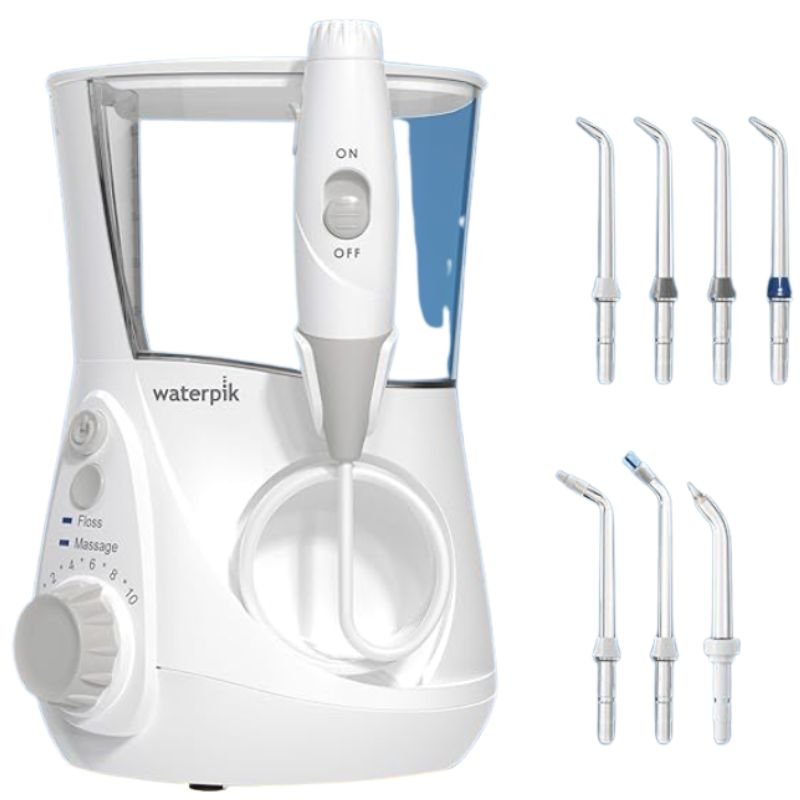
Price: $79.99 | Type: Countertop | Reservoir: 650ml | Settings: 10 (10–100 PSI) | ADA Accepted: Yes | Pik Pocket Tip: Yes (included) | Warranty: 3 years
The Aquarius leads this list because it combines the three features that matter most for gum disease: the widest pressure range available (10–100 PSI across 10 settings), an included Pik Pocket periodontal tip, and ADA acceptance.
The 10 PSI at setting 1 is genuinely gentle — low enough for use on freshly treated or severely inflamed tissue. As your gums heal over weeks and months, the progression to setting 3, then 5, then eventually 7+ happens naturally. That full range means this is the only water flosser you’ll need throughout your treatment journey, from initial sensitivity to long-term maintenance.
The Pik Pocket tip is the critical differentiator for gum disease. Its soft, tapered rubber end delivers a low-pressure stream designed for subgingival irrigation — reaching into periodontal pockets to flush bacteria without traumatising the pocket lining. Use it on settings 1–3 for pocket cleaning, then switch to the standard Classic Jet tip on a higher setting for general interdental work. This two-tip approach mirrors what many periodontists recommend.
The 650ml reservoir provides 90+ seconds of continuous use — important because gum disease patients need to spend extra time on affected areas. The Floss Mode (pulsating) is better for the gum line, while Stream Mode (continuous) works well for flushing deeper pockets where you want steady flow rather than pulses.
Strengths: Widest pressure range (10–100 PSI); Pik Pocket periodontal tip included; ADA accepted; 650ml reservoir; Floss + Stream modes; 3-year warranty; 75,000+ reviews at 4.6 stars.
Weaknesses: Countertop only (needs outlet and space); loud at higher settings; not portable.
Best Hybrid for Gum Disease: Waterpik ION Professional (WF-12)
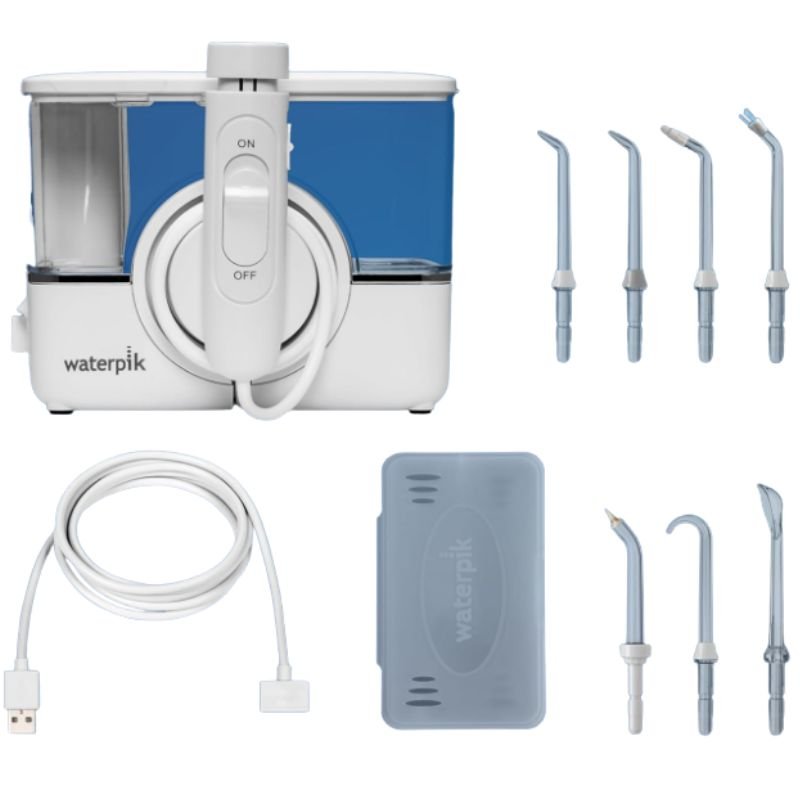
Price: $99.99 | Type: Hybrid | Reservoir: 650ml | Settings: 10 | Battery: ~4 weeks | ADA Accepted: Yes | Pik Pocket Tip: Yes (included) | Warranty: 3 years
The ION delivers everything the Aquarius offers — 10 settings, Pik Pocket tip, 650ml reservoir, ADA acceptance — with a cordless wand that moves more freely during use. For gum disease patients who need to angle the tip carefully into specific pocket sites, the untethered wand eliminates the cord tension that can make precise positioning difficult.
The practical difference for gum disease management is subtle. Both models deliver identical cleaning performance. The ION’s cordless wand is marginally easier to manoeuvre when you’re targeting specific pocket sites at the back of the mouth — where cord drag from the Aquarius can be noticeable. The $20 premium buys you that manoeuvrability plus the rechargeable battery (4 weeks per charge).
If you’re choosing between the two specifically for gum disease, the decision comes down to whether that $20 difference matters. The Aquarius at $79.99 provides the same clinical capability. The ION at $99.99 adds convenience. Neither has a cleaning advantage over the other.
Strengths: Cordless wand for easier pocket-targeting; same 10 settings and Pik Pocket tip as Aquarius; 650ml reservoir; ADA accepted; 3-year warranty; 7 included tips.
Weaknesses: $20 more than Aquarius for identical cleaning performance; still needs counter space; louder than cordless-only models.
Best Quiet Option: Philips Sonicare Power Flosser 3000
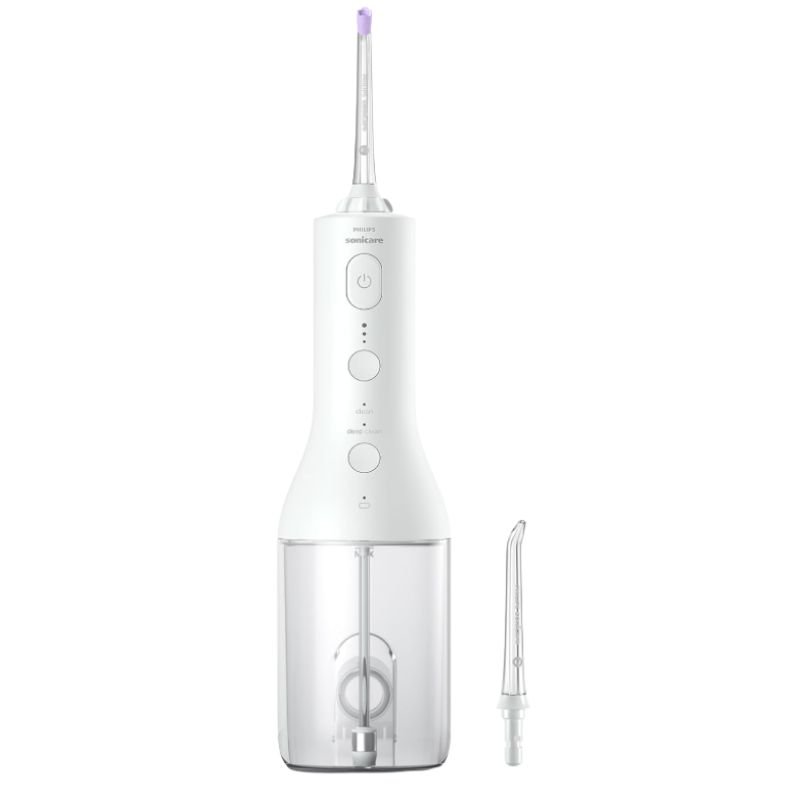
Price: $79.96 | Type: Cordless | Reservoir: 250ml (8 oz) | Modes: 2 (Clean, Deep Clean) × 3 intensities | ADA Accepted: Yes | Periodontal Tip: Not included | Warranty: 2 years
The Sonicare 3000 earns its place on this gum disease list for one reason: its lowest intensity setting is the gentlest of any water flosser available. If inflamed gums make even the Waterpik’s setting 1 uncomfortable, the Sonicare’s Clean mode at intensity 1 produces a noticeably softer stream — barely there, but still enough to flush loose debris from around the gum line.
The Quad Stream X-shaped nozzle disperses water into four streams rather than one concentrated jet. For sensitive gum tissue, this wider, lower-force pattern feels less aggressive than a traditional single-stream tip. Users with bleeding gums consistently report the Sonicare causes less initial discomfort than a Waterpik at comparable settings.
The trade-off for gum disease patients: the Sonicare does not include a periodontal pocket tip. Its standard and Quad Stream nozzles work for gum line and interdental cleaning, but they’re not designed for subgingival irrigation the way Waterpik’s Pik Pocket tip is. If your periodontist specifically recommends subgingival pocket flushing, the Waterpik models above are better suited. If your primary need is gentle daily gum line cleaning with minimal discomfort, the Sonicare delivers that better than anything else.
The noise advantage is also relevant. Gum disease patients often water floss twice daily (periodontist recommendation). A quiet model makes the morning session less disruptive to the household.
Strengths: Gentlest low setting available; quietest operation; Quad Stream disperses pressure across wider area; ADA accepted; compact cordless design; IPX7 waterproof.
Weaknesses: No periodontal pocket tip included (not designed for deep subgingival flushing); 250ml reservoir; only 2 tips; 2-week battery life; fewer pressure levels than Waterpik.
Best Budget for Gum Disease: Bitvae C6
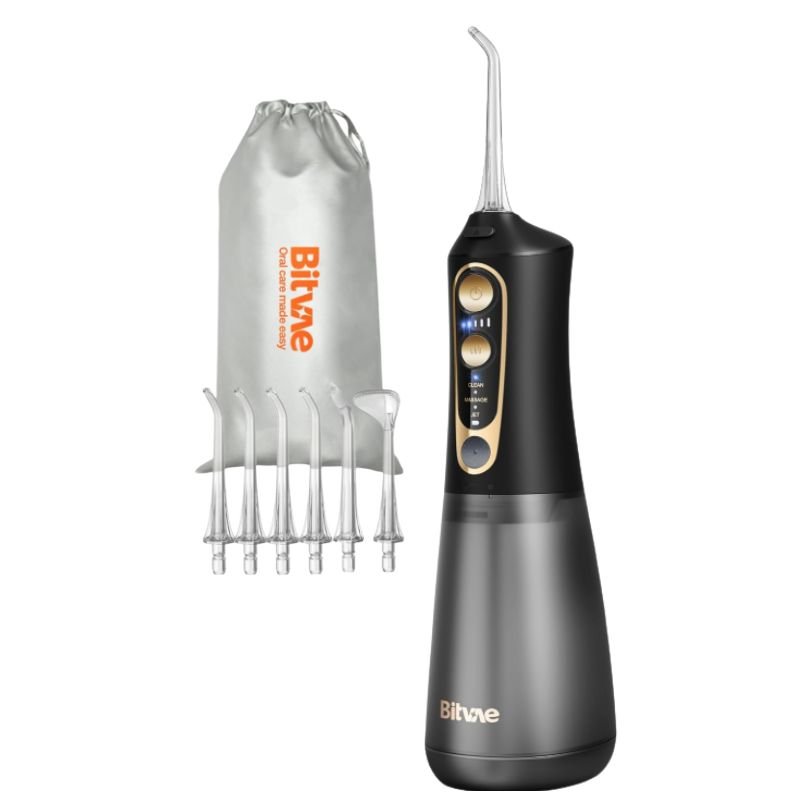
Price: $15.98 | Type: Cordless | Reservoir: 300ml | Settings: 3 modes × 5 levels | ADA Accepted: No | Periodontal Tip: Yes (included) | Warranty: 1 year
At $15.98, the Bitvae C6 makes water flossing accessible to anyone managing gum disease on a budget. It includes a periodontal tip — the accessory that matters most for subgingival cleaning — and offers a Soft mode with 5 intensity levels, giving you enough granularity to find a comfortable starting point for inflamed tissue.
The Soft mode at level 1 is gentle enough for most sensitive gums, though it doesn’t quite match the feather-light touch of the Sonicare’s lowest setting. The progression from Soft level 1 through Normal level 3–4 provides a reasonable path as gums improve over weeks of consistent use. The 300ml reservoir is sufficient for a focused gum-disease cleaning session (targeting affected areas plus a quick pass over healthy teeth).
The inclusion of 6 tips — including the periodontal tip and a tongue scraper (bad breath is a common gum disease symptom) — adds practical value. USB-C charging and a 40-day battery life eliminate the maintenance friction that leads to inconsistent use.
The limitations matter more for gum disease than for general use. No ADA seal means your periodontist may raise an eyebrow. The 1-year warranty is less reassuring for a tool you’ll rely on daily as part of a clinical management plan. And Bitvae’s periodontal tip is simpler in design than Waterpik’s Pik Pocket — it lacks the specialised soft rubber end that makes the Pik Pocket specifically suited for subgingival irrigation.
The honest framing: if $79.99 for an Aquarius is manageable, buy the Aquarius — the Pik Pocket tip and ADA acceptance matter for gum disease specifically. If $15.98 is the budget ceiling, the Bitvae C6 with its periodontal tip is dramatically better than not water flossing at all.
Strengths: $15.98 price; periodontal tip included; Soft mode with 5 levels; 300ml reservoir; USB-C charging; 40-day battery; tongue scraper for halitosis.
Weaknesses: No ADA seal; simpler periodontal tip design than Waterpik Pik Pocket; 1-year warranty; no clinical evidence base specific to this brand.
How to Water Floss With Gum Disease
The technique for gum disease differs from general water flossing. The goal shifts from interdental cleaning to subgingival flushing — getting water into and through the periodontal pockets where disease-causing bacteria reside.
Use the periodontal pocket tip first
Start your session with the periodontal/Pik Pocket tip, not the standard jet tip. Place the soft tip at the gum line of the first affected area. The tip should rest gently against the gum margin — don’t push it into the pocket. The water stream does the reaching; you just position the delivery point. Spend 5–10 seconds at each affected site, slowly tracing along the pocket opening.
Lowest pressure setting — non-negotiable
Setting 1 on a Waterpik (10 PSI). Lowest intensity on a Sonicare. Soft mode, level 1 on a Bitvae. Inflamed tissue is fragile. Higher pressure causes pain, increases bleeding, and can push bacteria deeper into the pocket rather than flushing it out. You can increase pressure gradually — over weeks, not days — as your gums respond to treatment.
Switch to the standard tip for general cleaning
After pocket flushing, switch to the standard jet tip on a slightly higher (but still moderate) setting for interdental cleaning of healthy areas. This two-tip protocol takes about 2–3 minutes total but addresses both the disease sites and general oral hygiene in one session.
Warm water or prescribed rinse
Warm water is more comfortable on inflamed tissue. Some periodontists prescribe a chlorhexidine rinse or dilute hydrogen peroxide solution to add to the reservoir for antimicrobial flushing. Only use prescribed solutions — don’t add over-the-counter mouthwash unless your dentist specifically approves it. The alcohol and chemicals in many mouthwashes can irritate diseased tissue and damage internal seals.
Twice daily if your periodontist recommends it
The ADA recommends interdental cleaning once daily for most people. Periodontists managing active gum disease often recommend twice daily — morning and evening — to keep the bacterial load in pockets consistently low between professional cleanings. Follow your dental professional’s specific guidance.
For the complete general technique, see: How to Use a Water Flosser Correctly.
What to Expect: The First Two Weeks
If you’re starting water flossing with existing gum disease, the first two weeks follow a predictable pattern. Knowing what’s normal prevents the panic that leads people to stop.
Days 1–3: Bleeding is normal. Even on the lowest pressure setting, water hitting inflamed tissue will likely cause bleeding. This is not damage from the water flosser — it’s evidence of existing inflammation. The bacteria trapped in your pockets have been irritating the tissue for weeks or months. Disturbing them causes a temporary increase in visible bleeding. This is the healing process beginning, not a reason to stop.
Days 4–7: Bleeding starts to decrease. As the bacterial load in the pockets reduces through daily flushing, the tissue begins calming down. Most users notice a meaningful reduction in bleeding by the end of the first week. Gums may still be tender but the sharp pain of the first session typically fades.
Days 7–14: Noticeable improvement. Bleeding is significantly reduced or eliminated for most mild-to-moderate cases. Gums feel firmer, less puffy. Bad breath (a common gum disease symptom caused by bacterial byproducts in pockets) often improves noticeably. This is when most people begin to feel the water flosser is “working” and compliance becomes self-reinforcing.
If bleeding persists beyond two weeks of consistent daily use on the lowest setting, schedule an appointment with your dentist or periodontist. Persistent bleeding may indicate deeper pockets or more advanced disease that requires professional intervention beyond home care.
For the clinical evidence behind these outcomes, see: Do Water Flossers Actually Remove Plaque?
Frequently Asked Questions
Can a water flosser cure gum disease?
No. A water flosser is a maintenance tool that reduces the bacterial load in periodontal pockets between professional treatments. It can significantly improve gum health metrics — bleeding, inflammation, pocket depth — but it cannot reverse bone loss, repair damaged tissue, or replace professional scaling, root planing, or surgical intervention. Think of it as an essential part of the management plan, not the treatment itself.
Do periodontists recommend water flossers?
Yes — periodontists are among the strongest advocates for water flossers. They see patients with deep pockets where string floss can’t reach, and the clinical evidence for water flossers reducing bleeding and gingivitis is particularly relevant to their patient population. Many periodontists prescribe specific water flosser models and tips as part of post-treatment home care instructions. See: Do Dentists Recommend Water Flossers?
What pressure setting should I use for gum disease?
Start at the absolute lowest setting your model offers — setting 1 on a Waterpik (10 PSI), lowest intensity on a Philips Sonicare, Soft mode level 1 on a Bitvae. Increase gradually over weeks as your gums heal and tolerate more. Most gum disease patients settle between settings 3–5 on a 10-setting model for long-term maintenance. Never increase pressure through pain — if it hurts, you’re too high.
Is the Pik Pocket tip necessary for gum disease?
It’s the most important accessory for gum disease management. Standard jet tips deliver a focused stream designed for interdental spaces — too concentrated for direct subgingival application. The Pik Pocket tip’s soft, flexible end delivers a diffused, low-pressure stream designed specifically for periodontal pockets. If your water flosser doesn’t include one, Waterpik sells them separately (~$8–10 for a two-pack).
Will my gums bleed when I start?
Almost certainly, yes — and that’s normal. Bleeding indicates existing inflammation, not damage from the water flosser. Consistent daily use on the lowest setting typically reduces bleeding significantly within 7–14 days. If bleeding persists beyond two weeks, consult your dental professional.
Can I add mouthwash for gum disease?
Only if your dentist specifically prescribes it. Chlorhexidine rinse and dilute hydrogen peroxide are sometimes recommended by periodontists for use in a water flosser reservoir. Over-the-counter alcohol-based mouthwash can irritate diseased tissue and damage the flosser’s internal seals. Warm water alone is effective and safe for daily use.
How often should I water floss with gum disease?
Once daily at minimum. Many periodontists recommend twice daily (morning and evening) during active treatment phases. Follow your dental professional’s specific guidance — they know the severity of your case and can advise on the optimal frequency for your situation.
The Bottom Line
The Waterpik Aquarius WP-660 ($79.99) is the best water flosser for gum disease management. The combination of 10 pressure settings starting at 10 PSI, the included Pik Pocket periodontal tip, ADA acceptance, and a 650ml reservoir covers every aspect of a gum disease home care protocol. It’s the model most likely to appear in a periodontist’s recommendation.
If you want that same performance with a cordless wand, the Waterpik ION WF-12 ($99.99) delivers it for $20 more. If gentleness and quiet operation matter most — particularly for twice-daily sessions — the Philips Sonicare 3000 ($79.96) offers the softest touch, though without a periodontal pocket tip.
If budget is the constraint, the Bitvae C6 ($15.98) includes a periodontal tip and a Soft mode that makes daily subgingival cleaning possible for under $16. For gum disease specifically, any water flosser used consistently is a significant improvement over no subgingival cleaning at all.
Remember: a water flosser supplements professional treatment — it doesn’t replace it. If you haven’t seen a dentist about your gum symptoms, start there. Then add daily water flossing to the maintenance plan they prescribe.
For the full comparison across all use cases, see our complete guide to the best water flossers of 2026.
Related Guides
- Best Water Flossers of 2026 (Compared and Rated)
- Do Water Flossers Actually Remove Plaque?
- Do Dentists Recommend Water Flossers?
- How to Use a Water Flosser Correctly
- Water Flosser vs String Floss: What the Evidence Says
- Best Water Flosser for Implants
- Best Water Flosser Tips and Nozzles
- Best Countertop Water Flosser