Last updated: March 2026 | By: VerdictLab Editorial Team
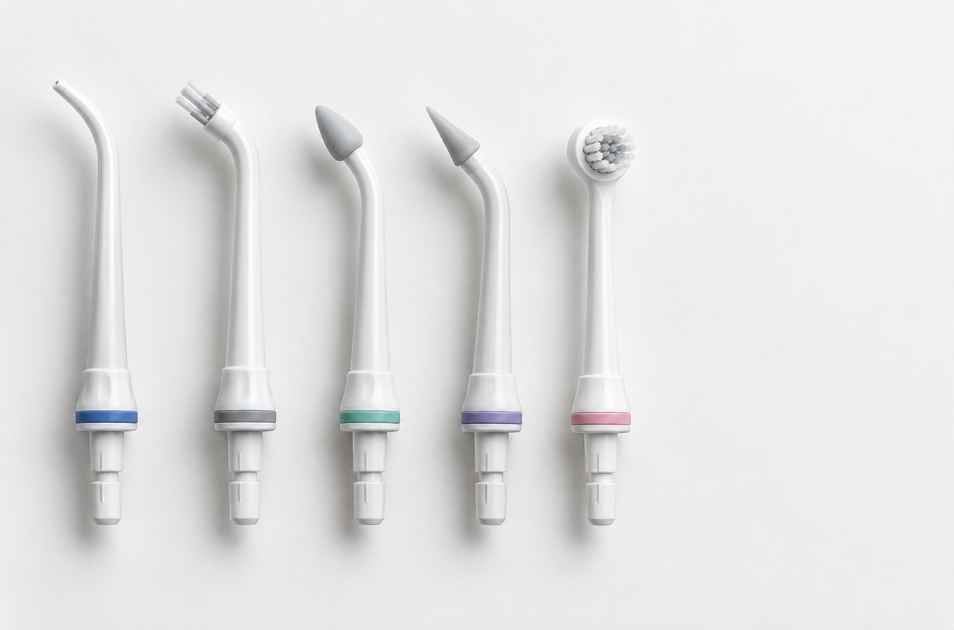
Your water flosser is only as effective as the tip attached to it. Most people use the standard jet tip that comes in the box and never think about it again. That works fine for general interdental cleaning — but if you have braces, implants, gum disease, or any dental work, you’re leaving performance on the table.
Each tip type is engineered for a specific job. Using the wrong tip doesn’t damage anything — it just means you’re not cleaning as effectively as you could be. Using the right tip means the difference between “I used my water flosser” and “I actually cleaned the areas that matter.”
Here’s what each tip does, who needs it, and when to replace it.
Quick Reference
- Classic/Standard Jet Tip — general interdental cleaning (everyone)
- Orthodontic Tip — braces, brackets, and wires
- Pik Pocket (Periodontal) Tip — gum disease, deep pockets, implants
- Plaque Seeker Tip — crowns, implants, bridges, veneers
- Implant Denture Tip — implant-supported bridges and dentures
- Tongue Cleaner Tip — bad breath, tongue coating
- Quad Stream Nozzle — wider coverage, gentler feel (Philips Sonicare only)
- Toothbrush Tip — light brushing while flossing (Waterpik only)
- Replace standard tips every 6 months, specialty tips every 3 months
In This Guide
Tip Compatibility: Which Tips Fit Which Flossers
Water flosser tips are not universal. Each brand uses a proprietary connection system. A Waterpik tip will not fit a Philips Sonicare, and vice versa. Bitvae and other budget brands use their own connections too. Before buying replacement tips, check that they’re designed for your specific brand and model.
| Brand | Tip Types Available | Tips Included With Flosser | Replacement Cost (per tip) |
|---|---|---|---|
| Waterpik | 8+ types | 4–7 (model dependent) | ~$4–6 each |
| Philips Sonicare | 2 types | 2 | ~$7–8 each |
| Bitvae | 4–5 types | 6 | ~$2–3 each |
| Burst | 2 types | 1 | ~$5 each (subscription) |
Approximate costs from Amazon and manufacturer websites at time of publication. Multi-packs reduce per-tip cost.
Waterpik has the widest tip ecosystem by a significant margin. If you anticipate needing specialty tips for changing dental needs (braces going on, an implant being placed, gum disease treatment starting), choosing a Waterpik flosser gives you the most accessory flexibility long-term. For full model comparisons, see our best water flosser guide.
Classic / Standard Jet Tip
What it does: Delivers a single focused stream of pulsating water for general interdental cleaning. This is the default tip included with every water flosser from every brand. It handles the core job: flushing food debris and disrupting plaque between teeth and along the gum line.
Who needs it: Everyone. This is your daily-use tip. Even if you own specialty tips for specific areas, the standard jet tip handles 80% of the work for most people.
How to use it: Aim at the gum line at a 90-degree angle. Pause 2–3 seconds between each tooth. Trace both the outer (cheek-side) and inner (tongue-side) gum lines. Full technique guide: How to Use a Water Flosser Correctly.
Replace every: 6 months, or sooner if you notice calcium buildup on the nozzle, reduced water flow, or a loose fit in the handle.
Colour coding: Waterpik includes multiple Classic Jet tips in different colours so family members can share a single flosser unit with their own identified tip. The Aquarius and ION each include 2–3 Classic Jet tips for this reason.
Orthodontic Tip
What it does: A tapered tip with a small tuft of soft bristles at the end. The bristles brush around the bracket base while the water stream flushes debris from behind and beneath it. It combines mechanical scrubbing with hydraulic flushing — which is why clinical studies show it removes three times more plaque around brackets than string floss.
Who needs it: Anyone with traditional braces (labial or lingual brackets), fixed retainers, or orthodontic bands. If you have clear aligners (Invisalign), you don’t need this tip — the aligners are removable, so standard cleaning works fine.
How to use it: Approach each bracket from three angles: above, below, and from the side along the archwire. Spend 3–5 seconds per bracket rather than the 2–3 seconds per gap used with the standard tip. Use low to medium pressure — brackets can trap water pressure between the wire and gum, amplifying force. Full braces technique guide: Best Water Flosser for Braces.
Replace every: 3 months. The bristles fray and lose effectiveness faster than standard tips because they contact bracket surfaces on every use.
Available from: Waterpik (included with Aquarius, ION, Cordless Advanced), Bitvae (included with C6). Not available for Philips Sonicare or Burst.
Pik Pocket (Periodontal) Tip
What it does: A soft, flexible rubber tip that delivers a low-pressure, diffused stream designed for subgingival irrigation — cleaning below the gum line inside periodontal pockets. Unlike the standard jet tip, which produces a focused, forceful stream, the Pik Pocket tip gently flushes bacteria from the deepened pockets that form with gum disease.
Who needs it: Anyone with diagnosed gum disease (gingivitis or periodontitis), deep periodontal pockets (4mm+), or dental implants where the peri-implant sulcus needs regular flushing. Periodontists frequently prescribe this specific tip as part of a home care regimen. If your dentist has mentioned “pocket depth” or “bone loss,” this is the tip that addresses it.
How to use it: Place the soft tip at the gum margin — where tissue meets tooth or implant abutment. Don’t push the tip into the pocket; let the water stream reach into it. Use the lowest 2–3 pressure settings only. Spend 5–10 seconds at each affected site. Full technique: Best Water Flosser for Gum Disease.
Replace every: 3 months. The soft rubber end degrades with use and loses its ability to deliver a properly diffused stream.
Available from: Waterpik (included with Aquarius, ION; sold separately ~$8–10 for 2-pack). Bitvae includes a periodontal tip with the C6, though it’s a simpler design than Waterpik’s Pik Pocket. Not available for Philips Sonicare or Burst.
Plaque Seeker Tip
What it does: Three thin tufts of bristles surround the water jet outlet. As the water stream flushes an area, the bristles simultaneously scrub the surfaces around crowns, bridges, implants, and veneers. It combines the hydraulic cleaning of a standard tip with the mechanical scrubbing of a small brush — targeted at the margins where dental restorations meet natural tooth structure.
Who needs it: Anyone with crowns, veneers, bridges, or implant crowns. The margins where a restoration meets the tooth (or implant abutment) are notorious for plaque accumulation because the junction creates a micro-gap that bacteria colonise. The Plaque Seeker’s bristles clean this junction more thoroughly than a standard jet tip alone.
How to use it: Place the tip close to the tooth so the bristles gently contact the surface. Glide slowly along the gum line, pausing at each restoration margin. Use moderate pressure — the bristles do part of the work, so you don’t need the highest settings. This tip is also effective for general use if you prefer the added scrubbing sensation.
Replace every: 3 months. The bristles wear down and splay with regular use.
Available from: Waterpik only (included with Aquarius, ION, Cordless Advanced). No equivalent exists for Philips Sonicare, Bitvae, or Burst.
Implant Denture Tip
What it does: A thin, curved tip designed to direct water underneath implant-supported bridges, All-on-4 dentures, and fixed prosthetics. The angled opening allows you to position the tip at one end of the prosthetic and glide it along the underside, flushing the debris and bacteria that accumulate in the space between the prosthetic and the gum tissue.
Who needs it: Anyone with an implant-supported bridge (3+ units), an All-on-4 or All-on-6 denture, or any fixed prosthetic that sits on gum tissue with spaces underneath. If your prosthetic doesn’t have a space between it and the gums (flush-fit), this tip is less relevant. If there’s a visible or palpable gap where food traps, this tip is essential.
How to use it: Position the curved end at one side of the prosthetic, directed into the gap between the false teeth and the gum tissue. Turn on the flosser at a low setting. Slowly glide the tip along the underside of the prosthetic to the other end. Repeat from the lingual (tongue) side if accessible. Full technique: Best Water Flosser for Implants.
Replace every: 6 months.
Available from: Waterpik only (included with ION; sold separately for Aquarius and other models, ~$8–10 for 2-pack). No equivalent exists from any other brand — this is the most specialised tip in the water flosser market.
Tongue Cleaner Tip
What it does: A spoon-shaped or flat scraper attachment that combines a gentle water stream with a physical scraping surface to clean the tongue. The tongue harbours a significant portion of the bacteria responsible for bad breath (halitosis) — particularly on the posterior third where a thick biofilm often accumulates.
Who needs it: Anyone dealing with persistent bad breath, visible tongue coating (white or yellowish film), or dry mouth conditions that reduce the tongue’s natural self-cleaning. Tongue cleaning is one of the most overlooked aspects of oral hygiene — it takes 10 seconds and makes a noticeable difference in breath freshness.
How to use it: Extend your tongue, place the scraper at the back (as far as comfortable without gagging), and pull forward with gentle pressure while the water stream rinses debris away. Two or three passes is sufficient. Use the lowest pressure setting — the tongue doesn’t need aggressive water force.
Replace every: 6 months.
Available from: Waterpik (included with ION), Bitvae (included with C6). Not available for Philips Sonicare or Burst. Standalone tongue scrapers ($5–10) are a cheaper alternative if your flosser doesn’t offer this attachment.
Quad Stream Nozzle (Philips Sonicare Only)
What it does: An X-shaped nozzle that splits the water into four simultaneous streams instead of a single concentrated jet. This covers roughly 9× the surface area of a single-stream tip (according to Philips), delivering a wider, gentler cleaning pattern that reaches more of the interdental space and gum line with each pass.
Who needs it: Anyone using a Philips Sonicare Power Flosser who wants the broadest, gentlest cleaning experience. The Quad Stream nozzle is the recommended daily-use tip for the Sonicare 3000 — it’s the tip that defines the Sonicare experience. Users with sensitive gums particularly benefit from the dispersed force distribution.
How to use it: Same technique as a standard tip — aim at the gum line, pause between teeth, trace both surfaces. The wider spray pattern means you can move slightly faster than with a single-jet tip while still achieving thorough coverage. The Deep Clean mode with the Quad Stream nozzle produces a pulsing pattern that guides you from tooth to tooth.
Replace every: 3–6 months. Philips replacement nozzles cost ~$15 per 2-pack (~$7.50 each) — the most expensive per-tip cost of any brand.
Available from: Philips Sonicare only. No other brand offers anything comparable. For a full comparison of the Quad Stream approach versus Waterpik’s single-jet, see: Waterpik vs Philips Sonicare Water Flosser.
Toothbrush Tip
What it does: A small toothbrush head attached to a water flosser handle, allowing you to brush tooth surfaces while the water stream provides simultaneous rinsing. It’s a hybrid approach — not a replacement for a proper electric or manual toothbrush, but a convenience for quick touch-ups.
Who needs it: Honestly, very few people. The toothbrush tip is included with the Waterpik Aquarius and is useful as a quick post-lunch brush at the office or a bedtime shortcut when you’re too tired for a full brushing routine. It’s not a substitute for proper twice-daily brushing with a dedicated toothbrush — the bristle density, motion, and contact pressure of a real toothbrush are superior.
Replace every: 3 months (same as a manual toothbrush).
Available from: Waterpik only (included with Aquarius). The Waterpik Sonic-Fusion takes this concept further with a full sonic toothbrush built into a water flosser, though reviews of that product are mixed.
When to Replace Water Flosser Tips
Tips degrade with daily use. The rubber seals that create a watertight connection to the handle wear down. Bristles on specialty tips fray and flatten. Mineral deposits from hard water accumulate inside the nozzle, reducing flow. Replacing tips on schedule maintains cleaning effectiveness and prevents bacterial buildup inside a deteriorating tip.
| Tip Type | Replace Every | Why |
|---|---|---|
| Classic / Standard Jet | 6 months | Rubber seal degradation, mineral buildup |
| Orthodontic | 3 months | Bristles fray from bracket contact |
| Pik Pocket / Periodontal | 3 months | Soft rubber end degrades, loses diffusion |
| Plaque Seeker | 3 months | Bristles splay and lose contact precision |
| Implant Denture | 6 months | Curved end may soften, nozzle opening widens |
| Tongue Cleaner | 6 months | Scraper edge dulls over time |
| Quad Stream (Philips) | 3–6 months | X-shaped channels can clog with minerals |
| Toothbrush | 3 months | Bristles flatten (same as any toothbrush) |
Signs a tip needs replacing before the schedule: visibly frayed or flattened bristles, white calcium deposits that don’t dissolve with vinegar soaking, reduced water flow compared to a new tip, a loose or wobbly fit in the handle, or discolouration that doesn’t clean off.
Soaking tips in white vinegar for 5–10 minutes monthly extends their usable life by dissolving mineral scale before it hardens permanently. But even with good maintenance, the rubber seals and bristles wear out — don’t push tips beyond the recommended intervals.
Annual Tip Replacement Cost by Brand
Tips are the ongoing cost of water flosser ownership. Here’s what a year of replacements costs for a typical user (one standard tip + one specialty tip, replaced on schedule).
| Brand | Standard Tips/Year | Specialty Tips/Year | Est. Annual Cost |
|---|---|---|---|
| Waterpik | 2 (~$10) | 4 (~$20) | ~$30 |
| Philips Sonicare | 2 (~$15) | 2 (~$15) | ~$30 |
| Bitvae | 2 (~$5) | 4 (~$10) | ~$15 |
| Burst (subscription) | 4 (~$20) | — | ~$20 |
Estimates based on manufacturer pricing for replacement packs. Actual costs vary with multi-pack discounts and promotions.
Annual tip costs are broadly comparable across brands — $15–30 per year. The Bitvae is cheapest. Philips has the highest per-tip cost but fewer replacements needed (2 tip types only). Waterpik’s wider variety means more tips to replace if you use multiple specialty types, but the per-tip cost is lower.
Worth noting: the Burst subscription model ($5 per quarter for a replacement tip) also maintains the limited lifetime warranty. If you’re a Burst user, the subscription pays for itself in warranty value alone.
Frequently Asked Questions
Can I use third-party tips with my water flosser?
Generic third-party tips are available for Waterpik flossers on Amazon at lower prices than genuine Waterpik tips. Quality varies. Some users report they fit and function well. Others report loose connections, inconsistent water flow, and faster degradation. Waterpik’s warranty may be voided by using non-genuine tips. For clinical applications (periodontal pockets, implant care), genuine tips are the safer choice. For standard jet tips used by healthy adults, third-party options can be a reasonable cost saver — just inspect them for fit quality before use.
Do I need more than the standard tip?
If you have healthy teeth and gums with no dental work, the standard jet tip handles your daily needs. You only need specialty tips if you have braces (orthodontic tip), gum disease or deep pockets (Pik Pocket), implants or bridges (Plaque Seeker or Implant Denture), or persistent bad breath (tongue cleaner). Most people start with the standard tip and add specialty tips as their dental situation evolves.
Which tip is best for braces?
The Waterpik Orthodontic Tip. Its tapered bristle end is specifically designed to brush around bracket bases while the water stream flushes behind them. No other brand offers a tip as purpose-built for orthodontic use. See: Best Water Flosser for Braces.
Which tip is best for gum disease?
The Waterpik Pik Pocket tip. Its soft rubber end delivers a gentle, diffused stream below the gum line — designed for flushing bacteria from periodontal pockets without irritating inflamed tissue. Use it on the lowest 2–3 pressure settings. See: Best Water Flosser for Gum Disease.
Which tip is best for implants?
For single-tooth implants: the Pik Pocket tip. For implant-supported bridges and dentures: the Implant Denture tip. The ION includes both. The Aquarius includes the Pik Pocket; the Implant Denture tip is available separately. See: Best Water Flosser for Implants.
Can I put water flosser tips in the dishwasher?
Waterpik does not recommend dishwashing tips — the high heat can warp the rubber seals and bristles. Clean tips by soaking in white vinegar for 5–10 minutes, then rinsing under warm water. The reservoir itself (on some Waterpik models) is dishwasher-safe (top rack, air dry), but the tips are not.
How do I clean mineral buildup from a clogged tip?
Soak the tip in undiluted white vinegar for 15–30 minutes. For stubborn deposits, use a thin pin or toothpick to gently clear the nozzle opening. If the flow doesn’t improve after soaking, the tip needs replacing — internal mineral deposits can reach points that soaking alone can’t dissolve.
The Bottom Line
The standard jet tip handles daily cleaning for healthy teeth. Beyond that, each specialty tip solves a specific problem: the Orthodontic Tip for braces, the Pik Pocket for gum disease and implants, the Plaque Seeker for crowns and bridges, the Implant Denture Tip for prosthetics, and the Tongue Cleaner for bad breath. You don’t need all of them — you need the ones that match your dental situation.
Waterpik’s tip ecosystem is the most comprehensive by a wide margin. If your dental needs are complex or likely to change, choosing a Waterpik flosser gives you the most accessory flexibility. If your needs are simple — healthy teeth, daily maintenance — the Philips Sonicare’s Quad Stream nozzle or a standard Bitvae tip handles that just fine.
Whatever tips you use, replace them on schedule. A worn tip with frayed bristles, a degraded rubber seal, or a mineral-clogged nozzle reduces your water flosser’s effectiveness by more than most people realise. The $4–8 cost of a replacement tip is worth it every time.
For the full water flosser comparison, see our complete guide to the best water flossers of 2026.