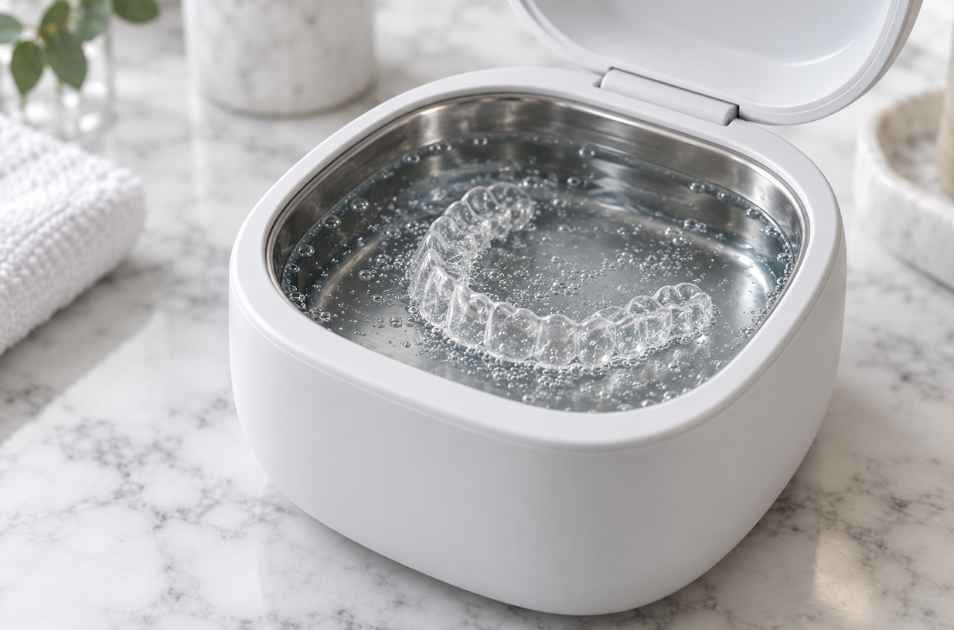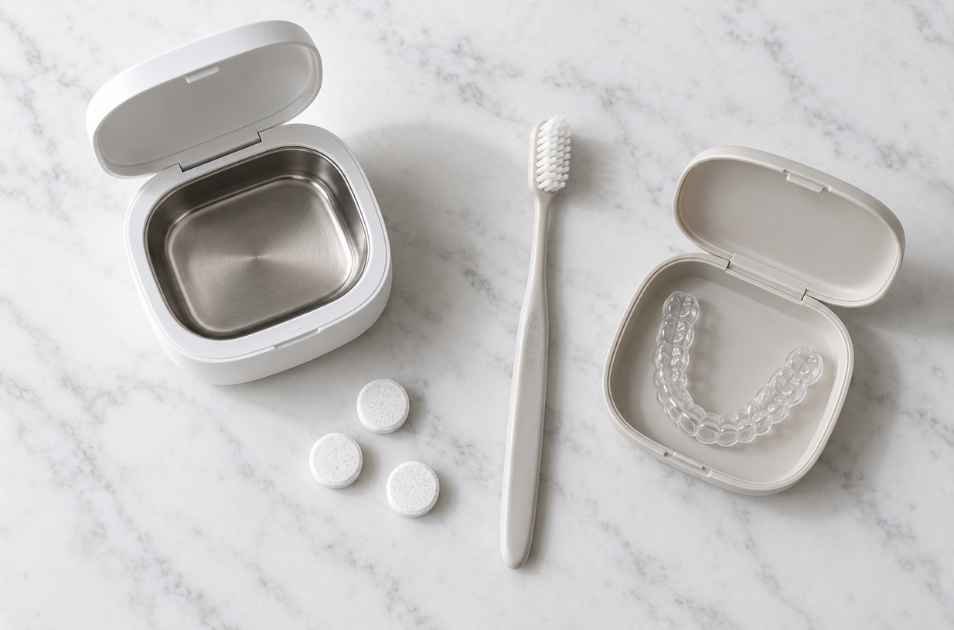
Category: Dental retainer

  • Best Retainer Cleaners of 2026: Machines, Tablets & Foams

    Best Retainer Cleaners of 2026: Machines, Tablets & Foams

    Editorial transparency: VerdictLab earns a commission when you purchase through our Amazon links — this never influences our ratings or recommendations. Product selections are based on verified specifications, label transparency, independent evidence, and Amazon availability. As an Amazon Associate I earn from qualifying purchases. Full disclosure.

    Last updated: September 2026  |  By: VerdictLab Editorial Team

    How we selected these products: We researched manufacturer specifications, reviewed independent clinical and laboratory evidence, verified current Amazon availability, and compared products within each category. VerdictLab has not yet performed hands-on testing. When we do, this page will be updated with first-hand results. Product picks require Amazon availability (our affiliate policy), but scientific conclusions are based on independent evidence, not commercial eligibility.

    Retainer cleaning is not complicated. The AAO recommends daily rinsing, gentle brushing with dish soap, and periodic use of a cleaning product. You do not need an ultrasonic pod. You do not need specialised tablets. Soap and water, done consistently, handle the fundamentals.

    That said, cleaning products exist because the fundamentals aren’t always enough. Biofilm accumulates in crevices a toothbrush can’t reach. Stains can build up over time from coffee, tea, and other strongly colored foods and drinks. Odour develops when daily cleaning falls behind schedule. This is where a cleaning tablet, an ultrasonic device, or both earn their place — as supplements to the daily routine, not replacements for it.

    This page helps you choose the right type first, then the right product within that type.

    Quick Picks by Category

    ULTRASONIC DEVICES

    • Best brand trust: Zima Dental Pod — powers the official Invisalign ultrasonic cleaner
    • Largest tank: iSonic F3900 — 200 mL, established ultrasonic manufacturer
    • Best value: UEOFEN GH-UC100 — ~200 mL, UV feature, competitive price

    CLEANING TABLETS

    OFFICIAL INVISALIGN


    Choose Your Cleaner Type First

    The most useful decision isn’t which product to buy — it’s which type of cleaning product matches your situation. Everything else follows from that.

    Situation Recommended Approach
    Your daily brush-and-soap routine keeps everything clean, clear, and odour-free You may not need any additional product. The AAO-recommended routine is sufficient for many people.
    You want a simple weekly deep clean beyond daily brushing Cleaning tablets. Cheapest, simplest, portable. Drop in water, soak, rinse.
    Staining, cloudiness, or odour persists despite tablet use Ultrasonic device + tablet. The combination outperformed either method alone in clinical research.
    Your retainer has complex geometry (clasps, crevices, textured surfaces) Ultrasonic device. Cavitation reaches micro-textures manual cleaning misses.
    You travel frequently Cleaning tablets. Individually wrapped, fit anywhere, no power needed.
    You wear Invisalign and want manufacturer-validated cleaning Invisalign Cleaning Crystals (or the official Invisalign ultrasonic cleaner from the Invisalign store).
    You wear both a retainer and a night guard Ultrasonic device with a larger tank (iSonic F3900 or UEOFEN) + tablets. One device handles both appliances.

    For the detailed comparison between ultrasonic devices and tablets, see: Ultrasonic Retainer Cleaner vs Cleaning Tablets.


    Ultrasonic Devices

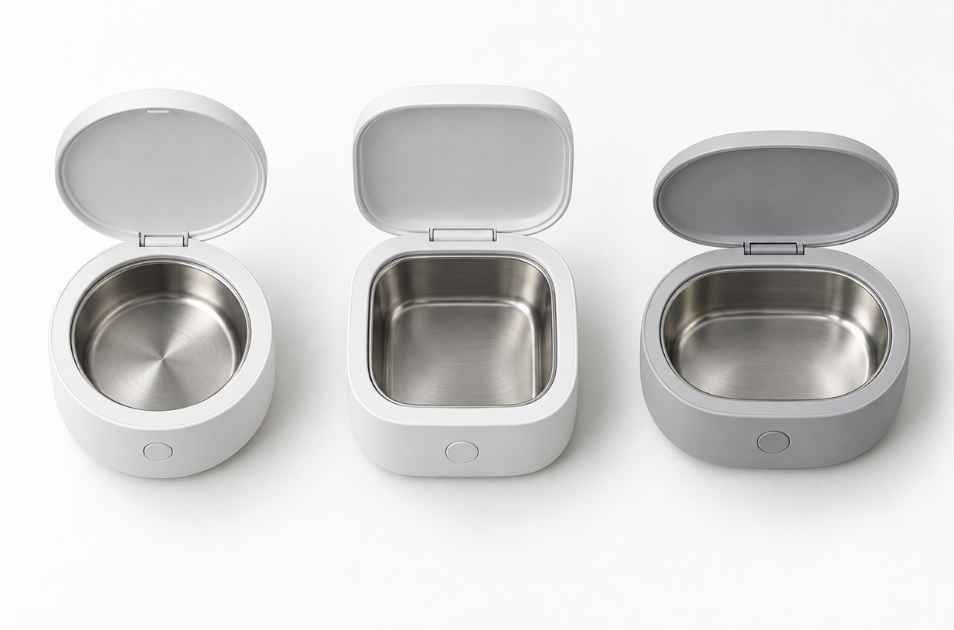
    Ultrasonic cleaners use high-frequency vibration (40–52 kHz) to create cavitation bubbles that mechanically dislodge debris from appliance surfaces. The most important thing to know about them: water-only ultrasonic cleaning performed worst in the most relevant 2026 clinical study. Adding a compatible cleaning tablet to the tank water is where the meaningful improvement comes from. For the full evidence, see: Do Ultrasonic Retainer Cleaners Actually Work?

    For the detailed device-by-device comparison with full reviews, see: Best Ultrasonic Retainer Cleaner. Here are the highlights:

    Zima Dental Pod — Best Brand Trust
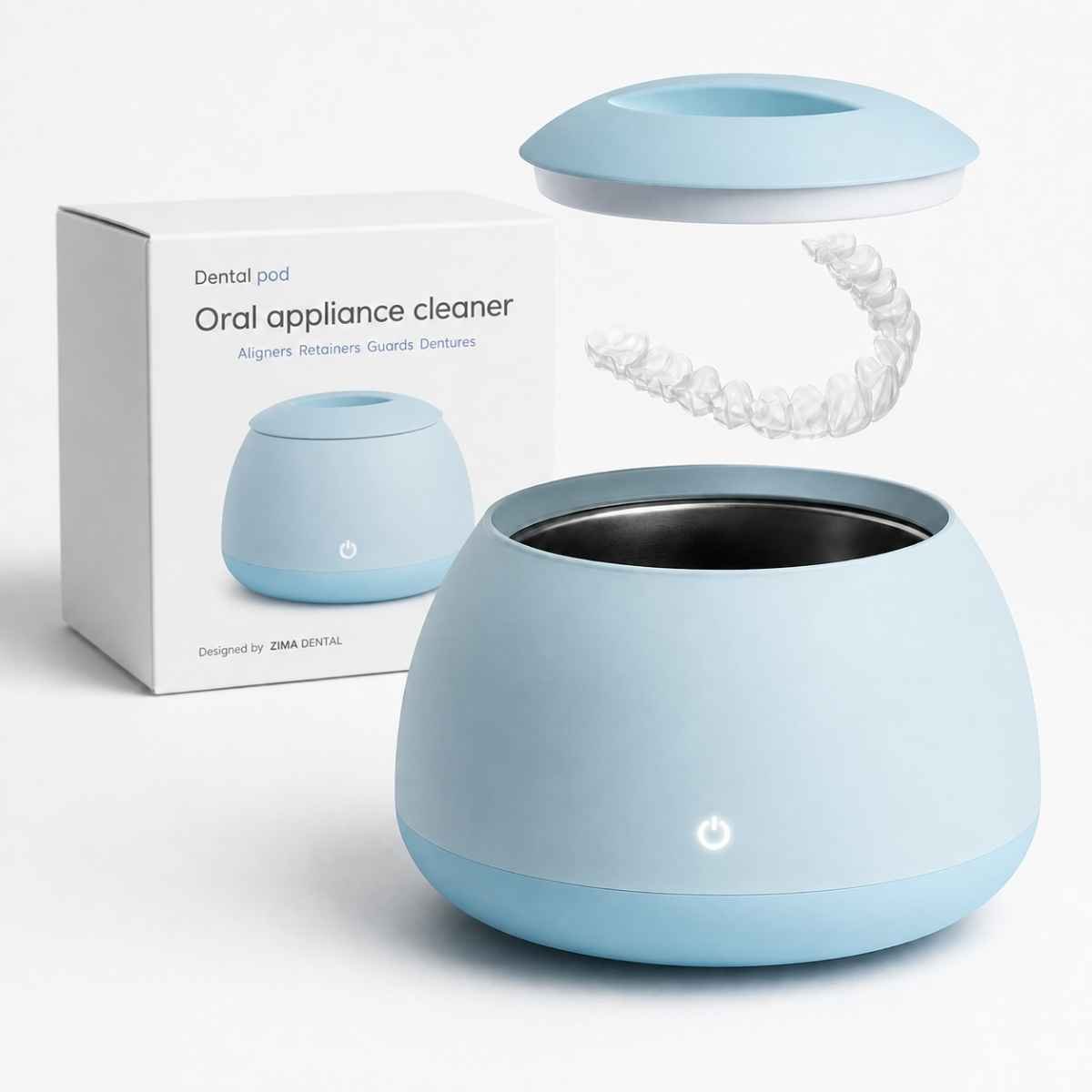
    Zima Dental Pod

    Powers the official Invisalign Ultrasonic Cleaning Station — the strongest manufacturer-compatibility signal in the category. ~42 kHz, ~150 mL tank, compact design. The Invisalign association means Align Technology validated Zima’s core technology against its own materials. No other Amazon pod carries that level of dental-brand backing.

    Check Price on Amazon

    iSonic F3900 — Largest Tank

    iSonic F3900

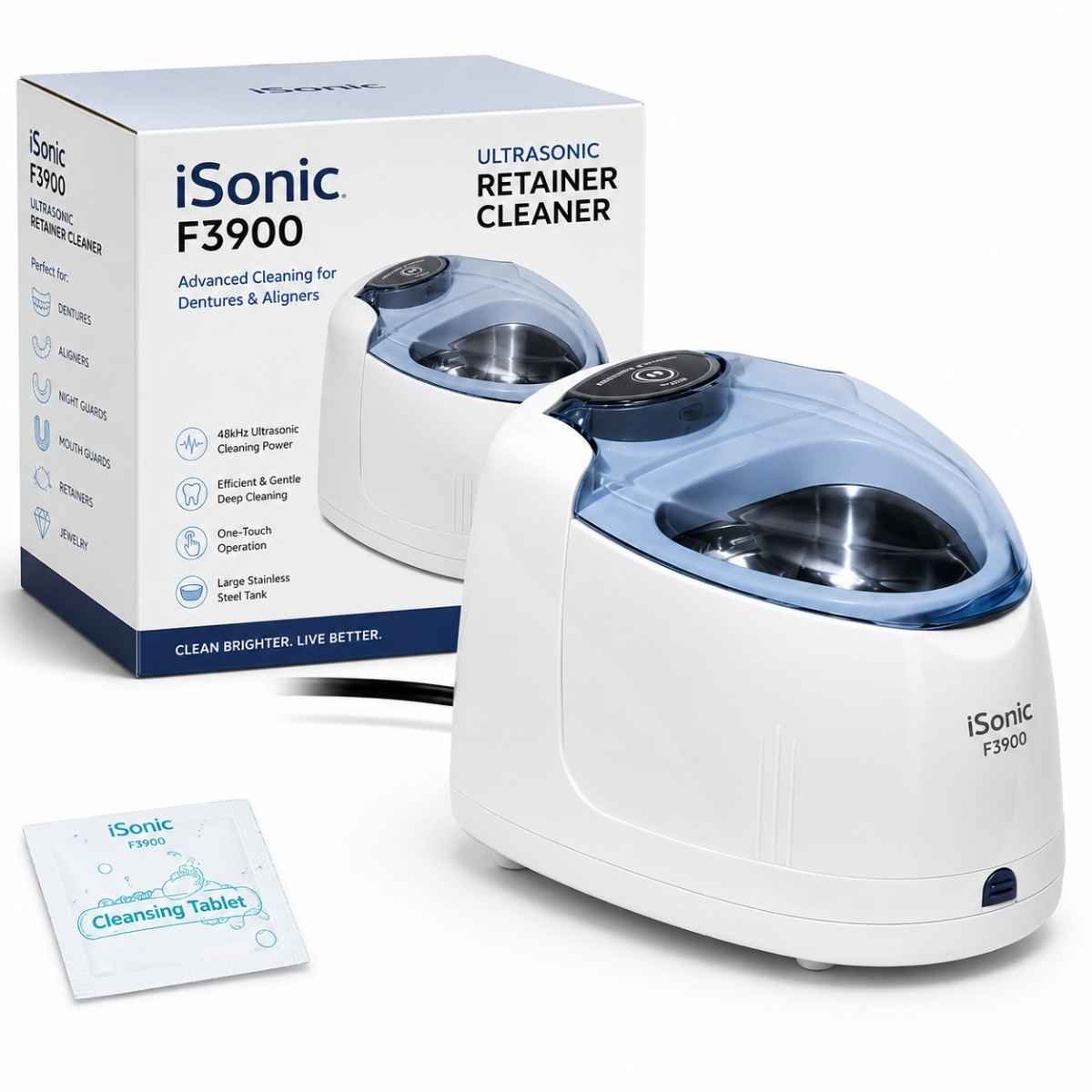
    200 mL tank (the largest here), ~42 kHz, 20W, 5-minute auto-off. iSonic is an established ultrasonic-cleaner manufacturer — not a consumer brand repackaging a generic pod. The larger tank fits bulkier appliances (night guards, Hawley retainers) without cramming. Fixed tank design requires filling/emptying in place.

    Check Price on Amazon

    UEOFEN GH-UC100 — Best Value

    UEOFEN GH-UC100

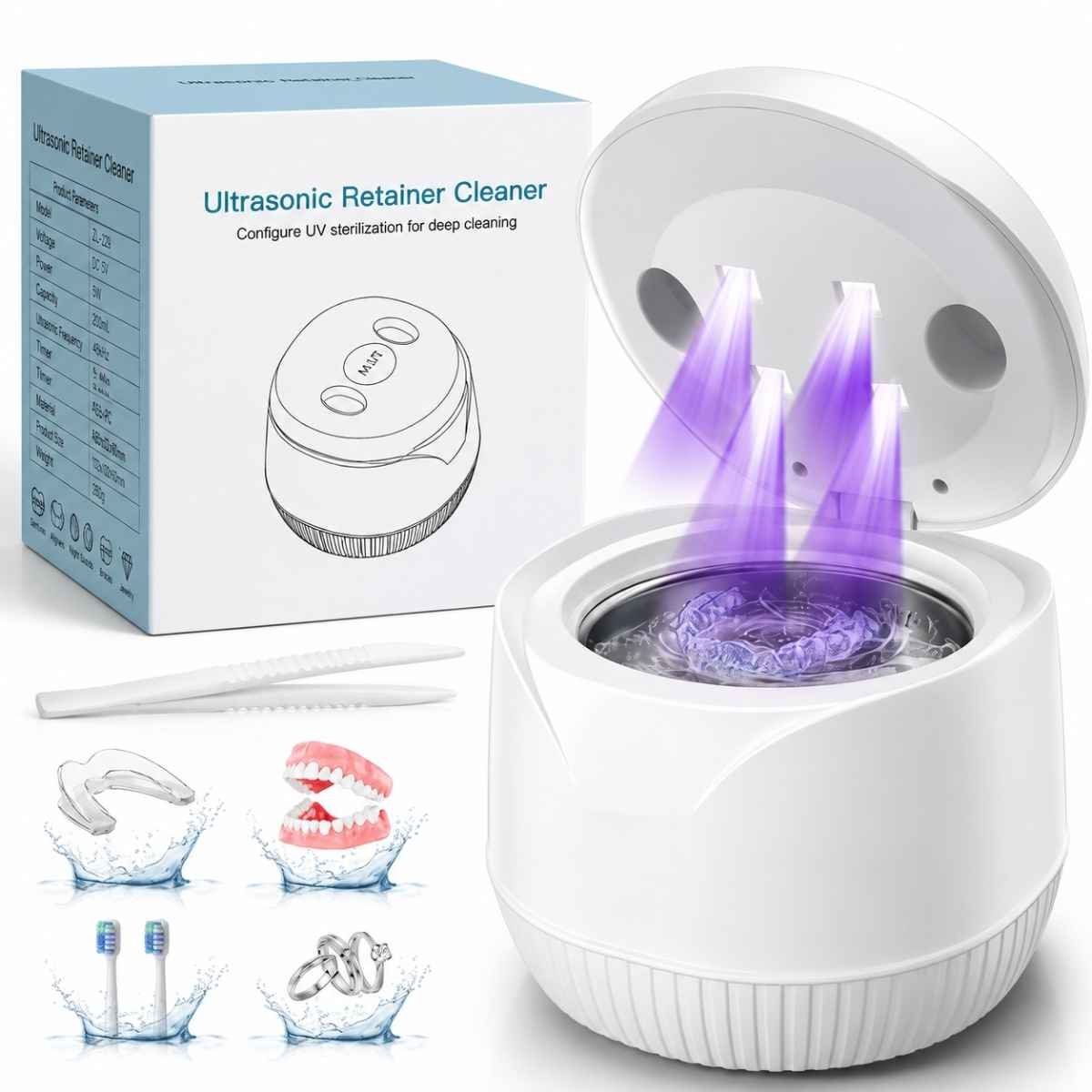
    ~45 kHz, ~200 mL tank, UV feature marketed, competitive pricing. The larger tank and UV inclusion at a lower price point make it the value pick. Less brand-stability signal than Zima or iSonic — verify seller and warranty details before purchasing.

    Check Price on Amazon

    Sonic Pro Dental Pod — Budget Entry

    Sonic Pro Dental Pod

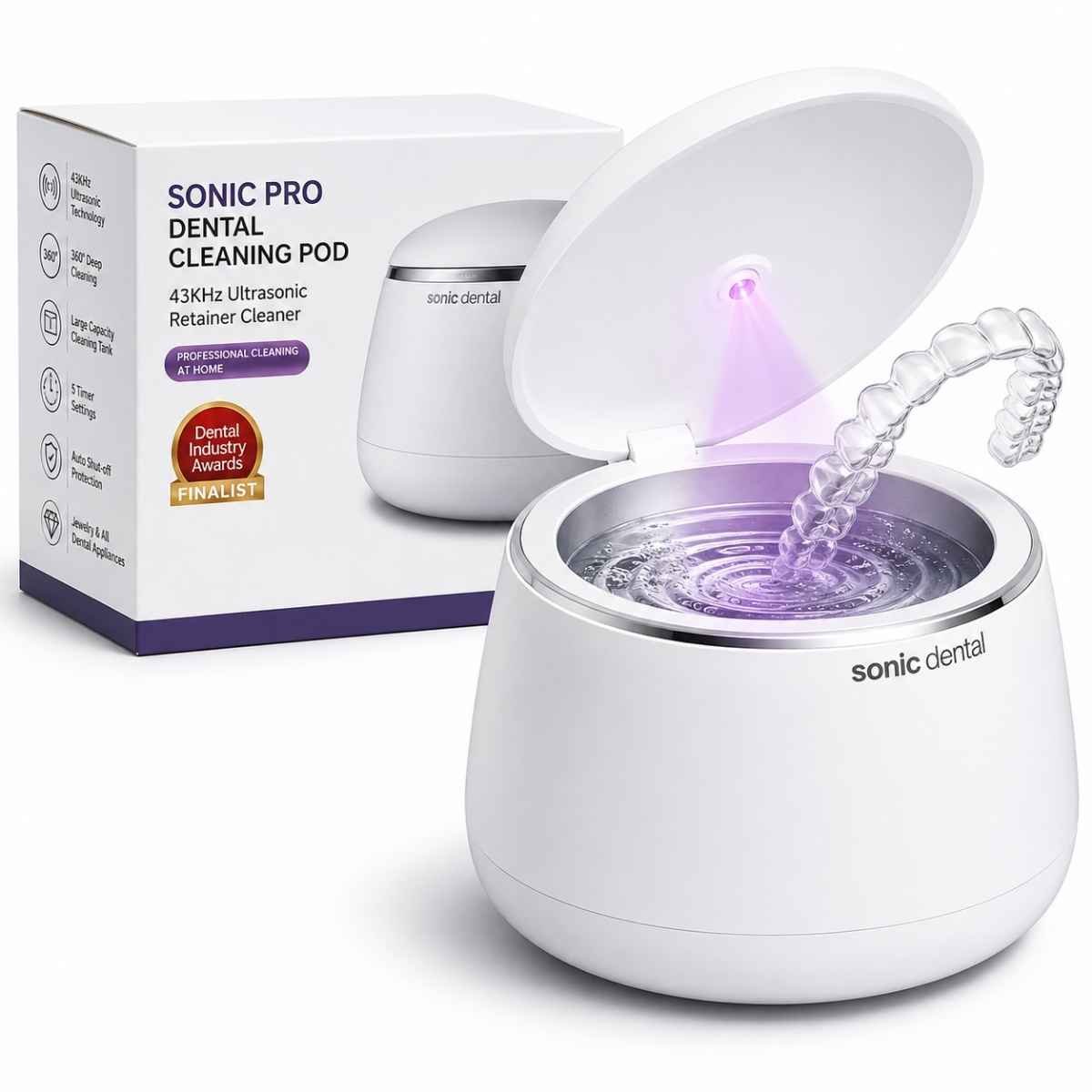
    ~43 kHz, compact design, lowest price point. A reasonable first device if you’re testing whether ultrasonic cleaning is worth adding to your routine before investing in a Zima or iSonic.

    Check Price on Amazon


    Cleaning Tablets

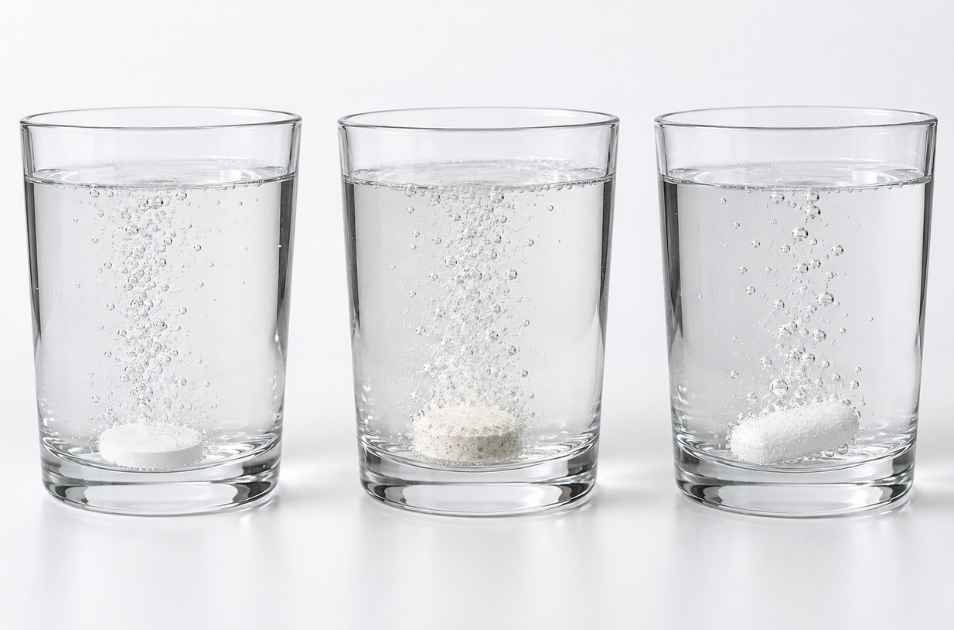
    Cleaning tablets are the simpler, cheaper, and more portable deep-clean option. Drop one in water, soak the retainer, rinse. For the detailed tablet comparison with ingredient analysis and persulfate disclosure, see: Best Retainer Cleaning Tablets.

    Retainer Brite (120-Count) — Best Overall Tablet
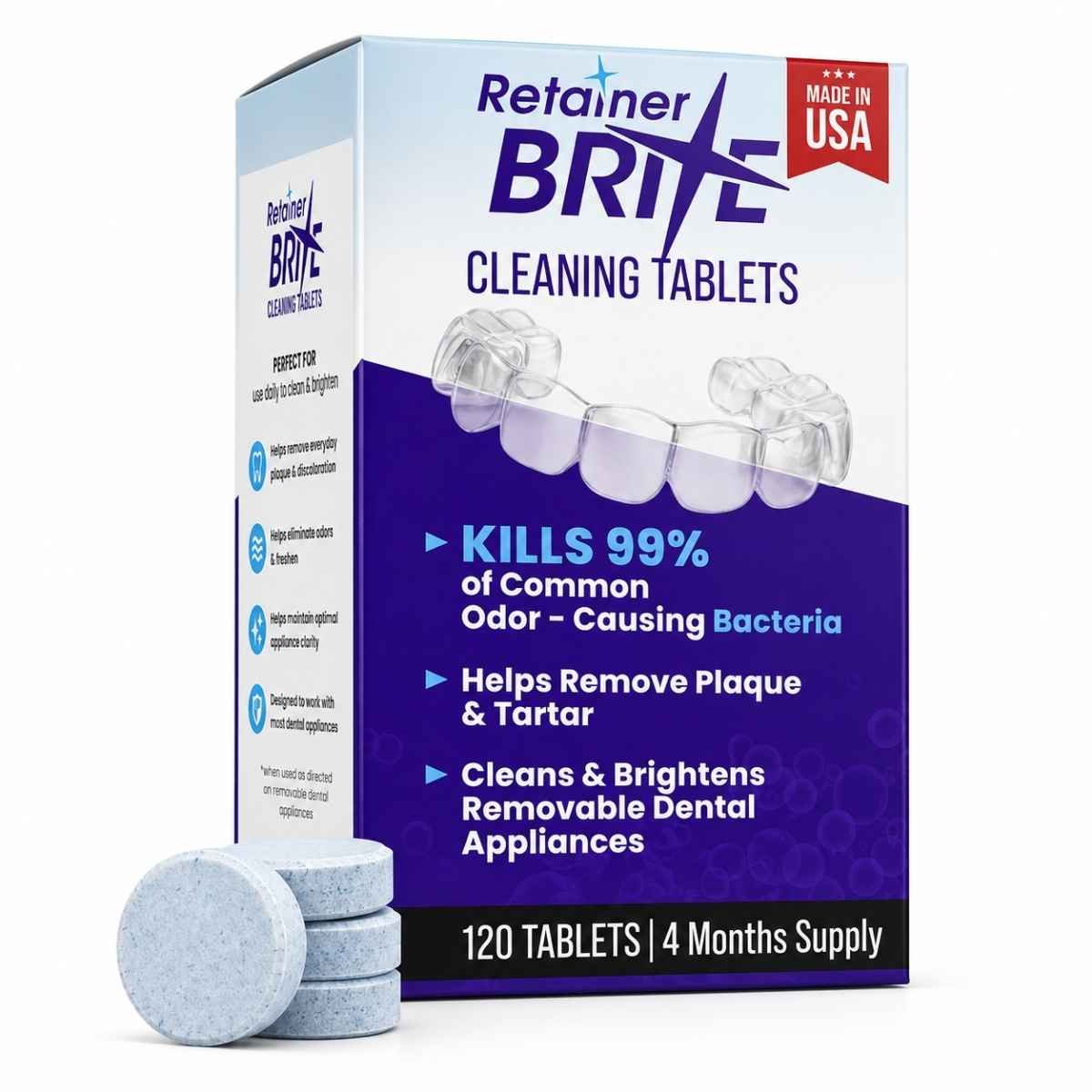
    Retainer Brite 120 count

    The only retainer cleaning tablet with independent biofilm research behind it — a 2023 laboratory study found it removed more established biofilm than comparator tablets (~54.5%). Labelled for retainers, aligners, and dental appliances. The 120-count box provides the best per-tablet value. Contains persulfate (potassium persulfate) — avoid if you have a known sensitivity.

    Check Price on Amazon

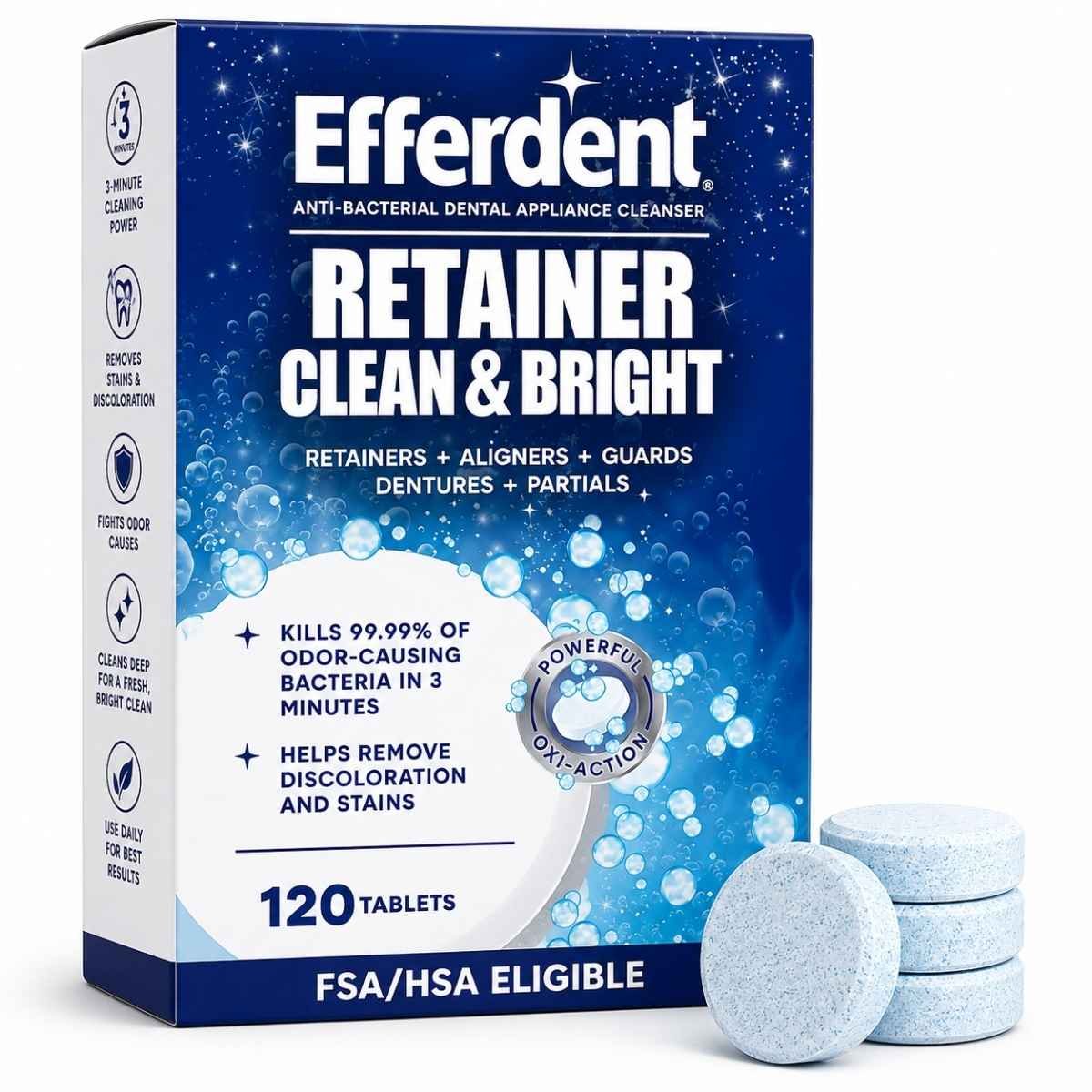
    Efferdent Retainer Clean & Bright — Broadest Appliance Label
    Efferdent Retainer Clean and Bright

    The broadest explicit compatibility labelling: retainers, clear aligners, night guards, and sports mouthguards — all named on the box. Transparent persulfate disclosure. Useful for households with multiple appliance types, since one product covers all of them. For the full analysis of denture-cleaner compatibility, see: Can You Use Denture Cleaner on a Retainer?

    Check Price on Amazon

    M3 Naturals — High-Review Alternative

    M3 Naturals retainer cleaner tablets

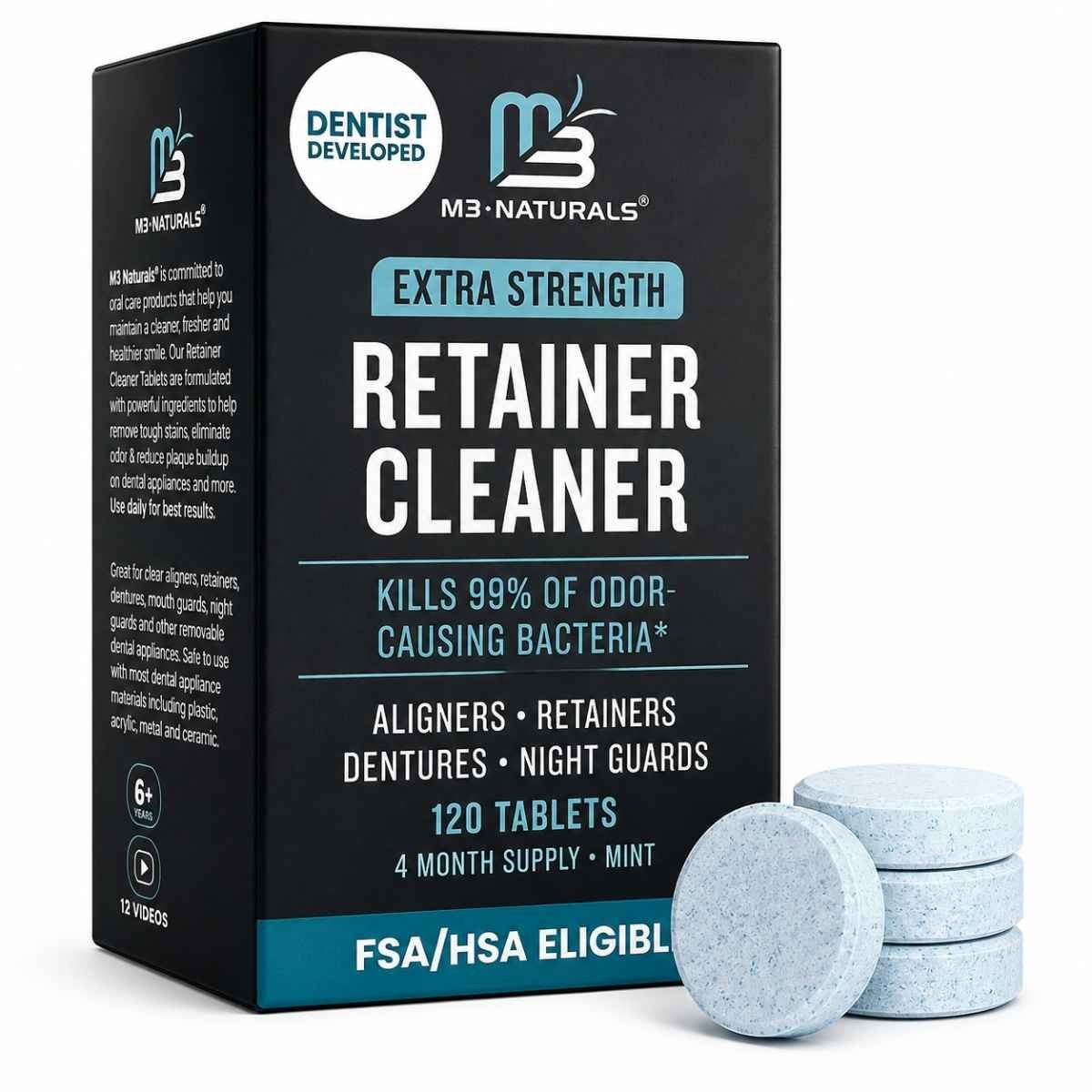
    Large Amazon review base, competitive pricing, labelled for retainers and dental appliances. No independent study identified. A reasonable choice for buyers who prioritise consumer reviews and value over independent evidence.

    Check Price on Amazon

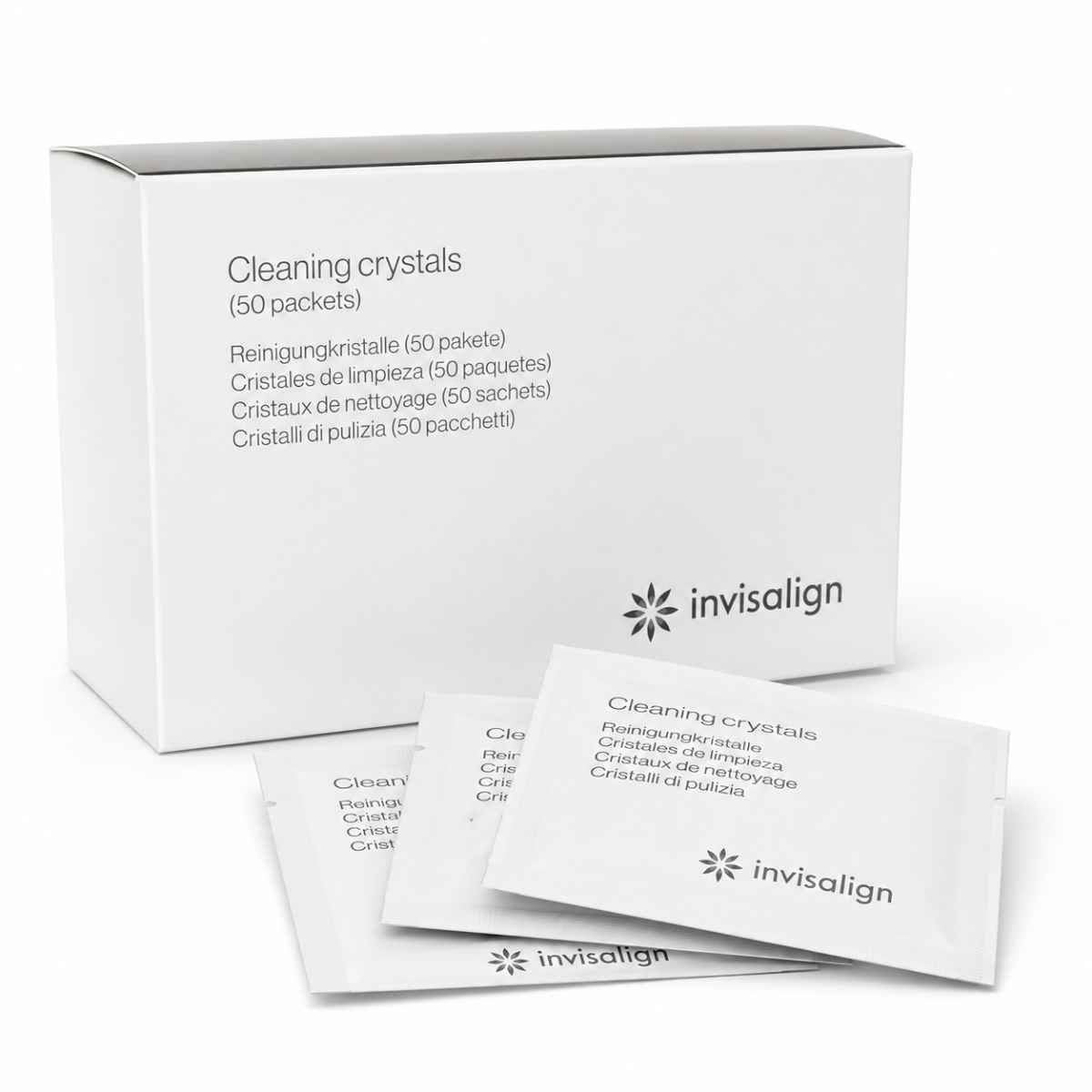
    Invisalign Cleaning Crystals (50-Count) — Official Invisalign Product
    Invisalign Cleaning Crystals 50 count

    Align Technology’s own cleaning product — the only one with direct manufacturer validation for Invisalign and Vivera materials. Higher per-use cost than third-party tablets. The right choice if your orthodontist specifically recommends official Invisalign products, or if you want the certainty of manufacturer-validated compatibility. See: How to Clean Invisalign and Clear Aligners.

    Check Price on Amazon


    Appliance Compatibility

    Not every product works with every appliance. The controlling documents are always the cleaner’s product label and your appliance manufacturer’s care instructions. This table provides a general starting point.

    Appliance Ultrasonic Pod Retainer Tablets Efferdent Retainer Line Invisalign Crystals
    Clear retainer (Essix-type) Generally supported (short-term evidence) Yes, if labelled Yes (labelled) Not specifically validated
    Invisalign / Vivera Official Zima device validated If labelled for aligners Yes (labelled for aligners) Yes (manufacturer product)
    Hawley retainer Limited direct evidence Generally compatible Generally compatible Not specifically validated
    Hard acrylic night guard Check manufacturer If labelled for guards Yes (labelled for guards) Not intended
    Soft / dual-laminate guard Insufficient direct evidence Check manufacturer Check manufacturer Not intended
    Sports mouthguard Check manufacturer If labelled Yes (labelled) Not intended

    This table is a general starting point. Your appliance manufacturer’s specific care instructions always take priority. See: Can You Use Denture Cleaner on a Retainer? for the full compatibility analysis.


    Cost Comparison

    Method Upfront Per Use Annual (1×/week)
    Dish soap + brush (AAO baseline) ~$3 Negligible ~$3–5
    Cleaning tablets only $0 ~$0.10–0.25 ~$5–15
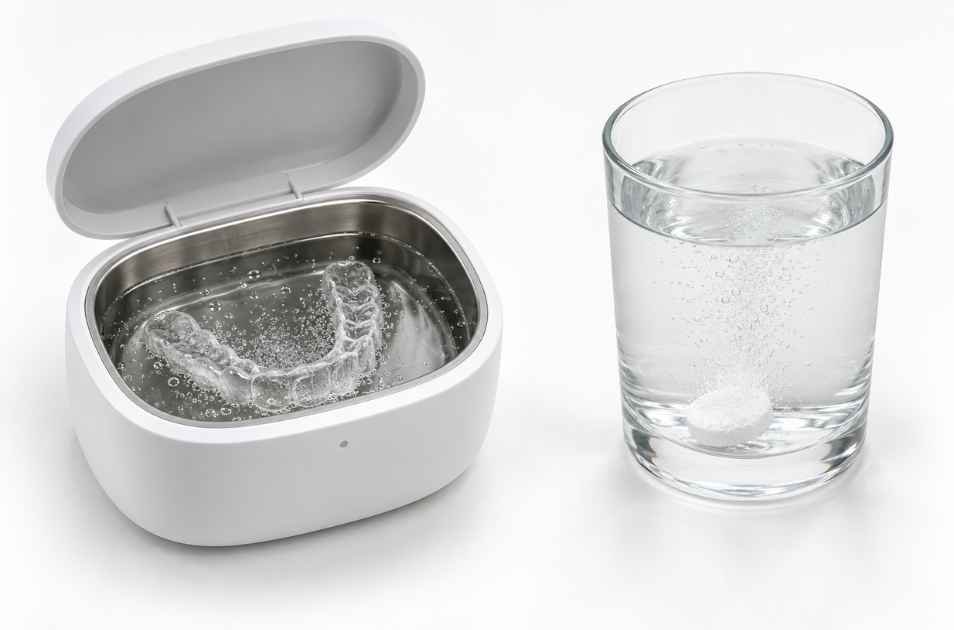
    Ultrasonic + water only $25–100 Electricity $25–100 (year 1)
    Ultrasonic + tablet (recommended) $25–100 ~$0.10–0.25 $30–115 (year 1), $5–15 after
    Invisalign Crystals only $0 Higher per-use Varies by pack pricing

    The daily dish-soap routine is essentially free and handles the fundamentals. Tablets add meaningful weekly deep cleaning at ~$5–15/year — the most cost-effective upgrade. An ultrasonic device is a one-time investment that adds stain removal and crevice access; after the first year, the ongoing cost is just the tablets.

    For the detailed cost and method comparison, see: Ultrasonic vs Tablets.


    Night Guards and Other Appliances

    Many of the products on this page work for night guards as well as retainers — Efferdent’s Retainer Clean & Bright explicitly labels night guards as a compatible appliance. Ultrasonic cleaners with larger tanks (iSonic F3900, UEOFEN) accommodate bulkier night guards more comfortably than compact pods.

    Night guard materials vary more than retainer materials (hard acrylic, soft EVA, dual-laminate), so material-specific care instructions matter more. Check your guard manufacturer’s guidance before using any cleaning product or device. For the full night guard cleaning guide, see: How to Clean a Night Guard.

    If you wear both a retainer and a night guard, a single ultrasonic cleaner and a single box of cleaning tablets handles both appliances. You don’t need separate products for each — just clean them one at a time.


    Frequently Asked Questions

    Do I need a retainer cleaner, or is soap and water enough?

    For many people, the AAO-recommended daily routine — lukewarm rinse, soft brush, mild dish soap — is sufficient. Cleaning products add value when plaque buildup, staining, or odour develops despite consistent daily cleaning, or when the retainer has crevices and textures that manual cleaning doesn’t reach well. Tablets are the simplest and cheapest first addition. An ultrasonic device is an optional upgrade beyond that.

    What’s the best retainer cleaner for Invisalign?

    Align Technology’s own Cleaning Crystals are the only product with direct manufacturer validation for Invisalign materials. Third-party tablets that explicitly list “clear aligners” on the label (Retainer Brite, Efferdent Retainer Clean & Bright) are reasonable and more affordable alternatives. The Zima Dental Pod is the ultrasonic device closest to manufacturer endorsement, since it powers the official Invisalign cleaning station. See: How to Clean Invisalign and Clear Aligners.

    Which is better — an ultrasonic cleaner or tablets?

    Neither universally dominates. Tablets are simpler, cheaper, and more portable. Ultrasonic cleaners are better for stain removal and reaching crevices. The combination — tablet dissolved in ultrasonic tank water — outperformed either method alone in the 2026 clinical research. If you’re choosing one, tablets are the more essential purchase. For the full comparison, see: Ultrasonic vs Tablets.

    Can I use denture cleaning tablets on my retainer?

    Only if the specific product explicitly lists your appliance type on its label. Efferdent’s Retainer Clean & Bright names retainers, aligners, and guards. Other denture-only formulations may not be appropriate. The product label determines compatibility — not the category name. See: Can You Use Denture Cleaner on a Retainer?

    Do ultrasonic cleaners sterilise retainers?

    No. The CDC classifies ultrasonic cleaners as mechanical cleaning devices. They clean — dislodging debris through cavitation. They do not sterilise, which means eliminating all microbial life. “Sterilises” claims on product listings are not supported by independent evidence for consumer retainer pods. See: Do Ultrasonic Retainer Cleaners Actually Work?

    My retainer is cloudy / smells bad. Which cleaner helps?

    For cloudiness: identify the cause first (mineral deposits, biofilm, scratches, or material aging). A tablet soak handles mineral deposits and biofilm. An ultrasonic cleaner may restore clarity more effectively for staining. Scratches and material aging are permanent — no cleaner fixes them. See: How to Remove White Buildup From a Retainer. For odour: thorough daily cleaning + deep soak + case replacement resolves most cases. See: Retainer Smells Bad.

    What about persulfate allergies?

    Both Retainer Brite and Efferdent contain persulfates. A small percentage of people react with tissue irritation or rash. If you have a known persulfate sensitivity, use a persulfate-free tablet formulation or skip tablets entirely (dish soap, vinegar, or ultrasonic with water). See the persulfate section in: Best Retainer Cleaning Tablets.



    Beyond Brushing Oral Health Guide Book
    Get the Free Oral Health Guide
    Download Beyond Brushing — a practical 30,000+ word guide to healthier teeth, gums, and fresher breath after 45.
    Marketing email consent
    • No spam • Unsubscribe anytime


    Medically reviewed
    Reviewed September 11, 2026
    Reviewed for dental accuracy, clinical claims and safety information. Product selection and rankings remain the responsibility of the VerdictLab Editorial Team.
  • Ultrasonic Retainer Cleaner vs Tablets: Which Is Better?

    Ultrasonic Retainer Cleaner vs Tablets: Which Is Better?

    Editorial transparency: VerdictLab earns a commission when you purchase through our Amazon links — this never influences our ratings or recommendations. As an Amazon Associate I earn from qualifying purchases. Full disclosure.

    Last updated: September 2026  |  By: VerdictLab Editorial Team

    Two products, two approaches to the same problem. An ultrasonic cleaner uses high-frequency vibration to mechanically dislodge debris through cavitation. A cleaning tablet uses effervescent chemistry to dissolve biofilm and organic buildup through soaking. Both claim to deep clean your retainer. Neither is a complete solution on its own.

    The question most people are really asking isn’t “which one is better?” — it’s “do I need both, or is one enough?” The answer depends on what you’re trying to accomplish, what your retainer is made of, and how much you’re willing to spend. Here’s how they compare across the endpoints that actually matter.


    Quick Answer

    Neither universally dominates. Tablets are cheaper, simpler, and sufficient for most people’s weekly deep clean. An ultrasonic cleaner reaches surfaces tablets can’t and improves stain/clarity outcomes — but water-only ultrasonic cleaning performed worst in the most relevant clinical study. The combination — a tablet dissolved in ultrasonic tank water — outperformed either method alone in the 2026 clinical research. If you can afford both, use both together. If you’re choosing one, tablets are the more essential purchase.


    Side-by-Side Comparison

    Factor Ultrasonic Cleaner Cleaning Tablets
    How it cleans Mechanical — cavitation bubbles dislodge debris from surfaces Chemical — effervescent agents dissolve biofilm and organic material
    Upfront cost $25–$100+ (device purchase) $0 (just the tablets)
    Ongoing cost Electricity only (if water-only) or + tablet cost ~$0.10–0.25 per tablet
    Stain removal Stronger (independent evidence supports optical improvement) Moderate (dissolves some surface staining)
    Biofilm reduction Water-only: weakest; with tablet: strongest Moderate (~54.5% in one laboratory study)
    Reaches crevices Yes — cavitation accesses micro-textures Limited — relies on chemical contact and diffusion
    Convenience Requires device, water, power outlet, cleanup Cup + water + tablet. Done.
    Travel-friendly Bulky; needs power Individually wrapped; fits anywhere
    Material risk Short-term evidence reassuring; long-term data limited Generally safe when used as labelled; persulfate sensitivity possible


    Cleaning and Biofilm

    This is the comparison that matters most — and where the 2026 clinical research provides the clearest guidance.

    Sambhavaphol et al. tested four protocols on thermoplastic retainers worn by 11 patients: ultrasonic with water only, ultrasonic with 0.12% chlorhexidine, ultrasonic with a cleaning tablet, and a control. The result that reshapes the entire comparison: ultrasonic with water alone performed worst. The chemical agent — not the ultrasonic vibration — drove the difference in microbial contamination. Ultrasonic with chlorhexidine performed best. Ultrasonic with a tablet outperformed water-only.

    Separately, the 2023 PMMA biofilm study tested cleaning tablets against established seven-day biofilm. Retainer Brite removed approximately 54.5% — the most of the three tested tablets, but still only about half. Established biofilm is genuinely difficult to remove by any consumer method.

    What this means in practice: a cleaning tablet on its own provides moderate biofilm reduction. An ultrasonic cleaner with water on its own provides the least. The combination — tablet dissolved in ultrasonic tank water — provides the most. If you’re choosing one method, the tablet is more useful for microbial cleaning. If you have both, using them together is meaningfully better than either alone.


    Stains and Clarity

    This is where the ultrasonic cleaner has its clearest independent advantage.

    Huang et al. (2025/2026) found that ultrasonic cleaning restored optical characteristics (clarity and colour) of stained thermoplastic retainer specimens closer to controls than either mechanical brushing or chemical tablet soaking. The cavitation action dislodges pigment particles embedded in the surface — something a passive chemical soak doesn’t do as effectively.

    Tablets address surface staining through chemical dissolution. This works for mild discolouration but has limited effect on pigments that have penetrated into the material surface. For retainers that have turned yellow or cloudy from coffee, tea, or wine exposure, an ultrasonic cycle may produce noticeably better cosmetic results than a tablet soak alone.

    For the full troubleshooting guide on staining and cloudiness, see: How to Remove White Buildup and Cloudiness From a Retainer.


    Convenience

    Tablets win this category outright. Drop a tablet in a cup of lukewarm water, add the retainer, wait 15–20 minutes, rinse. No device to set up, fill, empty, or store. No power outlet needed. Individually wrapped tablets fit in a pocket or toiletry bag. The entire process requires zero equipment beyond a cup.

    An ultrasonic cleaner requires a countertop location near an outlet, filling and emptying the tank, and occasional cleaning of the tank itself. It’s not complicated, but it’s more steps than a cup-and-tablet setup. For daily or frequent use, the convenience difference compounds. For weekly use, it’s manageable.

    Travel favours tablets decisively. Packing an ultrasonic pod, its power cable, and finding an outlet at a hotel is impractical for most trips. Three individually wrapped tablets fit in a ziplock bag and weigh nothing.


    Cost

    Tablets are dramatically cheaper to start. A 120-count box of Retainer Brite costs roughly the same as the cheapest ultrasonic pod. If you’re choosing one purchase, the tablets stretch further.

    Tablet-only annual cost: at one tablet per week, a 120-count box lasts over two years. Per-year cost: roughly $5–15 depending on the brand and pack size.

    Ultrasonic-only annual cost: the device costs $25–100+ upfront. No ongoing consumable cost if using water only — but water-only is the least effective approach. Add tablet cost if you’re using the combination method (recommended), which brings annual cost to $30–115+.

    Combination annual cost: device ($25–100 one-time) + tablets ($5–15/year). First-year total: $30–115. Subsequent years: just the tablet cost.

    If budget determines the decision, tablets alone provide meaningful cleaning at minimal ongoing cost. The ultrasonic device is a one-time investment that adds value primarily through stain removal and crevice access — real benefits, but not essential benefits if cost is the constraint.


    Material Safety

    Both methods carry low but non-zero material considerations.

    Ultrasonic: short-term studies on thermoplastic retainers found no significant changes in surface roughness, colour, or microhardness during ultrasonic cleaning. Align Technology sells an official ultrasonic cleaner for Invisalign. These are positive signals, but long-term data (months to years of daily use) doesn’t exist for most consumer pods. Follow your appliance manufacturer’s instructions.

    Tablets: generally safe when used as labelled with compatible appliances. The main concern is persulfate sensitivity — a small percentage of people react to persulfate-containing tablets with tissue irritation or allergic responses. Products like Retainer Brite and Efferdent disclose persulfate content. If you have a known sensitivity, use persulfate-free tablets or skip tablets entirely.

    Neither method replaces manufacturer care instructions. If your orthodontist or retainer brand specifies a particular cleaning approach, follow that guidance regardless of what the evidence says about the general category. For the full evidence on ultrasonic material safety, see: Do Ultrasonic Retainer Cleaners Actually Work?


    Using Both Together

    The evidence points here. The strongest cleaning protocol tested in the 2026 clinical study combined ultrasonic mechanical action with a chemical cleaning agent. The combination addresses both endpoints: cavitation dislodges debris and reaches crevices (mechanical cleaning), while the chemical agent reduces microbial contamination (antimicrobial action).

    The practical method: dissolve a cleaning tablet in the ultrasonic tank water, then run the cycle. Or drop the tablet into the filled tank and let it fizz during the cycle. Either way, the appliance is exposed to both cleaning mechanisms simultaneously. This is the approach that outperformed water-only ultrasonic, tablet-only soaking, and the control in the clinical research.

    If your ultrasonic cleaner’s manual permits cleaning solutions in the tank (most do), this is the recommended weekly deep-clean protocol. If the manual specifies water-only, soak in a tablet solution separately first, rinse, then run a water-only ultrasonic cycle for the mechanical step.


    Who Should Choose Which

    Choose tablets alone if:

    • Budget is the primary concern
    • You travel frequently and need portable cleaning
    • Your retainer stays reasonably clean with daily brushing plus weekly tablet soaks
    • You don’t have significant staining or cloudiness issues
    • You want the simplest possible deep-clean routine

    Add an ultrasonic cleaner if:

    • Staining or cloudiness persists despite regular tablet soaking
    • Your retainer has complex geometry (clasps, crevices, textured surfaces) that manual cleaning misses
    • You wear a night guard alongside a retainer and want one device that handles both
    • You value the combined cleaning approach supported by clinical evidence
    • You’re willing to invest $25–100 upfront for a long-lasting device

    Skip both if:

    • Your daily routine of brushing with dish soap keeps the retainer clean and odour-free
    • Your orthodontist hasn’t recommended any supplementary cleaning
    • You swap Invisalign trays every 1–2 weeks and staining/buildup doesn’t develop in that timeframe

    For product recommendations: Best Ultrasonic Retainer Cleaner and Best Retainer Cleaning Tablets. For the complete product comparison across all categories, see: Best Retainer Cleaner.


    Frequently Asked Questions

    Can I use tablets instead of an ultrasonic cleaner?

    Yes. Tablets alone provide meaningful biofilm reduction and are sufficient for most people’s weekly deep-clean needs. An ultrasonic cleaner adds stain removal and crevice access, but it’s not necessary for basic retainer hygiene. The AAO’s recommended routine (daily brushing + periodic cleaning products) doesn’t require a device.

    Is an ultrasonic cleaner worth it if I already use tablets?

    It depends on your situation. If your retainer stays clean, clear, and odour-free with daily brushing and weekly tablet soaks, the device adds convenience rather than necessity. If you struggle with persistent staining, cloudiness, or odour despite tablet use, the ultrasonic action addresses the mechanical cleaning that tablets can’t fully accomplish.

    Which is better for odour?

    Odour comes from bacterial biofilm. Tablets address it through chemical dissolution of the biofilm. Ultrasonic cleaning with water alone is less effective at reducing odour-causing bacteria. The combination (tablet + ultrasonic) addresses both the bacteria and the physical debris they anchor to. For persistent odour, see: How to Remove Bad Smell From a Retainer.

    Which is better for stains?

    Ultrasonic cleaning. The Huang et al. study found ultrasonic treatment restored optical characteristics more effectively than either mechanical brushing or chemical tablet soaking for stained thermoplastic retainer specimens. If cosmetic clarity is your concern, an ultrasonic cleaner adds more value than tablets alone. For the full troubleshooting guide, see: How to Remove White Buildup and Cloudiness From a Retainer.

    Do I need to buy a tablet AND an ultrasonic cleaner?

    No. Tablets alone are sufficient for most people. The ultrasonic cleaner is an optional upgrade. The combination is the strongest approach based on current evidence, but a tablet-only routine is a significant improvement over brushing alone — and far better than the water-only ultrasonic approach that some product marketing implies is sufficient.


    Beyond Brushing Oral Health Guide Book
    Get the Free Oral Health Guide
    Download Beyond Brushing — a practical 30,000+ word guide to healthier teeth, gums, and fresher breath after 45.
    Marketing email consent
    • No spam • Unsubscribe anytime


  • Best Ultrasonic Retainer Cleaners of 2026: Specs Compared

    Best Ultrasonic Retainer Cleaners of 2026: Specs Compared

    Editorial transparency: VerdictLab earns a commission when you purchase through our Amazon links — this never influences our ratings or recommendations. Product selections are based on verified specifications, manufacturer documentation, and independent evidence. As an Amazon Associate I earn from qualifying purchases. Full disclosure.

    Last updated: September 2026  |  By: VerdictLab Editorial Team

    How we selected these products: We researched manufacturer specifications, reviewed independent clinical evidence on ultrasonic cleaning, verified current Amazon availability, and compared published specs across devices. VerdictLab has not yet performed hands-on testing of these products. Specifications are sourced from manufacturer materials and Amazon listings — not our own measurements. When we perform physical testing, this page will be updated with first-hand results.

    Ultrasonic retainer cleaners are small countertop pods that vibrate at ultrasonic frequencies — typically 42–45 kHz — to clean dental appliances through cavitation. The concept is sound: microscopic bubbles form and collapse rapidly, dislodging debris from surfaces a toothbrush can’t reach. The marketing around them is less sound: “sterilises,” “kills 99.9%,” and “10× deeper” are claims that exceed what independent evidence supports.

    We compared four ultrasonic cleaners currently available on Amazon, focusing on verifiable specifications rather than marketing language. For the evidence on what ultrasonic cleaning actually does (and doesn’t do), see: Do Ultrasonic Retainer Cleaners Actually Work?

    The most important finding from that evidence review applies here too: adding a compatible cleaning tablet to the tank water substantially improves outcomes. Water-only ultrasonic cleaning performed worst in the most relevant 2026 clinical study. Every device below works better with a cleaning agent than without one.

    Quick Picks

    • Most established brand: Zima Dental Pod — ~42 kHz, ~150 mL, compact, powers the official Invisalign ultrasonic cleaner
    • Largest tank: iSonic F3900 — ~42 kHz, 200 mL, 20W, established ultrasonic-cleaner manufacturer
    • Best value candidate: UEOFEN GH-UC100 — ~45 kHz, ~200 mL, UV feature, competitive pricing
    • Budget entry: Sonic Pro Dental Pod — ~43 kHz, compact design


    Comparison Table

    Device Frequency Tank Capacity UV Feature Brand Background Best For
    Zima Dental Pod ~42 kHz ~150 mL No Powers official Invisalign cleaner Brand trust / Invisalign users
    iSonic F3900 ~42 kHz 200 mL No Established ultrasonic manufacturer Larger appliances / night guards
    UEOFEN GH-UC100 ~45 kHz ~200 mL Yes (marketed) Consumer electronics brand Value / UV interest
    Sonic Pro Dental Pod ~43 kHz Compact Varies by model Consumer dental brand Budget entry

    Specifications from manufacturer materials and Amazon listings. Prices checked September 2026 — verify on Amazon for current pricing.


    What Actually Matters in an Ultrasonic Cleaner

    Most product listings emphasise features that sound technical but don’t meaningfully differentiate one pod from another. Here’s what actually affects your experience:

    Tank size. This is the most practical specification. A larger tank fits larger appliances — Hawley retainers with wire extensions, thicker night guards, sports mouthguards — without stacking or cramming. A compact ~150 mL tank fits most clear retainers and aligners but may be tight for bulkier appliances. If you wear a night guard alongside a retainer, a 200 mL tank gives you more room.

    Whether your appliance fits flat. An appliance sitting flat on the tank bottom gets more even cavitation exposure than one propped at an angle or folded to fit. Before buying, compare your appliance’s dimensions to the tank’s usable interior — not the listed capacity, which includes water volume above the appliance.

    Whether you’ll use a cleaning agent. This matters more than any specification on the device itself. The 2026 clinical study showed water-only ultrasonic cleaning was the least effective protocol. Adding a compatible cleaning tablet to the tank water is where the meaningful improvement comes from. Any pod on this list performs better with a tablet than without one.

    What doesn’t matter as much as marketing suggests: the exact frequency (42 vs 45 vs 52 kHz — no evidence establishes one as superior for retainer cleaning), UV features (unproven incremental benefit for most pods), and “kills 99.9%” claims (manufacturer marketing, not independently verified for most consumer devices). For the full breakdown of these claims, see: Do Ultrasonic Retainer Cleaners Actually Work?


    Zima Dental Pod

    Zima Dental Pod ultrasonic retainer cleaner

    Frequency: ~42 kHz  |  Tank: ~150 mL  |  UV: No  |  Notable: Powers the official Invisalign Ultrasonic Cleaning Station

    Zima is the strongest brand-trust pick in this category for one reason: Align Technology — the maker of Invisalign — chose Zima to power its official ultrasonic cleaning station. That’s not a trivial endorsement. Align Technology presumably validated Zima’s technology against its own aligner materials before putting the Invisalign name on it. No other consumer pod on Amazon carries that level of manufacturer backing from a major dental brand.

    The standalone Zima Dental Pod (sold separately from the Invisalign-branded bundle) uses the same core ultrasonic technology in a compact form factor. The ~150 mL tank fits most clear retainers and aligners comfortably. For bulkier appliances — thick night guards, Hawley retainers with wide wire extensions — the tank may be tight. A one-year warranty is standard from Zima.

    The limitation is that the Invisalign association doesn’t mean this specific Amazon-listed pod has been individually validated by Align Technology. The official Invisalign cleaning station is a distinct product sold through the Invisalign store. The standalone Zima pod shares the brand and underlying technology, but the precise configuration may differ. The association is a strong signal, not an identity.

    Check Price on Amazon


    iSonic F3900

    iSonic F3900 ultrasonic retainer cleaner

    Frequency: ~42 kHz  |  Tank: 200 mL (~140 mL max fill)  |  Power: 20W  |  UV: No  |  Auto-off: 5-minute  |  Warranty: 1 year

    iSonic is an established ultrasonic-cleaner manufacturer — they make cleaners for jewellery, eyeglasses, and dental applications. The F3900 is their retainer-specific model. That manufacturing background matters because ultrasonic cleaner design isn’t trivial: transducer quality, tank material, vibration consistency, and build durability all affect real-world performance. A company that’s been making ultrasonic cleaners for years is a different proposition from a brand that repackages a generic OEM pod.

    The 200 mL tank (roughly 140 mL usable fill) is the largest among these four devices. It fits bulkier appliances — night guards, Hawley retainers, larger aligner trays — without the cramming that smaller tanks require. The fixed (non-removable) tank is the trade-off: you fill, use, and empty the tank in place, which makes post-cycle cleanup slightly less convenient than a removable-tank design.

    At 20W with a 5-minute auto-off cycle, the F3900 provides consistent operation without requiring you to time the cycle yourself. The 110V power supply means it’s US-outlet only. One-year warranty.

    Forbes Vetted included the iSonic in their ultrasonic retainer cleaner roundup, which is both a competitive signal (the SERP isn’t empty) and a credibility signal (an independent editorial outlet found it worth recommending).

    Check Price on Amazon


    UEOFEN GH-UC100

    UEOFEN GH-UC100 ultrasonic retainer cleaner

    Frequency: ~45 kHz  |  Tank: ~200 mL  |  UV: Yes (marketed)  |  Modes: Multiple (5/10-min reported)

    The UEOFEN positions itself as a value option with a larger tank and a UV feature at a competitive price point. The ~200 mL tank matches the iSonic’s capacity, and the ~45 kHz frequency is slightly higher — though as we’ve noted throughout this cluster, no evidence establishes one frequency as superior to another for retainer cleaning.

    The UV feature is the primary differentiator from the Zima and iSonic. UV-C light can inactivate microorganisms under suitable conditions. Whether the UV implementation in this specific pod delivers meaningful incremental benefit beyond the ultrasonic cleaning itself is not independently established. VerdictLab treats UV features as a potential supplementary mechanism, not a proven advantage — consistent with the evidence reviewed in our ultrasonic evidence article.

    The UEOFEN carries more brand-recognition risk than Zima or iSonic. It doesn’t have the Invisalign association of Zima or the multi-category ultrasonic-manufacturing history of iSonic. The consumer retainer-pod market has significant private-label and OEM overlap — multiple brands can sell similar or identical hardware under different names. This doesn’t mean the product is bad. It means the brand stability and long-term support signals are weaker than for the more established manufacturers.

    At its price point, the UEOFEN is a reasonable value candidate for buyers who want a larger tank and UV feature without paying premium pricing. Verify the current seller, warranty terms, and return policy before purchasing.

    Check Price on Amazon


    Sonic Pro Dental Cleaning Pod

    Sonic Pro Dental Cleaning Pod ultrasonic retainer cleaner

    Frequency: ~43 kHz  |  Tank: Compact  |  Design: Budget-friendly entry

    The Sonic Pro is the budget entry in this comparison. At ~43 kHz, it operates in the same frequency range as the other devices. The compact design makes it portable but may limit the size of appliances that fit comfortably in the tank — check dimensions against your retainer or night guard before ordering.

    Detailed manufacturer specifications are less extensively documented than for Zima or iSonic. This is common at the budget end of the ultrasonic-cleaner market, where product listings emphasise marketing claims (“deep clean,” “kills bacteria”) over verifiable technical data. The core ultrasonic function — generating cavitation bubbles to dislodge debris — is the same physics regardless of price point. What varies is build quality, tank material, vibration consistency, and longevity.

    For a first-time buyer testing whether an ultrasonic cleaner is worth adding to their routine, the Sonic Pro’s lower price point reduces the commitment. If you find the ultrasonic approach useful, upgrading to a Zima or iSonic for better build quality and brand support is a natural next step. If you find you rarely use it, you’ve spent less finding that out.

    Check Price on Amazon


    Claims to Ignore

    The ultrasonic retainer cleaner market is dense with marketing language that sounds scientific but isn’t supported by independent evidence. When evaluating any device — including the four above — discount the following:

    “Sterilises your retainer.” No consumer ultrasonic pod achieves sterilisation as the term is properly defined (elimination of all microbial life). The CDC classifies ultrasonic cleaners as mechanical cleaning devices. These pods clean. They don’t sterilise.

    “Kills 99.9% of bacteria.” This is a manufacturer marketing claim tied to specific test conditions that may not reflect real-world use. Unless the exact test protocol, organism, and conditions are published and independently verified, treat this as marketing rather than evidence.

    “10× deeper cleaning.” No meaningful independent standard was identified for this claim. Deeper than what? Measured how? This is comparative marketing without a defined comparison.

    “Higher frequency is safer/better.” Frequency is a specification, not a safety score. No available evidence establishes 45 kHz or 52 kHz as materially safer or more effective for retainers than 42 kHz. The cleaning agent you use matters far more.

    “UV sterilisation included.” UV-C light can inactivate microorganisms, but whether the UV feature in a specific consumer pod delivers meaningful benefit is unproven for most devices. UV is a supplementary feature, not a reason to choose one pod over another based on current evidence.


    Should You Add a Tablet?

    Yes — if your device manual and your appliance manufacturer’s instructions both permit it.

    The 2026 Sambhavaphol et al. clinical study found that ultrasonic cleaning with water alone was the least effective protocol for microbial contamination on thermoplastic retainers. Adding a compatible chemical agent (in that study, 0.12% chlorhexidine or a cleaning tablet) substantially improved outcomes. The ultrasonic vibration contributed to cleaning, but the chemical did the heavier antimicrobial lifting.

    Dissolve a retainer cleaning tablet in the tank water before starting the cycle, or let it fizz during the cycle — either approach puts the chemical agent in contact with the appliance while cavitation does the mechanical work. For tablet recommendations, see: Best Retainer Cleaning Tablets. For the full evidence comparison, see: Ultrasonic vs Tablets.


    Frequently Asked Questions

    Which ultrasonic retainer cleaner is best?

    The Zima Dental Pod has the strongest brand credibility (powers the official Invisalign cleaner). The iSonic F3900 has the largest tank and the most established ultrasonic-manufacturing background. The UEOFEN offers value with a larger tank and UV feature. The Sonic Pro is the budget entry. “Best” depends on your priorities: brand trust, tank size, features, or price.

    Do I need an ultrasonic cleaner for my retainer?

    No. The AAO’s recommended routine — daily brushing with dish soap and periodic cleaning tablet soaks — handles retainer care without any device. An ultrasonic cleaner is an optional supplement that can improve stain removal and reach areas manual cleaning misses. It’s a convenience, not a necessity. For the full care routine, see: How to Clean a Retainer.

    Are ultrasonic cleaners safe for Invisalign?

    Align Technology sells an official ultrasonic cleaner (powered by Zima) for Invisalign and Vivera. That’s a strong manufacturer compatibility signal. Third-party pods using similar frequencies haven’t been individually validated by Align Technology but are generally supported by short-term material research showing no significant damage to thermoplastic retainer specimens. Follow your orthodontist’s guidance. See: Do Ultrasonic Retainer Cleaners Actually Work?

    Can I use an ultrasonic cleaner for my night guard?

    Night guard materials vary (hard acrylic, soft EVA, dual-laminate). Check your guard manufacturer’s care instructions. The short-term evidence on thermoplastic materials is generally reassuring, but soft and dual-laminate guards may respond differently. The iSonic F3900’s larger tank is better suited to bulkier night guards than compact pods. See: How to Clean a Night Guard.

    Does the UV feature matter?

    UV-C can inactivate microorganisms under suitable conditions, but whether the UV implementation in consumer retainer pods delivers meaningful incremental benefit is unproven for most devices. It shouldn’t be the deciding factor between pods. The cleaning agent you use in the tank matters far more than whether the pod has a UV light.

    How often should I use an ultrasonic cleaner?

    A few times a week, or as a supplement to your weekly deep clean. It doesn’t replace daily brushing — the AAO’s recommended daily routine (rinse, brush with dish soap) remains the foundation. The ultrasonic cycle adds deeper cleaning that manual methods may miss.


    Beyond Brushing Oral Health Guide Book
    Get the Free Oral Health Guide
    Download Beyond Brushing — a practical 30,000+ word guide to healthier teeth, gums, and fresher breath after 45.
    Marketing email consent
    • No spam • Unsubscribe anytime


    Sources & References

    Sambhavaphol P et al. (2026) — Ultrasonic cleaning with chemical agents on thermoplastic retainers
    https://pubmed.ncbi.nlm.nih.gov/41313277/

    Huang X et al. (2025/2026) — Cleaning protocols on surface roughness and optical properties
    https://pubmed.ncbi.nlm.nih.gov/41423578/

    CDC — Cleaning (Disinfection and Sterilization Guidelines)
    https://www.cdc.gov/infection-control/hcp/disinfection-sterilization/cleaning.html

    Align Technology — Invisalign Ultrasonic Cleaning Station Bundle
    Invisalign Ultrasonic Cleaner Powered by Zima Dental®

    American Association of Orthodontists — How to Clean Your Retainer

    Dr. Eva-Maria Moll

  • Best Retainer Cleaning Tablets (2026): 3 Picks Compared

    Best Retainer Cleaning Tablets (2026): 3 Picks Compared

    Editorial transparency: VerdictLab earns a commission when you purchase through our Amazon links — this never influences our ratings or recommendations. As an Amazon Associate I earn from qualifying purchases. Full disclosure.

    Last updated: September 2026  |  By: VerdictLab Editorial Team

    Retainer cleaning tablets are the simplest upgrade to a daily dish-soap routine. Drop one in water, soak your retainer for 15–20 minutes, rinse. They dissolve biofilm, reduce staining, and address odour more effectively than water or soap alone — and they cost roughly $0.10–0.25 per use.

    The category is smaller than it looks. Once you strip away the private-label repackaging, there are only a handful of distinct formulations on Amazon. We compared the three with the strongest combination of label transparency, appliance compatibility, independent evidence, and Amazon availability.

    One important note before the reviews: cleaning tablets are not sterilisers. Manufacturer claims like “kills 99.9% of odour-causing bacteria” are test-condition-specific marketing, not independently verified results for every appliance in every situation. What tablets reliably do is clean — dissolving organic buildup and reducing the bacterial load on the appliance surface. That’s useful. It’s just not the same as what the packaging sometimes implies.

    Quick Picks

    • Best overall: Retainer Brite (120-count) — independent biofilm study evidence, widely recommended, retainer/aligner/guard labelled
    • Best for broad appliance use: Efferdent Retainer Clean & Bright — explicit label for retainers, aligners, night guards, sports guards; manufacturer persulfate disclosure
    • High-review alternative: M3 Naturals — large Amazon review base, competitive pricing
    • Official Invisalign option: Invisalign Cleaning Crystals — direct manufacturer validation for Invisalign/Vivera materials


    Comparison Table

    Product Count Labelled Appliances Contains Persulfate Independent Evidence Best For
    Retainer Brite 120 Retainers, aligners, guards Yes Yes (PMMA biofilm study) Overall / evidence-backed
    Efferdent Retainer Clean & Bright Varies Retainers, aligners, night guards, sports guards Yes (disclosed) Manufacturer testing Broad compatibility
    M3 Naturals Varies Retainers, dental appliances Check label No independent study identified Value / high reviews
    Invisalign Cleaning Crystals 50 Invisalign / Vivera only Check label Manufacturer validated Invisalign users

    Prices and pack sizes checked September 2026 — verify on Amazon for current listings.


    Retainer Brite (120-Count)

    Retainer Brite retainer cleaning tablets 120 count

    Retainer Brite is the most widely recommended cleaning tablet for dental appliances, and the only product in this comparison with independent research behind it.

    A 2023 ex-vivo study (PMID 37266911) tested commercial orthodontic cleaning tablets against established seven-day biofilm on PMMA specimens. Retainer Brite removed more biofilm than the two comparator tablets (Kukis and Dontodent) — though the mean removal was approximately 54.5%, meaning even the best-performing tablet left roughly half the established biofilm intact. This is useful context: tablets help meaningfully with biofilm, but they don’t achieve complete removal of mature bacterial colonies on their own. Daily brushing prevents the biofilm from establishing in the first place; the tablet handles what brushing leaves behind.

    The 120-count box provides over two years of weekly use at one tablet per session — the best per-tablet value among the options here. Retainer Brite contains potassium persulfate; see the persulfate section below if you have sensitivity concerns.

    Labelled for retainers, clear aligners, and dental appliances. Compatible with ultrasonic cleaners — dissolve the tablet in the tank water for combined chemical and mechanical cleaning, consistent with the 2026 clinical study’s finding that chemical-assisted ultrasonic cleaning outperformed water-only.

    Check Price on Amazon


    Efferdent Retainer Clean & Bright

    Efferdent Retainer Clean and Bright dental appliance cleaning tablets

    Efferdent’s appliance-specific line has the broadest explicit compatibility labelling of any product in this comparison. The Retainer Clean & Bright label specifically names retainers, clear aligners, night guards, and sports mouthguards as intended appliance types. That’s not a blogger’s interpretation — it’s printed on the box and confirmed on Efferdent’s own website.

    This matters because the “Can I use denture cleaner on my retainer?” question — which generates significant search volume — has a clear answer for this specific product: the manufacturer says yes, for these specific appliance types. Efferdent also makes traditional denture-only products, so the distinction between product lines is worth understanding. For the full analysis, see: Can You Use Denture Cleaner on a Retainer?

    Efferdent transparently discloses that its products contain persulfates and includes a warning about potential allergic reactions. This disclosure is a trust signal — the manufacturer is telling you what’s in the product and who should avoid it, rather than burying ingredients in fine print.

    Efferdent’s manufacturer claims include “kills 99.99% of odor-causing bacteria” in a specified time frame. This is a manufacturer-label claim based on their testing conditions — not an independently published result. VerdictLab treats it as what the manufacturer reports, not as independently validated evidence.

    Check Price on Amazon


    M3 Naturals Retainer Cleaner Tablets

    M3 Naturals retainer cleaner tablets

    M3 Naturals has built a large Amazon review base in the retainer cleaning tablet category. The product is labelled for retainers and dental appliances, and it’s competitively priced against Retainer Brite on a per-tablet basis.

    The honest limitation: no independent study was identified that specifically tested M3 Naturals tablets for biofilm removal, stain reduction, or material safety on dental appliances. The product’s reputation rests on its Amazon review profile and consumer feedback rather than on published research. This doesn’t mean it’s ineffective — it means the evidence basis is different from Retainer Brite’s, which has at least one independent laboratory study behind it.

    For buyers who prioritise consumer reviews and competitive pricing over independent evidence, M3 Naturals is a reasonable choice. For buyers who want the strongest evidence-backed option, Retainer Brite is the better match. Both serve the same fundamental purpose: dissolving biofilm and reducing odour through effervescent soaking.

    Check the ingredient list for persulfate content if you have sensitivity concerns — product formulations can change between batches.

    Check Price on Amazon


    Invisalign Cleaning Crystals (Reference)

    Invisalign Cleaning Crystals 50 count

    Invisalign Cleaning Crystals are Align Technology’s own cleaning product — the only one with direct manufacturer validation for Invisalign aligners and Vivera retainers. They’re designed to dissolve in water and clean the aligner through soaking, and an enhanced version (Cleaning Crystals+) is available as an addition to the official Invisalign ultrasonic cleaner.

    The 50-count pack is the standard Amazon listing. The per-use cost is higher than Retainer Brite or Efferdent, which reflects the manufacturer-premium pricing. Whether that premium is worth it depends on how much you value the direct Align Technology compatibility guarantee versus the lower cost of a third-party alternative.

    For Invisalign users whose orthodontist specifically recommends official cleaning products, these are the intended option. For Invisalign users comfortable with third-party tablets that list “clear aligners” on the label, Retainer Brite and Efferdent’s retainer line are less expensive per use and serve the same purpose.

    For the full Invisalign care guide, see: How to Clean Invisalign and Clear Aligners.

    Check Price on Amazon


    About Persulfates

    Persulfates (potassium persulfate, sodium persulfate) are oxidising agents found in many effervescent dental-appliance cleaners, including Retainer Brite and Efferdent. They contribute to the cleaning action and the fizzing effect.

    Most people use persulfate-containing tablets without any reaction. A small percentage of individuals have persulfate sensitivity, which can cause tissue irritation, rash, or in rare cases more significant allergic responses. Efferdent explicitly discloses its persulfate content and includes an allergy warning — a transparency practice that other tablet brands should follow but don’t always.

    If you have a known persulfate allergy, avoid any tablet containing persulfates and use an alternative cleaning method: mild dish soap, diluted white vinegar, or an ultrasonic cleaner with plain water. If you develop irritation after using a new cleaning tablet, stop using it and mention the reaction to your dentist or orthodontist.

    Persulfate-free formulations exist — some brands market this explicitly. Verify by checking the ingredient list rather than relying on front-of-package “natural” or “gentle” marketing, which doesn’t always mean persulfate-free.


    Using Tablets With an Ultrasonic Cleaner

    This is the combination the evidence supports most strongly. The 2026 Sambhavaphol et al. clinical study found that ultrasonic cleaning with a compatible chemical agent outperformed both water-only ultrasonic and tablet soaking alone for microbial contamination on thermoplastic retainers.

    The practical approach: dissolve a cleaning tablet in the ultrasonic tank water before starting the cycle, or drop it in and let it fizz during the cycle. The tablet provides the chemical cleaning action while the ultrasonic cavitation provides mechanical cleaning — addressing both debris and bacterial contamination simultaneously.

    Check your ultrasonic cleaner’s manual before adding tablets — most permit cleaning solutions, but some specify water-only use. If your pod’s manual doesn’t mention tablets, a conservative approach is to soak in a tablet solution separately, then rinse and run a water-only ultrasonic cycle for the mechanical step.

    For the full ultrasonic vs tablet comparison, see: Ultrasonic Retainer Cleaner vs Cleaning Tablets. For device recommendations, see: Best Ultrasonic Retainer Cleaner.


    Frequently Asked Questions

    How often should I use cleaning tablets?

    Once or twice a week as a supplement to daily brushing. Tablets handle the deeper cleaning that a toothbrush and dish soap leave behind. If you notice buildup, staining, or odour developing between weekly tablet soaks, increase to twice a week. Tablets don’t replace daily brushing — they complement it.

    Can I soak my retainer in a tablet overnight?

    Most tablet labels specify a soak time of 15–20 minutes. Soaking significantly longer than recommended may affect some retainer materials. Follow the packaging directions. If you want to soak your retainer while you sleep, use plain lukewarm water — it keeps the retainer moist without the extended chemical exposure.

    Are cleaning tablets safe for Invisalign?

    Align Technology’s own Cleaning Crystals are the safest option for Invisalign — direct manufacturer validation. Third-party tablets that list “clear aligners” on the label (Retainer Brite, Efferdent Retainer Clean & Bright) provide product-level compatibility evidence. Follow your orthodontist’s specific instructions. See: How to Clean Invisalign and Clear Aligners.

    What’s the difference between retainer tablets and denture tablets?

    “Denture cleaner” is a product category, not a single formulation. Some products (like Efferdent’s Retainer Clean & Bright) are specifically labelled for retainers and aligners. Others are formulated for denture acrylic only. The product label determines compatibility — not the category name. For the full analysis, see: Can You Use Denture Cleaner on a Retainer?

    Do tablets actually kill bacteria?

    Manufacturers make antibacterial claims, but these are tied to specific test conditions. Independent research shows that tablets can meaningfully reduce biofilm — Retainer Brite removed approximately 54.5% of established biofilm in one laboratory study — but no tablet achieved complete elimination. Tablets are cleaning products that reduce bacterial load. They’re not sterilisers.

    Which tablet is cheapest per use?

    Retainer Brite’s 120-count box typically offers the lowest per-tablet cost among dedicated retainer cleaning tablets. Efferdent’s pricing varies by pack size. M3 Naturals is competitive. Calculate per-tablet cost from the current Amazon listing price divided by the count — pack sizes and prices fluctuate, so check at the time of purchase.


    Beyond Brushing Oral Health Guide Book
    Get the Free Oral Health Guide
    Download Beyond Brushing — a practical 30,000+ word guide to healthier teeth, gums, and fresher breath after 45.
    Marketing email consent
    • No spam • Unsubscribe anytime


  • Retainer Smells Bad? How to Remove Odour and Prevent It

    Retainer Smells Bad? How to Remove Odour and Prevent It

    Last updated: September 2026  |  By: VerdictLab Editorial Team

    A retainer that smells is a retainer telling you something isn’t right with its cleaning routine, its storage, or its surface condition. The odour comes from bacteria — colonies of microorganisms that feed on the proteins and organic matter deposited by saliva, food particles, and oral biofilm. Left unchecked, they produce sulphur compounds and other byproducts that give the appliance a distinctive sour or stale smell.

    The fix is usually straightforward. But the cause matters, because a smell that comes back within hours of cleaning points to a different problem than one that develops over weeks of neglect.

    Why Your Retainer Smells

    The most common reasons, roughly in order of likelihood:

    Inconsistent cleaning. Skipping the daily rinse-and-brush routine allows biofilm to establish and mature on the retainer surface. Fresh biofilm is easy to remove. Mature biofilm — the kind that’s been building for days — adheres to the surface and produces more odour-causing compounds. A retainer that gets cleaned every other day instead of every day will smell noticeably worse by week two.

    A dirty case. One of the most overlooked causes. You clean the retainer, put it in a case you haven’t washed in weeks, and the case recontaminates the retainer overnight. The smell seems to come from the retainer, but the source is the case. This is surprisingly common and surprisingly easy to fix.

    Surface damage harbouring bacteria. A retainer that’s been brushed with toothpaste, scrubbed with abrasive tools, or dropped and scratched develops micro-grooves in the surface. Bacteria embed in these grooves and become inaccessible to routine cleaning. The retainer smells even right after you’ve cleaned it because the bacteria aren’t on the surface anymore — they’re in it.

    Insufficient drying. A damp retainer sealed in a closed case creates a warm, moist environment that accelerates bacterial growth. If you’re cleaning the retainer properly but storing it damp, the smell develops between the cleaning and the next wear.

    Material degradation. Over months of use, retainer material absorbs trace amounts of organic matter from saliva that can contribute to a persistent baseline odour. This is different from surface bacteria — it’s the material itself carrying a faint smell that intensifies over time. At this point, the retainer may be approaching end-of-life regardless of cleaning.

    How to Fix It

    Step 1: Thorough daily clean. Rinse the retainer under lukewarm water immediately after removal. Brush all surfaces — outer, inner, edges — with a soft-bristled toothbrush and a small amount of mild dish soap. No toothpaste. Rinse thoroughly. This should be happening every day; if it hasn’t been, start now and give it 2–3 days. Many odour problems resolve simply by reinstating the daily routine.

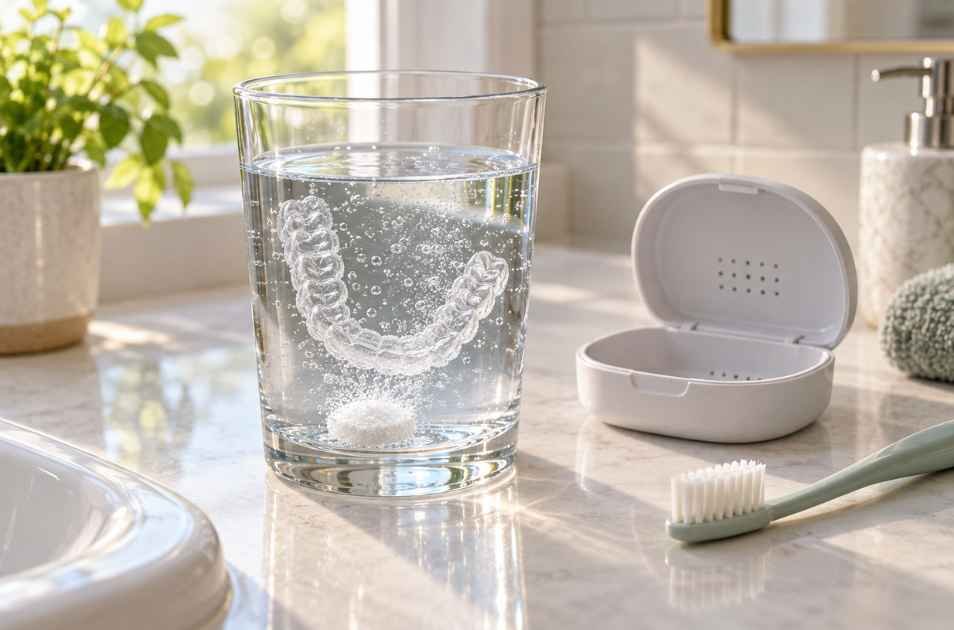
    Step 2: Deep clean soak. Drop a retainer-cleaning tablet into a cup of lukewarm water. Submerge the retainer for the recommended time (usually 15–20 minutes). The effervescent action penetrates surface deposits that brushing leaves behind. Rinse and brush gently afterward. A diluted white vinegar soak (equal parts vinegar and lukewarm water, 15–20 minutes) is an alternative if you don’t have tablets on hand.

    Step 3: Clean or replace the case. Wash the case with warm water and dish soap, scrubbing the interior and lid. Let it air-dry completely. If the case itself smells even after washing, replace it — cases cost a few dollars and no amount of retainer cleaning helps if the storage environment is contaminated.

    Step 4: Air-dry before storing. After cleaning, set the retainer on a clean surface (a paper towel works) and let it dry completely before closing it in the case. This eliminates the moist-case incubation problem.

    If steps 1–4 resolve the odour and it stays resolved, the problem was cleaning consistency and/or case hygiene. Maintain the daily routine and weekly deep clean going forward.

    Don’t Forget the Case

    This deserves its own section because it’s the cause people miss most often. A retainer case that hasn’t been washed accumulates a biofilm of its own — bacteria, dried saliva residue, and moisture trapped in the corners and lid. Every time a freshly cleaned retainer goes into a dirty case, it picks up bacteria from the case surface.

    Wash the case at least once a week with warm water and dish soap. Use a brush to reach the corners. Rinse and air-dry completely. Replace the case every 2–3 months, or sooner if it develops discolouration, persistent odour, or any sign of mould.

    If the case has ventilation holes, make sure they’re not clogged with residue. If it doesn’t have ventilation holes, either leave the lid slightly cracked while the retainer dries inside, or dry the retainer outside the case and close it only when both are fully dry.

    When Odour Won’t Go Away

    If you’ve reinstated daily cleaning, done a thorough deep clean, replaced the case, ensured proper drying, and the retainer still smells within hours of cleaning — the problem is likely in the retainer’s surface or material, not in your routine.

    Bacteria embedded in surface scratches or micro-damage can’t be reached by external cleaning. An ultrasonic cleaner may help in some cases by reaching crevices that manual methods miss — but if the damage is deep enough, even cavitation won’t dislodge embedded colonies. For more on ultrasonic cleaning capabilities, see: Do Ultrasonic Retainer Cleaners Actually Work?

    A retainer with persistent odour despite thorough, consistent cleaning is usually one that’s reached end-of-life. The surface has accumulated enough damage that it can no longer be kept hygienically clean. Contact your orthodontist to discuss replacement. This is a normal lifecycle event, not a failure of cleaning — all retainer materials degrade over time.

    One thing to avoid: don’t escalate to aggressive chemicals (bleach, alcohol, undiluted hydrogen peroxide, harsh household cleaners) in an attempt to kill the smell. These can damage the retainer material, leave residual taste, and irritate oral tissue. If gentle methods haven’t worked, the answer is replacement, not stronger chemistry.

    Prevention

    Clean the retainer daily. Every time you remove it. No exceptions, no skip days. The 60 seconds this takes prevents the biofilm accumulation that causes odour in the first place.

    Deep clean weekly. A cleaning tablet soak once a week handles what daily brushing leaves behind. Twice a week if you notice odour developing between deep cleans.

    Clean and replace the case regularly. Weekly wash, monthly inspection, replacement every 2–3 months. A clean retainer in a clean case stays clean.

    Air-dry before storing. Never seal a damp retainer in a closed case.

    Don’t use toothpaste. The abrasive scratching creates the surface damage that makes retainers harder to keep clean and more prone to harbouring odour-causing bacteria.

    Stay hydrated. Dry mouth produces less saliva flow, which reduces the natural rinsing action that helps limit bacterial buildup. Staying hydrated during the day — and particularly before bed if you wear a nighttime retainer — supports oral environment conditions that make retainer odour less likely.

    For the full cleaning routine, see: How to Clean a Retainer.

    Frequently Asked Questions

    Is a smelly retainer dangerous?

    A smelly retainer is a sign that bacteria have colonised the appliance surface beyond what your current cleaning routine handles. It’s a hygiene concern, not a medical emergency. But wearing a retainer with significant bacterial buildup isn’t ideal for oral health — bacteria against your teeth and gums for hours each night is counterproductive to the orthodontic result the retainer is supposed to maintain. Fix the cleaning routine or replace the retainer.

    Can I soak my retainer in mouthwash to remove the smell?

    Alcohol-based mouthwash can degrade and discolour some retainer materials over time. It may mask the smell temporarily without addressing the underlying bacterial colonisation. Use a purpose-made retainer-cleaning tablet or diluted white vinegar soak instead — both address bacteria more effectively without material risk.

    Does an ultrasonic cleaner help with retainer odour?

    It can help by reaching bacteria in crevices and surface textures that brushing and soaking miss. Add a compatible cleaning tablet to the tank water for best results. If odour persists even after ultrasonic cleaning, the retainer surface is likely damaged beyond what any cleaning method can fix. See: Best Ultrasonic Retainer Cleaner.

    How often should I replace my retainer case?

    Every 2–3 months, or sooner if it develops persistent odour, discolouration, or mould. Cases are inexpensive and replaceable. A dirty case undermines every other cleaning effort you make.

    My retainer smells bad on the first day of wearing a new one. Why?

    A brand-new retainer may have a faint manufacturing odour from the material or packaging. This usually dissipates after a rinse and a few hours of wear. If the smell is strong, persistent, or chemical in nature, contact your orthodontist — the material may need inspection. A brief soak in lukewarm water with mild dish soap before first wear can help.

    Beyond Brushing Oral Health Guide Book
    Get the Free Oral Health Guide
    Download Beyond Brushing — a practical 30,000+ word guide to healthier teeth, gums, and fresher breath after 45.
    Marketing email consent
    • No spam • Unsubscribe anytime

    Sources & References

    American Association of Orthodontists — How to Clean Your Retainer

    Dr. Eva-Maria Moll

    Biofilm removal performance of commercial orthodontic cleaning tablets on PMMA specimens (2023)
    https://pubmed.ncbi.nlm.nih.gov/37266911/

    Sambhavaphol P et al. (2026) — Ultrasonic cleaning with chemical agents on thermoplastic retainers
    https://pubmed.ncbi.nlm.nih.gov/41313277/

    CDC — Cleaning (Disinfection and Sterilization Guidelines)
    https://www.cdc.gov/infection-control/hcp/disinfection-sterilization/cleaning.html

  • How to Remove White Buildup From a Retainer (And Why It’s Cloudy)

    How to Remove White Buildup From a Retainer (And Why It’s Cloudy)

    Last updated: September 2026  |  By: VerdictLab Editorial Team

    A retainer that used to be clear and now looks cloudy, white-filmed, or speckled with chalky deposits is one of the most common complaints orthodontists hear. The instinct is to scrub harder. That’s usually the wrong move — and can make things permanently worse.

    “Cloudy” and “white buildup” aren’t one problem. They’re at least three different problems that look similar, have different causes, and need different responses. Removable mineral deposits, permanently scratched surfaces, and material aging can all produce a whitish or cloudy appearance — but only one of those can be cleaned off.

    The first step is figuring out which one you’re looking at.

    What’s Causing the Cloudiness?

    Hold the retainer under good light and look closely. The appearance gives you the diagnosis.

    White chalky film or spots that feel rough or gritty: almost certainly mineral deposits. Calcium and other minerals from saliva (and from hard tap water used for rinsing) crystallise on the retainer surface over time. This is the most common cause and the most treatable — the deposits sit on the surface and can usually be dissolved.

    A uniform haze or dull, matte appearance without distinct spots: likely surface scratching. This happens from brushing with toothpaste (the abrasives scratch the plastic), using a stiff brush, or scrubbing too aggressively. Huang et al.’s laboratory research on thermoplastic retainer specimens confirmed that mechanical brushing introduced visible linear abrasions, while ultrasonic cleaning produced comparatively less surface damage. Scratches are permanent — no amount of cleaning reverses them.

    Gradual yellowing or overall loss of transparency over months: material aging. Clear thermoplastic loses transparency over time from accumulated micro-wear, chemical exposure, and the inherent aging of the polymer. This is normal and irreversible.

    In practice, many cloudy retainers have a combination: mineral deposits on a surface that’s also mildly scratched. The cleaning steps below address the removable layer. What’s underneath may look better — or may reveal permanent damage that was hiding under the buildup.

    How to Clean Off Removable Buildup

    Start gentle and escalate only if needed.

    Step 1: Cleaning tablet soak. Drop a retainer-cleaning tablet (labelled for retainers and clear aligners) into a cup of lukewarm water. Submerge the retainer for the time on the label — usually 15–20 minutes. The effervescent chemistry dissolves surface-level mineral and organic buildup. Rinse and brush gently with a soft toothbrush and mild dish soap afterward. For many retainers with mild-to-moderate buildup, this is enough.

    Step 2: Diluted white vinegar soak. If the tablet didn’t fully clear the buildup, try equal parts white vinegar and lukewarm water for 15–20 minutes. The mild acidity helps dissolve hardened mineral deposits that the tablet chemistry didn’t reach. Rinse and brush gently afterward. Don’t extend the soak beyond 20–30 minutes unless your retainer manufacturer’s instructions specifically permit it.

    Step 3: Ultrasonic cleaning. If deposits remain after both soaks, an ultrasonic cleaner may help. The cavitation action reaches into surface textures and crevices that soaking alone misses. Add a compatible cleaning tablet to the tank water — ultrasonic with water alone is less effective. Laboratory research found that ultrasonic cleaning restored optical characteristics closer to controls than manual methods, with less surface damage than brushing.

    What not to do: Don’t scrape with a fingernail, dental pick, or hard tool. Don’t use baking soda paste, whitening toothpaste, or abrasive cleaners. Don’t scrub aggressively with a stiff brush. All of these scratch the retainer surface, trading one visible problem for another that’s permanent.

    If gentle methods don’t remove the deposits, consult your orthodontist before escalating. They may have a professional solution, or they may advise that the retainer needs replacing.

    Prevention

    Clean daily. Mineral deposits and biofilm accumulate every night. Daily rinsing and gentle brushing with dish soap removes them before they harden. A week of neglect creates buildup that takes real effort to remove.

    Deep clean weekly. A cleaning tablet soak once a week prevents the kind of hardened mineral accumulation that daily brushing alone leaves behind.

    Don’t use toothpaste. The most common cause of the permanent cloudiness that can’t be cleaned off. Mild dish soap cleans effectively without scratching.

    Rinse with filtered water if you have hard water. If your taps leave white deposits on faucets and showerheads, the same minerals are depositing on your retainer. Rinsing with filtered water after cleaning reduces mineral reaccumulation.

    Air-dry before storing. A damp retainer sealed in a case creates conditions that accelerate biofilm growth and can contribute to mineral crystallisation.

    For the full daily and weekly routine, see: How to Clean a Retainer.

    When It’s Time to Replace

    Cloudiness alone doesn’t necessarily mean the retainer needs replacing. If the buildup is removable and the retainer still fits correctly after cleaning, it’s functional.

    Replacement is warranted when cloudiness can’t be cleaned off (permanent scratching or material aging), when the retainer’s fit has changed, when the material has become brittle or shows cracks, or when persistent odour remains despite thorough cleaning and case replacement.

    Ask your orthodontist if you’re unsure. They can assess whether the retainer is still doing its job — holding your teeth in position — even if it doesn’t look the way it did when it was new. Cosmetic degradation and functional degradation aren’t always on the same timeline.

    Frequently Asked Questions

    Is white buildup on a retainer harmful?

    Mineral deposits themselves aren’t directly harmful. But the roughened surface they create gives bacteria more places to colonise, which can contribute to odour and hygiene issues. Removing buildup through regular cleaning is good practice for both aesthetics and hygiene.

    Can baking soda remove white buildup?

    Baking soda is a mild abrasive. While it may remove some surface deposits, it can also scratch clear thermoplastic retainer material — trading visible buildup for permanent surface haziness. A cleaning tablet soak or diluted vinegar soak is safer.

    Why does my retainer turn cloudy so fast?

    Several factors accelerate cloudiness: hard water, inconsistent daily cleaning, using toothpaste (abrasive scratching), and individual saliva chemistry. If cloudiness develops within days despite daily cleaning, hard water or toothpaste use are the most likely contributors.

    Will an ultrasonic cleaner fix a cloudy retainer?

    If the cloudiness is from removable surface deposits, ultrasonic cleaning (especially with a compatible cleaning tablet) may improve clarity. If it’s from permanent scratching or material aging, no cleaning method will reverse it. See: Do Ultrasonic Retainer Cleaners Actually Work?

    Beyond Brushing Oral Health Guide Book
    Get the Free Oral Health Guide
    Download Beyond Brushing — a practical 30,000+ word guide to healthier teeth, gums, and fresher breath after 45.
    Marketing email consent
    • No spam • Unsubscribe anytime

  • Can You Use Denture Cleaner on a Retainer? It Depends

    Can You Use Denture Cleaner on a Retainer? It Depends

    Last updated: September 2026  |  By: VerdictLab Editorial Team

    Search this question and you’ll get two confident, contradictory answers. Half the internet says yes — denture tablets clean retainers just fine. The other half says no — denture cleaners are too harsh and will damage your retainer. Both sides state their position as though it’s settled fact.

    Neither is right as a blanket answer. The real answer is: it depends on the exact product and the exact appliance. “Denture cleaner” is a product category containing many different chemical formulations. “Retainer” covers several different materials with different sensitivities. Whether a specific cleaner is appropriate for a specific retainer depends on what’s in the cleaner and what the retainer is made of — not on the category label on the box.

    Here’s how to sort it out.


    The Short Answer

    Sometimes — but only when the exact cleaner explicitly lists your exact appliance type on its label. A denture-cleaning tablet that says “for retainers, clear aligners, and night guards” on the packaging is a different product from one that says “for dentures” only. The label is the evidence. The category name is not.


    Why the Advice Is So Contradictory

    The confusion exists because people — and many dental blogs — treat “denture cleaner” as though it’s one thing. It isn’t. The category contains dozens of products from multiple manufacturers, each with a different chemical formulation designed for a different set of materials.

    Some denture cleaners are formulated exclusively for thick acrylic denture material. Their chemistry may be too aggressive for thin thermoplastic retainers. Others — like certain Efferdent products — have been specifically reformulated and relabelled for a broader range of dental appliances including retainers, clear aligners, and night guards.

    Meanwhile, “retainer” also isn’t one thing. A Hawley retainer (acrylic plate with metal wire) responds differently to cleaning chemistry than a clear thermoplastic Essix-type retainer, which responds differently from an Invisalign aligner, which responds differently from a soft night guard. A cleaner that’s perfectly fine for acrylic may not be appropriate for thin thermoplastic — and vice versa.

    The bloggers who say “never use denture cleaner on a retainer” are usually thinking about traditional denture-only formulations and clear plastic retainers. The bloggers who say “denture tablets work great” are usually thinking about multi-appliance products like Efferdent’s retainer-specific line. Both are partly right. Neither is giving you the full picture.


    The Efferdent Case Study

    Efferdent is the clearest example of why product-level specificity matters more than category labels.

    Efferdent’s Retainer Clean & Bright is explicitly labelled for retainers, clear aligners, night guards, and sports mouthguards. The manufacturer’s own website and product packaging identify these appliance types by name. This isn’t a blogger’s interpretation or an Amazon reviewer’s guess — it’s the manufacturer’s stated intended use, printed on the box.

    Efferdent also makes traditional denture-cleaning products. Those are formulated for dentures. The distinction between Efferdent’s denture-specific products and its appliance-specific products is a formulation decision made by the manufacturer — not something you should override based on a blog post.

    If you’re considering an Efferdent product for your retainer, the check is simple: does the specific product you’re holding say “retainers” or “clear aligners” on the label? If yes, the manufacturer says it’s compatible with those appliances. If the label only says “dentures,” it wasn’t designed for your retainer regardless of how similar the tablets might look.

    Even with a compatible Efferdent product, follow the specific directions on the packaging — soak time, water temperature, rinsing instructions. And check your appliance manufacturer’s instructions too. If your orthodontist or retainer brand says not to use effervescent tablets at all, that narrower instruction takes priority over the tablet manufacturer’s broader compatibility claim.


    Persulfates: What They Are and Why They Matter

    Many effervescent dental-appliance cleaners — including Efferdent and Retainer Brite — contain persulfates (typically potassium persulfate or sodium persulfate). Persulfates are oxidising agents that help break down organic material and contribute to the fizzing action of the tablet.

    Efferdent’s own labelling discloses that its products contain persulfates and warns that persulfate-containing cleansers may cause allergic reactions in some individuals. Symptoms can include tissue irritation, rash, or in rare cases more significant allergic responses.

    If you have a known persulfate allergy or sensitivity, avoid any cleaning tablet containing persulfates — regardless of whether it’s labelled as a denture cleaner, retainer cleaner, or appliance cleaner. Look for a persulfate-free formulation, or use a non-tablet cleaning method (dish soap, diluted vinegar, or an ultrasonic cleaner with water).

    If you don’t have a known sensitivity, persulfate-containing tablets used as directed are a standard cleaning option supported by dental professionals and studied in independent research. The 2023 PMMA biofilm study included Retainer Brite (which contains persulfate) and found it removed more biofilm than comparator tablets in that test — though no tablet achieved complete removal of established biofilm.

    The persulfate issue is worth knowing about, not worth being alarmed by. Most people use persulfate-containing tablets without any reaction. Those who do react should switch products and mention it to their dentist.


    Compatibility by Appliance Type

    The practical starting point below is based on manufacturer labels, professional guidance, and available evidence. But the exact cleaner’s label and the exact appliance manufacturer’s care instructions are always the controlling documents.

    Clear thermoplastic retainers (Essix-type)

    Use only products explicitly labelled for retainers or clear appliances. Products like Efferdent’s Retainer Clean & Bright and Retainer Brite are formulated and labelled for this use. Traditional denture-only formulations may be too aggressive for thin thermoplastic. Follow the recommended soak time — don’t extend it. Use lukewarm water, never hot.

    Invisalign and Vivera

    Align Technology sells its own cleaning products (Cleaning Crystals, Cleaning Crystals+). These are the only products with direct manufacturer validation for Invisalign materials. Some third-party tablets like Efferdent’s retainer-specific line list “clear aligners” on the label, which provides product-level compatibility evidence. But your orthodontist’s specific instructions for your Invisalign treatment may be narrower — follow those. For full Invisalign care guidance, see: How to Clean Invisalign and Clear Aligners.

    Hawley retainers (acrylic + wire)

    Hawley retainers are generally more tolerant of effervescent cleaning tablets than thin thermoplastic retainers. The acrylic is thicker and more chemically resistant. Many denture-cleaning products are compatible because denture acrylic and Hawley acrylic are similar materials. But “generally compatible” is not “universally safe” — check the specific product label and your orthodontist’s guidance.

    Night guards (hard acrylic, hybrid, soft)

    Night guard materials vary more than retainer materials. Hard acrylic guards are similar to Hawley acrylic and generally tolerate appliance-cleaning tablets. Soft EVA and dual-laminate guards are more variable — some manufacturers advise against effervescent tablets. Check your guard manufacturer’s care instructions. Products explicitly labelled for night guards (like Efferdent’s Retainer Clean & Bright) are the safest commercial choice. For the full night guard cleaning guide, see: How to Clean a Night Guard.

    Sports mouthguards

    Efferdent’s appliance-specific line includes sports mouthguards in its labelled uses. Follow the product directions and your mouthguard manufacturer’s care instructions.


    How to Check Before Using

    A two-step process that takes less than a minute:

    Step 1: Read the cleaner’s label. Does it explicitly list your appliance type — “retainers,” “clear aligners,” “night guards”? If yes, the manufacturer says it’s formulated for that use. If the label says “dentures” only, it wasn’t designed for your appliance.

    Step 2: Check your appliance manufacturer’s instructions. Does your orthodontist or retainer/guard manufacturer say anything about tablet cleaning? If they permit it, proceed. If they say to avoid effervescent tablets or specific chemical ingredients, that instruction overrides the tablet manufacturer’s broader compatibility claim. The narrower, appliance-specific instruction wins when the two conflict.

    If the two sources agree (cleaner says “for retainers,” orthodontist says “cleaning tablets are fine”), you’re clear. If they conflict (cleaner says “for retainers,” but your orthodontist says “no tablets for this specific retainer”), follow the orthodontist. If you can’t find clear guidance from either source, call your orthodontist’s office. They can confirm compatibility in seconds.


    Alternatives to Denture Tablets

    If you’ve decided denture-category tablets aren’t appropriate for your specific appliance, or if you have a persulfate sensitivity, several alternatives handle weekly deep cleaning:

    Purpose-made retainer cleaning tablets. Products like Retainer Brite are formulated specifically for retainers and dental appliances from the ground up — not reformulated denture products. For the full comparison, see: Best Retainer Cleaning Tablets.

    Diluted white vinegar. Equal parts vinegar and lukewarm water, soaked for 15–20 minutes. Dissolves mineral deposits without effervescent chemistry. Rinse thoroughly afterward.

    Mild dish soap and a soft brush. The AAO’s baseline recommendation for daily cleaning. Handles biofilm effectively when done consistently. No chemical compatibility concerns.

    Ultrasonic cleaner with a compatible cleaning agent. Reaches surfaces manual cleaning misses. Use a cleaning agent in the tank for best results. For the full evidence, see: Do Ultrasonic Retainer Cleaners Actually Work?

    For the complete cleaning product comparison, see: Best Retainer Cleaner.


    Frequently Asked Questions

    Can I use Polident on my retainer?

    Check the specific Polident product label. Like Efferdent, Polident makes multiple formulations. Some may list retainers or dental appliances as compatible uses; others may be labelled for dentures only. The product label — not the brand name — is what tells you whether it’s appropriate for your appliance. Also check your retainer manufacturer’s care instructions for any restrictions on effervescent tablet use.

    Is Efferdent safe for Invisalign?

    Efferdent’s Retainer Clean & Bright lists “clear aligners” on the label, which provides product-level compatibility evidence. However, Align Technology sells its own cleaning products (Cleaning Crystals) specifically validated for Invisalign materials. If your orthodontist has given specific cleaning instructions for your Invisalign treatment, follow those. The safest approach is the manufacturer’s own product; the Efferdent retainer-specific line is a reasonable and more affordable alternative if your orthodontist permits third-party cleaning products.

    Will denture tablets damage my retainer?

    A tablet explicitly labelled for retainers, used according to its directions with the correct water temperature and soak time, is unlikely to damage a compatible appliance. Damage risk increases when you use a tablet not labelled for your appliance type, soak for much longer than recommended, use hot water, or use the tablet on a material it wasn’t formulated for. The label and instructions exist for a reason.

    Are persulfate-free tablets available?

    Yes. Some retainer cleaning tablets are marketed as persulfate-free for people with persulfate sensitivity. Check the ingredient list rather than relying on front-of-package marketing — “natural” or “gentle” doesn’t always mean persulfate-free. If you have a confirmed sensitivity, verify the specific ingredient list or ask your pharmacist.

    Why does my orthodontist say no tablets, but the tablet says it’s safe for retainers?

    Because your orthodontist may be giving instructions specific to your retainer material, your treatment situation, or their clinical experience — and those instructions are narrower than a tablet manufacturer’s general compatibility claim. The tablet manufacturer is saying “our product is formulated for retainers in general.” Your orthodontist is saying “for your specific retainer, in your specific situation, I recommend a different approach.” Follow the narrower instruction. Your orthodontist knows your appliance; the tablet manufacturer doesn’t.

    Can I use denture tablets on my night guard?

    Products explicitly labelled for night guards — like Efferdent’s Retainer Clean & Bright — are formulated for that use. Night guard materials vary (hard acrylic, soft EVA, dual-laminate), and some manufacturers advise against effervescent tablets for soft guards specifically. Check both the tablet label and your guard manufacturer’s care instructions. For the full night guard cleaning guide, see: How to Clean a Night Guard.


    Beyond Brushing Oral Health Guide Book
    Get the Free Oral Health Guide
    Download Beyond Brushing — a practical 30,000+ word guide to healthier teeth, gums, and fresher breath after 45.
    Marketing email consent
    • No spam • Unsubscribe anytime


    Medically reviewed
    Reviewed September 22, 2026
    Reviewed for dental accuracy, clinical claims and safety information. Product selection and rankings remain the responsibility of the VerdictLab Editorial Team.
  • How to Clean Invisalign: Daily Care, Deep Cleaning & What to Avoid

    How to Clean Invisalign: Daily Care, Deep Cleaning & What to Avoid

    Last updated: September 2026  |  By: VerdictLab Editorial Team

    Note: This guide reflects Align Technology’s current official care instructions for Invisalign and Vivera retainers as of the date above. If your orthodontist has given you different instructions, follow theirs — they know your specific treatment plan.

    Invisalign aligners and Vivera retainers are made from proprietary thermoplastic materials — SmartTrack for aligners, a related material for Vivera. They’re thinner, more precisely engineered, and more expensive to replace than generic clear retainers. They also stain, cloud, and develop odour the same way any oral appliance does when cleaning is inconsistent.

    The care routine isn’t complicated, but it differs from generic retainer advice in a few important ways. Align Technology has its own cleaning products, its own ultrasonic device, and specific guidance that overrides the generic tips recycled across most dental blogs. This guide starts with what Align Technology actually says, then covers the independent evidence and practical questions that official marketing doesn’t address.

    Daily Routine

    Every time you remove your aligners or Vivera retainers — before eating, brushing, or at the end of the day — rinse them under lukewarm running water. Not hot. Lukewarm. The SmartTrack material softens and can warp at temperatures well below what comes out of a hot tap.

    Gently brush all surfaces with a soft-bristled toothbrush dedicated to aligner cleaning. Use a small amount of clear, mild liquid soap — unscented dish soap is the standard recommendation. Brush the outer surface, the inner surface that contacts your teeth, and the edges. Rinse thoroughly afterward.

    Don’t use toothpaste. This is one of the most commonly repeated pieces of Invisalign care advice, and it’s correct — toothpaste abrasives scratch the aligner surface, making it more visible on your teeth and creating micro-grooves where bacteria settle. If your aligners are looking dull or cloudy after a few weeks, toothpaste abrasion may be why.

    After cleaning, let the aligners air-dry on a clean surface before putting them back in or storing them. A damp aligner in a closed case is a bacterial incubator.

    This daily routine takes about 60 seconds and prevents the vast majority of odour, staining, and buildup problems.

    Align Technology’s Official Cleaning Products

    Align Technology sells its own cleaning products through the official Invisalign store. These are the only products with explicit manufacturer validation for Invisalign and Vivera materials.

    Invisalign Cleaning Crystals / Cleaning Crystals+. Dissolvable packets designed for a 15-minute soak. The Crystals+ formulation is marketed as a deeper-cleaning upgrade. These are the only cleaning solutions Align Technology officially recommends beyond basic soap and water. They’re formulated specifically for SmartTrack material, which means compatibility isn’t a question — the manufacturer designed them for their own product.

    Invisalign Ultrasonic Cleaning Station. An ultrasonic pod powered by Zima Dental, sold through the official store as a bundle (currently at $113.48). It’s specifically intended for Invisalign and Vivera appliances with a five-minute cycle. Cleaning Crystals+ can be added to the tank for a deeper-cleaning combination. This is the only ultrasonic cleaner with explicit Align Technology endorsement.

    The official products are more expensive than generic alternatives — Cleaning Crystals cost more per use than Retainer Brite tablets, and the official ultrasonic station costs more than standalone pods on Amazon. Whether the premium is justified depends on how much value you place on guaranteed material compatibility versus using a generic product that’s probably fine but hasn’t been specifically validated for SmartTrack.

    The practical reality: many Invisalign users successfully clean their aligners with generic methods (soap, third-party tablets, third-party ultrasonic pods) without visible problems. Align Technology’s official products are the safest choice, not the only viable one.

    Ultrasonic Cleaning for Invisalign

    The fact that Align Technology sells its own ultrasonic cleaner is the strongest compatibility signal available. It establishes that the manufacturer considers ultrasonic cleaning safe and appropriate for their specific materials, at least with their specific device and protocols.

    What that signal does not extend to is every third-party pod on Amazon. Different devices vibrate at different frequencies (40–52 kHz), with different intensities, and potentially at different temperatures. The official Invisalign cleaner was presumably tested against SmartTrack material properties. A generic $25 pod wasn’t.

    That said, the independent short-term evidence on ultrasonic cleaning of thermoplastic retainer materials is generally reassuring. The 2026 Sambhavaphol et al. clinical study found no significant changes in colour, surface roughness, or microhardness of thermoplastic retainers during ultrasonic cleaning phases. Huang et al. found that ultrasonic cleaning restored optical properties closer to controls than mechanical brushing, with less surface damage.

    If you choose to use a third-party ultrasonic pod: use room-temperature water, add a compatible cleaning tablet or Cleaning Crystals if the device manual permits, and run the shortest cycle first. Inspect your aligners afterward for any changes in fit, texture, or appearance.

    The most important caveat from the research: ultrasonic cleaning with water alone was the least effective protocol. Add a cleaning agent.

    For the full evidence analysis, see: Do Ultrasonic Retainer Cleaners Actually Work?

    Can You Use Third-Party Cleaning Tablets?

    Many Invisalign users soak their aligners in Retainer Brite, Efferdent Retainer Clean & Bright, or similar third-party cleaning tablets. These products are typically labelled for retainers, aligners, and dental appliances, and user reports of material damage from short soaks (15–20 minutes) are uncommon.

    Align Technology’s official position favours their own Cleaning Crystals. They haven’t published a list of approved third-party products. This creates a grey area: generic retainer tablets aren’t endorsed, but they’re also not explicitly prohibited by most orthodontists who prescribe Invisalign.

    If you use a third-party tablet, follow the timing on the product label (usually 15–20 minutes), use lukewarm or room-temperature water, and rinse thoroughly afterward. Products containing persulfates should be avoided by anyone with a known persulfate allergy.

    For the tablet-versus-ultrasonic comparison, see: Ultrasonic Retainer Cleaner vs Cleaning Tablets.

    What to Avoid

    Hot water. SmartTrack material warps at lower temperatures than you’d expect. Even water from a fully hot tap can distort an aligner. Always lukewarm or room temperature.

    Toothpaste. Scratches the material, makes the aligner more visible, and creates surfaces where bacteria embed.

    Coloured or scented soap. Dyes can tint the clear material. Fragrances can leave a residual taste.

    Alcohol-based mouthwash. Can degrade and discolour the material over time.

    Eating or drinking with aligners in. Water is fine. Everything else should be consumed with aligners removed.

    Leaving aligners in open air. Store them in their case when not wearing them — not in a napkin, pocket, or on a countertop.

    Smoking or tobacco with aligners in. Tobacco stains clear aligners rapidly and irreversibly.

    Cloudiness and Staining

    Some cloudiness in clear aligners is normal over the course of a treatment tray’s lifespan (typically 1–2 weeks per tray). The material is thin and accumulates micro-deposits from saliva, food residue, and mineral content in your water. Consistent daily cleaning slows this process but doesn’t stop it entirely.

    If an aligner becomes visibly cloudy within the first few days of wear, the likely cause is inadequate cleaning — dried saliva film, mineral deposits, or abrasion from toothpaste use. A cleaning tablet soak usually resolves the first two. Surface scratching won’t reverse.

    For Vivera retainers, which are worn for months rather than weeks, cloudiness is more of a concern because the appliance has a longer lifespan. Regular cleaning-tablet soaks and gentle daily brushing are the best prevention.

    For the full troubleshooting guide, see: How to Remove White Buildup and Cloudiness From a Retainer.

    Odour

    A retainer or aligner that smells is one that isn’t being cleaned thoroughly enough, often enough, or both. The odour comes from bacterial colonisation on the appliance surface.

    For treatment-phase aligners (changed every 1–2 weeks), odour is a short-term problem that resolves with each new tray. For Vivera retainers worn over longer periods, persistent odour despite regular cleaning may mean bacteria have embedded in surface damage — and the retainer may need replacing.

    Don’t ignore case hygiene. A dirty case recontaminates a clean retainer every time you put it away. Wash it weekly. Replace it every few months.

    For the full odour guide, see: How to Remove Bad Smell From a Retainer.

    Aligners vs Vivera Retainers: Any Difference in Care?

    The cleaning routine is essentially the same. The difference is in replacement cycle and what that means for cleaning intensity.

    Treatment-phase aligners are changed every 1–2 weeks. Each tray starts clean and doesn’t accumulate long-term buildup. Daily rinsing and brushing, with occasional soaking, is sufficient.

    Vivera retainers are worn for months — sometimes years. They need the full daily-plus-weekly cleaning protocol because buildup, staining, and bacterial colonisation compound over time. The longer the wear period, the more cleaning consistency matters.

    Frequently Asked Questions

    Can I use Retainer Brite on Invisalign?

    Retainer Brite is labelled for retainers and dental appliances. Many Invisalign users use it without reported material problems. Align Technology’s official position favours their own Cleaning Crystals. If you use Retainer Brite, follow the label instructions (usually 15–20 minutes), use lukewarm water, and rinse thoroughly. Avoid it if you have a known persulfate allergy.

    How often should I clean my Invisalign?

    Rinse and brush every time you remove them. A deeper clean with a tablet or ultrasonic device 2–3 times per week helps prevent buildup. For Vivera retainers, maintain the full daily-plus-weekly routine indefinitely.

    Is it safe to use a third-party ultrasonic cleaner on Invisalign?

    The short-term evidence on thermoplastic retainer materials is generally reassuring, and Align Technology sells its own ultrasonic cleaner. A third-party pod hasn’t been specifically tested against SmartTrack. If you use one, start with room-temperature water, run the shortest cycle, and inspect afterward. The official Invisalign Ultrasonic Cleaning Station is the only device with explicit manufacturer endorsement.

    Why do my aligners smell even though I clean them?

    Possible causes: cleaning isn’t thorough enough, the case is dirty, or bacteria have embedded in surface micro-damage. For treatment aligners, the smell resolves with the next tray. For Vivera retainers, persistent odour may indicate the surface is compromised. See: How to Remove Bad Smell From a Retainer.

    Can I use mouthwash to clean my Invisalign?

    Alcohol-based mouthwash can discolour and degrade aligner material over time. Use Cleaning Crystals, a retainer-cleaning tablet, or diluted hydrogen peroxide (if your orthodontist approves) instead.

    My aligner cracked. Should I keep wearing it?

    No. A cracked aligner can irritate soft tissue and may not deliver the intended force. Contact your orthodontist — they may advise moving to the next tray early or reordering.

    Beyond Brushing Oral Health Guide Book
    Get the Free Oral Health Guide
    Download Beyond Brushing — a practical 30,000+ word guide to healthier teeth, gums, and fresher breath after 45.
    Marketing email consent
    • No spam • Unsubscribe anytime

  • How to Clean a Retainer: Daily Routine, Deep Cleaning & What to Avoid

    How to Clean a Retainer: Daily Routine, Deep Cleaning & What to Avoid

    Last updated: September 2026  |  By: VerdictLab Editorial Team

    Note: Retainer care instructions vary by material and brand. If your orthodontist or retainer manufacturer provided specific care instructions, follow those first. The guidance below reflects current AAO (American Association of Orthodontists) recommendations and applies to most common retainer types.

    A retainer that isn’t cleaned regularly becomes a reservoir for the bacteria, plaque, and mineral deposits it was supposed to protect your teeth from. The appliance sits against your teeth for hours — all night for a nighttime retainer, most of the day for a full-time wear schedule — collecting everything your mouth produces: saliva, food particles, and the biofilm that forms continuously on any oral surface.

    The cleaning routine is simple. The mistakes people make — hot water, toothpaste, skipping days — are simpler. And the consequences of neglect (odour, buildup, staining, and an appliance that becomes unhygienic faster than it wears out) are entirely avoidable.

    This guide covers daily maintenance, weekly deep cleaning, material-specific advice for clear and Hawley retainers, and the things that damage retainers more than dirty ones do.


    Know Your Retainer Type

    Cleaning advice depends on what your retainer is made of. The two main types respond differently to heat, chemicals, and abrasion.

    Clear thermoplastic retainers (Essix-type, Vivera, and most clear aligners like Invisalign) are made from thin, transparent plastic — typically a copolyester or polypropylene material. They’re the most common type prescribed after orthodontic treatment. They’re also the most sensitive to heat, abrasion, and harsh chemicals. Hot water warps them. Toothpaste scratches them. Alcohol-based products can degrade them.

    Hawley retainers are the traditional design: an acrylic plate with metal wire clasps that hook around the teeth. The acrylic is more durable than clear thermoplastic and less sensitive to mild abrasion, but it can crack if dropped and stain if not cleaned regularly. The metal components need attention too — mineral buildup can accumulate around the wire-acrylic junctions.

    Permanent (bonded) retainers are fixed wires cemented to the back of the front teeth. They’re not removable and can’t be cleaned with the methods in this guide — they need to be cleaned in place with your regular brushing and flossing routine, plus professional cleanings. If your only retainer is bonded, this article isn’t the one you need.

    If you’re not sure which type you have, your orthodontist’s office can tell you. For Invisalign-specific care, which has some differences from generic clear retainers, see: How to Clean Invisalign and Clear Aligners.


    Daily Cleaning Routine

    Do this every time you remove the retainer. For nighttime retainers, that means every morning. For full-time retainers, it means after every extended wear period.

    Rinse immediately. Run the retainer under lukewarm water as soon as you take it out of your mouth. This removes loose saliva and debris before it dries and hardens. Don’t use hot water — even briefly — on a clear thermoplastic retainer. Warm is fine. Hot warps.

    Brush gently with a soft-bristled toothbrush and mild dish soap. Use a separate toothbrush dedicated to retainer cleaning — not the one you brush your teeth with. A small amount of unscented, mild dish soap is the cleaning agent the AAO supports for daily use. Brush all surfaces: the outer side, the inner side that contacts your teeth, and any crevices where debris collects.

    Skip the toothpaste. This is counterintuitive — toothpaste cleans teeth, so it should clean a retainer too. But most toothpastes contain mild abrasives (silica, calcium carbonate, baking soda) designed to scrub enamel, which is the hardest substance in the human body. Clear retainer plastic is much softer. Those same abrasives create microscopic scratches on the retainer surface, and scratched surfaces harbour more bacteria and stain faster. Unless your retainer manufacturer specifically says toothpaste is safe for their product, avoid it.

    Rinse thoroughly and let it air-dry. After brushing, rinse all the soap off under running water. Set the retainer on a clean surface (a paper towel works) and let it dry completely before putting it in its case. A damp retainer sealed in a case creates a warm, moist environment that encourages bacterial growth — exactly the conditions you just cleaned it to avoid.

    This takes about 60 seconds. It’s the single most important thing you can do for retainer hygiene. The weekly deep clean matters too, but it can’t compensate for skipping the daily routine.


    Weekly Deep Clean

    Once a week, give the retainer a more thorough soak to address the buildup that daily brushing leaves behind. Several methods work — pick the one that fits your retainer type and your orthodontist’s guidance.

    Retainer cleaning tablets

    Drop a retainer-cleaning tablet (such as Retainer Brite or a product explicitly labelled for retainers and aligners) into a cup of lukewarm water. Add the retainer and follow the timing on the tablet packaging — usually 15–20 minutes. The effervescent action helps dissolve biofilm and mineral deposits that brushing alone misses.

    Check the tablet label before using it on your specific appliance. Products labelled for retainers, clear aligners, and dental appliances are the appropriate choice. Not every denture-cleaning tablet is formulated identically — some contain ingredients that may not be suitable for all retainer materials. For more on this question, see: Can You Use Denture Cleaner on a Retainer?

    Some cleaning tablets contain persulfates, which can cause allergic reactions in sensitive individuals. If you have a known persulfate sensitivity, look for a persulfate-free formulation or use one of the alternative methods below.

    Diluted white vinegar

    Mix equal parts white vinegar and lukewarm water. Soak the retainer for 15–20 minutes. The mild acidity helps dissolve mineral deposits. Rinse thoroughly and brush gently afterward to remove any loosened residue. This is a simple, inexpensive option, though the retainer may taste faintly acidic on first wear — a thorough rinse before wearing handles that.

    Don’t soak for extended periods (hours or overnight) unless your manufacturer specifically says it’s safe. Different retainer materials respond differently to prolonged acid exposure.

    Hydrogen peroxide

    Some manufacturers allow short soaks in standard 3% hydrogen peroxide (the drugstore concentration). Compatibility and timing vary by material — check your retainer’s care instructions. When permitted, a 10–15 minute soak followed by a thorough rinse provides antimicrobial action without the acidity of vinegar.

    After any deep-clean method, brush the retainer again with your dedicated soft toothbrush and rinse thoroughly under lukewarm water. Let it air-dry completely before storing.

    For the full comparison of cleaning tablets versus ultrasonic devices, see: Ultrasonic Retainer Cleaner vs Cleaning Tablets. For cleaning product recommendations, see: Best Retainer Cleaner.


    What Not to Use

    Retainer materials — particularly clear thermoplastic — are more sensitive to heat and chemicals than they appear. The AAO and most orthodontic authorities advise against the following:

    Hot or boiling water. Thermoplastic retainers warp at temperatures well below boiling. Even hot tap water can distort a clear retainer enough to change its fit. Once warped, the retainer can’t be reshaped — it needs replacing. Always use lukewarm or room-temperature water. This applies to dishwashers too — the heat cycle will ruin a clear retainer.

    Toothpaste. The abrasives in most toothpastes scratch the retainer surface, creating micro-grooves that harbour bacteria and accelerate staining. If your specific retainer manufacturer says a particular non-abrasive toothpaste is safe for their product, follow their guidance. Otherwise, mild dish soap is the AAO-supported alternative.

    Alcohol-based mouthwash. Products like Listerine contain alcohol that can dry out, discolour, and degrade some retainer materials over time. If you want an antimicrobial soak, use a purpose-made retainer cleaning tablet or one of the methods in the deep-clean section above — not mouthwash.

    Bleach. Even diluted. Bleach is too harsh for retainer materials, can leave a residual taste that’s difficult to remove, and may irritate oral tissue. The AAO explicitly warns against it.

    Harsh detergents and strong chemicals. Anything beyond mild dish soap introduces unnecessary risk to the retainer material. If it wouldn’t be gentle enough for fine glassware, it’s not gentle enough for a retainer.

    Abrasive tools. Stiff brushes, scouring pads, and aggressive scrubbing can scratch and weaken retainer material. Use a soft-bristled toothbrush with gentle pressure. If deposits won’t come off with gentle methods, see the stains section below rather than scrubbing harder.


    How Often to Clean

    Daily brushing: every time you remove the retainer. Non-negotiable. This is the foundation that every other cleaning method builds on. A retainer that gets daily brushing and rinsing will stay cleaner over its lifetime than one that gets weekly deep cleans but skips the daily routine.

    Deep cleaning: once or twice a week for most people. If you notice buildup developing faster than your weekly soak handles — common in areas with hard water, or if you drink coffee, tea, or red wine regularly — increase to twice a week. Your retainer will tell you: if it’s developing a visible film, cloudiness, or odour between deep cleans, clean it more often.

    Ultrasonic cleaning (if you use one): a few times a week or as a supplement to your weekly deep clean. An ultrasonic cleaner is not a daily replacement for brushing — it’s an additional step that can reach areas manual cleaning misses. See the ultrasonic section below for details.

    After illness: clean the retainer thoroughly (daily brush + deep soak) after recovering from any illness, particularly anything involving the mouth or respiratory system. Replace the storage case.


    Cleaning the Case

    Most people clean the retainer and forget the case. Then they put a freshly cleaned retainer into a case that hasn’t been washed in weeks — and wonder why the retainer smells again the next morning.

    Wash the case at least once a week with warm water and a small amount of dish soap. Use a brush to reach the corners and the lid’s inner surface. Rinse thoroughly and let it air-dry completely before putting the retainer back in. If the case has ventilation holes, make sure they’re not clogged with dried residue.

    Replace the case periodically — every few months, or whenever it develops a persistent odour, visible discolouration, or any sign of mould. Cases are cheap and replaceable. A dirty case recontaminates a clean retainer every time you put it away.

    When you’re not wearing the retainer, keep the case in a clean, room-temperature location — not in direct sunlight, not near a heat source, and not somewhere a curious pet can reach. Dogs are attracted to the saliva residue on retainer cases and will chew through both the case and the retainer inside it.


    Should You Use an Ultrasonic Cleaner?

    Ultrasonic retainer cleaners — small pods that vibrate at 40–52 kHz, creating microscopic cavitation bubbles — can supplement your daily routine by reaching crevices and textures that a toothbrush misses. The short-term evidence on material safety is generally reassuring for thermoplastic retainers, and Align Technology sells an official ultrasonic cleaner for Invisalign and Vivera appliances, which is a meaningful manufacturer compatibility signal.

    The most important finding from the research: ultrasonic cleaning with water alone performed worst among tested protocols in a 2026 clinical study on thermoplastic retainers. The cleaning medium mattered more than the vibration. Adding a compatible cleaning tablet or solution to the tank water substantially improved outcomes.

    An ultrasonic cleaner is not a necessity for retainer care. The AAO’s recommended routine — daily rinsing, gentle brushing with dish soap, and periodic cleaning tablets — handles the fundamentals without one. An ultrasonic pod is an optional convenience tool that can improve stain removal and reach what manual cleaning leaves behind, particularly for appliances with complex geometry or persistent buildup.

    If you’re considering one, check your retainer manufacturer’s instructions first. For the full evidence on how ultrasonic cleaners perform, see: Do Ultrasonic Retainer Cleaners Actually Work?. For product comparisons, see: Best Ultrasonic Retainer Cleaner.


    Stains, Mineral Deposits, and Cloudiness

    Even with consistent cleaning, retainers can develop discolouration, white buildup, or a cloudy appearance over time. These have different causes and different remedies.

    Yellow or brownish staining typically comes from food and drink exposure — coffee, tea, red wine, turmeric — or from tobacco use. A cleaning tablet soak is the first-line treatment. For stubborn stains, some research suggests ultrasonic cleaning may restore optical clarity more effectively than manual scrubbing, with less risk of scratching the surface.

    White chalky deposits are usually mineral buildup from saliva or hard water. A diluted white vinegar soak (equal parts vinegar and lukewarm water, 15–20 minutes) can dissolve mild mineral deposits. For hardened buildup that doesn’t respond to gentle methods, consult your orthodontist before attempting aggressive removal — scraping or abrasive cleaning can permanently damage the retainer surface.

    Cloudiness can mean several things: removable surface deposits, permanent surface scratches from abrasive cleaning, or material degradation from age or chemical exposure. The first step is trying a gentle cleaning soak — if the cloudiness clears, it was removable buildup. If it doesn’t, the retainer’s surface may be permanently altered, and replacement may be the appropriate next step.

    For the full troubleshooting guide, see: How to Remove White Buildup and Cloudiness From a Retainer.


    When to Contact Your Orthodontist

    Most retainer cleaning is straightforward home care. But some situations warrant professional input.

    Persistent odour despite thorough cleaning. If the retainer smells even after a deep clean and case replacement, bacteria may be embedded in surface damage that home methods can’t reach. Your orthodontist can assess whether the retainer needs replacing. For troubleshooting steps first, see: How to Remove Bad Smell From a Retainer.

    Visible cracks, chips, or warping. A damaged retainer can irritate soft tissue, fit unevenly, or fail to maintain tooth position. Don’t continue wearing a retainer with visible structural damage — contact your orthodontist for evaluation.

    Changed fit. If the retainer feels tighter, looser, or doesn’t seat the way it used to, something has changed — either the retainer has deformed or your teeth have shifted. Either way, your orthodontist needs to know.

    Irritation, sores, or allergic reaction. Mouth irritation from a retainer can indicate a fit problem, a material reaction, or a sensitivity to cleaning products (persulfate allergy from cleaning tablets is documented). Stop wearing the retainer and consult your orthodontist or dentist.

    You’re unsure about a cleaning method. If you’re not sure whether a product, device, or cleaning approach is safe for your specific retainer material, ask your orthodontist’s office. They can confirm compatibility in seconds. A damaged retainer costs far more to replace than the time a phone call takes.


    Frequently Asked Questions

    Can I use toothpaste on my retainer?

    The AAO advises against it for most retainers. Toothpaste abrasives can scratch clear thermoplastic retainers, creating micro-grooves that harbour bacteria and accelerate staining. Use a soft-bristled toothbrush with mild dish soap instead. If your retainer manufacturer specifically says a non-abrasive toothpaste is safe for their product, follow their guidance.

    How often should I clean my retainer?

    Rinse and brush daily — every time you remove it. Deep clean (tablet soak, vinegar soak, or ultrasonic) once or twice a week. If you notice buildup, odour, or cloudiness developing between deep cleans, increase the frequency. Consistency matters more than intensity: a retainer brushed daily stays cleaner than one deep-cleaned weekly but skipped on the other six days.

    Can I soak my retainer overnight?

    This depends on the product and the retainer material. Some cleaning tablet labels specify short soak times (15–20 minutes), and prolonged exposure to the chemistry may affect certain materials. Don’t soak in vinegar or hydrogen peroxide overnight unless your manufacturer specifically says it’s safe. If you want an overnight soak, use plain lukewarm water — it won’t clean actively, but it keeps the retainer moist without chemical exposure risk.

    Is it safe to use denture cleaning tablets on my retainer?

    “Denture cleaner” is a category, not a single formulation. Some products — like Efferdent’s Retainer Clean & Bright — are explicitly labelled for retainers, clear aligners, and night guards. Others are formulated specifically for denture materials and may not be appropriate for clear thermoplastic retainers. Use the exact product label and your appliance manufacturer’s instructions to determine compatibility. For the full analysis, see: Can You Use Denture Cleaner on a Retainer?

    What if my retainer smells bad even after cleaning?

    Persistent odour usually means bacteria have colonised surface damage that routine cleaning can’t reach. Try a thorough deep clean (tablet soak + gentle brushing). Clean or replace the storage case — a dirty case recontaminates a clean retainer. If odour persists despite these steps, the retainer surface may be permanently compromised and replacement may be needed. See: How to Remove Bad Smell From a Retainer.

    My retainer has a white film on it. What is it?

    Most likely mineral deposits from saliva or hard water. A diluted white vinegar soak (15–20 minutes) often dissolves mild buildup. If it’s hardened and doesn’t respond to gentle soaking, don’t scrub aggressively — you’ll scratch the surface. Consult your orthodontist. See: How to Remove White Buildup and Cloudiness From a Retainer.

    How do I clean a Hawley retainer differently from a clear retainer?

    Hawley retainers (acrylic plate with metal wire) are more tolerant of gentle brushing than clear thermoplastic retainers. The daily routine is similar — lukewarm water, soft brush, mild dish soap. Pay attention to the wire-acrylic junctions where buildup accumulates. Hawley retainers are less sensitive to mild abrasion than clear retainers, but the acrylic can still crack from dropping or crack from extreme temperature changes. Don’t use hot water on the acrylic plate.

    Do I need to clean a retainer I only wear at night?

    Yes — every morning when you take it out. Your mouth produces saliva and bacteria continuously during sleep. A nighttime retainer accumulates the same biofilm as a full-time retainer; it just does it in an 8-hour window instead of a 22-hour one. The daily rinse-and-brush routine applies regardless of wear schedule.


    Beyond Brushing Oral Health Guide Book
    Get the Free Oral Health Guide
    Download Beyond Brushing — a practical 30,000+ word guide to healthier teeth, gums, and fresher breath after 45.
    Marketing email consent
    • No spam • Unsubscribe anytime


    Medically reviewed
    Reviewed September 21, 2026
    Reviewed for dental accuracy, clinical claims and safety information. Product selection and rankings remain the responsibility of the VerdictLab Editorial Team.
  • Do Ultrasonic Retainer Cleaners Work? Evidence & Safety

    Do Ultrasonic Retainer Cleaners Work? Evidence & Safety

    Last updated: August 2026  |  By: VerdictLab Editorial Team

    Note: This article summarises published clinical research, laboratory studies, and authoritative guidance on ultrasonic cleaning of dental appliances. It is not medical or dental advice. For cleaning instructions specific to your retainer or aligner, follow your orthodontist’s or manufacturer’s guidance.

    Ultrasonic retainer cleaners are marketed with language that ranges from reasonable (“deep clean”) to extravagant (“sterilizes 99.99% of bacteria”). The devices are real — small pods that fill with water, vibrate at ultrasonic frequencies, and claim to clean your retainer better than brushing or soaking alone. What’s less clear is which of those claims hold up under scrutiny, and which are marketing dressed up as science.

    The answer depends on what you mean by “work.” Ultrasonic cavitation can dislodge debris and improve some cleaning outcomes. That part is supported. But stain removal, biofilm removal, microbial reduction, and material preservation are different endpoints — and the evidence for each is different. A device that genuinely cleans is not the same as one that sterilises, even if the Amazon listing uses both words interchangeably.

    This is what the independent research actually shows.


    Quick Verdict

    Do they work?

    Ultrasonic retainer cleaners are legitimate mechanical cleaning tools. They can dislodge debris, improve stain and clarity outcomes, and supplement a daily cleaning routine. But their effectiveness depends on the cleaning medium (water alone is insufficient for meaningful microbial reduction), the appliance material, and the specific endpoint being measured. They should not be described as sterilisers, and “kills 99.9% of bacteria” is a manufacturer marketing claim — not an independently verified result for most consumer pods.


    How Ultrasonic Cleaning Works

    Ultrasonic cleaners generate high-frequency sound waves — typically in the 40–52 kHz range for consumer dental pods — that travel through a liquid medium (usually water). These sound waves create millions of microscopic bubbles through a process called cavitation. The bubbles form and collapse rapidly, producing tiny but intense pressure waves at the surface of whatever is submerged in the tank.

    This mechanical action dislodges debris from surfaces, including crevices and textures that a toothbrush bristle can’t physically reach. The CDC classifies ultrasonic cleaners as mechanical cleaning devices — in the same broad category as manual scrubbing and automated washers — and uses them in medical-instrument processing for exactly this purpose: removing soil before a separate disinfection or sterilisation step.

    That last distinction matters. In clinical settings, ultrasonic cleaning is the first step in a multi-step reprocessing chain. It removes physical contamination so that chemical or thermal disinfection can work effectively on the remaining microorganisms. Ultrasonic cleaning alone — without a subsequent antimicrobial step — does not achieve disinfection or sterilisation in clinical instrument processing. The same principle applies to consumer retainer pods, regardless of what the product listing claims.


    The Water-Only Problem

    This is the single most important finding for anyone considering an ultrasonic cleaner, and the one that manufacturer marketing almost never mentions.

    A 2026 clinical crossover study by Sambhavaphol et al., published in the American Journal of Orthodontics and Dentofacial Orthopedics, tested four cleaning protocols on thermoplastic retainers (Essix ACE) worn by 11 patients. The protocols included ultrasonic cleaning with water only, ultrasonic with 0.12% chlorhexidine, ultrasonic with a retainer-cleaning tablet, and a control. The result that should shape how you think about these devices: ultrasonic cleaning with water alone performed worst among the four tested protocols for microbial contamination. The chemical agent used alongside the ultrasonic cleaner mattered far more than the ultrasonic action itself.

    The combination of ultrasonic cleaning with 0.12% chlorhexidine produced the lowest contamination in that study. Ultrasonic with a cleaning tablet also outperformed water-only. The ultrasonic vibration contributed to cleaning — it was not useless — but without a compatible chemical agent, the cavitation alone wasn’t enough to meaningfully reduce microbial load.

    This doesn’t mean ultrasonic cleaners are worthless. It means the way most people use them — fill with plain water, drop in the retainer, press the button — is the least effective configuration. Adding a compatible cleaning tablet or solution to the tank water substantially changes the outcome.


    Stains and Clarity

    Where ultrasonic cleaning shows its clearest advantage is in stain removal and optical restoration — making cloudy or discoloured retainers look cleaner and more transparent.

    Huang et al. (2025/2026), published in Clinical Oral Investigations, studied the effects of different cleaning protocols on standardised stained thermoplastic retainer specimens. Ultrasonic cleaning restored optical characteristics (clarity and colour) closer to control specimens than either mechanical brushing or chemical tablet soaking alone. Mechanical brushing removed stains but introduced visible linear abrasions — scratches that can make the retainer look worse over time and may harbour bacteria. Chemical tablets left some residue.

    Susarchick et al. (2022), studying 400 copolyester (Essix ACE) specimens, found that ultrasonic treatment generally enhanced cleaning effectiveness and improved light transmittance, particularly in stained conditions. The cosmetic improvement was measurable under controlled laboratory conditions.

    The practical takeaway: if your retainer has turned cloudy, yellowish, or stained, ultrasonic cleaning may improve its appearance more effectively than scrubbing — and with less risk of scratching the surface. This is a genuinely useful benefit. It’s also a cosmetic/optical endpoint, not a microbial one. A retainer that looks cleaner isn’t necessarily more hygienic unless the cleaning protocol also addressed bacteria.

    For more on cloudy retainers specifically, see: How to Remove White Buildup and Cloudiness From a Retainer.


    Biofilm and Bacteria

    Biofilm — the sticky, structured community of bacteria that colonises any oral appliance — is harder to remove than loose debris or surface stains. It adheres to the appliance surface and resists simple rinsing. This is where cleaning claims need the most scrutiny.

    The Sambhavaphol et al. clinical study showed that chemical-assisted ultrasonic cleaning reduced microbial contamination more than water-only ultrasonic. That’s encouraging for the combination approach. But the study used specific chemicals (0.12% chlorhexidine, a prescription-strength antimicrobial) under controlled conditions with a specific retainer material. Generalising to every consumer pod with every tap-water fill exceeds what the data supports.

    A separate 2023 ex-vivo study (PMID 37266911) tested commercial orthodontic cleaning tablets — including Retainer Brite — against established seven-day biofilm on PMMA specimens. Retainer Brite removed more biofilm than the two comparator tablets (Kukis and Dontodent), but the mean removal was only about 54.5%. None of the tablets achieved complete biofilm removal from established colonies. This is useful context for understanding what “cleaning tablets” actually accomplish: they help, but they don’t eliminate mature biofilm on their own.

    The honest position: ultrasonic cleaning can contribute to biofilm reduction, particularly when combined with a compatible chemical agent. It’s a meaningful cleaning tool, not a magic box. Established biofilm on a long-neglected appliance probably won’t be fully removed by a single five-minute ultrasonic cycle with or without a tablet.


    Material Safety

    A reasonable concern: does ultrasonic vibration damage the thin thermoplastic material that retainers and clear aligners are made from?

    The available short-term evidence is reassuring but limited. The Sambhavaphol et al. study found no significant changes in colour, surface roughness, or microhardness of Essix ACE thermoplastic retainers during the study’s ultrasonic cleaning phases. Huang et al. similarly found that ultrasonic cleaning produced less measured surface damage than mechanical brushing in their laboratory protocol.

    The caveat: these are short-term observations on specific materials under controlled conditions. They cannot prove that daily ultrasonic cleaning over months or years is universally safe for every retainer material, every aligner brand, every guard thickness, and every water temperature. Materials vary. Pod vibration intensities vary. The research answers “short-term, no obvious damage to this specific material” — not “guaranteed safe for everything forever.”

    The practical rule: follow your appliance manufacturer’s care instructions. If they specifically permit ultrasonic cleaning, proceed. If they don’t mention it, use room-temperature water, limit cycle duration to the pod’s shortest setting initially, and inspect the appliance afterward for any visible changes. If the manufacturer explicitly warns against ultrasonic cleaning, that instruction overrides general research findings.


    Invisalign and Vivera Compatibility

    Align Technology — the manufacturer of Invisalign and Vivera retainers — now sells its own ultrasonic cleaner, powered by Zima Dental, through the official Invisalign store. The device is specifically intended to clean Invisalign clear aligners and Invisalign/Vivera retainers in a five-minute cycle, with Cleaning Crystals+ available as an optional deeper-cleaning addition.

    This is significant because it establishes manufacturer support for ultrasonic cleaning of those specific appliances with that specific device. Align Technology has more data on the material properties and tolerances of its own products than any third-party reviewer. Their willingness to sell an ultrasonic cleaner bearing the Invisalign name is a strong compatibility signal — for that device and those appliances.

    What it does not establish is that every third-party ultrasonic pod on Amazon is equally safe for Invisalign. Different pods vibrate at different frequencies, with different intensities, at different temperatures. The official Invisalign cleaner was presumably validated against Invisalign materials. A generic 45 kHz pod with no Invisalign-specific testing wasn’t. The compatibility signal extends to the category concept (ultrasonic cleaning can be safe for these aligners) but not automatically to every specific product.

    If you wear Invisalign or Vivera retainers and want to use an ultrasonic cleaner, the official device is the only one with explicit manufacturer support. Using a third-party pod isn’t necessarily harmful — the short-term material research is generally reassuring — but the compatibility certainty is lower.


    What Frequency Does and Doesn’t Tell You

    Consumer retainer cleaners operate between roughly 40 kHz and 52 kHz. Some manufacturers market higher frequency as inherently better or safer — “52 kHz is gentler on your aligner” or “higher frequency means deeper cleaning.” This framing is misleading.

    Frequency determines the size of the cavitation bubbles. Higher frequencies produce smaller bubbles, which collapse with less individual energy. Lower frequencies produce larger bubbles with more aggressive individual collapse. Both can clean effectively. Neither frequency is “proven safer” for retainers based on the available comparative evidence.

    No study identified in this review established that 52 kHz is materially safer than 42 kHz for thermoplastic dental appliances, or that either frequency is categorically superior for cleaning outcomes. The Sambhavaphol clinical study used a household ultrasonic cleaner without reporting frequency as a differential variable — because cleaning agent mattered far more than frequency in that study’s results.

    Frequency is a specification, not a safety score. Treat it the way you’d treat the wattage of a light bulb — relevant to the device’s operation, not a one-dimensional measure of quality. Tank capacity, cycle duration, water temperature, and — above all — whether you use a cleaning agent alongside the water matter more for your retainer than whether the label says 42 or 52 kHz.


    Does UV Add Anything?

    Many ultrasonic retainer pods include a UV-C light feature, marketed as providing additional “sanitisation” or “sterilisation.” The concept isn’t baseless — UV-C light at appropriate wavelengths (around 254 nm) can inactivate microorganisms by damaging their DNA. This is established physics used in water treatment, air purification, and hospital surface disinfection.

    Whether the UV feature in a specific consumer retainer pod delivers a meaningful antimicrobial benefit is a different question. Germicidal UV effectiveness depends on wavelength, dose (intensity × time), distance from the target, and whether the light actually reaches all surfaces — including the inner surfaces of a retainer sitting in a liquid-filled tank. Soil and liquid between the UV source and the surface reduce effectiveness. Exact wavelength verification for most consumer pods is not provided in their marketing materials.

    No strong independent clinical evidence was identified establishing that the UV feature in consumer retainer pods provides a significant incremental benefit beyond ultrasonic cleaning with a compatible chemical agent. The feature may contribute some antimicrobial action. It may also contribute very little. Without product-specific testing data that goes beyond manufacturer self-reporting, the honest assessment is: potential supplementary mechanism, unproven incremental real-world benefit for most pods.

    A UV feature shouldn’t be a reason to skip using a cleaning tablet or solution. And it definitely shouldn’t be a reason to accept “sterilises” as an accurate description of what the device does.


    Using Tablets in an Ultrasonic Tank

    Given that chemical-assisted ultrasonic cleaning outperformed water-only cleaning in the most directly relevant clinical research, adding a cleaning tablet to the tank water is a logical improvement. Some pod manufacturers explicitly recommend or permit this. Others are silent on it.

    The practical approach: if your ultrasonic cleaner’s manual says tablets or cleaning solutions are compatible, use them. Dissolve the tablet in the tank water before starting the cycle, or let it fizz during the cycle — either approach puts the chemical agent in contact with the appliance while cavitation does the mechanical work. The combination addresses both physical debris (ultrasonic) and microbial contamination (chemical agent) simultaneously.

    If the manual doesn’t mention tablets, a conservative approach is to dissolve the tablet in a separate cup, soak the retainer briefly, then transfer to the ultrasonic tank with plain water for the mechanical cleaning step. This avoids any theoretical concern about tablet chemistry interacting with the pod’s tank coating while still providing chemical-assisted cleaning.

    Not every tablet is compatible with every appliance material. Check both the tablet label (does it list your appliance type?) and your appliance manufacturer’s instructions (do they permit tablet use?). The general care guidance from the AAO supports periodic use of retainer-cleaning solutions or tablets, so the concept isn’t controversial — the specifics of which tablet with which pod with which appliance type is where individual checking matters.

    For the comparison of ultrasonic devices versus tablets as standalone cleaning methods, see: Ultrasonic Retainer Cleaner vs Cleaning Tablets.


    Cleaning, Sanitising, Disinfecting, Sterilising

    These words are not interchangeable, and the way they’re used on product listings is frequently misleading. VerdictLab uses them consistently across all articles, following CDC definitions:

    Cleaning means physically removing soil, debris, and organic material from a surface. Brushing your retainer with soap, soaking it in a cleaning solution, and running it through an ultrasonic pod are all cleaning methods. CDC explicitly classifies ultrasonic cleaners as mechanical cleaning devices.

    Sanitising means reducing germs to a level considered acceptable under a defined standard or context. It’s a weaker claim than disinfecting — it reduces microbial load without necessarily eliminating all pathogens.

    Disinfecting means eliminating many or all pathogenic microorganisms on an inanimate object, generally not including bacterial spores. This is a stronger claim that requires evidence of specific antimicrobial action.

    Sterilising means destroying or eliminating all forms of microbial life — bacteria, viruses, fungi, and spores. This is an absolute claim and the strongest possible hygiene assertion. It requires specific validated processes (autoclaving, chemical sterilants, verified high-level methods) and does not apply to any consumer retainer pod on the market.

    When an Amazon listing says a retainer pod “sterilises” your appliance, that claim is not supported by the independent evidence reviewed here. Consumer ultrasonic pods are cleaning devices. Some may contribute to microbial reduction, especially with a compatible chemical agent. None has been independently shown to achieve sterilisation as the term is properly defined.


    Practical Safe-Use Protocol

    Based on the available evidence, here’s a reasonable approach to using an ultrasonic retainer cleaner:

    Check your appliance manufacturer’s instructions first. If they specifically permit or recommend ultrasonic cleaning, proceed. If they warn against it, follow their guidance regardless of what this or any other article says. Manufacturer instructions for your specific appliance material override general research findings.

    Use a compatible cleaning agent in the tank. The 2026 clinical research is clear: water-only ultrasonic cleaning was the least effective protocol. Add a retainer-cleaning tablet or manufacturer-recommended solution to the tank water. This is where the meaningful antimicrobial improvement comes from.

    Use room-temperature or lukewarm water. Hot water can warp thermoplastic retainers and clear aligners. Unless your pod’s manual specifically instructs otherwise, room temperature is the safe default.

    Follow the device’s preset cycle. Don’t improvise longer cycles, higher temperatures, or cleaning agents the manual doesn’t mention. More isn’t necessarily better, and longer exposure to vibration or inappropriate chemistry could affect your appliance.

    Don’t skip daily manual cleaning. An ultrasonic pod is a supplement to your daily routine, not a replacement for it. The AAO recommends rinsing your retainer with lukewarm water after removal and gently brushing it daily with a dedicated soft toothbrush and mild dish soap. The ultrasonic cycle — weekly or a few times a week — adds deeper cleaning that manual methods may miss.

    Inspect your appliance after cleaning. Look for any changes in fit, clarity, texture, or structural integrity. If you notice warping, increased roughness, or a change in how the retainer seats on your teeth, stop using the ultrasonic cleaner and consult your orthodontist.

    For the full daily retainer care guide, see: How to Clean a Retainer.


    Limitations of the Current Evidence

    The research base for ultrasonic cleaning of dental appliances is small and recent. The most directly relevant clinical study (Sambhavaphol et al.) had 11 participants and tested one specific retainer material with specific chemical agents over short phases. The materials studies used laboratory specimens under controlled conditions that may not reflect years of daily home use.

    No long-term study has tracked the effects of daily ultrasonic cleaning on retainer material properties over 6–12 months. No large-scale randomised trial has compared ultrasonic cleaning to manual cleaning for clinically relevant outcomes (infection rates, retainer failure, orthodontic relapse). The evidence supports the mechanism and shows promising short-term results, but it’s not yet deep enough to make strong universal recommendations.

    Product-specific testing data is largely absent from the public domain. Individual pod manufacturers may have internal testing, but most consumer devices on Amazon lack published, independent validation of their specific cleaning claims. This makes brand-specific “which pod is best” comparisons difficult to ground in evidence rather than specifications and user reports.

    VerdictLab will update this article as new research is published. The field is active — the 2025–2026 studies cited here are the first directly relevant clinical and materials studies for this specific application, and more are likely to follow.


    Frequently Asked Questions

    Do ultrasonic retainer cleaners kill bacteria?

    Ultrasonic cavitation is a mechanical cleaning process — it dislodges debris and can disrupt some surface bacteria. But “kill” implies antimicrobial action, and the independent evidence shows that the cleaning medium matters more than the vibration. Ultrasonic cleaning with water alone performed worst in the most relevant clinical study. Adding a compatible chemical agent (a cleaning tablet or antimicrobial solution) to the tank water is where meaningful microbial reduction comes from.

    Are ultrasonic cleaners safe for clear retainers?

    Short-term studies on thermoplastic retainer materials (Essix ACE) found no significant changes in surface roughness, colour, or microhardness during ultrasonic cleaning phases. Align Technology sells an official ultrasonic cleaner for Invisalign and Vivera. These are positive signals, but they don’t prove that every pod at every frequency with every water temperature is safe for every clear retainer brand. Check your specific appliance manufacturer’s instructions.

    Do I need to add a tablet, or is water enough?

    The evidence strongly favours adding a compatible cleaning agent. The 2026 clinical study found that water-only ultrasonic cleaning was the least effective protocol for reducing contamination. A retainer-cleaning tablet or manufacturer-recommended solution in the tank water substantially improves outcomes. If your pod’s manual permits tablet use, use one.

    Is 42 kHz or 52 kHz better?

    No available evidence establishes either frequency as superior for retainer cleaning or safety. Higher frequency produces smaller cavitation bubbles; lower frequency produces larger ones with more aggressive collapse. Both can clean effectively. The cleaning agent you use, the water temperature, and the cycle duration matter more than the frequency number on the label.

    Does the UV feature actually do anything?

    UV-C light can inactivate microorganisms under suitable conditions (appropriate wavelength, dose, and direct exposure). Whether the UV feature in a specific consumer pod delivers meaningful incremental benefit beyond ultrasonic cleaning with a chemical agent is unproven for most devices. It’s a potential supplementary mechanism, not a reason to skip proper cleaning.

    Can an ultrasonic cleaner replace brushing my retainer?

    No. The AAO recommends daily rinsing and gentle brushing with a dedicated toothbrush and mild dish soap as the foundation of retainer care. An ultrasonic cleaner supplements this routine by reaching areas manual cleaning may miss and improving stain/clarity outcomes. It doesn’t replace the daily basics.

    Is it safe for my night guard?

    Night guards come in different materials — hard acrylic, soft EVA, dual-laminate — and each responds differently. The short-term evidence on thermoplastic materials is generally reassuring, but night guard materials vary more widely than retainer materials. Check your guard manufacturer’s care instructions. For the full night guard cleaning guide, see: How to Clean a Night Guard.


    Beyond Brushing Oral Health Guide Book
    Get the Free Oral Health Guide
    Download Beyond Brushing — a practical 30,000+ word guide to healthier teeth, gums, and fresher breath after 45.
    Marketing email consent
    • No spam • Unsubscribe anytime


    Sources & References


    Medically reviewed
    Reviewed September 16, 2026
    Reviewed for dental accuracy, clinical claims and safety information. Product selection and rankings remain the responsibility of the VerdictLab Editorial Team.