Category: Hydroxyapatite Toothpaste

  • Does Hydroxyapatite Toothpaste Whiten Teeth?

    Does Hydroxyapatite Toothpaste Whiten Teeth?

    Last updated: September 2026  |  By: VerdictLab Editorial Team

    “Whitening” is one of the most common claims on HAp toothpaste packaging — and one of the claims that drew regulatory attention when Boka’s advertising was challenged before the NAD/NARB in 2025. The issue isn’t whether HAp toothpaste can affect tooth color at all. It’s that “whitening” means different things depending on the mechanism, and the version HAp delivers is not the version most people picture when they read the word on a label.

    This guide separates the mechanisms, reviews what the evidence supports, and sets realistic expectations.


    Three Kinds of “Whitening” — Only One Involves HAp

    HAp toothpaste does not cause chemical bleaching of intrinsic tooth color the way peroxide-containing whitening products do; any HAp-specific brightening effect appears more subtle, with direct evidence primarily coming from laboratory studies. Understanding the difference avoids disappointment.

    Chemical bleaching (peroxide-based). Hydrogen peroxide or carbamide peroxide penetrates enamel and oxidizes the pigment molecules inside the tooth structure. This changes the intrinsic color of the tooth — making it genuinely lighter. Whitening strips, professional in-office treatments, and take-home trays use this mechanism. The results can be dramatic (several shade changes) and are visible within days to weeks. HAp toothpaste does not do this.

    Surface stain removal (abrasion-based). Abrasive particles in the toothpaste (usually silica, calcium carbonate, or baking soda) physically scrub extrinsic stains — coffee, tea, wine, tobacco deposits — off the enamel surface. This restores the tooth’s natural color by removing what’s sitting on top of it. Most “whitening toothpastes” at the drugstore work this way. Some HAp toothpastes also contain silica and provide this effect — but it’s the silica doing the abrasive work, not the HAp.

    Optical brightening (mineral deposition). This is HAp’s proposed whitening mechanism. When HAp particles deposit onto the enamel surface, they may fill micro-imperfections (scratches, pits, roughness) and create a smoother, more uniform surface. A smoother surface reflects light more evenly, making the tooth appear brighter and more luminous — not necessarily a different shade, but a cleaner-looking version of its current shade. Think of it as polishing rather than bleaching.

    The whitening that HAp can plausibly deliver is the third kind — optical brightening through surface smoothing and mineral deposition. This is real but subtle. It’s not the dramatic shade change that “whitening” implies to most consumers.


    What the Evidence Shows

    The evidence for HAp-specific whitening is primarily laboratory-based.

    Shang et al. (2022) tested a non-abrasive toothpaste containing 10% nano-HAp against a 1% nano-HAp version on bovine enamel specimens stained with coffee. The 10% formulation produced significantly greater color change (measured instrumentally by ΔE values). This supports a concentration-dependent whitening effect under controlled laboratory conditions — but the study used bovine enamel, controlled staining, and a non-abrasive base formula specifically to isolate the HAp effect. Real-world toothpaste formulas include abrasives that contribute independently to stain removal.

    Huang et al. (2025/2026), studying thermoplastic retainer specimens (not teeth), found that ultrasonic cleaning restored optical characteristics more effectively than mechanical brushing. While this study addressed retainer clarity rather than tooth whitening, it illustrates the broader principle: surface-level mineral and stain interactions affect optical appearance, and the mechanism (deposition vs removal) matters for understanding the result.

    The clinical evidence for HAp-specific whitening on human teeth is limited. Most clinical studies of HAp toothpaste measure caries or sensitivity endpoints, not shade change. When whitening is measured, confounding by abrasive ingredients in the same formula makes it difficult to attribute the result to HAp specifically.

    VerdictLab’s structured evidence review found no eligible direct comparative human home-use HAp toothpaste trial supporting a direct whitening claim; the prominent HAp whitening study used bovine teeth in a laboratory.


    The Boka NAD/NARB Whitening Decision

    In 2025, Procter & Gamble (Crest) challenged Boka’s advertising claims — including whitening claims — before the BBB’s National Advertising Division. The NAD recommended that Boka discontinue certain claims, and the NARB affirmed on appeal. The NAD found that none of the evidence presented tested the specific Boka toothpaste product for the claimed benefits.

    This ruling is important context for the entire category. It doesn’t mean HAp toothpaste can’t produce any whitening effect. It means that making a whitening claim about a specific product requires evidence testing that specific product — not extrapolating from general HAp research or laboratory studies of other formulations. The ruling applies to advertising substantiation, not to the underlying science.

    For VerdictLab’s purposes: we can say that HAp’s proposed optical-brightening mechanism is plausible and supported by laboratory studies. We cannot say that any specific retail product has been clinically proven to whiten teeth, because none of the products on our recommended list has published a product-specific whitening trial.


    What to Realistically Expect

    If you switch to an HAp toothpaste and use it consistently for several weeks, you may notice your teeth look slightly brighter, smoother, or more luminous. This effect — if it occurs — is subtle. It’s the kind of difference you might notice when looking closely in the mirror but that probably won’t prompt comments from other people.

    You should not expect:

    Multiple shade changes. That’s peroxide territory. HAp toothpaste does not bleach intrinsic tooth color.

    Instant results. Optical brightening through mineral deposition is gradual. Expect weeks of consistent use before noticing anything, if you notice anything at all.

    Reversal of deep discoloration. Tetracycline staining, age-related yellowing from dentin showing through thinning enamel, and other intrinsic color issues are beyond what any toothpaste — HAp or otherwise — can address. These require professional whitening or dental veneers.

    Removal of heavy surface stains without abrasives. If your teeth are stained from years of coffee and wine, the stain removal comes from the abrasive ingredients in the toothpaste formula (silica, etc.), not from the HAp. A non-abrasive HAp toothpaste won’t scrub off established extrinsic stains.

    The most honest framing: HAp toothpaste may help maintain a cleaner, brighter appearance through optical effects and, in formulas with abrasives, surface stain removal. It does not whiten teeth in the way that peroxide products do. If dramatic whitening is your goal, whitening strips or professional treatment is the appropriate solution. If gradual maintenance and a modest brightening effect are what you’re after, HAp toothpaste — used consistently alongside good hygiene — may contribute to that.


    If You Want Actual Whitening

    HAp toothpaste and peroxide whitening are not competitors — they serve different purposes. You can use both:

    Peroxide-based whitening (strips, professional treatment, take-home trays) for actual shade change when you want noticeably whiter teeth.

    HAp toothpaste for daily maintenance, remineralization support, and the proposed optical-brightening effect between whitening treatments.

    Some people alternate: a whitening strip cycle a few times a year for the visible change, and HAp toothpaste daily for ongoing maintenance. This is a reasonable approach. The HAp toothpaste isn’t doing the heavy whitening — the peroxide is. The HAp toothpaste may help maintain the result by keeping surfaces smooth and minimizing new surface staining.


    Frequently Asked Questions

    Is HAp toothpaste a whitening toothpaste?

    It depends on how you define “whitening.” HAp may produce a subtle optical-brightening effect through mineral deposition and surface smoothing. It does not bleach teeth like peroxide products. Many HAp toothpastes also contain silica (an abrasive) that removes surface stains — but that’s the silica working, not the HAp. The Boka NAD/NARB decision challenged whitening claims specifically because product-level evidence was insufficient.

    Will HAp toothpaste make my teeth noticeably whiter?

    Probably not in a dramatic, others-will-notice way. The proposed effect is subtle — a slight improvement in brightness and surface smoothness over weeks of consistent use. If you want a visible shade change, peroxide-based whitening products are the appropriate tool.

    Can I use HAp toothpaste with whitening strips?

    Yes. They work through different mechanisms (mineral deposition vs chemical bleaching) and don’t interfere with each other. Some people use strips periodically for shade change and HAp toothpaste daily for maintenance. Follow the timing and usage instructions for each product.

    Does concentration affect whitening?

    The Shang et al. laboratory study found that 10% nano-HAp produced greater color change than 1% on stained bovine enamel. This suggests concentration matters for the optical effect. Whether the difference between 10% and 15% is clinically meaningful for whitening on human teeth hasn’t been tested. See: HAp Toothpaste Percentages.

    Which HAp toothpaste is best for whitening?

    No HAp toothpaste has been clinically proven to whiten teeth with product-specific evidence. Among the major brands, formulas containing both HAp (for proposed optical brightening) and silica (for surface stain removal) offer two mechanisms in one tube. Check the ingredient list for hydrated silica or a similar abrasive alongside the HAp. For the full product comparison, see: Best Hydroxyapatite Toothpaste.



    Beyond Brushing Oral Health Guide Book
    Get the Free Oral Health Guide
    Download Beyond Brushing — a practical 30,000+ word guide to healthier teeth, gums, and fresher breath after 45.
    Marketing email consent
    • No spam • Unsubscribe anytime


    ✓ Medically reviewed
    Reviewed September 20, 2026
    Medical review covers dental and clinical accuracy only. It does not imply personal product testing, ranking or endorsement.
  • Hydroxyapatite Toothpaste for Kids

    Hydroxyapatite Toothpaste for Kids

    Last updated: September 2026  |  By: VerdictLab Editorial Team

    Note: Children’s dental care involves individual caries risk, age, developmental stage, and family history. This article provides context for a conversation with your child’s dentist — not a replacement for it. The American Academy of Pediatric Dentistry (AAPD) and ADA recommend fluoride toothpaste for children at specific concentrations by age.

    The most common reason parents consider HAp toothpaste for their children is the swallowing question. Young children — especially under age 6 — swallow toothpaste instead of spitting it out. With fluoride toothpaste, excess swallowing during the tooth-development years can contribute to dental fluorosis (cosmetic changes in permanent teeth). HAp toothpaste, being fluoride-free, eliminates that specific concern.

    That’s a real advantage in a narrow sense. The question parents need to answer is whether eliminating the fluorosis risk is worth accepting a thinner evidence base for cavity prevention in the age group that’s most vulnerable to cavities. This guide presents both sides so you can have an informed conversation with your child’s dentist.


    Why Parents Are Looking at HAp

    The swallowing concern is legitimate. Children under 6 swallow a meaningful fraction of their toothpaste — estimates range from 30% to over 60% depending on age, taste, and supervision. Fluoride ingestion during the years when permanent teeth are forming (roughly ages 0–8) can cause dental fluorosis — white spots, streaks, or in severe cases pitting on the permanent teeth. This is why children’s fluoride toothpaste uses lower concentrations (typically 500–1,000 ppm versus 1,000–1,500 ppm for adults) and why the ADA recommends a rice-grain-sized smear for under-3s and a pea-sized amount for ages 3–6.

    HAp eliminates this specific risk. The EU SCCS found that ingested nano-HAp dissolves in gastric fluid and does not raise nano-specific safety concerns. Fluoride-free HAp toothpaste does not cause fluoride-related dental fluorosis, but toothpaste should still not be intentionally swallowed; young children should use age-appropriate amounts under supervision. For parents whose primary concern is accidental ingestion, this is a genuine differentiator.

    What it doesn’t eliminate: the need for effective cavity prevention. Children aged 2–5 have the highest rate of untreated dental caries of any age group in the US. Toothpaste is one layer of defense — and switching to an ingredient with less evidence behind it carries a trade-off that depends on the child’s individual risk.


    What the Pediatric Evidence Shows

    One clinical trial has specifically studied HAp toothpaste in children. Paszynska et al. (2021) compared a microcrystalline HAp toothpaste against a 500 ppm sodium fluoride toothpaste in children aged 2–6 over 12 months. The study found noninferiority — the HAp group did not show meaningfully more cavities than the fluoride group within the predefined margin. No significant adverse events were reported.

    This is a meaningful result. It’s also a single trial, with a specific formulation (microcrystalline HAp, not nano), a specific comparator (500 ppm fluoride — the lowest recommended pediatric concentration), a relatively short follow-up (12 months), and manufacturer funding (Dr. Wolff, the company that makes the tested product).

    That study was one of three fluoride-free HAp caries trials identified in VerdictLab’s clinical evidence review. Its finding applies to the tested product, pediatric population, outcome and non-inferiority margin—not to every HAp toothpaste or every child.

    Fluoride’s pediatric evidence, by comparison, spans decades of randomized trials, systematic reviews, and population-level data across millions of children. Cochrane reviews have repeatedly confirmed that fluoride toothpaste reduces caries in children, with the benefit increasing at higher concentrations.

    The evidence gap is not a sign that HAp is ineffective in children. It’s a sign that the pediatric data is at an earlier stage — one trial versus hundreds. Parents who are comfortable with the evidence from a single noninferiority trial in a general pediatric population are making a reasonable judgment. Parents who want the evidence depth that fluoride provides are also making a reasonable judgment. Neither is wrong. They’re weighing the same trade-off differently.


    What Dental Authorities Recommend

    The AAPD and ADA both recommend fluoride toothpaste for children:

    Under 3 years: A smear (rice-grain-sized amount) of fluoride toothpaste (1,000 ppm), with parental supervision to minimize swallowing.

    Ages 3–6: A pea-sized amount of fluoride toothpaste (1,000 ppm), with parental supervision, spit-and-rinse encouraged.

    Over 6: Standard fluoride toothpaste (1,000–1,500 ppm), with the child capable of spitting reliably.

    Neither the AAPD nor the ADA currently recommends HAp toothpaste as a substitute for fluoride in children. This doesn’t mean HAp is contraindicated — it means the professional bodies haven’t incorporated HAp into their guidance based on the current evidence level. The guidance may evolve as more pediatric data becomes available.

    Some pediatric dentists are individually comfortable with HAp for low-risk children. Others are not. Your child’s dentist’s recommendation, based on their assessment of your child’s specific caries risk, is the most relevant guidance for your family.


    Age Considerations

    Under 2

    The swallowing concern is highest here — infants and toddlers have no ability to spit. The AAPD recommends fluoride toothpaste even at this age (a smear amount), accepting a small fluorosis trade-off for the caries-prevention benefit. HAp toothpaste eliminates the fluorosis concern entirely, which some parents find more comfortable for this age group. The trade-off: no pediatric HAp trial has studied children under 2 specifically.

    Ages 2–6

    This is the age range covered by the Paszynska children’s trial (2021). The noninferiority result applies here most directly. Children in this range are learning to spit but still swallow significant amounts. The fluorosis window for permanent front teeth is closing by age 6, so the swallowing concern gradually decreases.

    Over 6

    By this age, children can reliably spit and rinse. The fluorosis risk from toothpaste drops substantially. The toothpaste decision becomes more similar to the adult decision: fluoride has deeper evidence; HAp has promising but narrower evidence. For the full adult comparison, see: Hydroxyapatite vs Fluoride.


    It Depends on Your Child’s Caries Risk

    The most important variable isn’t the toothpaste ingredient — it’s your child’s individual cavity risk. A low-risk child (no cavities, good brushing habits, low sugar diet, adequate saliva, access to dental care) is in a different position from a high-risk child (active or recent cavities, frequent sugary snacks, inconsistent brushing, limited dental access).

    Low-risk children: The noninferiority evidence from the Paszynska trial is most applicable here. A low-risk child with good hygiene and regular dental visits may do well with HAp toothpaste. The margin for error is larger because the baseline cavity risk is lower.

    High-risk children: Fluoride’s broader and deeper evidence base becomes more important. High-risk children benefit from every proven layer of protection — fluoride toothpaste, professional fluoride treatments, sealants, dietary counseling. Switching to an ingredient with one supporting trial is a higher-stakes decision when the child is already cavity-prone.

    Your child’s dentist can assess caries risk at a routine visit and recommend accordingly. This is a faster and more accurate way to make the decision than comparing toothpaste labels.


    Practical Tips if You Choose HAp

    Use the right amount. A rice-grain smear for under-3s, a pea-sized amount for ages 3–6. Same sizing as fluoride toothpaste — more isn’t better.

    Supervise brushing until at least age 7–8. Young children lack the manual dexterity to brush effectively without help. You’re brushing for them until about age 3, then supervising and correcting until they can reach all surfaces consistently. This matters more than toothpaste choice.

    Don’t skip dental visits. HAp toothpaste is not a substitute for professional monitoring. Your child’s dentist catches early problems that toothpaste — any toothpaste — can’t fix.

    Maintain the full routine. Brushing twice daily, limiting sugary snacks and drinks, starting flossing when teeth touch, and regular dental visits. Toothpaste is one component. The overall routine determines outcomes.

    Tell your dentist. If you switch to HAp toothpaste, mention it at your child’s next dental visit. Your dentist may want to monitor more closely or recommend supplementary fluoride treatments (varnish, rinse) to compensate for the toothpaste switch — particularly if your child’s caries risk changes.


    Frequently Asked Questions

    Is HAp toothpaste safe for toddlers?

    The EU SCCS found nano-HAp safe in toothpaste at specified concentrations, and noted that ingested particles dissolve in gastric fluid. One clinical trial studied children as young as 2 without reporting significant adverse events. No safety concern specific to toddlers has been identified. But comprehensive pediatric safety data equivalent to what exists for fluoride doesn’t exist for HAp. Discuss with your pediatric dentist.

    Is HAp better than fluoride for kids?

    Not established. HAp has one pediatric noninferiority trial (showing it wasn’t meaningfully worse). Fluoride has decades of evidence across millions of children. HAp eliminates the fluorosis concern from swallowing. The choice depends on your child’s caries risk and how you weigh a narrow but real swallowing advantage against a wider evidence gap. Neither ingredient is categorically “better” — they have different evidence profiles and different trade-offs.

    Will my dentist approve of HAp toothpaste for my child?

    It depends on the dentist and your child’s risk profile. Some pediatric dentists are individually comfortable recommending HAp for low-risk children. Others follow the AAPD guidance (fluoride for all ages). Ask directly — your dentist can give a personalized recommendation in seconds.

    What about kids’ HAp toothpaste brands?

    Several brands (Boka, RiseWell) offer kids-specific formulations with child-friendly flavors. The same evaluation criteria apply as for adult products: does the brand disclose concentration, what particle type is used, and is the formulation aligned with the clinical evidence? See: Best Hydroxyapatite Toothpaste.

    Can I use both — fluoride at one brushing, HAp at the other?

    Yes. Some parents use fluoride in the morning (when the child is supervised and can spit) and HAp at night (when swallowing is more likely and the fluorosis risk matters more). Whether this combination provides better protection than either alone hasn’t been clinically tested in children, but it avoids a binary choice.


    Beyond Brushing Oral Health Guide Book
    Get the Free Oral Health Guide
    Download Beyond Brushing — a practical 30,000+ word guide to healthier teeth, gums, and fresher breath after 45.
    Marketing email consent
    • No spam • Unsubscribe anytime


    ✓ Medically reviewed
    Reviewed September 19, 2026
    Medical review covers dental and clinical accuracy only. It does not imply personal product testing, ranking or endorsement.
  • How to Use Hydroxyapatite Toothpaste

    How to Use Hydroxyapatite Toothpaste

    Last updated: September 2026  |  By: VerdictLab Editorial Team

    Using HAp toothpaste is not complicated. The brushing mechanics are the same as any toothpaste — apply, brush, spit. If you already brush twice a day with a soft-bristled brush, you already know how to use it. The questions people actually have are about the details: whether to rinse afterward, whether to alternate with fluoride, how much to use, and whether there’s a “wrong” way to do it.

    This guide covers the practical routine. For the science behind the ingredient, see: What Is Hydroxyapatite Toothpaste?. For product recommendations, see: Best Hydroxyapatite Toothpaste.


    The Basic Routine

    How much: A pea-sized amount for adults. Same as fluoride toothpaste. More doesn’t mean more mineral deposition — it means more waste.

    How long: Two minutes, twice a day. The ADA’s standard brushing recommendation applies regardless of the toothpaste ingredient. Set a timer if you tend to rush. Most people brush for about 45 seconds without timing — less than half of what’s recommended.

    What brush: A soft-bristled toothbrush — manual or electric. HAp toothpaste doesn’t require a special brush. If you use an electric toothbrush, let the brush do the work. If you use a manual brush, short gentle strokes at a 45-degree angle to the gumline. The brushing technique matters more than the toothpaste brand.

    When: Morning and night. If you brush after meals, wait 30 minutes after eating or drinking anything acidic (citrus, coffee, wine) — brushing on acid-softened enamel can cause more wear than the acid itself.

    Spit, don’t swallow. All toothpaste — HAp or fluoride — is designed to be spit out. The EU SCCS found that incidentally ingested nano-HAp dissolves in gastric fluid without raising safety concerns, but that’s about accidental exposure, not intentional swallowing.


    Should You Rinse After Brushing?

    This is the most common question specific to HAp toothpaste, and the answer is less clear-cut than either camp suggests.

    The case for not rinsing: Some HAp advocates recommend spitting without rinsing to leave a layer of HAp on the tooth surface, giving the mineral more contact time to deposit into enamel. The logic mirrors the established fluoride advice — the UK’s NHS and many dental professionals recommend not rinsing after fluoride toothpaste to maximize fluoride contact time. Applying the same principle to HAp is reasonable in concept.

    The case for rinsing: HAp toothpaste also contains surfactants, flavoring, silica, and other ingredients you may not want sitting on your teeth and gums for hours. Some formulations leave a slight residue or film that’s cosmetically noticeable, particularly for clear aligner wearers. Rinsing removes that residue along with the HAp.

    The evidence: No clinical trial has compared rinsing versus not rinsing after HAp toothpaste to determine which produces better clinical outcomes. The recommendation to skip rinsing is an extrapolation from fluoride practice, not a tested protocol for HAp specifically.

    The practical answer: If you’re comfortable with a slight residual film and want to maximize contact time, spit without rinsing — especially at night, when the toothpaste has 6–8 hours of uninterrupted contact. If the residue bothers you or you wear clear aligners, a brief light rinse is fine. This is a preference, not a critical decision point. Neither approach will make or break the toothpaste’s effectiveness.


    Using HAp Alongside Fluoride

    HAp and fluoride are not mutually exclusive. Three common approaches exist:

    HAp only (both brushings). The simplest switch. You’re relying entirely on HAp for your toothpaste-delivered protection. This is the approach tested in the Paszynska noninferiority trial. Appropriate for low-to-moderate caries risk adults who’ve decided to go fluoride-free.

    Although three fluoride-free HAp trials met study-specific non-inferiority criteria for particular caries outcomes, VerdictLab’s evidence review found that the products, populations, endpoints and margins differed. Your individual cavity risk should therefore guide any decision to replace fluoride completely.

    Fluoride only (both brushings). The conventional approach with the deepest evidence base. No change needed. HAp toothpaste is an option, not an obligation.

    Alternating (one brushing each). Some people use fluoride in the morning and HAp at night, or vice versa. The rationale: fluoride provides established anticaries protection during the day; HAp provides proposed remineralization during the longer overnight contact period. Whether this combination delivers additive benefit over either ingredient alone hasn’t been clinically established. But it avoids the trade-off of choosing one over the other, which some people find more comfortable than a full switch.

    A few products contain both HAp and fluoride in one tube. These exist but are less common. If you use one, you’re getting both mechanisms simultaneously without alternating.

    Your dentist can advise on which approach fits your caries risk. For the full comparison, see: Hydroxyapatite vs Fluoride.


    Where HAp Toothpaste Fits in a Full Oral Care Routine

    Toothpaste is one part of oral hygiene, not the whole thing. A complete routine includes:

    Flossing or interdental cleaning — once daily, before brushing. This removes plaque and debris from between teeth where the toothbrush can’t reach. HAp toothpaste doesn’t change this requirement.

    Brushing — twice daily, two minutes each, with HAp (or fluoride) toothpaste and a soft-bristled brush.

    Tongue cleaning — daily, after brushing. A tongue scraper or brush removes the bacterial coating that contributes to bad breath.

    Mouthwash (optional) — if you use one, choose a product compatible with your goals. Alcohol-free mouthwash is generally gentler. If you’re not rinsing after HAp toothpaste, don’t immediately follow with mouthwash — that defeats the purpose of leaving HAp on the tooth surface.

    Regular dental visits — every 6 months (or as your dentist recommends). No toothpaste, HAp or otherwise, replaces professional cleaning and examination.


    Common Mistakes

    Using too much. A pea-sized amount is sufficient. A full brush-length strip is wasteful and doesn’t improve outcomes.

    Expecting overnight results. HAp toothpaste works through gradual mineral deposition over weeks. If you’re using it for sensitivity, expect 2–4 weeks of consistent use before noticing a difference. One brushing doesn’t produce a visible change.

    Brushing your retainer or aligner with it. HAp toothpaste is for your teeth — not your dental appliances. Toothpaste abrasives (including those in HAp formulas) scratch clear thermoplastic retainers. Clean appliances separately with dish soap, a cleaning tablet, or an ultrasonic cleaner. See: How to Clean a Retainer.

    Assuming all HAp toothpastes are identical. Concentration, particle type (nano vs micro), supporting ingredients, and price all vary between brands. A product with an undisclosed concentration is a different purchase proposition from one at a verified 10%. See: HAp Toothpaste Percentages.

    Skipping flossing because you upgraded your toothpaste. HAp toothpaste doesn’t reach between teeth. Nothing does except floss, interdental brushes, or a water flosser. Premium toothpaste is not a substitute for interdental cleaning.

    Stopping fluoride without considering your risk level. If you have active cavities, dry mouth, or a high caries risk, switching away from fluoride toothpaste is a decision your dentist should be part of. HAp’s noninferiority evidence comes from general populations — high-risk individuals may need the broader evidence base behind fluoride. See: HAp vs Fluoride.


    Frequently Asked Questions

    How often should I use HAp toothpaste?

    Twice daily — the same frequency recommended for any toothpaste. If you’re alternating with fluoride, once daily HAp and once daily fluoride is the common split.

    Can I use it with an electric toothbrush?

    Yes. HAp toothpaste works with any toothbrush — manual or electric. No special brush is required.

    Should I use it before or after flossing?

    Floss first, then brush. Flossing loosens debris from between teeth so the toothpaste can reach more surface area during brushing. This applies to HAp and fluoride toothpaste equally.

    Can I use HAp toothpaste with mouthwash?

    Yes, but timing matters. If you’re skipping the post-brushing rinse to maximize HAp contact time, using mouthwash immediately afterward washes the HAp away. If you want both, either use mouthwash at a different time of day (e.g., after lunch) or accept that the rinse reduces contact time.

    Is there a wrong way to use it?

    No unique wrong way — the common brushing mistakes (too much pressure, too little time, wrong angle, skipping areas) apply equally to every toothpaste. The HAp-specific mistake is expecting immediate results from a gradual mineral-deposition process. Give it 2–4 weeks of consistent use before evaluating.


    Beyond Brushing Oral Health Guide Book
    Get the Free Oral Health Guide
    Download Beyond Brushing — a practical 30,000+ word guide to healthier teeth, gums, and fresher breath after 45.
    Marketing email consent
    • No spam • Unsubscribe anytime


  • Nano vs Micro Hydroxyapatite Toothpaste

    Nano vs Micro Hydroxyapatite Toothpaste

    Last updated: September 2026  |  By: VerdictLab Editorial Team

    HAp toothpaste labels say “nano-hydroxyapatite” or “micro-hydroxyapatite” as though those terms tell you which one is better. They don’t. They tell you the particle size — and particle size is one variable among several that affect how the ingredient interacts with your teeth. The marketing that converts “nano” into “superior” and “micro” into “outdated” is overstating what the comparative evidence supports.

    This guide explains what the size distinction actually means, where each particle type has been studied, and why shape and formulation matter at least as much as the number on the label.


    What Nano and Micro Mean

    Nano-hydroxyapatite (nHAp) refers to particles smaller than 100 nanometers in at least one dimension. For context, a human hair is roughly 80,000–100,000 nm wide. These particles are too small to see individually, even under a standard optical microscope.

    Micro-hydroxyapatite (mHAp) refers to particles larger than 1 micrometer (1,000 nm). They’re still microscopic — invisible to the naked eye — but substantially larger than nano particles. The surface area per gram is lower, and the way they interact with tooth surfaces differs.

    The gap between “nano” and “micro” is not small. A 50 nm particle and a 5,000 nm particle differ by a factor of 100 in diameter. Their surface-area-to-volume ratios, their ability to penetrate into structures like dentin tubules, and their behavior in a toothpaste suspension are all different. This is a real physical distinction, not just a marketing label.


    Why Particle Size Matters (In Theory)

    Surface area. Smaller particles have a higher surface-area-to-volume ratio. More surface area means more contact with the tooth surface per gram of HAp in the formula. In principle, this could mean more mineral deposition, more tubule interaction, and more efficient use of the ingredient.

    Tubule penetration. Dentin tubules are roughly 1–2.5 μm in diameter at the outer surface. Nano particles (under 100 nm) are small enough to enter and deposit within the tubule. Micro particles (over 1,000 nm) are closer to the tubule diameter and may sit on top rather than penetrating into it. For sensitivity relief (which relies on tubule occlusion), this size difference is theoretically significant — nano particles may plug the tubule from inside, while micro particles cap it from outside.

    Remineralization surface. For enamel remineralization (depositing mineral onto early lesion surfaces), both particle sizes can contribute — nano particles may integrate more closely with the enamel crystal structure due to their smaller size and higher reactivity, while micro particles provide bulk mineral delivery.

    These are mechanistic hypotheses supported by laboratory observations. They are not clinical proof that nano toothpaste outperforms micro toothpaste for any specific endpoint in your mouth. The difference between “should work better based on physics” and “has been shown to work better in human trials” is the gap the marketing consistently ignores.


    What the Research Has Actually Compared

    No published clinical trial was identified that directly compared a nano-HAp toothpaste against a micro-HAp toothpaste for the same clinical endpoint (caries prevention, sensitivity relief, or remineralization) in the same study population. This is the key evidence gap in the entire nano-vs-micro debate.

    The Paszynska et al. adult trial (2023) tested a specific nano-HAp formulation. The children’s trial (2021) tested a microcrystalline HAp formulation. Both showed noninferiority to fluoride — but they were separate studies with different populations, different comparator concentrations, and different durations. Comparing their results across studies to conclude “nano equals micro” or “nano beats micro” is not methodologically valid.

    Laboratory studies have compared nano and micro HAp on enamel specimens. Some find nano-HAp produces greater mineral deposition or optical improvement under controlled conditions. Others find comparable performance. The results depend heavily on the specific particles tested, the concentrations used, and the experimental setup. Laboratory specimens don’t replicate the full complexity of an oral environment — saliva, biofilm, temperature, pH fluctuation, and mechanical forces all modify how particles interact with teeth in real life.

    The honest position: nano-HAp has stronger theoretical advantages and some supportive laboratory data, but the clinical evidence for superior real-world performance over micro-HAp in toothpaste is not established.

    The three non-inferiority caries trials mapped in VerdictLab’s evidence review used different formulations, populations, outcomes and margins, so comparing results across those trials cannot establish that one particle size is clinically superior.


    Shape Matters Too — Not Just Size

    Particle size gets the marketing attention. Particle shape gets almost none. But shape affects both safety and function.

    The EU SCCS safety opinion (Submission IV, 2025) assessed rod-shaped nano-HAp particles with specific aspect ratios: at least 87% with aspect ratios of 3 or less, the remainder not exceeding 9. The opinion explicitly states it is “not applicable to any hydroxyapatite (nano) material that is composed of or contains needle-shaped particles.”

    This means the safety assessment covers rods, not needles. Needle-shaped nano particles — which have high aspect ratios and different surface interactions — are specifically excluded. If a product uses needle-shaped nano-HAp, the SCCS safety opinion doesn’t apply to it, regardless of the particle size.

    Most retail labels say “nano-hydroxyapatite” without specifying shape. A few brands (like RiseWell PRO, which sources its nano component from Fluidinova — the manufacturer that submitted the SCCS-assessed material) provide supply-chain traceability that connects to the assessed particle specification. Most don’t. You’re trusting the manufacturer to use particles within the assessed envelope, without being able to verify it from the label.

    For the full safety assessment, see: Is Hydroxyapatite Toothpaste Safe?


    What the Major Brands Use

    Product Particle Type Nano Source Disclosed?
    RiseWell Original Micro only (10%) N/A — no nano component
    RiseWell PRO Nano + Micro (15% combined) Yes — Fluidinova (SCCS-assessed manufacturer)
    Boka Ela Mint Nano Western Europe lab (unnamed)
    Davids Hydroxi Nano Not disclosed

    RiseWell is the only brand offering both options — micro in the Original, nano + micro in the PRO — letting you choose based on your preference and budget. Boka and Davids use nano only. No major US HAp brand uses micro-only as a premium positioning — micro is generally positioned as the standard tier, nano as the premium.

    For the full brand comparison, see: Boka vs RiseWell vs Davids.


    Which Should You Choose?

    The practical advice is simpler than the science suggests:

    If sensitivity is your primary concern, nano-HAp has the stronger theoretical case for tubule penetration. RiseWell PRO is the most targeted option, with a nano component from the SCCS-assessed manufacturer.

    If you want the closest match to clinical trial concentration, RiseWell Original at 10% micro-HAp is the most transparent option at the concentration tested in the Paszynska trials — though the trial used nano, not micro.

    If you want nano-HAp and don’t need sensitivity-specific positioning, Boka or Davids are both nano-HAp products at lower price points than RiseWell PRO.

    If you want both particle types, RiseWell PRO is currently the only major US product combining nano and micro in one formula.

    What you shouldn’t do: treat “nano” as automatically better based solely on the particle-size label. The evidence for nano superiority over micro in finished consumer toothpaste products is theoretical and laboratory-supported, not clinically proven. A well-formulated micro-HAp toothpaste at a verified 10% concentration may perform as well as a nano product at an undisclosed concentration — you just can’t know from the labels alone.


    Frequently Asked Questions

    Is nano-HAp better than micro-HAp?

    Nano-HAp has theoretical advantages (higher surface area, deeper tubule penetration) supported by some laboratory data. No clinical trial has directly compared the two in human subjects using the same study design. “Better” in theory and “better” in your mouth are different claims, and only the first has current support.

    Is nano-HAp safe?

    The EU SCCS assessed specified nano-HAp particles (rod-shaped, uncoated, defined size) and found them safe at up to 29.5% in toothpaste. Needle-shaped nano particles are excluded from that assessment. For the full safety analysis, see: Is Hydroxyapatite Toothpaste Safe?

    Does the clinical evidence use nano or micro?

    The strongest adult trial (Paszynska 2023) tested a nano-HAp formulation. The children’s trial (Paszynska 2021) tested a microcrystalline HAp formulation. Both showed noninferiority to fluoride. They are separate studies, not a head-to-head comparison.

    Can a toothpaste contain both?

    Yes. RiseWell PRO uses both nano-HAp (from Fluidinova) and micro-HAp (from a French mine) in a single formula. The rationale is complementary interaction: nano for deeper tubule penetration, micro for broader surface mineral delivery. Whether the combination outperforms either alone hasn’t been clinically established.

    How do I know which particle type a product uses?

    Check the product page, FAQ, or contact the manufacturer. Some brands (RiseWell, Boka) disclose particle type clearly. Others are vague. If the label says “hydroxyapatite” without specifying nano or micro, you don’t know which you’re getting. For concentration and label interpretation, see: HAp Toothpaste Percentages.


    Beyond Brushing Oral Health Guide Book
    Get the Free Oral Health Guide
    Download Beyond Brushing — a practical 30,000+ word guide to healthier teeth, gums, and fresher breath after 45.
    Marketing email consent
    • No spam • Unsubscribe anytime


    ✓ Medically reviewed
    Reviewed September 22, 2026
    Medical review covers dental and clinical accuracy only. It does not imply personal product testing, ranking or endorsement.
  • Hydroxyapatite Toothpaste for Sensitive Teeth

    Hydroxyapatite Toothpaste for Sensitive Teeth

    Last updated: September 2026  |  By: VerdictLab Editorial Team

    Note: Tooth sensitivity can have causes beyond exposed dentin — including cavities, cracked teeth, gum disease, and grinding. If your sensitivity is new, worsening, or severe, see your dentist for diagnosis before changing your toothpaste.

    Sensitivity is the second most common reason people try hydroxyapatite toothpaste, after the fluoride-free appeal. The marketing pitch is intuitive: HAp particles fill in exposed dentin tubules, physically blocking the fluid movement that triggers pain. The mechanism is plausible. The question is whether the evidence matches the confidence of the marketing.

    The answer: the evidence is promising but thinner than what exists for established sensitivity ingredients like potassium nitrate and stannous fluoride. And a complication that most HAp sensitivity marketing conveniently ignores — many HAp toothpastes also contain potassium nitrate, making it difficult to credit either ingredient alone for any relief you experience.


    How Dentin Hypersensitivity Works

    Tooth enamel doesn’t contain nerves. Dentin — the layer beneath enamel — does, indirectly. Dentin is permeated by microscopic tubules that run from the outer surface inward toward the tooth’s nerve (pulp). When enamel wears away, recedes, or is damaged, these tubules become exposed to the oral environment.

    The hydrodynamic theory (Brännström, 1966) explains sensitivity as fluid movement within these tubules. A cold drink, a blast of air, an acidic food, or even a toothbrush causes the fluid inside the tubule to shift. That movement stimulates nerve fibers at the inner end of the tubule, and you feel a sharp, brief pain.

    Sensitivity treatments work by either blocking the tubule (occluding it so the fluid can’t move) or desensitizing the nerve (reducing its response to the movement). These are different mechanisms, and the distinction matters for understanding how HAp compares to other sensitivity ingredients.


    How HAp Is Proposed to Help

    Hydroxyapatite’s proposed mechanism for sensitivity relief is tubule occlusion — the physical plugging of exposed dentin tubules by HAp particles. Since dentin is largely made of hydroxyapatite, depositing more of the mineral onto exposed dentin surfaces is a biomimetic approach: using the tooth’s own building material to seal the opening.

    Laboratory studies have demonstrated that HAp particles can deposit onto and into dentin tubules under controlled conditions, reducing tubule diameter and fluid permeability. Nano-HAp particles, being smaller, are proposed to penetrate deeper into the tubules than micro-HAp, though comparative clinical evidence for this is limited.

    The proposed advantage over other occluding agents (like stannous fluoride) is that HAp is chemically similar to the dentin itself — so the occlusion may integrate more naturally with the tooth surface. The proposed advantage over nerve-desensitizing agents (like potassium nitrate) is that HAp addresses the cause (open tubules) rather than the symptom (nerve response).

    Both advantages are mechanistically plausible. Neither has been conclusively demonstrated to produce superior clinical outcomes in head-to-head trials against established sensitivity treatments.


    What the Evidence Actually Shows

    The sensitivity evidence for HAp exists but is less robust than the caries-prevention evidence.

    A 2025 narrative review in the Journal of Functional Biomaterials described HAp’s desensitizing potential as supported by both in-vitro (tubule occlusion under laboratory conditions) and some clinical studies, but noted that study designs, comparators, formulations, and outcome measures vary considerably across the literature. The review found the evidence “promising” but stopped short of concluding equivalence or superiority to established sensitivity treatments.

    Individual clinical studies have reported reduced sensitivity scores with HAp toothpaste, but the comparators, sample sizes, and durations differ enough that drawing confident conclusions from any single trial is difficult. Some studies compare HAp to placebo (showing benefit), others to fluoride (showing noninferiority for some endpoints), and others to potassium nitrate (with mixed results).

    The honest summary: there is clinical evidence that HAp can reduce sensitivity in some study designs. There is not enough evidence to conclude that HAp is better than, equal to, or interchangeable with established sensitivity treatments like stannous fluoride or potassium nitrate for all patients. The gap isn’t a sign that HAp doesn’t work — it’s a sign that the research base is still developing.

    Our review of comparative human trials found multiple randomized studies reporting reduced dentin hypersensitivity with HAp toothpaste, but most lasted only four to eight weeks and used different formulations, comparators and outcome tests.


    HAp vs Other Sensitivity Ingredients

    Ingredient Mechanism Evidence Depth Found In
    Potassium nitrate (5%) Nerve desensitization — reduces nerve firing threshold Strong (FDA-recognized OTC active for sensitivity) Sensodyne Pronamel, many sensitivity toothpastes, some HAp toothpastes
    Stannous fluoride (0.454%) Tubule occlusion + acid resistance + antibacterial Strong (FDA-recognized, extensive clinical trials) Sensodyne Rapid Relief, Crest Pro-Health
    Nano-hydroxyapatite Tubule occlusion — proposed biomimetic mineral deposition Moderate (clinical studies with varied designs; no FDA sensitivity recognition) Boka, RiseWell PRO, Davids Hydroxi
    Micro-hydroxyapatite Surface-level mineral deposition; less tubule penetration proposed Limited for sensitivity specifically RiseWell Original

    Potassium nitrate and stannous fluoride are both FDA-recognized for sensitivity treatment. HAp is not. This doesn’t mean HAp doesn’t help — it means HAp hasn’t gone through the FDA evaluation process for this specific indication. The regulatory status reflects the evidence pathway, not a definitive clinical verdict.


    The Potassium Nitrate Confound

    This is the detail most HAp sensitivity marketing skips. Several HAp toothpastes marketed for sensitivity also contain potassium nitrate — an established, FDA-recognized desensitizing agent. When you use one of these products and your sensitivity improves, which ingredient deserves the credit?

    If the toothpaste contains both HAp (tubule occlusion) and potassium nitrate (nerve desensitization), attributing the relief specifically to the HAp component is impossible from a consumer perspective. You’re experiencing the combined effect of both mechanisms. The HAp may be contributing. The potassium nitrate is almost certainly contributing. You can’t separate them from a single tube.

    This matters when comparing products. An HAp toothpaste with potassium nitrate is competing with Sensodyne (which also uses potassium nitrate) on overlapping mechanisms. The fair comparison for HAp’s unique contribution is an HAp-only product (no potassium nitrate) versus a potassium-nitrate-only product. That head-to-head data is limited.

    Check the ingredient list. If sensitivity is your primary concern and the HAp toothpaste also contains potassium nitrate, you’re getting an established desensitizer alongside the HAp — which is fine, but it means the HAp isn’t solely responsible for any improvement you notice.


    Which HAp Toothpaste for Sensitivity?

    Among the major US HAp brands, RiseWell PRO is positioned most directly for sensitivity. Its formula includes nano-HAp from Fluidinova (the manufacturer whose material was assessed by the EU SCCS), which is proposed to penetrate deeper into dentin tubules than larger micro-HAp particles. The total stated HAp concentration is 15% (5% NanoXIM + 10% micro).

    Boka Ela Mint and Davids Hydroxi both use nano-HAp and market sensitivity relief, but neither discloses concentration (Boka calls it proprietary; Davids’ percentage is unverified by VerdictLab). RiseWell Original uses micro-HAp at 10%, which has less proposed tubule-penetration depth than nano.

    If sensitivity is your primary reason for trying HAp toothpaste, RiseWell PRO offers the most targeted formulation with the most transparent disclosure. If you want a lower-cost entry point, any of the nano-HAp options (Boka, Davids) are reasonable to try — with the understanding that their concentration and exact sensitivity benefit are less verifiable.

    For the full brand comparison, see: Boka vs RiseWell vs Davids.


    When to Stay With a Fluoride Sensitivity Toothpaste

    If you currently use a stannous fluoride or potassium nitrate toothpaste and it’s working — your sensitivity is managed, you’re comfortable with the product, and your dentist is satisfied — switching to HAp for sensitivity is a lateral move with less evidence behind it, not an upgrade.

    Stannous fluoride in particular offers a triple mechanism: tubule occlusion (similar concept to HAp), acid resistance (fluoride’s anticaries role), and antibacterial activity. This is a broader spectrum of action than HAp alone. For patients with both sensitivity and caries risk, stannous fluoride addresses both problems simultaneously.

    The case for switching to HAp is stronger when you want to avoid fluoride for personal reasons and are willing to accept a thinner sensitivity evidence base in exchange. It’s weaker when sensitivity management is your primary clinical need and the established treatment is already working.


    Frequently Asked Questions

    Is HAp toothpaste better than Sensodyne for sensitivity?

    Not established. Sensodyne uses FDA-recognized sensitivity ingredients (potassium nitrate, stannous fluoride) with deep clinical evidence. HAp has promising sensitivity data but less depth. If Sensodyne is managing your sensitivity effectively, switching to HAp is a lateral move, not an evidence-based upgrade.

    Does nano-HAp work better than micro-HAp for sensitivity?

    Theoretically, smaller nano-HAp particles may penetrate deeper into dentin tubules than larger micro-HAp particles. This is mechanistically plausible. Clinical evidence comparing the two particle types specifically for sensitivity outcomes in the same study is limited. RiseWell PRO uses both; RiseWell Original uses micro only. The PRO is positioned for sensitivity, but the comparative clinical proof is thin.

    How long does it take to notice a difference?

    Clinical improvement with sensitivity toothpaste requires time but varies by ingredient, formula, and individual response. A single use won’t resolve sensitivity.

    Can I use HAp toothpaste alongside a fluoride sensitivity product?

    Yes. Some people alternate — using fluoride for one brushing and HAp for another. This gives you both established desensitization and the proposed HAp tubule occlusion. Whether the combination is clinically superior to either alone hasn’t been established, but it avoids the trade-off of choosing one. See: HAp vs Fluoride.

    My sensitivity is getting worse despite using HAp toothpaste. What should I do?

    See your dentist. Worsening sensitivity can indicate a problem beyond exposed dentin — a cavity, a cracked tooth, gum recession, or grinding damage. Toothpaste choice doesn’t address structural dental issues. Diagnosis comes first; toothpaste comes after.


    Beyond Brushing Oral Health Guide Book
    Get the Free Oral Health Guide
    Download Beyond Brushing — a practical 30,000+ word guide to healthier teeth, gums, and fresher breath after 45.
    Marketing email consent
    • No spam • Unsubscribe anytime


    ✓ Medically reviewed
    Reviewed September 23, 2026
    Medical review covers dental and clinical accuracy only. It does not imply personal product testing, ranking or endorsement.
  • Hydroxyapatite Toothpaste With Braces and Retainers

    Hydroxyapatite Toothpaste With Braces and Retainers

    Last updated: September 2026  |  By: VerdictLab Editorial Team

    Note: This article discusses using HAp toothpaste alongside orthodontic treatment. It is not a substitute for your orthodontist’s specific care instructions. If your orthodontist has recommended a particular toothpaste, follow their guidance.

    Orthodontic patients — people with braces, retainers, clear aligners, or other appliances — are one of the audiences most drawn to hydroxyapatite toothpaste. The logic is intuitive: braces make cleaning harder, enamel around brackets is vulnerable to demineralization (the white spots that sometimes appear after braces come off), and a toothpaste that deposits mineral onto enamel sounds like a good match for that problem.

    The logic is reasonable. The evidence behind it is narrower than you’d expect from the marketing. Here’s what applies to orthodontic patients specifically, what doesn’t, and what to discuss with your orthodontist before switching.


    Why Orthodontic Patients Are Interested

    Demineralization around orthodontic brackets is one of the most common side effects of fixed braces. The brackets create areas that are difficult to clean, plaque accumulates, acid production increases, and the enamel immediately around the bracket starts losing mineral. This shows up as white spot lesions — chalky white patches that are visible the day the braces come off and can persist permanently.

    The appeal of HAp toothpaste in this context is remineralization: the idea that brushing with a calcium phosphate mineral might help replace what the enamel is losing around the brackets. Some orthodontic research has explored this concept, and the plausibility is high. But “plausible” and “proven for this specific use” are different evidence levels.

    A 24-week randomized non-inferiority trial in orthodontic patients compared fluoride-free microcrystalline HAp toothpaste with 1,400 ppm fluoride toothpaste and met its study-specific non-inferiority criterion for ICDAS lesion development. As detailed in VerdictLab’s clinical evidence review, the result applies to that product, population, endpoint, margin and duration; it does not establish that every HAp toothpaste is equivalent to fluoride during orthodontic treatment.


    Fixed Braces (Brackets and Wires)

    HAp toothpaste is used the same way as any toothpaste with braces — brush around brackets, under wires, and along the gumline. The physical application doesn’t change. The question is whether HAp provides adequate protection in a higher-risk cleaning environment.

    What the evidence supports: HAp toothpaste has been shown to be noninferior to fluoride for cavity prevention in general populations. If you’re a low-to-moderate caries risk individual who cleans thoroughly around brackets, this evidence is relevant — though it wasn’t generated in an orthodontic-specific setting.

    What the evidence doesn’t cover: High-risk orthodontic scenarios — poor brushing compliance, high sugar intake, dry mouth during treatment — haven’t been tested with HAp specifically. Fluoride’s evidence base is deeper for these higher-risk situations, and most orthodontists recommend fluoride toothpaste (often at higher concentrations) for patients with active white spot formation.

    The practical consideration: orthodontic treatment is temporary but the consequences of demineralization during treatment can be permanent. If you’re going to experiment with HAp toothpaste, the stakes are higher during active bracket treatment than during routine post-treatment maintenance. A conversation with your orthodontist before switching is worth the two minutes it takes.

    Some patients use both: a fluoride toothpaste for their primary daily brushing (for the stronger anticaries evidence during active treatment) and an HAp toothpaste as a second brushing or overnight remineralization step. Whether this combination provides additive benefit isn’t clinically proven, but it avoids the trade-off of choosing one over the other during a high-risk treatment period.


    Invisalign and Clear Aligners

    Clear aligner patients remove their aligners to eat and brush, which eliminates the bracket-specific cleaning challenges. Enamel access is normal during brushing. The toothpaste choice is less constrained than with fixed braces.

    HAp toothpaste is compatible with clear aligner treatment in the sense that you brush normally, spit, rinse, and reinsert. No specific incompatibility between HAp toothpastes and clear aligner materials was found in the literature; aligner manufacturer recommendations and orthodontist instructions should be followed. The toothpaste contacts your teeth during brushing, not the aligner.

    One relevant note: some HAp toothpastes leave a slight residue on teeth that’s more noticeable with clear aligners than without them — a faint white film that may transfer to the aligner’s inner surface. This is cosmetic, not a hygiene or safety concern. A thorough rinse after brushing reduces it. If residue persists, switching to a different HAp brand or formula may help, as the effect varies by formulation.

    Align Technology (Invisalign’s manufacturer) does not specifically recommend or warn against HAp toothpaste. Their care instructions focus on aligner cleaning, not toothpaste choice. Your orthodontist’s toothpaste recommendation, if they have one, takes precedence.

    For the complete Invisalign care guide, see: How to Clean Invisalign and Clear Aligners.


    Retainers (Post-Treatment)

    Post-treatment retainer wearers are the simplest case. You’re no longer in active orthodontic treatment. The brackets are gone. Your enamel access during brushing is normal. The retainer comes out, you brush your teeth, you clean the retainer separately, you put it back in.

    At this stage, toothpaste choice is a personal oral health decision rather than an orthodontic one. The HAp-vs-fluoride comparison applies at its standard level: fluoride has deeper evidence, HAp has shown noninferiority in specific formulations, and your caries risk determines which evidence profile matters more to you.

    One important distinction: the toothpaste you use to brush your teeth is not the product you use to clean your retainer. Toothpaste — HAp or fluoride — is generally too abrasive for clear thermoplastic retainers. The AAO recommends cleaning retainers with a soft brush and mild dish soap, not toothpaste. An HAp toothpaste is for your teeth. A cleaning tablet or ultrasonic cleaner is for your retainer. Don’t cross-purpose them.

    For the full retainer care guide, see: How to Clean a Retainer. For cleaning products, see: Best Retainer Cleaner.


    Night Guards

    Night guard wearers often overlap with the HAp audience — both groups tend to be adults interested in dental health beyond basic brushing. The toothpaste-vs-guard cleaning distinction applies here too: brush your teeth with your chosen toothpaste, clean the guard separately with appropriate methods.

    Don’t brush your night guard with HAp toothpaste (or any toothpaste). Toothpaste abrasives scratch night guard materials, creating micro-textures that harbour bacteria and accelerate staining. Use the cleaning methods in: How to Clean a Night Guard.

    If you grind your teeth (bruxism), the enamel wear from grinding is a different problem from acid-driven demineralization. HAp’s proposed mechanism — depositing mineral into early enamel lesions — addresses acid-driven mineral loss, not mechanical wear from grinding forces. A night guard protects against the mechanical damage. Toothpaste (HAp or fluoride) addresses the chemical environment. They solve different problems and neither replaces the other.


    What to Ask Your Orthodontist

    If you’re in active orthodontic treatment and considering HAp toothpaste, these questions make the conversation productive:

    Am I developing white spots? If yes, your orthodontist may specifically recommend a higher-fluoride or prescription-fluoride toothpaste. This is a higher-risk situation where fluoride’s deeper evidence base may be more appropriate than switching to HAp.

    Is my current cleaning adequate? If you’re cleaning well and no demineralization is developing, the toothpaste choice is less critical. A switch to HAp is a lower-stakes decision when your enamel isn’t under active threat.

    Can I use HAp as a supplementary step? Some orthodontists are comfortable with patients using HAp as a second brushing (e.g., midday or before bed) while keeping fluoride as the primary toothpaste. This gives both mechanisms without abandoning fluoride during active treatment.

    Do you have a preference? Some orthodontists have strong opinions on toothpaste ingredients. Others don’t. Asking directly is faster than guessing.


    Frequently Asked Questions

    Can I use HAp toothpaste with braces?

    Yes, in the sense that HAp toothpaste is used the same way as any toothpaste — brush, spit, rinse. Whether it provides adequate enamel protection during active bracket treatment depends on your caries risk. Discuss with your orthodontist before switching during active treatment.

    Should I clean my retainer with HAp toothpaste?

    No. Use HAp toothpaste (or any toothpaste) on your teeth. Clean your retainer with a soft brush and mild dish soap, a cleaning tablet, or an ultrasonic cleaner. Toothpaste abrasives scratch clear retainer materials. See: How to Clean a Retainer.

    Does HAp prevent white spots from braces?

    HAp’s proposed remineralization mechanism is plausible for helping with early demineralization around brackets, but no orthodontic-specific clinical trial has tested this. Fluoride has stronger evidence for white spot prevention during orthodontic treatment. If you’re already developing white spots, follow your orthodontist’s recommendation.

    Can I use HAp and fluoride toothpaste together?

    Yes. Some patients alternate — using fluoride for one brushing and HAp for another. Some products contain both ingredients. Whether the combination provides additive clinical benefit over either alone hasn’t been firmly established. See: HAp vs Fluoride.

    Does HAp toothpaste leave residue on aligners?

    Some formulations may leave a faint white film on teeth that transfers to the aligner’s inner surface. This is cosmetic, not harmful. Thorough rinsing after brushing reduces it. The effect varies by product.


    Beyond Brushing Oral Health Guide Book
    Get the Free Oral Health Guide
    Download Beyond Brushing — a practical 30,000+ word guide to healthier teeth, gums, and fresher breath after 45.
    Marketing email consent
    • No spam • Unsubscribe anytime


    ✓ Medically reviewed
    Reviewed September 22, 2026
    Medical review covers dental and clinical accuracy only. It does not imply personal product testing, ranking or endorsement.
  • Best Hydroxyapatite Toothpaste (2026)

    Best Hydroxyapatite Toothpaste (2026)

    Editorial transparency: VerdictLab earns a commission when you purchase through our Amazon links — this never influences our ratings or recommendations. Product selections are based on manufacturer disclosures, ingredient transparency, and independent evidence. As an Amazon Associate I earn from qualifying purchases. Full disclosure.

    Last updated: September 2026  |  By: VerdictLab Editorial Team

    How we selected these products: We evaluated HAp toothpastes on five criteria: (1) whether the brand discloses its HAp concentration, (2) particle type and source transparency, (3) alignment with published clinical evidence, (4) current Amazon availability, and (5) ingredient and label quality. VerdictLab has not performed hands-on testing. These are research-based editorial selections — not lab-tested rankings. No product was excluded or included based on commission rate. HAp toothpaste lacks FDA approval as an anticaries agent and the ADA Seal — both are disclosed throughout this guide.

    Hydroxyapatite toothpaste is a growing category with a transparency problem. The active ingredient is supported by clinical evidence — specific HAp formulations have shown noninferiority to fluoride for cavity prevention in randomized trials. But the retail products trading on that evidence rarely disclose enough for you to verify whether their formula matches what was tested. Concentrations are often proprietary. Particle types are vaguely described. And marketing language routinely exceeds what the research supports.

    This guide cuts through that. We compared the leading HAp toothpastes on what they disclose, what they don’t, and how each maps to the published evidence. If you want the science first, start with: What Is Hydroxyapatite Toothpaste? and Hydroxyapatite vs Fluoride.

    Quick Picks

    • Most transparent: RiseWell Original — 10% micro-HAp, concentration and source fully disclosed
    • Highest HAp concentration: RiseWell PRO — 15% combined (nano from SCCS-assessed Fluidinova + micro), positioned for sensitivity relief
    • Most widely available: Boka Ela Mint — largest retail footprint, undisclosed concentration
    • Most sustainable packaging: Davids Hydroxi — recyclable metal tube, EWG Verified, Made in USA


    What to Look for in an HAp Toothpaste

    The HAp toothpaste market is crowded with products that look similar on the shelf but differ meaningfully in what they disclose. Before comparing individual products, here’s what actually differentiates one from another:

    Concentration disclosure. The strongest clinical trial tested a 10% HAp formulation. A product that discloses its concentration lets you check whether it matches the evidence. A product that calls it “proprietary” doesn’t — you’re trusting the brand without being able to verify. Neither is inherently better, but the transparency is different. See: HAp Toothpaste Percentages.

    Particle type. Nano-HAp and micro-HAp have different research bases and different interactions with tooth surfaces. The EU SCCS safety assessment specifically evaluated nano particles with defined characteristics. The Paszynska clinical trial tested nano-HAp. Some products use micro, some nano, some both — and the distinction matters more than most marketing acknowledges. See: Nano vs Micro Hydroxyapatite.

    What isn’t on the label. HAp toothpaste in the US is marketed as a cosmetic, not a drug. It lacks FDA approval as an anticaries agent and the ADA Seal of Acceptance. These are regulatory realities, not safety findings — but they mean HAp toothpaste occupies a different professional and legal status than fluoride toothpaste. See: Is Hydroxyapatite Toothpaste Safe?

    Supporting ingredients. Xylitol, potassium nitrate, silica, essential oils — these affect the toothpaste’s overall performance alongside the HAp. A sensitivity claim may come from potassium nitrate, not HAp. A whitening effect may come from silica abrasion, not HAp. Check the full formula, not just the headline ingredient.


    Product Comparison

    Product HAp Type Concentration Source Disclosed Standout Feature
    RiseWell Original Micro 10% (disclosed) Yes — French mine Full transparency
    RiseWell PRO Nano + Micro 15% combined (disclosed) Yes — Fluidinova (nano) + France (micro) SCCS-assessed nano source
    Boka Ela Mint Nano Not disclosed (proprietary) Western Europe lab (unnamed) Widest retail availability
    Davids Hydroxi Nano Not independently verified Not disclosed Metal tube, EWG Verified, Made in USA

    For the full side-by-side brand analysis, see: Boka vs RiseWell vs Davids.


    RiseWell Original — Most Transparent

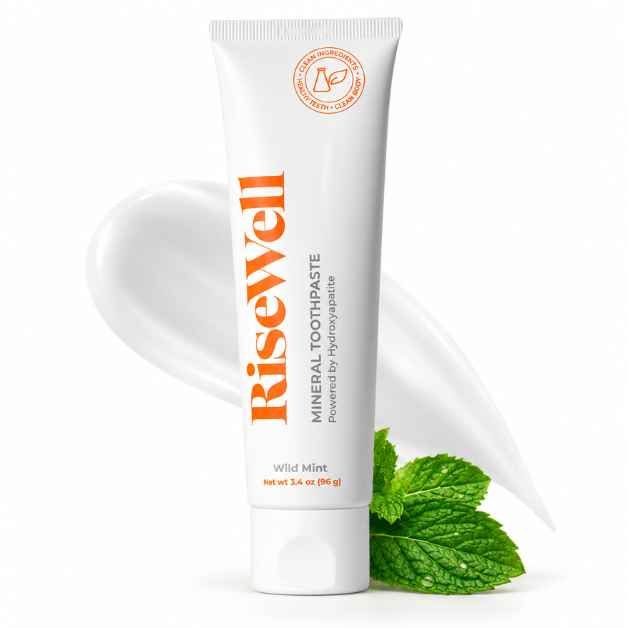
    RiseWell Original Mineral hydroxyapatite toothpaste

    RiseWell discloses what its competitors won’t: 10% micro-hydroxyapatite, sourced from a mine in France. That concentration matches the strongest clinical trial’s tested amount. The particle type differs (micro vs nano in the Paszynska study), but the transparency lets you make an informed comparison — something you can’t do with undisclosed formulas.

    SLS-free, fluoride-free, with xylitol. The reduced foaming (no SLS) takes a few days to adjust to. The ingredient list is clean and the FAQ on the product page answers common questions directly.

    Check Price on Amazon


    RiseWell PRO — Highest Concentration

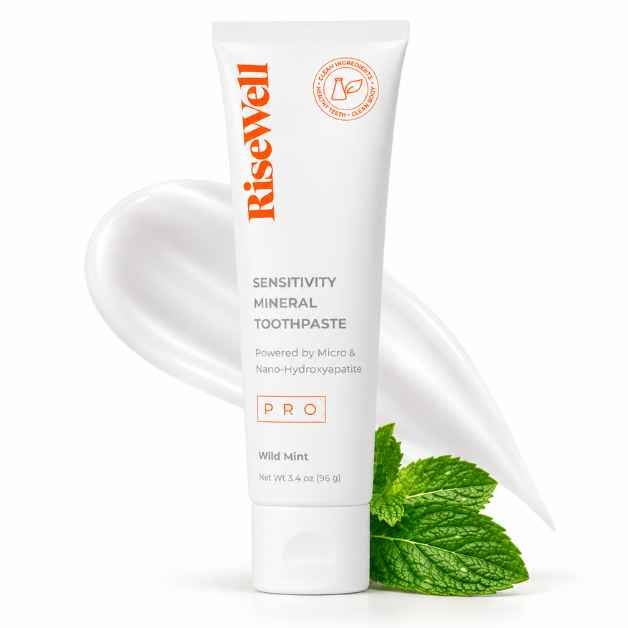
    RiseWell PRO Mineral hydroxyapatite toothpaste

    The only US product combining both nano and micro-HAp in one formula. Total stated concentration: 15% (5% NanoXIM CarePaste from Fluidinova + 10% micro-HAp). The nano component comes from the manufacturer whose material was assessed by the EU SCCS — a supply-chain signal no other product here matches.

    Positioned for sensitivity relief (nano-HAp targets dentin tubule occlusion) and maximum mineral delivery. The premium price reflects the dual-particle formulation and Fluidinova sourcing. No clinical trial has tested this specific combined formula.

    Check Price on Amazon


    Boka Ela Mint — Most Available

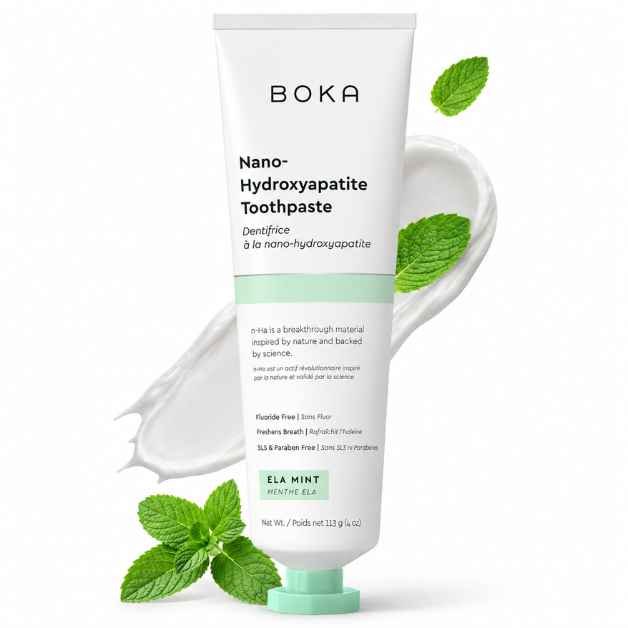
    Boka Ela Mint nano-hydroxyapatite toothpaste

    Boka is the gateway product for most people discovering HAp toothpaste — the largest brand, the widest retail footprint (Amazon, Target, Whole Foods), and the most online reviews. It uses nano-HAp with xylitol in a fluoride-free, SLS-free formula.

    The trade-off is transparency: Boka declines to disclose its nano-HAp concentration, calling it proprietary. You can’t verify the amount against clinical evidence. The 2025 NAD/NARB decision recommended Boka discontinue certain advertising claims — a ruling about marketing, not product safety, but relevant context for evaluating the brand’s positioning.

    If you want the most accessible, most reviewed HAp toothpaste and don’t need concentration verification, Boka is the pragmatic choice.

    Check Price on Amazon


    Davids Hydroxi — Most Sustainable

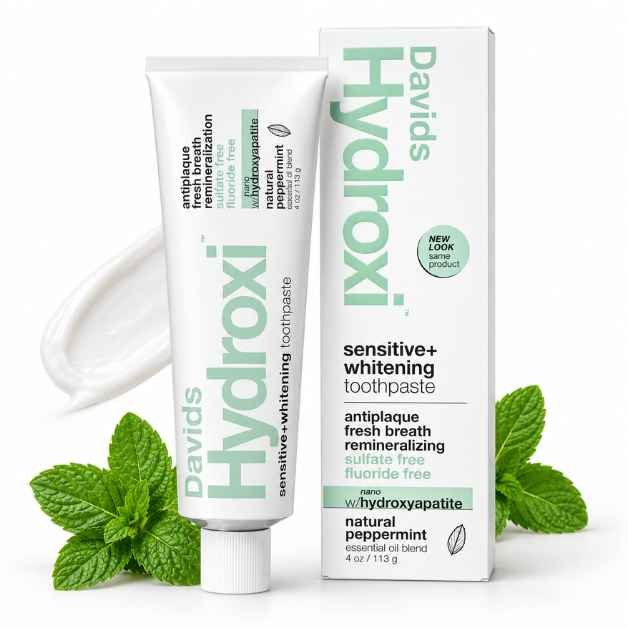
    Davids nano-hydroxyapatite toothpaste sensitive whitening peppermint

    Davids differentiates on sustainability and sourcing philosophy: recyclable metal tube (unique among these four), EWG Verified, Made in USA (California). The toothpaste uses nano-HAp and is marketed for both sensitivity and whitening.

    Concentration transparency is limited — VerdictLab has not independently verified a specific disclosed percentage from the manufacturer’s official materials. If you prioritise environmental packaging and US manufacturing over concentration verification, Davids may suit those priorities in this lineup.

    Check Price on Amazon


    Who Should Use HAp Toothpaste (and Who Shouldn’t)

    HAp toothpaste may be a reasonable choice if you:

    • Are a low-to-moderate caries risk adult looking for a fluoride-free option
    • Prefer to avoid fluoride for personal preference reasons and accept the narrower evidence base
    • Want a toothpaste marketed for sensitivity without potassium nitrate
    • Have young children who swallow toothpaste and you want an alternative to low-fluoride formulas

    Talk to your dentist first if you:

    • Have active cavities or a high caries risk — fluoride has deeper evidence for these populations
    • Have dry mouth, are on medications that reduce saliva, or are undergoing cancer treatment
    • Are pregnant or breastfeeding — no HAp-specific pregnancy data exists
    • Have been specifically prescribed a fluoride toothpaste by your dentist

    HAp toothpaste is not for you if you:

    • Need the strongest available evidence for cavity prevention — fluoride remains the benchmark
    • Want a toothpaste with the ADA Seal — no HAp-only product has it
    • Expect HAp to repair existing cavities or regrow lost enamel — no toothpaste does this


    The Evidence in Context

    Two things are true simultaneously about HAp toothpaste:

    First, the evidence is real and growing. Randomized trials have shown noninferiority to fluoride for cavity prevention with specific HAp formulations. The EU’s scientific committee has assessed nano-HAp material safety thoroughly. The ingredient has a plausible mechanism supported by laboratory and clinical research.

    Second, the retail products on Amazon are not the products that were tested in those trials. No product on this page has been individually validated in a published clinical trial. The clinical evidence comes from other formulations — notably a Dr. Wolff product tested in the Paszynska trials. Every retail brand is using the same ingredient category, but ingredient-level evidence and product-level evidence are different tiers of confidence.

    This gap is the central tension in the HAp category. VerdictLab’s role is to make that gap visible — not to pretend it doesn’t exist by citing clinical trials as though they proved something about a specific Amazon listing, and not to dismiss the category by ignoring the legitimate evidence behind it.

    For the full evidence review: What Is Hydroxyapatite Toothpaste?. For the fluoride comparison: HAp vs Fluoride. For safety and regulatory status: Is Hydroxyapatite Toothpaste Safe?

    Funding also deserves attention: VerdictLab’s review found that at least 8 of 17 eligible studies were manufacturer-linked, while funding was unclear from accessible declarations for another 7.


    Frequently Asked Questions

    Which HAp toothpaste is best overall?

    If transparency is your priority, RiseWell Original — it’s the only product that fully discloses concentration (10%), particle type (micro), and source (French mine). If availability matters most, Boka has the widest retail footprint. If sensitivity is the concern, RiseWell PRO offers the highest HAp concentration with a nano component from the SCCS-assessed manufacturer. If sustainability matters, Davids has the recyclable metal tube. “Best” depends on what you’re optimizing for.

    Can HAp toothpaste replace fluoride?

    Specific HAp formulations have shown noninferiority to fluoride in clinical trials — meaning they weren’t meaningfully worse for cavity prevention. This is promising but narrower evidence than fluoride’s decades of population data. For low-risk adults, HAp is a plausible alternative. For high-risk individuals, fluoride remains the stronger evidence-based choice. See: HAp vs Fluoride.

    Why don’t HAp toothpastes have the ADA Seal?

    The ADA Seal is a voluntary program. As of September 2026, no HAp-only toothpaste has received it. This may mean manufacturers haven’t applied, or that submitted evidence didn’t meet ADA criteria. Absence of the Seal is not evidence of harm. See: Is HAp Safe?

    Is HAp toothpaste safe for kids?

    The EU SCCS assessment found nano-HAp safe in toothpaste at specified concentrations. One pediatric clinical trial (Paszynska 2021) studied children aged 2–6 without significant adverse events. However, comprehensive pediatric safety data equivalent to fluoride doesn’t exist for HAp. Discuss with your child’s dentist. See: HAp Toothpaste for Kids.

    Can I use HAp toothpaste with braces or a retainer?

    HAp toothpaste is used the same way as any toothpaste — brush, spit, rinse. There’s no specific contraindication for orthodontic appliances, though your orthodontist’s care instructions take priority. For the retainer-specific angle, see: HAp Toothpaste With Braces and Retainers.

    Does HAp toothpaste whiten teeth?

    Some laboratory evidence supports mild whitening (surface stain reduction and optical brightening) from HAp at higher concentrations. This is not the same as peroxide-based chemical whitening. Most whitening effects from HAp toothpaste come from silica abrasion in the formula, not HAp itself. The Boka NAD/NARB decision specifically addressed whitening claim substantiation. See: Does HAp Toothpaste Whiten Teeth?


    Beyond Brushing Oral Health Guide Book
    Get the Free Oral Health Guide
    Download Beyond Brushing — a practical 30,000+ word guide to healthier teeth, gums, and fresher breath after 45.
    Marketing email consent
    • No spam • Unsubscribe anytime


    ✓ Medically reviewed
    Reviewed September 21, 2026
    Medical review covers dental and clinical accuracy only. It does not imply personal product testing, ranking or endorsement.
  • Boka vs RiseWell vs Davids Toothpaste Compared

    Boka vs RiseWell vs Davids Toothpaste Compared

    Editorial transparency: VerdictLab earns a commission when you purchase through our Amazon links — this never influences our ratings or recommendations. As an Amazon Associate I earn from qualifying purchases. Full disclosure.

    Last updated: September 2026  |  By: VerdictLab Editorial Team

    How we compared: We reviewed each brand’s publicly disclosed specifications, ingredient lists, concentration disclosures (or lack thereof), particle type, and manufacturer claims. VerdictLab has not performed hands-on testing. This comparison is based on what each brand tells you — and what each doesn’t.

    Boka, RiseWell and Davids are the three brands most people encounter when they start shopping for hydroxyapatite toothpaste. All three are fluoride-free, all three use HAp as their headline ingredient, and all three position themselves as premium alternatives to conventional toothpaste. The similarities end there.

    They differ in what they disclose (RiseWell tells you its concentration; Boka doesn’t), what type of HAp they use (nano, micro, or both), how they price their products, and what supporting ingredients they include. This comparison focuses on those differences — because the things all three share (fluoride-free, HAp-based, premium-priced) don’t help you choose between them.

    For the foundational evidence behind HAp toothpaste, see: What Is Hydroxyapatite Toothpaste?. For concentration interpretation, see: HAp Toothpaste Percentages.


    Head-to-Head Comparison

    Attribute Boka Ela Mint RiseWell Original RiseWell PRO Davids Hydroxi
    HAp Type Nano-HAp Micro-HAp Nano + Micro Nano-HAp
    Concentration Disclosed? No (proprietary) Yes — 10% Yes — 15% (5% nano + 10% micro) Not independently verified
    HAp Source Disclosed? Western Europe lab (per brand) Mine in France Fluidinova (nano) + French mine (micro) Not disclosed
    Fluoride No No No No
    Sensitivity Ingredient HAp (proposed tubule occlusion) HAp HAp (nano component targets sensitivity) HAp + marketed for sensitivity
    Notable Extras Xylitol Xylitol, essential oils Xylitol, essential oils EWG Verified, metal tube
    SLS-Free Yes Yes Yes Yes
    Tube Size 4 oz 4 oz 4 oz 4 oz
    Retail Availability Amazon, Target, brand site Amazon, brand site, retailers Amazon, brand site Amazon, brand site
    Clinical Trial of This Product? No published trial No published trial No published trial No published trial

    Specifications from manufacturer product pages and help centers as of September 2026. Prices fluctuate — check Amazon for current pricing.


    Boka Ela Mint

    Boka Ela Mint nano-hydroxyapatite toothpaste

    Boka is the most widely recognized HAp toothpaste brand in the US — the one most people try first when they hear about hydroxyapatite. It uses nano-HAp, is fluoride-free and SLS-free, and includes xylitol as a supporting ingredient. The Ela Mint flavor is the flagship product.

    The transparency gap. Boka explicitly declines to disclose its nano-HAp concentration, calling it proprietary. Independent reviewers have estimated it somewhere in the 10–15% range based on ingredient-list ordering, but that’s guesswork — ingredient ordering alone can’t pin down an exact percentage, and Boka hasn’t confirmed any estimate. This means you can’t verify whether the amount in the tube matches the 10% concentration tested in the Paszynska clinical trial. It might. You just can’t check.

    The NAD/NARB context. In 2025, the BBB’s National Advertising Division recommended Boka discontinue certain remineralization and whitening claims, finding that the evidence presented didn’t adequately support those specific advertising statements. This was a ruling about advertising claims, not product safety or effectiveness — but it’s worth knowing when evaluating the brand’s marketing language.

    Best for: People who want the most widely available, widely reviewed HAp toothpaste and are comfortable with an undisclosed concentration. The brand’s retail footprint (Amazon, Target, Whole Foods) makes it the easiest to find in person.

    Check Price on Amazon


    RiseWell Original Mineral Toothpaste

    RiseWell Original Mineral hydroxyapatite toothpaste

    RiseWell is the most transparent brand in this comparison. The Original uses 10% micro-hydroxyapatite, sourced from a mine in France. Both the concentration and the source are disclosed on the product page — something neither Boka nor Davids does as clearly.

    Micro, not nano. RiseWell Original uses micro-HAp (particles larger than 1 μm), not nano-HAp (particles under 100 nm). This is a meaningful distinction. The Paszynska adult trial tested a nano-HAp formulation. The EU SCCS safety opinion specifically assessed nano particles. Micro-HAp has its own research base, particularly around remineralization, but the studies don’t always interchange with nano-HAp results. RiseWell’s concentration (10%) matches the trial, but the particle type differs.

    The formula. SLS-free, fluoride-free, with xylitol and essential oils. Some users note that RiseWell doesn’t foam as much as conventional toothpaste due to the absence of SLS — this is a formulation feature, not a performance issue, though it takes a few days to adjust to.

    Best for: People who prioritise ingredient transparency and want to know exactly what concentration they’re getting. The 10% disclosed concentration, named source, and detailed FAQ make RiseWell the easiest brand to evaluate against the published evidence.

    Check Price on Amazon


    RiseWell PRO Mineral Toothpaste

    RiseWell PRO Mineral hydroxyapatite toothpaste

    RiseWell PRO is the premium tier — the first US toothpaste to combine both nano and micro-HAp in one formula. The total stated concentration is 15%: 5% NanoXIM CarePaste (sourced from Fluidinova, the manufacturer whose material was assessed by the EU SCCS) plus 10% micro-HAp from the same French source as the Original.

    The nano source matters. Fluidinova produces the NanoXIM material that was submitted for the SCCS safety assessment. That’s a stronger supply-chain signal than an unspecified “nano-HAp” from an unnamed lab. It doesn’t mean the PRO formula was individually assessed by the SCCS — it means the nano-HAp ingredient comes from the assessed manufacturer.

    The concentration caveat. “15% HAp” sounds like 50% more than “10% HAp.” But 5% NanoXIM CarePaste is 5% of a commercial HAp dispersion — the actual nano-HAp mineral content from that component is a fraction of 5%, not 5% pure nano-HAp. The “15%” is accurate as a description of total HAp-containing ingredients by weight. It’s potentially misleading as a comparison to the 10% figure in the Paszynska trial, which tested a different formulation. No clinical trial has tested the PRO’s combined formula.

    Best for: People who want the highest disclosed HAp concentration available, specifically want nano-HAp for sensitivity, and value that the nano component comes from the SCCS-assessed manufacturer. The premium price reflects the dual-particle formulation and Fluidinova sourcing.

    Check Price on Amazon


    Davids Hydroxi Sensitive+Whitening

    Davids nano-hydroxyapatite toothpaste sensitive whitening peppermint

    Davids approaches the HAp category from a sustainability and clean-ingredients angle. The toothpaste comes in a recyclable metal tube, is EWG Verified, and uses nano-HAp. It’s marketed for both sensitivity and whitening.

    Concentration. Davids lists nano-hydroxyapatite on its ingredient list and markets the product around the ingredient, but VerdictLab has not independently verified a specific disclosed percentage from the manufacturer’s official materials. If Davids discloses a concentration, it may appear on updated product pages or in direct manufacturer communication — check the current listing.

    The packaging differentiator. The recyclable metal tube is unique among these four products and matters to buyers who weigh environmental impact alongside oral care. Most HAp toothpastes come in standard plastic tubes. Davids’ metal tube is a genuine distinguishing feature, even if it has nothing to do with the toothpaste’s clinical performance.

    Made in USA. Davids manufactures in the US (California), which is a supply-chain differentiator for some buyers. The “Made in USA” claim is verifiable from the brand’s own materials.

    Best for: People who value sustainability (metal tube, EWG Verified), want a US-made nano-HAp toothpaste, and are less focused on concentration disclosure than on the brand’s overall ingredient and sourcing philosophy.

    Check Price on Amazon


    Which One Should You Choose?

    Choose based on what matters most to you:

    Transparency: RiseWell (Original or PRO) — disclosed concentration, particle type, and source for every HAp component.

    Availability: Boka — widest retail footprint, easiest to find in stores.

    Highest HAp concentration: RiseWell PRO — 15% combined (with the nano-dispersion caveat above).

    SCCS-assessed nano source: RiseWell PRO — NanoXIM from Fluidinova, the assessed manufacturer.

    Sustainability: Davids — recyclable metal tube, EWG Verified, Made in USA.

    Budget: Compare current Amazon pricing — all four are in the premium toothpaste range ($8–$16/tube), but multi-packs often reduce the per-tube cost.

    None of these products has been tested in a published clinical trial as the specific retail formula. The clinical evidence for HAp toothpaste comes from other formulations — Paszynska et al. tested a specific 10% HAp toothpaste made by Dr. Wolff (BioRepair/Karex). These brands use the same active ingredient category, but not the same product. This is true of the entire HAp retail market, not a flaw specific to any one brand.

    For the full product roundup across more brands, see: Best Hydroxyapatite Toothpaste.


    Frequently Asked Questions

    Is Boka or RiseWell better?

    Neither is objectively better — they make different trade-offs. RiseWell is more transparent (disclosed concentration and source). Boka is more widely available and has larger brand recognition. If concentration transparency matters to you, RiseWell wins. If retail convenience and community size matter more, Boka wins.

    Is RiseWell PRO worth the premium over Original?

    The PRO adds nano-HAp (from Fluidinova, the SCCS-assessed manufacturer) to the Original’s micro-HAp base, raising the total stated concentration to 15%. Whether that extra cost translates to meaningfully better clinical outcomes hasn’t been established by a published trial comparing the two. The PRO is positioned for people with sensitivity concerns who specifically want nano-HAp. If you don’t have sensitivity issues, the Original provides the same disclosed 10% micro-HAp concentration at a lower price.

    Why doesn’t Boka disclose its percentage?

    Boka says the concentration is proprietary. This is a common practice in consumer products, not unique to Boka. It does mean you can’t independently verify the amount against clinical evidence. Independent reviewers have estimated 10–15% from ingredient ordering, but that’s an estimate, not a confirmed figure.

    Does Davids disclose its concentration?

    VerdictLab has not independently verified a specific percentage from Davids’ official materials as of September 2026. Check the current product page or contact Davids directly for the latest disclosure.

    Have any of these been clinically tested?

    No published clinical trial was identified that tested any of these four specific retail products. The clinical evidence for HAp toothpaste comes from other formulations (notably the Paszynska trials using a Dr. Wolff product). All four brands use hydroxyapatite as an ingredient category — but the ingredient and the product are different levels of evidence.

    This distinction is central to VerdictLab’s structured evidence review: results should remain specific to the tested product, population and outcome and should not automatically be transferred to another retail formulation.


    Beyond Brushing Oral Health Guide Book
    Get the Free Oral Health Guide
    Download Beyond Brushing — a practical 30,000+ word guide to healthier teeth, gums, and fresher breath after 45.
    Marketing email consent
    • No spam • Unsubscribe anytime


  • Hydroxyapatite Toothpaste Percentages: How to Read the Label

    Hydroxyapatite Toothpaste Percentages: How to Read the Label

    Last updated: September 2026  |  By: VerdictLab Editorial Team

    “10% nano-hydroxyapatite” is the number you’ll see most often in the HAp toothpaste category. Some brands disclose their percentage. Others call it proprietary. A few claim higher concentrations. And almost none explain what the percentage actually means — or whether it matches the concentration studied in clinical trials.

    This guide explains how to read HAp toothpaste labels, what the disclosed percentages tell you, what they don’t, and how to compare a retail product to the research it’s implicitly trading on.


    What a Disclosed HAp Percentage Actually Means

    When a toothpaste label says “10% hydroxyapatite,” it typically means 10% by weight of the finished formula is hydroxyapatite mineral. A 4 oz (113 g) tube at 10% would contain roughly 11.3 g of HAp.

    That sounds straightforward. It isn’t, for three reasons.

    Finished-formula concentration versus ingredient dispersion

    First, the percentage can refer to different things. “10% HAp” could mean 10% of the total formula weight is hydroxyapatite, or it could mean the formula contains a proprietary ingredient that is itself an HAp dispersion — so the actual HAp mineral concentration in the tube is lower than the stated percentage. If a product uses “5% NanoXIM CarePaste” (a commercial HAp dispersion), the finished-formula HAp mineral content depends on the concentration of HAp within that dispersion, not the percentage of the dispersion added. RiseWell’s PRO line discloses this distinction: 5% NanoXIM CarePaste plus 10% micro-HAp, for a combined stated concentration of 15% — but the nano-HAp mineral content from the NanoXIM component is a fraction of that 5%.

    Second, particle type matters alongside concentration. 10% nano-HAp and 10% micro-HAp are not the same formulation even at the same percentage. The particles have different sizes, surface areas, and interaction profiles with tooth surfaces. The clinical trials tested specific formulations, not just a concentration number.

    Third, “proprietary” is not a synonym for “zero.” When a brand like Boka declines to disclose its HAp concentration (“for proprietary purposes, we’re unable to share the exact % of nHA in our products”), that’s a business decision about competitive information. It doesn’t mean the product contains a negligible amount — it means you can’t verify the amount against the clinical evidence. Undisclosed is a different label from zero, and both are different from verified.


    How Concentrations Appear in Human Research

    The most-cited clinical evidence for HAp toothpaste comes from Paszynska et al. (2023), which tested a toothpaste containing 10% hydroxyapatite against 1,450 ppm sodium fluoride in adults over 18 months. The HAp concentration in that study was a defined, verified formulation — not a self-reported label claim from a retail product.

    The 10% figure has become a de facto marketing benchmark. Brands that disclose 10% are implicitly claiming their product matches the concentration in this trial. Brands that disclose higher concentrations (like RiseWell PRO’s 15%) are implicitly claiming their product exceeds it. Neither claim means the retail product was the one actually tested in the study — the formulation, particle characteristics, and supplementary ingredients may all differ.

    The EU SCCS assessed nano-HAp safety at concentrations up to 29.5% in toothpaste. That’s a safety ceiling, not an efficacy recommendation. A product at 29.5% is not “three times more effective” than one at 10% — the SCCS evaluated safety, not dose-response for clinical effectiveness. No human caries trial has tested concentrations near that ceiling.

    A 2022 laboratory study (Shang et al.) tested 10% versus 1% nano-HAp in non-abrasive toothpastes and found the 10% concentration produced significantly greater whitening effects (color change) on bovine enamel. This supports a concentration-effect relationship for that specific cosmetic endpoint under laboratory conditions — it doesn’t establish a universal minimum for every clinical outcome.

    VerdictLab’s clinical-trial review reinforces that concentration cannot be interpreted alone: findings apply to the complete tested product, population, comparator and outcome, rather than establishing 10% as a universal effectiveness threshold.


    Why Percentage Alone Does Not Determine Effectiveness

    Concentration is one variable. Particle type (nano vs micro), particle shape (rods vs spheres), particle source (synthetic vs mined), coating status, supporting ingredients (xylitol, silica, potassium nitrate), and the overall formula pH all affect how the toothpaste interacts with tooth surfaces.

    A recent in-vitro study highlighted by Ask the Dentist (2025) compared eight remineralizing toothpastes and found that a 3.1% nano-HAp formulation (Fygg, using NanoXIM) outperformed several products with higher stated concentrations on remineralization endpoints. The study was manufacturer-funded and in-vitro (not clinical), but it illustrates the point: particle quality and formulation matter, not just the number on the label.

    This doesn’t mean percentage is irrelevant. It means percentage without context — without knowing the particle type, the supporting formula, and whether the exact product has been clinically tested — is insufficient to predict clinical performance. Two toothpastes both labeled “10% HAp” may perform differently if one uses rod-shaped nano-HAp from a characterized source and the other uses uncharacterized micro-HAp powder.


    Label Comparison: What Each Brand Discloses

    The table below captures what each major US brand publicly states about its HAp concentration. “Disclosed” means the manufacturer provides the information on its product page or in response to direct inquiry. “Not disclosed” means the brand has explicitly declined or the information is not publicly available.

    Product HAp Type Stated Concentration Concentration Basis Source / Date Direct Clinical Match
    RiseWell Original Micro-HAp 10% Finished formula (per manufacturer FAQ) risewell.com product page, Sept 2026 Concentration matches trials; particle type differs (micro vs nano in Paszynska)
    RiseWell PRO Nano + Micro 15% combined (5% NanoXIM + 10% micro) Manufacturer disclosure (product page + blog) risewell.com PRO page, Sept 2026 Nano component sourced from Fluidinova (SCCS-assessed manufacturer); no trial of this combined formula
    Davids Hydroxi Sensitive+Whitening Nano-HAp Not independently verified by VerdictLab Check current label/manufacturer materials davids-usa.com, Sept 2026 No published trial of this specific product
    Boka Ela Mint Nano-HAp Not disclosed (proprietary) N/A — brand explicitly declines Boka help center, Sept 2026 No published trial of this specific product

    Table reflects publicly available manufacturer disclosures as of September 2026. Concentrations are manufacturer-stated, not independently verified by VerdictLab. “Direct clinical match” means whether a published clinical trial tested this exact retail product — not whether the product uses the same ingredient category.

    RiseWell is the most transparent: it discloses concentration, particle type, and source (micro-HAp from a French mine for Original; NanoXIM from Fluidinova for the nano component in PRO). Boka is the least transparent on concentration, though it discloses that it uses nano-HAp. Davids uses nano-HAp but VerdictLab has not independently verified a specific percentage from the manufacturer.

    For the full brand comparison, see: Boka vs RiseWell vs Davids.


    How to Check a Product Label

    If you’re comparing HAp toothpastes, these are the questions to answer from the label or manufacturer’s website:

    Does the brand disclose the HAp percentage? If yes, note whether it refers to the finished formula or a proprietary ingredient blend. If no, note that the concentration is unverified — not that it’s zero.

    Is the HAp nano, micro, or unspecified? This affects which research and which safety assessments apply. The SCCS safety opinion covers specified nano particles. The Paszynska adult trial tested a specific formulation. Matching “nano” or “micro” to a product requires the brand to disclose it.

    Does the product have any independent clinical testing? A disclosed concentration that matches a published trial’s concentration is suggestive — but only if the formulation, particle characteristics, and supporting ingredients also match. Most retail products have not been individually tested in published clinical trials.

    What else is in the formula? Silica (abrasive), potassium nitrate (sensitivity), xylitol (antibacterial), and other ingredients all contribute to the toothpaste’s overall performance. HAp concentration is one variable, not the whole story.

    For particle-type distinctions, see: Nano vs Micro Hydroxyapatite Toothpaste. For the full safety framework, see: Is Hydroxyapatite Toothpaste Safe?


    Frequently Asked Questions

    Is a higher percentage always better?

    Not necessarily. The most robust clinical evidence comes from a 10% formulation. A 2022 lab study found 10% outperformed 1% for whitening endpoints, suggesting concentration matters at the extremes. But recent in-vitro research also found a 3.1% formulation outperforming higher-concentration products on remineralization, suggesting particle quality and formulation matter at least as much as percentage. Higher is not automatically better — and no clinical trial has tested the full concentration range to establish an optimal dose.

    Is 10% a proven minimum for every use?

    No. 10% is the concentration used in the strongest clinical trial (Paszynska et al. 2023). It’s a reasonable reference point, not a universal minimum. Products at lower concentrations may still provide benefits — or they may not. The evidence base for concentrations below 10% is thinner, and for concentrations above 10%, no clinical trial has established additional benefit.

    Can ingredient order on the label reveal the exact amount?

    No. US cosmetic labeling requires ingredients to be listed in descending order of predominance, but this only tells you the relative ranking, not the exact percentage. An ingredient listed third could be 8% or 3% — the label doesn’t say. Reverse-engineering a precise concentration from ingredient order is guesswork, not verification.

    Is an undisclosed percentage proof a product is ineffective?

    No. Undisclosed means you can’t verify the concentration against the clinical evidence. It doesn’t prove the product contains too little HAp. It does mean you’re taking the manufacturer’s word that the amount is effective without being able to check. Whether that level of trust is acceptable is a personal purchasing decision.


    Beyond Brushing Oral Health Guide Book
    Get the Free Oral Health Guide
    Download Beyond Brushing — a practical 30,000+ word guide to healthier teeth, gums, and fresher breath after 45.
    Marketing email consent
    • No spam • Unsubscribe anytime


    ✓ Medically reviewed
    Reviewed September 19, 2026
    Medical review covers dental and clinical accuracy only. It does not imply personal product testing, ranking or endorsement.
  • Is Hydroxyapatite Toothpaste Safe? Nano-HAp, FDA and ADA Explained

    Is Hydroxyapatite Toothpaste Safe? Nano-HAp, FDA and ADA Explained

    Last updated: September 2026  |  By: VerdictLab Editorial Team

    Note: This article reviews published safety assessments and regulatory frameworks for hydroxyapatite in toothpaste. It is not medical advice. If you have specific concerns — particularly regarding pregnancy, breastfeeding, young children or a medical condition — consult your dentist or physician.

    Three different questions get blurred into one when people search “is hydroxyapatite toothpaste safe.” The EU’s scientific committee has assessed the material’s safety. The FDA has a different regulatory framework that doesn’t include HAp as an approved anticaries agent. The ADA has a voluntary Seal program that no HAp-only toothpaste has obtained. These are three separate bodies answering three separate questions — and the answer to each one is different.

    This guide separates them, explains what each assessment covers and doesn’t cover, and identifies the groups where the safety evidence is thinner than marketing implies.


    The Practical Safety Question Depends on the Formula and User

    “Is it safe?” is the wrong question without specifying safe for whom, in what form, at what concentration, and for what use. A 10% nano-HAp toothpaste used by a healthy adult twice daily is a different safety question from a toddler swallowing a mouthful, or a pregnant woman using an untested formulation, or a product with an undisclosed particle type at an unknown concentration.

    The safety assessments that exist are specific. They evaluate defined materials under defined conditions. Extending their conclusions beyond those conditions — “the EU says it’s safe, so every HAp toothpaste is safe for everyone” — is the mistake most marketing and many blog posts make.


    What Human Toothpaste Studies Report About Tolerability

    The clinical trials of HAp toothpaste (notably Paszynska et al. 2023 in adults and 2021 in children) did not report significant adverse events attributable to the HAp formulation during the study periods. Participants used the toothpaste twice daily for 18 months (adults) and 12 months (children) under supervised conditions.

    This is a positive signal within its scope. Two caveats apply:

    First, these trials were designed to measure cavity prevention, not to comprehensively capture adverse events with the statistical power of a dedicated safety trial. “No significant adverse events reported” in a 189-person trial is not the same as “proven safe in all populations” — it means nothing alarming emerged in this study, in this population, over this period.

    Second, the tested formulation was specific (a particular HAp concentration, particle type, and supporting formula). A different retail product with different particle characteristics, concentration, or additional ingredients may have a different tolerability profile. The trial data applies to what was tested, not to the entire product category.

    As explained in VerdictLab’s clinical evidence review, these trials can describe the adverse events reported during their study periods, but they are not large or long enough to establish rare or long-term safety across all users.


    The EU SCCS Assessment: What It Covers

    The European Commission’s Scientific Committee on Consumer Safety (SCCS) issued its Submission IV final opinion on June 26, 2025 (published July 1, 2025). It is the most comprehensive safety assessment of nano-hydroxyapatite in oral care products currently available from any regulatory body.

    The headline finding: the SCCS considers hydroxyapatite (nano) safe when used at concentrations up to 29.5% in toothpaste and up to 10% in mouthwash.

    The supporting evidence: the committee found that nano-HAp does not pose a mutagenic hazard, cytotoxicity, or inflammatory effects even at high test concentrations in a buccal mucosa cell model. Any uptake by buccal mucosa is considered negligible. Unintentionally ingested nanoparticles undergo rapid dissolution in gastric fluid and “do not raise any nano-specific concern over safety.”

    Specified particles and exposures, not blanket approval

    The SCCS opinion applies only to hydroxyapatite (nano) with specific characteristics:

    The particles must be rod-shaped, with at least 87% (by number) having aspect ratios of 3 or less and the remaining 13% not exceeding aspect ratios of 9. The particles must not be coated or surface-modified. The maximum length assessed is 122 ± 43 nm. The opinion explicitly states it is “not applicable to any hydroxyapatite (nano) material that is composed of or contains needle-shaped particles.”

    This specificity matters. A retail product that uses nano-HAp matching these specifications falls within the assessed safety envelope. A product that uses needle-shaped particles, coated particles, or particles outside the assessed size range is not covered by this opinion — even if the label says “nano-hydroxyapatite.” Most retail labels don’t disclose enough particle detail for a consumer to verify the match.

    The SCCS also updated its position from earlier opinions. Its 2023 Submission III opinion had found nano-HAp safe at up to 10% in toothpaste and 0.465% in mouthwash. The 2025 opinion significantly raised both thresholds based on new submitted evidence — demonstrating that safety assessments evolve as data accumulates.

    Body / Document Jurisdiction What It Evaluates What It Does Not Evaluate
    EU SCCS (Submission IV, 2025) EU cosmetics regulation Material safety of specified nano-HAp in oral products at specified concentrations Clinical efficacy; product-level approval; US legal status; non-specified particle types
    FDA OTC Monograph (21 CFR 355) US drug regulation Which active ingredients are permitted in anticaries toothpaste Cosmetic ingredients; ingredients not submitted for monograph inclusion; EU safety opinions
    ADA Seal of Acceptance US professional endorsement (voluntary) Safety and efficacy claims for products submitted by manufacturers Products that haven’t applied; ingredients as categories; regulatory or legal status
    NAD/NARB (Boka, 2025) US advertising self-regulation Whether specific advertising claims were adequately substantiated Product safety; ingredient safety; whether the product works at all


    FDA Status and the ADA Seal Are Different Questions

    FDA: In the US, toothpaste that claims to prevent cavities is regulated as an over-the-counter drug under the FDA’s monograph system (21 CFR Part 355). The recognized anticaries active ingredients are specific fluoride compounds (sodium fluoride, stannous fluoride, sodium monofluorophosphate) at specified concentrations. Hydroxyapatite is not listed as an approved anticaries active under this monograph.

    This means HAp toothpaste in the US is marketed as a cosmetic product, not a drug. It can claim to “clean” or “whiten” teeth (cosmetic claims) but cannot legally claim to “prevent cavities” or “treat” a dental condition without drug approval. Some brands navigate this with careful language — “supports remineralization” rather than “prevents cavities” — but the regulatory line is clear: HAp is not an FDA-approved anticaries agent.

    This is a regulatory-pathway distinction, not a safety finding. The FDA hasn’t evaluated and rejected HAp for safety concerns — it simply hasn’t approved it as a drug active through the monograph process. Manufacturers could pursue FDA approval through appropriate pathways, but none have done so to date.

    ADA Seal: The ADA Seal of Acceptance is a voluntary program. Manufacturers submit their products along with clinical evidence, and the ADA’s Council on Scientific Affairs evaluates them. As of September 2026, no HAp-only toothpaste carries the Seal. This could mean manufacturers haven’t applied, that submitted evidence didn’t meet ADA criteria, or both — the ADA doesn’t publicly disclose application details.

    The absence of the Seal is not evidence of harm. It is absence of this particular professional endorsement. Many safe, effective oral care products don’t carry the ADA Seal — it’s a quality signal, not a safety clearance.


    Children, Pregnancy, Breastfeeding and Accidental Swallowing

    Children: The Paszynska et al. (2021) trial studied children aged 2–6 using a microcrystalline HAp toothpaste over 12 months without reporting significant adverse events. The SCCS assessment addresses nano-HAp material safety generally. However, neither constitutes comprehensive pediatric safety data equivalent to what exists for fluoride in children. The ADA and AAPD provide specific fluoride dosing guidance by age. Comparable HAp-specific age guidance from a US professional body does not exist.

    Parents considering HAp toothpaste for children should discuss the decision with their child’s dentist, particularly regarding the child’s individual caries risk and the relative strength of the evidence base compared to fluoride. For the detailed children’s guide, see: Hydroxyapatite Toothpaste for Kids.

    Pregnancy and breastfeeding: No HAp-specific pregnancy or breastfeeding safety studies were identified in this review. The SCCS assessment addresses oral mucosa exposure and incidental ingestion in adults — it does not specifically evaluate gestational or lactational exposure. Pregnant and breastfeeding individuals should consult their healthcare provider before switching toothpaste ingredients, particularly if their current fluoride toothpaste was recommended by their dentist for caries management during pregnancy (a period of increased caries risk for some individuals).

    Accidental swallowing: The SCCS opinion states that unintentionally ingested nano-HAp particles “undergo rapid dissolution in the gastric fluid and therefore do not raise any nano-specific concern over safety.” This addresses the material behavior in gastric conditions — it is not a finding that swallowing toothpaste is safe or recommended. All toothpaste, HAp or fluoride, is designed to be spit out after brushing. Young children who cannot reliably spit should use age-appropriate amounts under supervision, regardless of the active ingredient.


    Other Ingredients, Allergies and Irritation

    HAp is one ingredient in a toothpaste formula. The complete product also contains surfactants, flavoring, sweeteners, thickeners, preservatives and sometimes additional active ingredients (potassium nitrate for sensitivity, silica for abrasion). Safety or irritation reactions may come from any of these components, not just the hydroxyapatite.

    If you experience mouth irritation, tingling, rash, or any unusual reaction after switching to an HAp toothpaste, stop using it and consult your dentist. The reaction may be to the HAp, to another ingredient (SLS, a flavor compound, a preservative), or to the change in formulation rather than any single ingredient. Your dentist can help identify the likely cause.

    Check the full ingredient list, not just the headline marketing. “Natural” or “clean” labels on HAp toothpastes don’t mean the product is free of potential allergens or irritants — they mean the manufacturer has chosen to market with those terms.


    When to Seek Professional Advice

    Talk to your dentist before switching if you fall into any of these categories: active cavities or recent caries history (your dentist may specifically recommend fluoride); dry mouth or medications that reduce saliva; pregnancy or breastfeeding; immune-compromised status; young children (your pediatric dentist should weigh in); or any history of oral tissue reactions to dental products.

    For healthy adults at low to moderate caries risk, the existing safety evidence is promising with respect to the studied formulations and exposures; however, it does not confirm the safety of all HAp products and populations. Whether it protects you as well as your current toothpaste depends on the specific product, your individual risk, and the strength of evidence you require before making the switch.


    Frequently Asked Questions

    Is HAp toothpaste FDA-approved?

    Hydroxyapatite is not recognized as an anticaries active ingredient under the FDA’s OTC monograph. This means HAp toothpaste is marketed as a cosmetic product in the US, not a drug. It’s a regulatory-classification distinction, not a safety verdict. The FDA hasn’t evaluated and rejected HAp for safety reasons — it hasn’t approved it through the drug monograph process.

    Does the lack of an ADA Seal prove HAp is harmful?

    No. The ADA Seal is a voluntary professional endorsement. Many safe, effective products don’t carry it — either because manufacturers haven’t applied or because the submitted evidence didn’t meet ADA’s specific criteria. Absence of the Seal is absence of this endorsement, not evidence of harm.

    Does the EU opinion apply to every nano-HAp product?

    No. The SCCS opinion specifies particle characteristics: rod-shaped, uncoated, with defined aspect ratios and maximum length. Products using needle-shaped particles, coated particles, or particles outside the assessed specifications are not covered. Most retail labels don’t disclose enough particle detail for consumers to verify the match.

    Can I safely swallow HAp toothpaste?

    No toothpaste — HAp or fluoride — is designed to be swallowed. The SCCS found that incidentally ingested nano-HAp dissolves in gastric fluid without raising nano-specific safety concerns. That’s a reassuring finding about accidental exposure, not a recommendation that swallowing is safe or intended. Spit and rinse after brushing.

    Is HAp toothpaste safe during pregnancy?

    No HAp-specific pregnancy studies were identified. The EU assessment addresses adult oral use, not gestational exposure specifically. Pregnant individuals should discuss toothpaste choices with their healthcare provider, particularly if fluoride toothpaste was recommended for caries management during pregnancy.

    Is nano-HAp dangerous?

    The EU SCCS found no mutagenic hazard, cytotoxicity, or inflammatory effects for the specified nano-HAp particles at assessed concentrations. The word “nano” triggers concern for some consumers, but the safety assessment specifically addressed nanoparticle behavior — including that ingested particles dissolve in gastric fluid. The concern is more about undefined or unspecified nano particles than about the category as a whole.


    Beyond Brushing Oral Health Guide Book
    Get the Free Oral Health Guide
    Download Beyond Brushing — a practical 30,000+ word guide to healthier teeth, gums, and fresher breath after 45.
    Marketing email consent
    • No spam • Unsubscribe anytime


    ✓ Medically reviewed
    Reviewed September 17, 2026
    Medical review covers dental and clinical accuracy only. It does not imply personal product testing, ranking or endorsement.