Last updated: September 2026 | By: VerdictLab Editorial Team
Hydroxyapatite toothpaste is a growing category with a transparency problem. The active ingredient is supported by clinical evidence — specific HAp formulations have shown noninferiority to fluoride for cavity prevention in randomized trials. But the retail products trading on that evidence rarely disclose enough for you to verify whether their formula matches what was tested. Concentrations are often proprietary. Particle types are vaguely described. And marketing language routinely exceeds what the research supports.
This guide cuts through that. We compared the leading HAp toothpastes on what they disclose, what they don’t, and how each maps to the published evidence. If you want the science first, start with: What Is Hydroxyapatite Toothpaste? and Hydroxyapatite vs Fluoride.
Quick Picks
- Most transparent: RiseWell Original — 10% micro-HAp, concentration and source fully disclosed
- Highest HAp concentration: RiseWell PRO — 15% combined (nano from SCCS-assessed Fluidinova + micro), positioned for sensitivity relief
- Most widely available: Boka Ela Mint — largest retail footprint, undisclosed concentration
- Most sustainable packaging: Davids Hydroxi — recyclable metal tube, EWG Verified, Made in USA
In This Guide
What to Look for in an HAp Toothpaste
The HAp toothpaste market is crowded with products that look similar on the shelf but differ meaningfully in what they disclose. Before comparing individual products, here’s what actually differentiates one from another:
Concentration disclosure. The strongest clinical trial tested a 10% HAp formulation. A product that discloses its concentration lets you check whether it matches the evidence. A product that calls it “proprietary” doesn’t — you’re trusting the brand without being able to verify. Neither is inherently better, but the transparency is different. See: HAp Toothpaste Percentages.
Particle type. Nano-HAp and micro-HAp have different research bases and different interactions with tooth surfaces. The EU SCCS safety assessment specifically evaluated nano particles with defined characteristics. The Paszynska clinical trial tested nano-HAp. Some products use micro, some nano, some both — and the distinction matters more than most marketing acknowledges. See: Nano vs Micro Hydroxyapatite.
What isn’t on the label. HAp toothpaste in the US is marketed as a cosmetic, not a drug. It lacks FDA approval as an anticaries agent and the ADA Seal of Acceptance. These are regulatory realities, not safety findings — but they mean HAp toothpaste occupies a different professional and legal status than fluoride toothpaste. See: Is Hydroxyapatite Toothpaste Safe?
Supporting ingredients. Xylitol, potassium nitrate, silica, essential oils — these affect the toothpaste’s overall performance alongside the HAp. A sensitivity claim may come from potassium nitrate, not HAp. A whitening effect may come from silica abrasion, not HAp. Check the full formula, not just the headline ingredient.
Product Comparison
| Product | HAp Type | Concentration | Source Disclosed | Standout Feature |
|---|---|---|---|---|
| RiseWell Original | Micro | 10% (disclosed) | Yes — French mine | Full transparency |
| RiseWell PRO | Nano + Micro | 15% combined (disclosed) | Yes — Fluidinova (nano) + France (micro) | SCCS-assessed nano source |
| Boka Ela Mint | Nano | Not disclosed (proprietary) | Western Europe lab (unnamed) | Widest retail availability |
| Davids Hydroxi | Nano | Not independently verified | Not disclosed | Metal tube, EWG Verified, Made in USA |
For the full side-by-side brand analysis, see: Boka vs RiseWell vs Davids.
RiseWell Original — Most Transparent
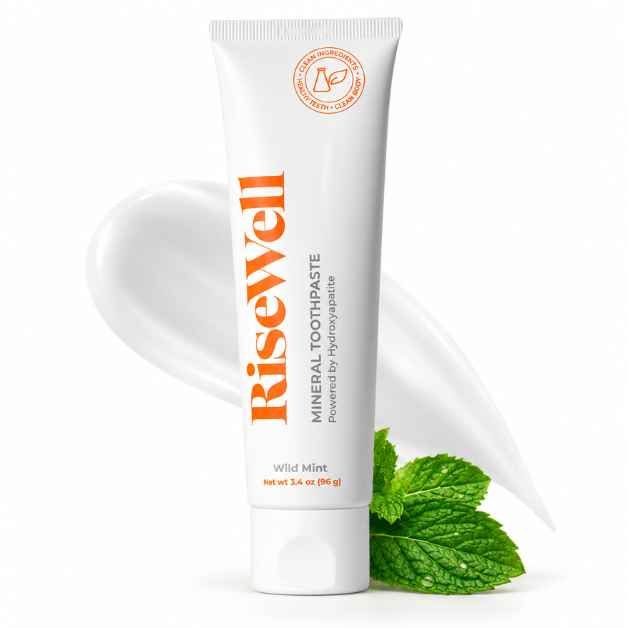
RiseWell discloses what its competitors won’t: 10% micro-hydroxyapatite, sourced from a mine in France. That concentration matches the strongest clinical trial’s tested amount. The particle type differs (micro vs nano in the Paszynska study), but the transparency lets you make an informed comparison — something you can’t do with undisclosed formulas.
SLS-free, fluoride-free, with xylitol. The reduced foaming (no SLS) takes a few days to adjust to. The ingredient list is clean and the FAQ on the product page answers common questions directly.
RiseWell PRO — Highest Concentration
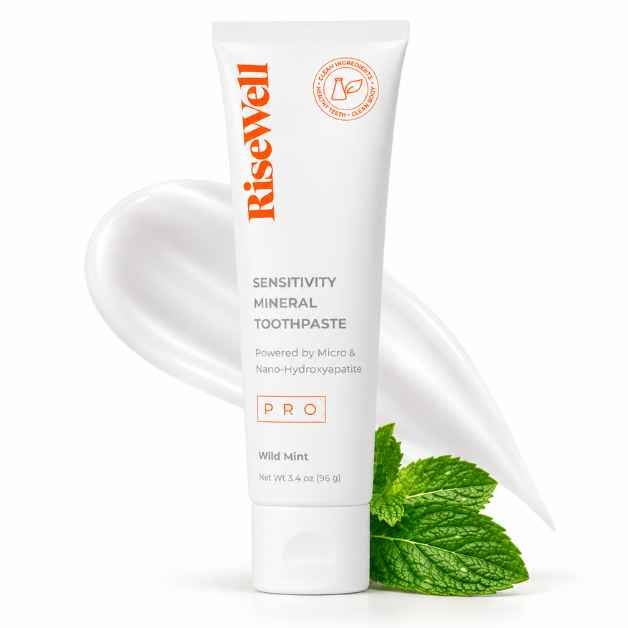
The only US product combining both nano and micro-HAp in one formula. Total stated concentration: 15% (5% NanoXIM CarePaste from Fluidinova + 10% micro-HAp). The nano component comes from the manufacturer whose material was assessed by the EU SCCS — a supply-chain signal no other product here matches.
Positioned for sensitivity relief (nano-HAp targets dentin tubule occlusion) and maximum mineral delivery. The premium price reflects the dual-particle formulation and Fluidinova sourcing. No clinical trial has tested this specific combined formula.
Boka Ela Mint — Most Available
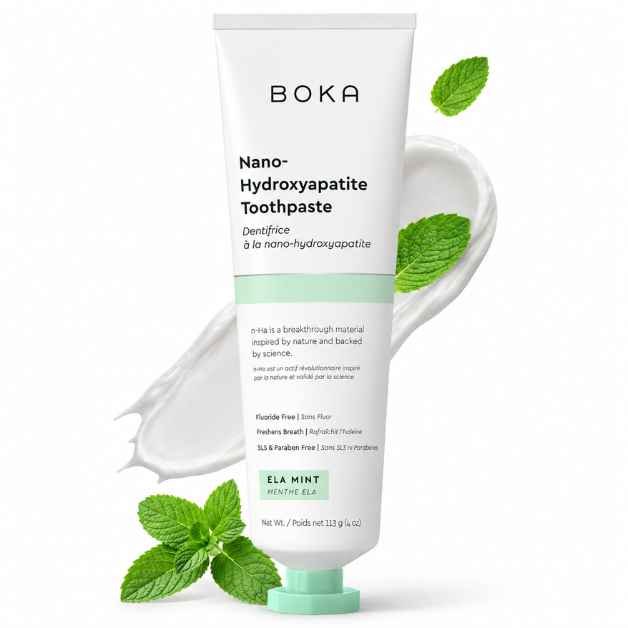
Boka is the gateway product for most people discovering HAp toothpaste — the largest brand, the widest retail footprint (Amazon, Target, Whole Foods), and the most online reviews. It uses nano-HAp with xylitol in a fluoride-free, SLS-free formula.
The trade-off is transparency: Boka declines to disclose its nano-HAp concentration, calling it proprietary. You can’t verify the amount against clinical evidence. The 2025 NAD/NARB decision recommended Boka discontinue certain advertising claims — a ruling about marketing, not product safety, but relevant context for evaluating the brand’s positioning.
If you want the most accessible, most reviewed HAp toothpaste and don’t need concentration verification, Boka is the pragmatic choice.
Davids Hydroxi — Most Sustainable
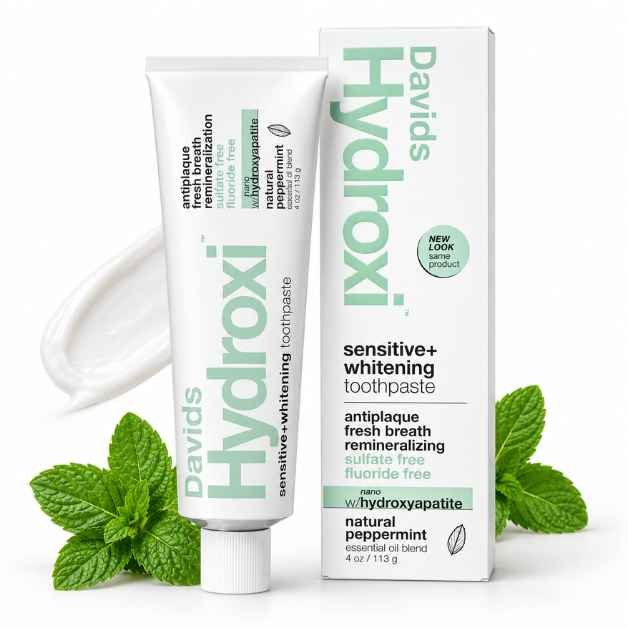
Davids differentiates on sustainability and sourcing philosophy: recyclable metal tube (unique among these four), EWG Verified, Made in USA (California). The toothpaste uses nano-HAp and is marketed for both sensitivity and whitening.
Concentration transparency is limited — VerdictLab has not independently verified a specific disclosed percentage from the manufacturer’s official materials. If you prioritise environmental packaging and US manufacturing over concentration verification, Davids may suit those priorities in this lineup.
Who Should Use HAp Toothpaste (and Who Shouldn’t)
HAp toothpaste may be a reasonable choice if you:
- Are a low-to-moderate caries risk adult looking for a fluoride-free option
- Prefer to avoid fluoride for personal preference reasons and accept the narrower evidence base
- Want a toothpaste marketed for sensitivity without potassium nitrate
- Have young children who swallow toothpaste and you want an alternative to low-fluoride formulas
Talk to your dentist first if you:
- Have active cavities or a high caries risk — fluoride has deeper evidence for these populations
- Have dry mouth, are on medications that reduce saliva, or are undergoing cancer treatment
- Are pregnant or breastfeeding — no HAp-specific pregnancy data exists
- Have been specifically prescribed a fluoride toothpaste by your dentist
HAp toothpaste is not for you if you:
- Need the strongest available evidence for cavity prevention — fluoride remains the benchmark
- Want a toothpaste with the ADA Seal — no HAp-only product has it
- Expect HAp to repair existing cavities or regrow lost enamel — no toothpaste does this
The Evidence in Context
Two things are true simultaneously about HAp toothpaste:
First, the evidence is real and growing. Randomized trials have shown noninferiority to fluoride for cavity prevention with specific HAp formulations. The EU’s scientific committee has assessed nano-HAp material safety thoroughly. The ingredient has a plausible mechanism supported by laboratory and clinical research.
Second, the retail products on Amazon are not the products that were tested in those trials. No product on this page has been individually validated in a published clinical trial. The clinical evidence comes from other formulations — notably a Dr. Wolff product tested in the Paszynska trials. Every retail brand is using the same ingredient category, but ingredient-level evidence and product-level evidence are different tiers of confidence.
This gap is the central tension in the HAp category. VerdictLab’s role is to make that gap visible — not to pretend it doesn’t exist by citing clinical trials as though they proved something about a specific Amazon listing, and not to dismiss the category by ignoring the legitimate evidence behind it.
For the full evidence review: What Is Hydroxyapatite Toothpaste?. For the fluoride comparison: HAp vs Fluoride. For safety and regulatory status: Is Hydroxyapatite Toothpaste Safe?
Funding also deserves attention: VerdictLab’s review found that at least 8 of 17 eligible studies were manufacturer-linked, while funding was unclear from accessible declarations for another 7.
Frequently Asked Questions
Which HAp toothpaste is best overall?
If transparency is your priority, RiseWell Original — it’s the only product that fully discloses concentration (10%), particle type (micro), and source (French mine). If availability matters most, Boka has the widest retail footprint. If sensitivity is the concern, RiseWell PRO offers the highest HAp concentration with a nano component from the SCCS-assessed manufacturer. If sustainability matters, Davids has the recyclable metal tube. “Best” depends on what you’re optimizing for.
Can HAp toothpaste replace fluoride?
Specific HAp formulations have shown noninferiority to fluoride in clinical trials — meaning they weren’t meaningfully worse for cavity prevention. This is promising but narrower evidence than fluoride’s decades of population data. For low-risk adults, HAp is a plausible alternative. For high-risk individuals, fluoride remains the stronger evidence-based choice. See: HAp vs Fluoride.
Why don’t HAp toothpastes have the ADA Seal?
The ADA Seal is a voluntary program. As of September 2026, no HAp-only toothpaste has received it. This may mean manufacturers haven’t applied, or that submitted evidence didn’t meet ADA criteria. Absence of the Seal is not evidence of harm. See: Is HAp Safe?
Is HAp toothpaste safe for kids?
The EU SCCS assessment found nano-HAp safe in toothpaste at specified concentrations. One pediatric clinical trial (Paszynska 2021) studied children aged 2–6 without significant adverse events. However, comprehensive pediatric safety data equivalent to fluoride doesn’t exist for HAp. Discuss with your child’s dentist. See: HAp Toothpaste for Kids.
Can I use HAp toothpaste with braces or a retainer?
HAp toothpaste is used the same way as any toothpaste — brush, spit, rinse. There’s no specific contraindication for orthodontic appliances, though your orthodontist’s care instructions take priority. For the retainer-specific angle, see: HAp Toothpaste With Braces and Retainers.
Does HAp toothpaste whiten teeth?
Some laboratory evidence supports mild whitening (surface stain reduction and optical brightening) from HAp at higher concentrations. This is not the same as peroxide-based chemical whitening. Most whitening effects from HAp toothpaste come from silica abrasion in the formula, not HAp itself. The Boka NAD/NARB decision specifically addressed whitening claim substantiation. See: Does HAp Toothpaste Whiten Teeth?

Sources & References
- Paszynska E et al. — Caries-preventing effect of a hydroxyapatite-toothpaste in adults (Frontiers in Public Health, 2023)
- EU SCCS — Scientific Opinion on Hydroxyapatite (nano), Submission IV (2025)
- American Dental Association — Toothpastes
- BBB National Programs — NAD/NARB Decision: Essor Group (Boka), 2025
- RiseWell — Original Mineral Toothpaste (10% micro-HAp)
- RiseWell — PRO Mineral Toothpaste (15% combined)
- Boka — Nano-Hydroxyapatite Percentage (Help Center)
- Davids — Hydroxi Sensitive+Whitening (product page)
Related Guides
-
- What Is Hydroxyapatite Toothpaste?
- Hydroxyapatite vs Fluoride Toothpaste
- Is Hydroxyapatite Toothpaste Safe?
- HAp Toothpaste Percentages
- Boka vs RiseWell vs Davids
- Nano vs Micro Hydroxyapatite
- HAp Toothpaste for Sensitive Teeth
- HAp Toothpaste for Kids
- HAp Toothpaste With Braces and Retainers
- Does HAp Toothpaste Whiten Teeth?
- How to Use HAp Toothpaste