Author: verdictlab@gmail.com

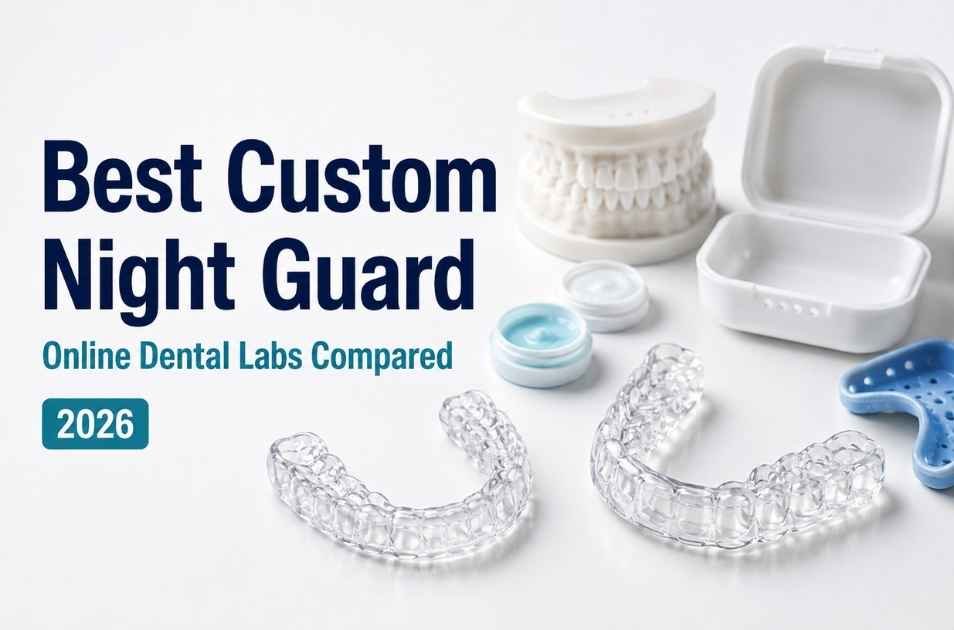
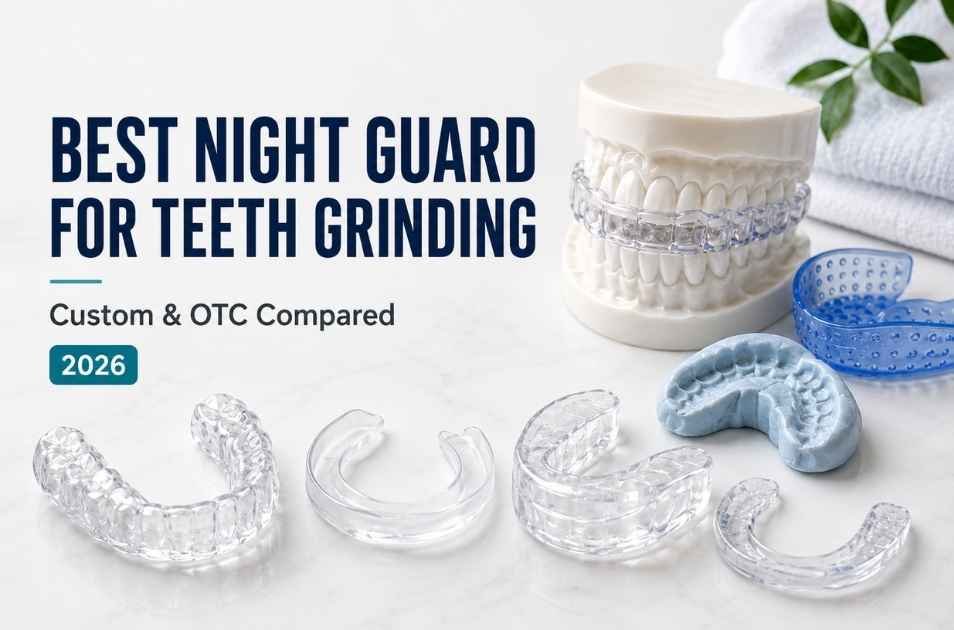
  • Best Night Guard for Teeth Grinding (2026): Custom & OTC Compared

    Best Night Guard for Teeth Grinding (2026): Custom & OTC Compared

    Editorial transparency: VerdictLab earns a commission when you purchase through our Amazon links — this never influences our ratings or recommendations. Our picks are based on product design, materials, fit approach, manufacturer information, durability features, and suitability for different use cases. As an Amazon Associate I earn from qualifying purchases. Full disclosure.

    Last updated: August 2026  |  By: VerdictLab Editorial Team

    Note: If you suspect you’re grinding your teeth, a dentist can assess for signs of bruxism and grinding-related dental damage. A night guard’s clearest role is helping protect the teeth from direct grinding contact; it is not reliably shown to eliminate the underlying bruxism itself.

    Night guards range from inexpensive ready-to-wear products to custom appliances made from an impression of your teeth. They all create some form of separation between the upper and lower teeth, but the differences in fit, materials, thickness, durability features, and buying process are large enough to matter.

    There also isn’t one night guard that’s best for everyone.

    Someone who wants the lowest-cost way to try sleeping with a guard has a very different buying problem from someone who repeatedly wears through guards, struggles with bulky appliances, or wants a custom fit.

    We compared the Amazon-available custom options and the OTC products covered across our night-guard series. This hub gives you the short version. The supporting guides go deeper into custom vs OTC, TMJ, heavy wear, thin guards, cleaning, cost, and the evidence behind night guards.

    Our Picks

    • Best custom overall: enCore Custom Night Guard — 4 construction options, custom impression fit, FDA-cleared
    • Best two-guard custom option: Remi Custom Night Guard — multiple thicknesses, selected Amazon package includes 2 guards, FDA-cleared
    • Best OTC overall: SOVA Aero — 1.6mm, remoldable up to 20×, perforated design
    • Best OTC durability warranty: LunaGuard — 1.6mm, remoldable up to 20×, 180-day durability warranty
    • Best two-layer OTC: The Doctor’s NightGuard — patented two-layer moldable design
    • Best budget multi-pack: HONEYBULL — 6 moldable guards with thin and thick options


    Master Comparison Table

    Product Price Type Material / Design Thickness Key Feature Best For
    enCore Check Amazon Custom lab Soft / Hybrid / Hard / Ultra Thin Varies by type 4 custom constructions Overall custom
    Remi Check Amazon Custom lab Dual-laminate 1mm / 1.3mm / 2mm Multiple thicknesses Two-guard custom option
    SOVA Aero Check Amazon OTC moldable Perforated Diffusix thermoplastic 1.6mm Remoldable up to 20× Premium thin OTC
    LunaGuard Check Amazon OTC moldable Thermoplastic 1.6mm 180-day durability warranty Durability warranty
    The Doctor’s NightGuard Check Amazon OTC moldable Patented two-layer design Standard profile Soft + firm layers Two-layer OTC
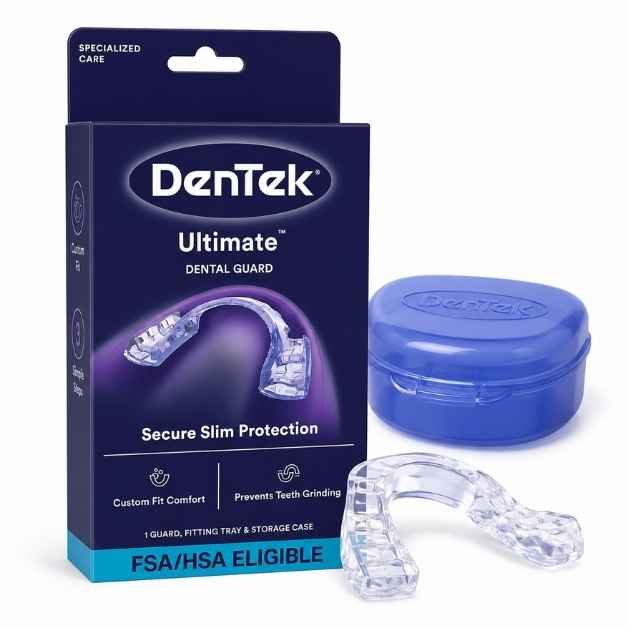
    DenTek Professional-Fit Check Amazon OTC moldable Guard + fitting tray Standard profile Guided fitting system Home molding
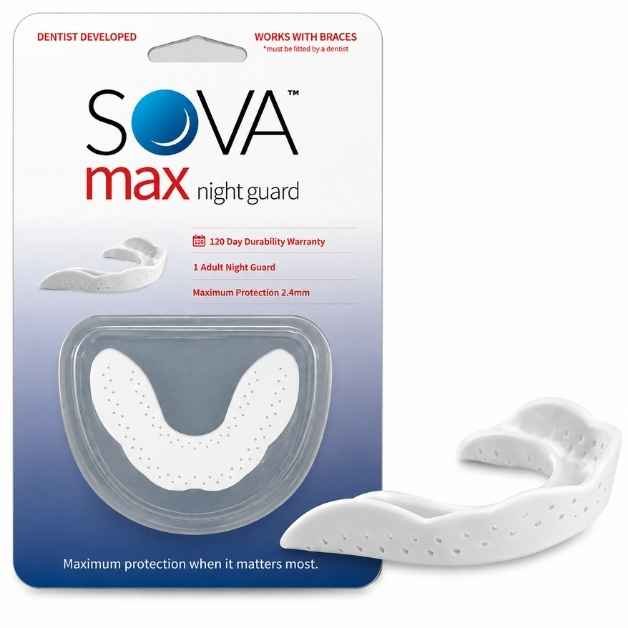
    SOVA Max Check Amazon OTC moldable Perforated Diffusix thermoplastic 2.4mm 120-day durability warranty Thicker OTC option
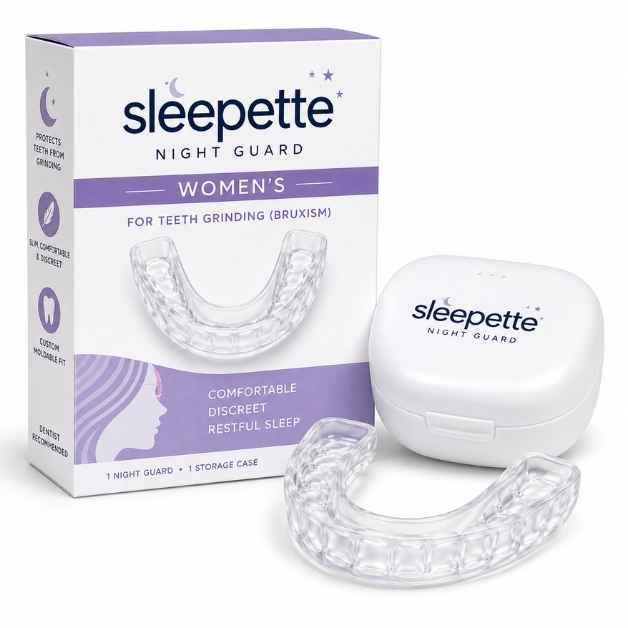
    Sleepette Check Amazon OTC moldable 4 guards / 2 size options Varies Smaller sizing option Smaller-fit needs
    HONEYBULL Check Amazon OTC moldable 3 thin + 3 thick guards Two thickness options 6-guard multi-pack Budget / backups
    Plackers Grind No More Check Amazon Ready-to-wear / limited-use No-mold design Thin Up to 3 nights each Travel / trial

    Amazon pricing and package configurations can change. Durability also varies substantially by user, so we do not assign fixed lifespan estimates. For replacement-cost math, see: Night Guard Cost: Dentist vs Online vs OTC.


    Custom Lab Picks

    Custom night guards are fabricated from an impression of your teeth rather than molded from a universal stock shape. Their main advantage is the more individualised fit.

    The two Amazon-available custom-lab options in this guide are enCore and Remi. For the deeper comparison between them, see: Best Custom Night Guard.

    enCore Custom Night Guard — Best Custom Overall
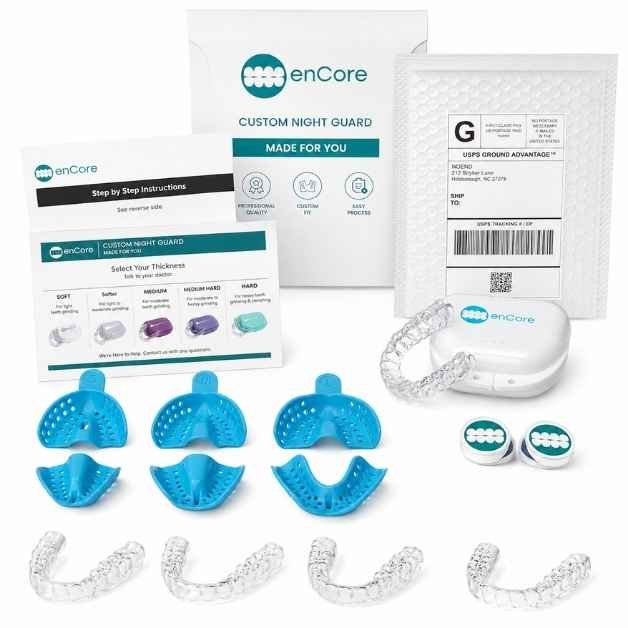
    enCore Custom Night Guard

    enCore gives you four different custom constructions from the same lab: Soft, Hybrid, Hard, and Ultra Thin.

    That’s the main reason it earns our overall custom pick. You’re not locked into one material system. The Hard Guard offers a rigid custom option, Hybrid combines softer and firmer layers, Soft prioritises flexibility, and Ultra Thin uses a 1mm low-profile design that enCore also positions for discreet daytime wear.

    enCore states that its lab has more than 30 years of dental manufacturing experience. The impression is reviewed before fabrication, impressions are stored for six months, and the company currently offers a 30-day fit-adjustment period. HSA/FSA eligibility is also listed by enCore.

    The enCore Night Guard is FDA-cleared under 510(k) K252004.

    That clearance should not be interpreted as an FDA ranking or endorsement over competing night guards.

    If you’re unsure whether Soft, Hybrid, Hard, or Ultra Thin is appropriate for your teeth and grinding pattern, ask your dentist rather than choosing purely from a severity label.

    Check Price on Amazon

    Remi Custom Night Guard — Best Two-Guard Custom Option
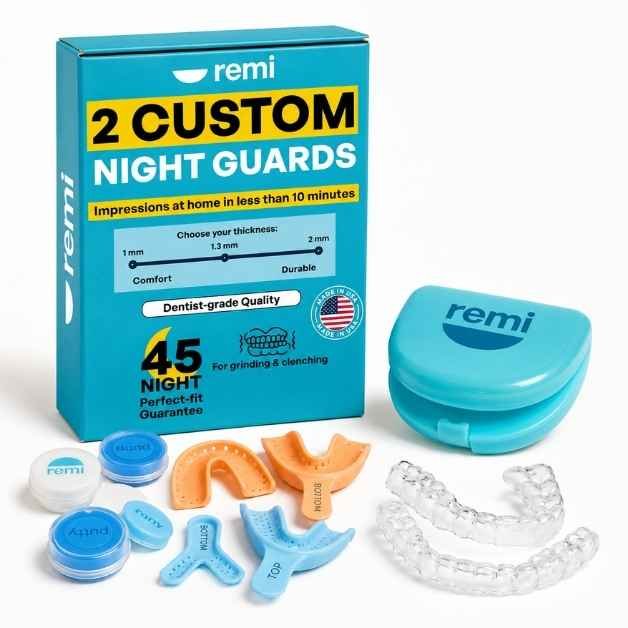
    Remi Custom Night Guard with case

    Remi uses a dual-laminate construction and offers three thickness choices: 1mm, 1.3mm, and 2mm.

    The selected Amazon listing in our guide is a two-guard package, which makes it particularly interesting if you value having a backup. Package configurations can change, so confirm the current Amazon listing before ordering.

    The impression process includes review before fabrication, and Remi currently offers a 45-night fit guarantee.

    Remi Custom Night Guard is FDA-cleared as an OTC mouthguard under 510(k) K251778.

    We would not choose the thickness solely from a simple light/moderate/heavy label. Remi provides manufacturer guidance for its thicknesses, but comfort, dental work, your own wear history, and professional advice can all matter.

    Check Price on Amazon


    OTC Picks

    OTC guards win on two things: lower upfront cost and immediate availability.

    Fit is created at home — or, with ready-to-wear designs, isn’t molded tooth by tooth at all. How well that works varies considerably between people and products.

    Premium OTC guards have also moved beyond the old one-shot boil-and-bite formula. Some are remoldable, some use slim bite-pad designs, and several offer meaningful durability warranties.

    For all 12 products in the category, see: Best OTC Night Guard.

    SOVA Aero — Best OTC Overall
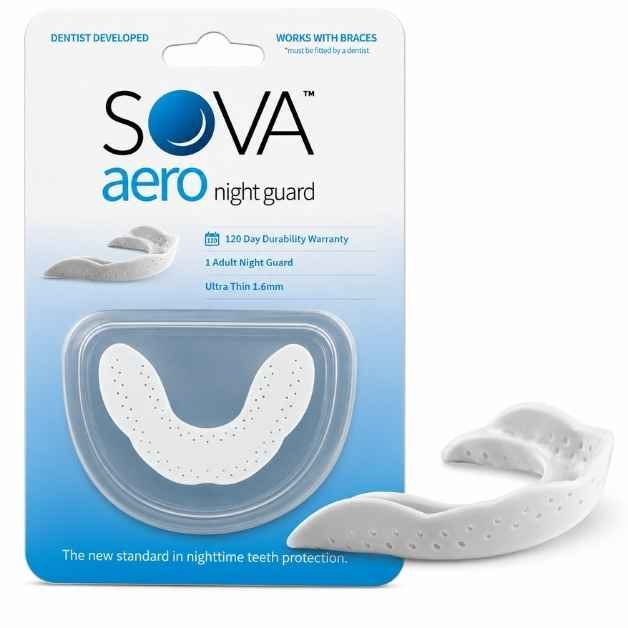
    SOVA Aero 1.6mm Night Guard

    SOVA Aero combines a relatively thin 1.6mm profile with the brand’s perforated Diffusix design.

    The most practical feature is remoldability. SOVA says the Aero can be reheated and remolded up to 20 times, so a poor first fit doesn’t necessarily mean you’ve wasted the guard.

    The manufacturer also backs the Aero with a 120-day durability warranty.

    Those features make it a strong starting point for someone who wants a premium moldable OTC guard without moving to custom fabrication.

    For more low-profile choices, see: Best Thin Night Guard.

    Check Price on Amazon

    LunaGuard — Best OTC Durability Warranty
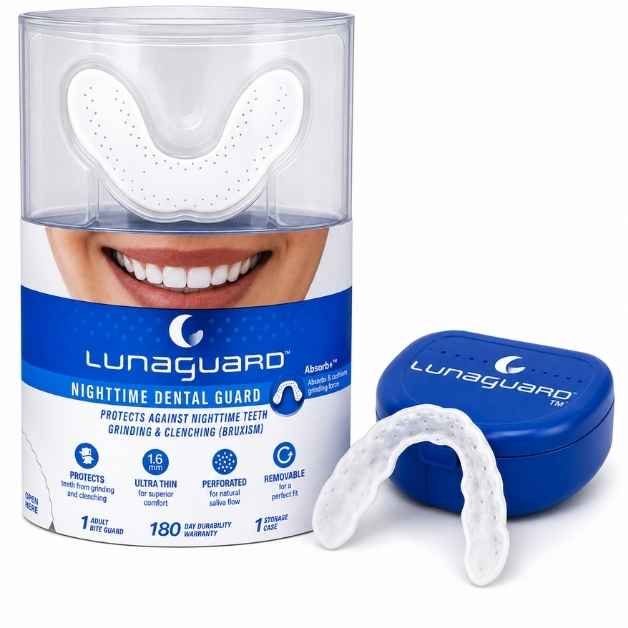
    LunaGuard Nighttime Dental Protector

    LunaGuard is also 1.6mm and can be reheated and remolded up to 20 times.

    What separates it in this roundup is the manufacturer’s 180-day durability warranty.

    That does not prove LunaGuard will last longer than every competing guard in every mouth. A warranty is not a controlled head-to-head durability test.

    But if you’re particularly worried about buying a thin OTC guard and quickly wearing through it, the longer manufacturer warranty is a meaningful feature to compare.

    Check Price on Amazon

    The Doctor’s NightGuard — Best Two-Layer OTC
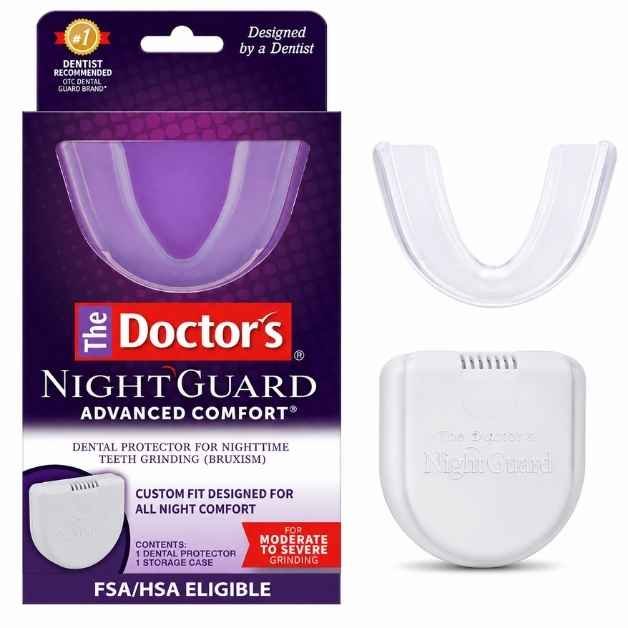
    The Doctor's Advanced Comfort NightGuard

    The Doctor’s NightGuard uses a patented two-layer design combining a softer cushioning layer with a firmer supporting layer.

    That gives it a different feel and construction from a basic single-material boil-and-bite without moving all the way to an online custom guard.

    It is an established OTC option and has FDA clearance under 510(k) K073220.

    Follow the product’s own fitting instructions rather than using a generic molding method from another guard.

    Check Price on Amazon

    DenTek Professional-Fit — Best Guided Home Mold
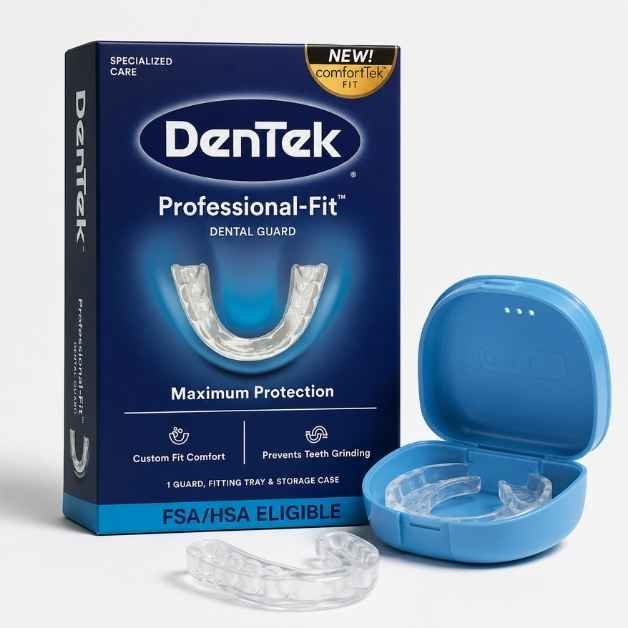
    DenTek Professional-Fit Dental Guard

    DenTek Professional-Fit is built around a fitting tray that helps position the softened guard material during the home-molding process.

    It is still an OTC guard rather than a lab-made custom appliance, but the guided fitting system can be appealing if you’ve struggled with simpler boil-and-bite products.

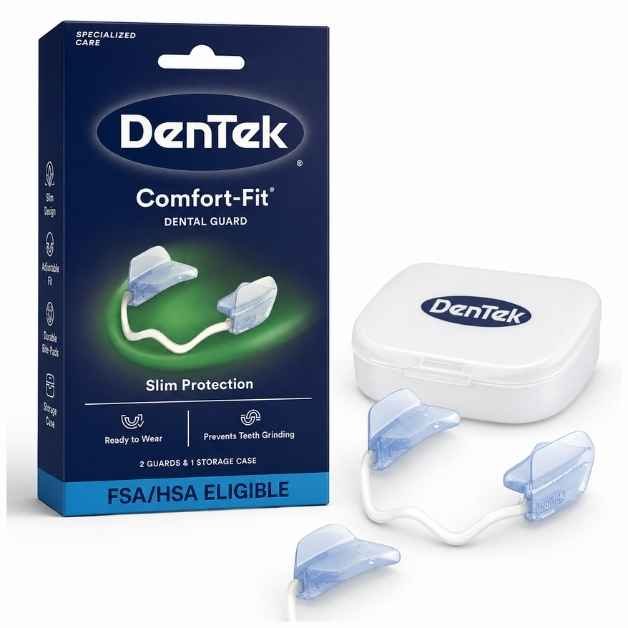
    DenTek also offers different approaches within its lineup. The DenTek Ultimate uses a slimmer bite-pad design, while the DenTek Comfort-Fit is a ready-to-wear 2-pack.

    Check Price on Amazon


    Budget Picks

    HONEYBULL Anti-Grinding Guard Set — Best Budget Multi-Pack
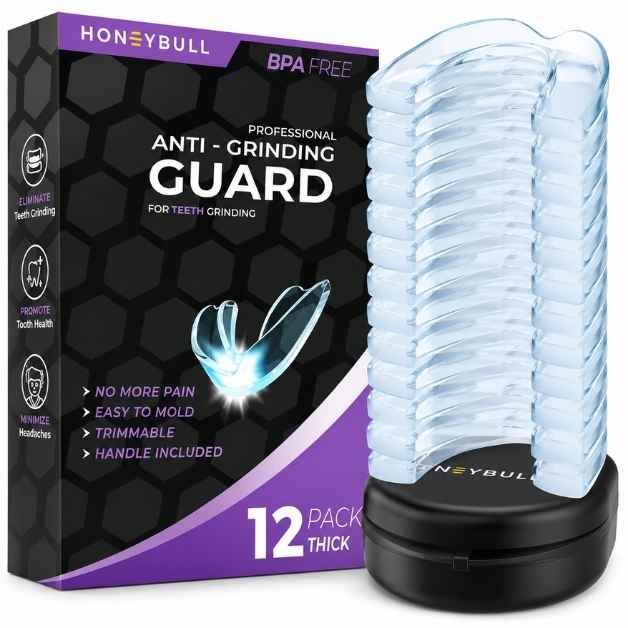
    HONEYBULL night guard 6-pack

    HONEYBULL’s 6-pack includes three thinner guards and three thicker guards.

    The appeal is flexibility and quantity rather than premium fitting technology: you get multiple molding attempts, spare guards, and two thickness profiles in one set.

    That’s useful if your priority is keeping the upfront commitment low or having backups available.

    If repeated molding still doesn’t produce a comfortable, stable fit, though, buying more inexpensive guards is unlikely to solve the underlying fit problem.

    Check Price on Amazon

    Plackers Grind No More (10-Count) — Best Limited-Use Option
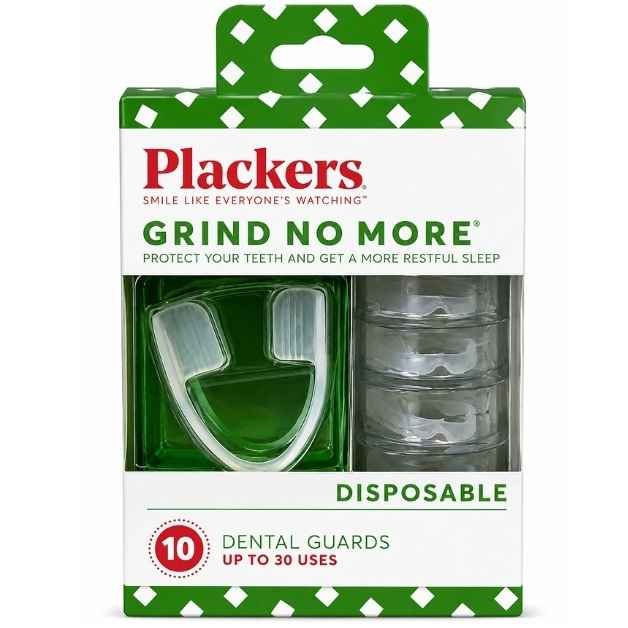
    Plackers Grind No More disposable night guards

    Plackers takes the simplest approach: no boiling and no molding.

    The manufacturer says each guard can be used for up to three nights, giving the 10-count package up to 30 uses.

    That makes the product particularly convenient for travel, temporary use, or someone who wants to experience sleeping with a guard before buying a moldable or custom appliance.

    It is a limited-use product by design rather than a direct substitute for every long-term night-guard option.

    Check Price on Amazon


    Buyer’s Guide: How to Choose

    Custom or OTC?

    Custom gives you an appliance fabricated from an impression of your individual teeth. That can provide a more precise and secure fit, but the upfront cost is higher and online custom guards still don’t include the same in-person clinical examination and fitting you get from a dentist.

    OTC gives you lower upfront cost and immediate availability. Some people get an excellent usable fit from moldable OTC guards; others repeatedly struggle with looseness, bulk, or the home-fitting process.

    If an OTC guard fits comfortably and holds up well, there’s no rule saying you must upgrade after a certain period. If you repeatedly fail to get a stable fit or keep replacing guards because of wear, custom becomes more attractive.

    For the detailed comparison, see: Custom vs OTC Night Guard: Is Custom Worth It?.

    What material?

    Material affects feel, rigidity, thickness, and how the appliance wears, but there isn’t a universal rule assigning one material to every level of grinding.

    Rigid custom guards maintain their shape and are often selected when wear resistance is important.

    Hybrid / dual-laminate guards combine firmer and softer layers and may offer a different comfort profile.

    Moldable thermoplastics dominate the OTC category and vary substantially in thickness, rigidity, remoldability, and design.

    If you have significant dental work, unusual bite issues, jaw pain, or repeatedly destroy appliances, professional guidance matters more than simply choosing whatever material sounds toughest.

    How thick?

    Thinner guards generally take up less space in the mouth. Thicker designs give you more material to wear through.

    But thickness alone doesn’t determine comfort or durability.

    A well-fitted 1.6mm thermoplastic guard may work very well for one person, while someone else may quickly create deep wear marks in it. Likewise, a thicker guard isn’t useful if its bulk makes you stop wearing it.

    There is no universal rule saying everyone who grinds heavily needs a specific minimum thickness.

    If low profile is your priority, see: Best Thin Night Guard.

    If you repeatedly wear through guards quickly, see: Best Night Guard for Heavy Grinders.

    What about the dentist option?

    A dentist-made guard costs more because the price includes clinical services in addition to the appliance: examination, impression-taking or scanning, appliance selection, fitting, bite adjustment, and follow-up.

    That extra oversight is particularly relevant if you have substantial jaw symptoms, complicated dental work, bite problems, previous guard-related difficulties, or progressing damage.

    For the full cost comparison, see: Night Guard Cost: Dentist vs Online vs OTC.

    How do I know if I even need one?

    Signs worth discussing with a dentist include visible tooth wear, damaged restorations, recurrent morning jaw-muscle soreness, unexplained tooth sensitivity, or a partner regularly hearing grinding sounds.

    None of those signs alone perfectly proves current sleep bruxism.

    A dentist can assess for signs of bruxism and grinding-related dental damage and decide whether further evaluation or tooth protection is appropriate.

    For the fuller checklist, see: Signs You Need a Night Guard.


    Frequently Asked Questions

    Do night guards actually work?

    The clearest role of a night guard is helping separate the teeth and protect them from direct grinding damage.

    Effects on jaw pain, headaches, muscle activity, or the underlying bruxism are less predictable. Night guards are not reliably shown to eliminate sleep bruxism itself.

    For the evidence in detail, see: Do Night Guards Work?.

    What’s the difference between a night guard and a sports mouth guard?

    They’re designed for different jobs.

    A night guard is intended for repeated tooth contact, clenching, or grinding during sleep. A sports mouth guard is designed primarily to reduce injury from sudden impact during athletic activity.

    The materials and shapes vary between products, so the distinction is about intended purpose rather than simply saying one category is always hard and the other always soft.

    For the full comparison, see: Night Guard vs Mouth Guard.

    How do I clean a night guard?

    Follow the care instructions for your specific guard because cleaning recommendations vary by material and manufacturer.

    As a general habit, rinse the appliance after use, clean it using a method approved for that product, let it dry as directed, and keep the storage case clean.

    Avoid assuming that toothpaste, vinegar, peroxide, tablets, or ultrasonic cleaning are appropriate for every material.

    For the detailed guide, see: How to Clean a Night Guard.

    Can I stop grinding my teeth without a night guard?

    Bruxism can be associated with several factors, including stress, some medications, alcohol or stimulant use, and sleep-related conditions.

    Addressing contributing factors may help some people, particularly with awake clenching, but there is no single strategy that reliably eliminates sleep bruxism for everyone.

    A night guard is primarily used for protection while contributing factors are assessed and managed.

    See: How to Stop Grinding Teeth at Night.

    How much does a night guard cost?

    OTC usually has the lowest upfront cost, online custom sits in the middle, and a dentist-made appliance generally costs the most because it includes clinical examination, fitting, adjustment, and follow-up.

    Actual prices vary widely, and replacement frequency can change the long-term cost comparison.

    For the full breakdown and scenario math, see: Night Guard Cost Breakdown.

    Upper or lower guard?

    Follow the intended placement in the instructions for the specific product you’re using.

    Many OTC guards are designed for one particular arch. Custom guards may be made for upper or lower placement depending on the product and clinical situation.

    If your dentist has recommended a particular arch — especially for TMD or another specific dental reason — follow that recommendation rather than switching placement yourself.

    Can I use HSA/FSA funds to buy a night guard?

    Possibly. Eligibility depends on the specific purchase, the medical or dental purpose, and the rules or documentation requirements of your HSA/FSA administrator.

    Some night-guard products are explicitly listed as HSA/FSA eligible. If you’re unsure, verify eligibility before purchasing rather than assuming every retail guard automatically qualifies.

    For more detail, see the insurance section in our Night Guard Cost Breakdown.


    Beyond Brushing Oral Health Guide Book
    Get the Free Oral Health Guide
    Download Beyond Brushing — a practical 30,000+ word guide to healthier teeth, gums, and fresher breath after 45.
    Marketing email consent
    • No spam • Unsubscribe anytime


    Which Night Guard Should You Choose?

    If you want a custom lab-made guard and value having several construction choices, enCore is our strongest all-around custom option.

    If the selected two-guard package and multiple thickness choices matter more, Remi is the custom alternative to compare.

    For OTC, SOVA Aero is the most balanced premium starting point in this group, while LunaGuard stands out for its 180-day durability warranty. The Doctor’s NightGuard gives you a two-layer moldable design, and HONEYBULL is the straightforward multi-pack option when keeping the upfront commitment low matters most.

    But the ranking should only get you to the shortlist.

    The better decision comes from your own constraints: fit, comfort, existing dental work, how quickly you wear through guards, whether you need professional oversight, and what you can realistically wear night after night.

    If you aren’t sure where to start, the next useful comparison is Custom vs OTC Night Guard. If you repeatedly wear through guards, go to Best Night Guard for Heavy Grinders. If bulk is the problem, see Best Thin Night Guard.


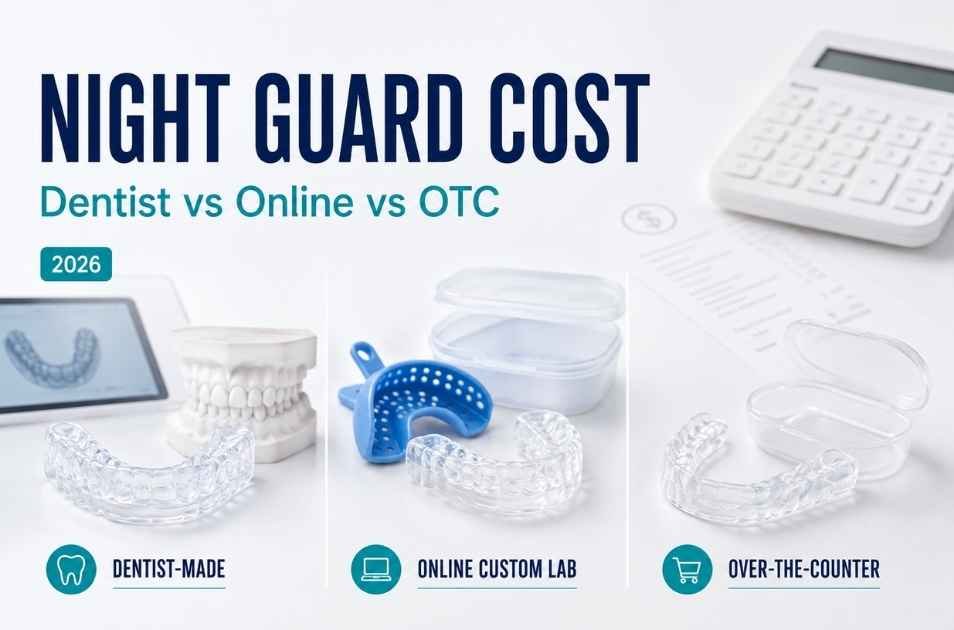
  • Night Guard Cost: Dentist vs Online Lab vs OTC (2026 Breakdown)

    Night Guard Cost: Dentist vs Online Lab vs OTC (2026 Breakdown)

    Editorial transparency: VerdictLab earns a commission when you purchase through our Amazon links — this never influences our ratings or recommendations. As an Amazon Associate I earn from qualifying purchases. Full disclosure.

    Last updated: August 2026  |  By: VerdictLab Editorial Team

    The price range for night guards is unusually wide. A basic OTC guard can cost a small fraction of what a dental office charges for a professionally fitted appliance, even though both products sit between your teeth while you sleep.

    The difference isn’t just the plastic.

    At the dentist, you’re also paying for examination, impression-taking or scanning, appliance selection, fitting, bite adjustment, and follow-up. Online custom labs remove much of that in-person clinical service while still fabricating a guard from an impression. OTC products remove the lab step too.

    That makes sticker price useful — but incomplete.

    If you replace a cheaper guard frequently, its annual cost can eventually approach or exceed a more expensive option. On the other hand, if an inexpensive OTC guard fits you well and lasts a long time, spending more may not save you anything.

    This guide compares the three purchasing routes and shows you how to calculate the cost using your own replacement history instead of relying on generic lifespan promises.


    Cost Overview

    Tier Typical Upfront Cost What You Get Main Trade-Off
    Dentist-made Often several hundred dollars; can exceed $1,000 Clinical exam, impression/scan, custom fabrication, fitting, adjustments, follow-up Highest upfront cost
    Online custom lab Usually substantially less than dentist-made At-home impression kit + custom lab fabrication No in-person dental examination or chairside fitting
    OTC Lowest upfront cost Boil-and-bite, adjustable, pre-formed, or limited-use guard Less individualised fit

    Prices vary by provider, product, location, insurance, retailer, and package configuration. Amazon prices can change frequently.


    Dentist-Made Night Guards

    A dentist-made night guard is usually the most expensive route, but you’re buying more than the appliance itself.

    The process commonly starts with an examination. The dentist looks at your teeth, restorations, bite, jaw symptoms, and signs of grinding-related damage. An impression or digital scan is then used to fabricate an appliance specifically for your teeth.

    When the finished guard returns from the lab, the dentist can check how it seats, evaluate the bite contacts, make adjustments, and monitor the appliance at future visits.

    That clinical oversight is the main difference.

    Pricing varies enormously. A relatively straightforward guard from a general dental practice may cost several hundred dollars, while more complex appliances, specialist care, or treatment in higher-cost areas can push the total substantially higher — sometimes above $1,000.

    There isn’t one meaningful national sticker price because the service being provided isn’t identical from office to office.

    The premium can be worthwhile when your situation is complicated. If you have significant dental work, jaw pain, bite problems, previous appliance difficulties, or unexplained progressing damage, an in-person examination has value that cannot be replicated by simply mailing an impression to a lab.


    Online Custom Lab Guards

    Online labs use a similar basic fabrication concept: a custom appliance is produced from an impression of your teeth.

    The difference is where the clinical steps happen — or don’t happen.

    You take the impression yourself at home, return it to the lab, and receive the finished guard by mail. Reputable services review the impression before manufacturing and may ask you to repeat it if the mold isn’t usable.

    That removes the dental-office examination and chairside fitting, which is a major reason online custom guards can cost considerably less.

    Among the Amazon-available custom options we currently cover:

    • enCore
      — Soft, Hybrid, Hard, and Ultra Thin custom options. Check current Amazon price.
    • Remi
      — multiple thickness choices with custom impression fabrication. Check current Amazon price and package configuration.

    For the full comparison, see: Best Custom Night Guard.

    The trade-off is self-service. You make the impression yourself, and there is no dentist examining your teeth, jaw, restorations, or bite before the appliance is manufactured.

    That doesn’t make online custom guards inherently poor products. It means you’re buying custom fabrication without the full clinical service surrounding it.

    For someone primarily seeking straightforward grinding protection and who does not have a complicated dental situation, that can be an attractive value proposition. If you’re uncertain whether a night guard is appropriate in the first place, the dentist route provides something an online lab cannot: diagnosis and direct examination.


    Over-the-Counter Night Guards

    OTC products remove the custom lab step entirely.

    They include traditional boil-and-bite guards, remoldable thermoplastic designs, adjustable bite-pad guards, pre-formed options, and limited-use products.

    The main advantage is obvious: low upfront cost and immediate availability.

    Some of the Amazon options covered in our OTC guide include:

    • SOVA Aero
      — 1.6mm, remoldable up to 20 times. Check current Amazon price.
    • SOVA Max
      — thicker 2.4mm SOVA design. Check current Amazon price.
    • LunaGuard
      — 1.6mm, remoldable, with a 180-day manufacturer durability warranty. Check current Amazon price.
    • The Doctor’s NightGuard
      — moldable two-layer design. Check current Amazon price.
    • DenTek Professional-Fit
      — moldable guard with a fitting system. Check current Amazon price.
    • HONEYBULL
      — multi-pack moldable option. Check current Amazon price.

    See: Best OTC Night Guard for the complete comparison.

    OTC does not automatically mean disposable or poor quality. Some premium moldable designs offer remoldability and manufacturer durability warranties.

    But the fit is still created at home rather than from a dental-lab model of your individual teeth. Whether that’s perfectly adequate or frustrating depends heavily on the product and the person using it.

    The other unknown is replacement frequency. Some people get substantial use from an OTC guard. Others wear through the same design rapidly. That’s why an article cannot honestly tell you that OTC will always cost more — or less — over a year.


    Annual Cost by Replacement Frequency

    This is the part of the comparison that sticker prices hide.

    The formula is simple:

    Annual cost = price per guard × number of guards you replace in one year

    The difficult part is that nobody can reliably predict your replacement frequency before you use the appliance.

    So the examples below are deliberately hypothetical. They show how the math changes — not how long a particular brand is expected to last.

    Example Example Price Replacement Frequency Annualised Cost
    Scenario A $20 Every month $240/year
    Scenario B $25 Every 3 months $100/year
    Scenario C $40 Every 6 months $80/year
    Scenario D $150 Every 18 months $100/year
    Scenario E $180 Every 2 years $90/year
    Scenario F $600 Every 3 years $200/year

    Important: These are arithmetic examples only. They are not current product prices or predicted night-guard lifespans.

    What the Math Actually Tells You

    A cheaper guard is not automatically cheaper over time.

    If you spend $25 and replace it every three months, you’re spending $100 per year.

    If another appliance costs $150 but lasts 18 months for you, its annualised cost is also $100.

    But the calculation can reverse just as easily.

    If your $25 guard lasts a full year, that’s only $25 per year. In that situation, buying a $150 custom appliance purely to “save money” would make no sense unless it offered another benefit you valued — such as better fit or comfort.

    Likewise, if you chew through a $25 guard every month, you’re spending $300 per year. That’s when a more durable design can become economically attractive very quickly.

    The strongest cost data therefore comes from your own replacement history.

    After you’ve used one or two guards, write down:

    • what you paid
    • when you started using it
    • when it developed meaningful wear or stopped fitting properly

    That gives you a personal annual-cost estimate far more useful than any generic “this guard lasts X months” claim.


    Insurance, HSA, and FSA

    Dental Insurance

    Dental-insurance coverage for night guards varies substantially.

    A plan may cover an occlusal guard under certain conditions, require documentation, apply a deductible or coinsurance, limit how often the appliance can be replaced, or exclude it entirely.

    Online-lab and retail purchases may also be treated differently from a dentist-provided appliance. Don’t assume that an Amazon or online custom purchase is either automatically covered or automatically excluded.

    The most useful step is to call the insurer before buying and ask:

    “Is an occlusal guard or night guard a covered benefit under my dental plan, what documentation is required, and are there restrictions on where I purchase it?”

    Also ask about:

    • deductible
    • coinsurance
    • replacement-frequency limits
    • pre-authorization requirements
    • in-network versus out-of-network rules

    If the insurer gives you a reference number for the call, keep it.

    HSA and FSA

    HSA and FSA rules deserve slightly more caution than simply saying “night guards are eligible.”

    IRS rules allow qualified medical and dental expenses when the expense is primarily for the prevention or alleviation of a medical or dental condition. Whether a particular retail or online purchase qualifies — and what documentation is required — can depend on the item and your plan administrator.

    If you’re planning to use HSA or FSA funds, verify the specific purchase before ordering.

    Some products and sellers explicitly indicate HSA/FSA eligibility. enCore, for example, currently lists HSA/FSA eligibility for its custom guards.

    If Amazon identifies a product as HSA/FSA eligible at checkout, that makes the transaction simpler. If it doesn’t, don’t assume that merely saving the receipt guarantees reimbursement. Check with your administrator about eligibility and any documentation they require.

    Using eligible pre-tax funds can reduce the effective after-tax cost of a qualified purchase, but the exact benefit varies with your tax situation and account type.

    For FSA users, also check your plan’s year-end rules. FSAs are generally subject to use-it-or-lose-it rules, but an employer plan may allow a grace period or a permitted carryover. Don’t buy an appliance you don’t need simply to empty an account.


    When the Dentist Route Is Worth the Extra Cost

    The online-lab and OTC routes can be much cheaper upfront. That doesn’t mean the dentist route is overpriced in every situation.

    Sometimes the clinical service is exactly what you’re paying for.

    You have TMD or significant jaw symptoms.

    TMD is multifactorial, and evidence for splint therapy is mixed. If jaw pain, locking, progressive limitation, or other substantial symptoms are the reason you’re considering an appliance, professional assessment matters more than simply choosing the highest-rated guard online.

    See: Best Night Guard for TMJ.

    You have extensive dental work.

    Multiple crowns, bridges, veneers, implants, active orthodontics, or complex bite relationships can make appliance selection and fit more important. A dentist can examine those restorations directly and adjust the guard after fitting.

    You’ve had problems with a previous guard.

    If an appliance has caused new tooth pressure, jaw pain, or a persistent change in how your teeth meet, buying another random design isn’t the best experiment. Have the situation assessed.

    You have progressing dental damage or unusually rapid guard wear.

    Repeated cracks, substantial enamel wear, restoration failure, or very rapid destruction of appliances are good reasons to involve a dentist. The goal is not simply to keep replacing plastic — it’s to protect the teeth while also looking at the broader bruxism picture.

    Your insurance substantially reduces the price.

    A dentist-made guard may look expensive at full retail price but very different after insurance benefits. Check actual out-of-pocket cost before deciding that the online route is automatically cheaper.


    Frequently Asked Questions

    Why do dentist night guards cost so much?

    You’re paying for more than the material and laboratory fabrication.

    The price can include examination, impression-taking or digital scanning, appliance selection, laboratory work, fitting, bite adjustment, follow-up, and the overhead of providing clinical care.

    Online labs remove many of those in-person services, which is one reason their upfront price can be substantially lower.

    Is a cheap night guard worth buying?

    It can be.

    A lower-cost OTC guard may be a perfectly reasonable starting point if it fits comfortably, stays in place, and holds up adequately for your use.

    Price alone doesn’t determine whether a guard is appropriate.

    If you repeatedly wear through inexpensive guards, can’t achieve a stable fit, or stop wearing them because they’re uncomfortable, that’s when paying more for a better fitting system or custom appliance becomes easier to justify.

    A budget multi-pack such as HONEYBULL can make sense for someone specifically looking for a low-cost moldable option, but there is no arbitrary deadline after which everyone must “upgrade.”

    How much should I spend on a night guard?

    There isn’t a universal number.

    Start with the problem you’re trying to solve:

    • If low upfront cost matters most, OTC usually wins.
    • If OTC fit repeatedly fails you, online custom becomes more attractive.
    • If you need examination, bite adjustment, or professional monitoring, the dentist route offers services the cheaper options do not.
    • If you replace guards frequently, calculate your actual annual cost before assuming the cheapest sticker price is the cheapest option.

    Can I use HSA/FSA funds for an Amazon night guard?

    Possibly, but verify the specific item and your plan’s requirements.

    Some Amazon products are explicitly flagged as HSA/FSA eligible. If the item isn’t clearly identified, contact your HSA/FSA administrator rather than assuming reimbursement is guaranteed.

    Documentation requirements can vary.

    Does dental insurance cover night guards?

    Some plans do and some don’t.

    Coverage may depend on the reason for the appliance, where it is purchased, provider network rules, deductibles, coinsurance, and replacement limits.

    Ask specifically whether an occlusal guard/night guard is a covered benefit and what requirements apply.

    How often do I need to replace a night guard?

    There is no reliable replacement calendar that applies to every person or every material.

    Inspect the guard rather than relying solely on age.

    Signs that deserve attention include:

    • holes or bite-through
    • cracks
    • major thinning
    • sharp or rough areas
    • significant distortion
    • a noticeable change in fit

    If you’re uncertain whether a worn guard is still usable, take it to your dentist.

    For care advice, see: How to Clean a Night Guard.


    Beyond Brushing Oral Health Guide Book
    Get the Free Oral Health Guide
    Download Beyond Brushing — a practical 30,000+ word guide to healthier teeth, gums, and fresher breath after 45.
    Marketing email consent
    • No spam • Unsubscribe anytime


    Where Your Money Goes Furthest

    There is no universally cheapest night-guard category.

    OTC usually wins upfront. If an inexpensive guard fits well and lasts adequately for you, it can remain the cheapest route.

    Online custom can become competitive when fit or repeated replacements become a problem. You’re paying more upfront for an individually fabricated appliance without paying for the full dental-office service.

    Dentist-made guards cost more because they include clinical care. That extra expense can be worthwhile when you have complicated dental work, substantial jaw symptoms, bite concerns, previous appliance problems, or progressing damage that needs monitoring.

    The most useful calculation is not what somebody else’s guard supposedly costs per year.

    It’s yours:

    What did you pay, and how long did that specific guard remain comfortable, intact, and usable?

    Once you know those two numbers, the cost comparison becomes much more meaningful.

    For the full product comparisons: Best Custom Night Guard, Best OTC Night Guard, and Best Night Guard for Teeth Grinding (2026).


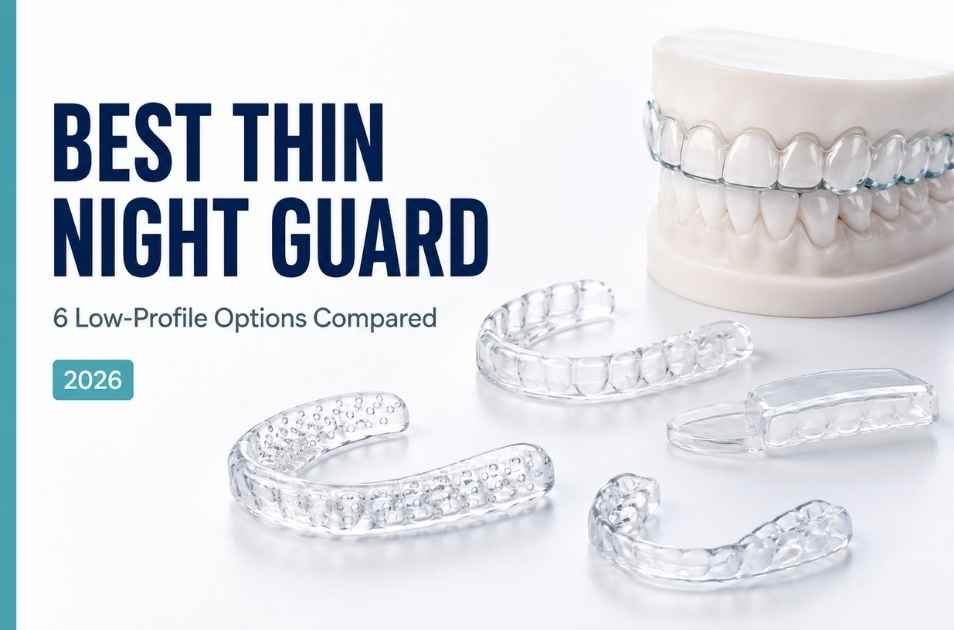
  • Best Thin Night Guard (2026): 6 Low-Profile Options

    Best Thin Night Guard (2026): 6 Low-Profile Options

    Editorial transparency: VerdictLab earns a commission when you purchase through our Amazon links — this never influences our ratings or recommendations. As an Amazon Associate I earn from qualifying purchases. Full disclosure.

    Last updated: August 2026  |  By: VerdictLab Editorial Team

    The most useful night guard is one you can actually wear consistently. And for some people, bulk is the thing that gets in the way.

    A thick guard can feel intrusive, trigger gagging in sensitive users, take up more room in the mouth, or simply make it harder to relax at bedtime. After a few uncomfortable nights, the guard ends up in a drawer and the teeth are back to grinding without protection.

    That’s where thin and low-profile guards make sense. They reduce the amount of material in the mouth, but there is a trade-off: less material may also mean less wear allowance depending on the material, design, and how strongly you grind.

    This guide compares six thinner or lower-profile options — custom and OTC — plus choices for people who find standard guards too large and for people who clench during the day.

    Quick Picks

    • Best 1mm custom night guard: Remi 1mm — custom impression fit, dual-laminate construction
    • Best thin OTC: SOVA Aero 1.6mm — perforated design, remoldable up to 20×
    • Best thin OTC durability warranty: LunaGuard 1.6mm — remoldable up to 20×, 180-day durability warranty
    • Best slim DenTek option: DenTek Ultimate — low-profile bite-pad design, FDA-cleared
    • Best for smaller-fit needs: Sleepette — 4-pack with 2 size options
    • Best custom option for daytime clenching: enCore Ultra Thin — 1mm custom hard-layer guard suitable for discreet daytime wear


    Why a Lower-Profile Guard Can Be Easier to Wear

    Thickness isn’t the only thing that determines comfort, but it can make a noticeable difference.

    Less bulk. A lower-profile guard simply occupies less space in the mouth. That can matter if you’ve already tried a thicker appliance and found the feeling distracting or difficult to tolerate.

    Gag sensitivity. Some people have a strong gag reflex and find appliances that feel bulky or extend too far toward the back of the mouth uncomfortable. A thinner, well-fitted design may be easier to tolerate, although the shape and posterior extension of the guard matter too.

    General mouth feel. Thickness affects how much material sits around the teeth and against the tongue and cheeks. For some users, reducing that material makes the appliance feel less intrusive.

    Retention still matters. Thin isn’t useful if the appliance feels loose or unstable. A secure fit may matter just as much as the actual millimetre measurement.

    None of this means thinner is automatically better. Someone who repeatedly wears through thin guards may benefit from a thicker or more wear-resistant design. The right balance is the lowest-profile guard you can wear comfortably that still holds up adequately for your grinding pattern.


    The Thin-Guard Trade-off

    Reducing thickness means reducing the amount of material available to wear through. But thickness alone doesn’t predict lifespan.

    Material, fit, grinding intensity, where your teeth contact the appliance, and the guard’s construction all affect durability.

    A thinner guard made from a wear-resistant thermoplastic may hold up better for one person than a thicker but softer appliance. Another person may destroy both quickly.

    So instead of assuming:

    • 1mm = short lifespan
    • 2mm = long lifespan
    • thin = light grinders only

    look at your own wear pattern.

    If a thin guard fits comfortably and remains intact, there’s no reason to move thicker just for the sake of thickness. If you repeatedly develop deep grooves, holes, distortion, or bite-through, durability becomes a stronger reason to consider another design.

    Comfort still matters. A more durable appliance has little practical value if it’s uncomfortable enough that you stop wearing it.


    Product Picks

    Remi 1mm — Best 1mm Custom Night Guard

    Remi Custom Night Guard 1mm

    Amazon Price: Check current listing  |  Thickness: 1mm  |  Material: Dual-laminate  |  FDA: Cleared under 510(k) K251778  |  Fit: Custom impression

    Remi’s 1mm option is the thinnest version in its current custom lineup. The company also offers 1.3mm and 2mm versions, giving you some flexibility if you want a little more material without changing brands or impression systems.

    The main advantage here isn’t simply the 1mm number. It’s the combination of a low-profile design with a guard fabricated from your own dental impression.

    For someone who has found generic OTC guards bulky or unstable, that individually fabricated fit may be as important as the reduction in thickness.

    Remi uses a dual-laminate construction rather than a rigid single-layer design. The company generally positions the thinner versions toward lighter grinding and the 2mm version toward heavier grinding, but your own wear pattern should ultimately determine whether the 1mm remains durable enough for you.

    Don’t assume thinner automatically means invisible or impossible to feel. It is still an oral appliance, and comfort varies from person to person.

    Check Price on Amazon

    SOVA Aero (1.6mm) — Best Thin OTC

    SOVA Aero 1.6mm Night Guard

    Amazon Price: Check current listing  |  Thickness: 1.6mm  |  Remoldable: Up to 20×  |  Design: Perforated Diffusix  |  Durability warranty: 120 days

    The SOVA Aero is a 1.6mm moldable OTC guard built around SOVA’s perforated Diffusix design. The manufacturer says the perforations allow fluid and airflow through the appliance while helping distribute grinding forces across the material.

    The most useful feature for home fitting is remoldability. SOVA says the Aero can be reheated and remolded up to 20 times, which takes much of the pressure out of getting the mold perfect on the first attempt.

    That makes the Aero particularly attractive if you want a low-profile OTC guard but have had trouble getting a stable boil-and-bite fit before.

    SOVA also backs the Aero with a 120-day durability warranty. That is a more useful durability benchmark than trying to predict exactly how many months it will last in your mouth.

    Check Price on Amazon

    LunaGuard (1.6mm) — Best Thin OTC Durability Warranty

    LunaGuard Nighttime Dental Protector

    Amazon Price: Check current listing  |  Thickness: 1.6mm  |  Remoldable: Up to 20×  |  Durability warranty: 180 days  |  Fit: Moldable OTC

    LunaGuard is also 1.6mm, so the choice between it and SOVA Aero isn’t simply about which one is thinner.

    Its standout feature is the manufacturer’s 180-day durability warranty — longer than SOVA’s current 120-day warranty. LunaGuard can also be reheated and remolded up to 20 times.

    That combination makes it particularly relevant for someone who wants a thin moldable guard but is worried about paying for something that wears rapidly.

    We wouldn’t claim LunaGuard universally lasts longer than SOVA or another competing guard. A warranty is not the same thing as a controlled head-to-head durability test, and individual wear can vary enormously.

    Think of LunaGuard as the thin OTC option with the strongest manufacturer durability warranty in this group.

    Check Price on Amazon

    DenTek Ultimate — Best Slim DenTek Option

    DenTek Ultimate Dental Guard Slim-Fit

    Amazon Price: Check current listing  |  Design: Ultra-light / slim profile  |  FDA: Cleared under 510(k) K180933  |  Fit: OTC fitting system

    DenTek’s Ultimate is aimed directly at the bulkiness problem. Rather than using a traditional full slab of thick moldable material, the design uses cushioned bite pads and a lower-profile connecting structure.

    DenTek doesn’t publish an exact thickness comparable with SOVA’s 1.6mm measurement, so it doesn’t make sense to rank the Ultimate by millimetres.

    Its appeal is the shape: less material occupying the mouth than a conventional full-coverage boil-and-bite design.

    The product has FDA clearance under K180933 and comes from an established OTC dental-guard brand. If you dislike traditional boil-and-bite bulk but don’t necessarily want the SOVA/LunaGuard style, the Ultimate gives you another approach to reducing mouth feel.

    Check Price on Amazon


    Guards for Smaller Mouths

    Sleepette Night Guard — Best for Smaller-Fit Needs

    Sleepette Night Guard for Women 4-pack

    Amazon Price: Check current listing  |  Count: 4 guards  |  Sizes: 2 size options  |  Type: Moldable

    Sometimes thickness isn’t actually the problem. The guard is simply too wide or long for your mouth.

    Sleepette is marketed toward women and smaller-fit needs, and its 4-pack includes two size options rather than forcing every user into one universal shape.

    That’s the reason it belongs in this article. If a standard OTC guard feels too large around the sides or toward the back of the mouth, access to a smaller option may help more than simply choosing a thinner guard.

    The gender label isn’t the important part. Mouth and dental-arch size vary between individuals, so anyone who repeatedly finds one-size guards too large may appreciate having more than one size to work with.

    Check Price on Amazon

    Custom guards provide another solution to sizing problems because the appliance is fabricated from an impression of your own teeth rather than from a universal stock size. Both Remi and enCore use custom impression systems.


    Daytime Guards for Awake Clenching

    Not all bruxism happens during sleep. Awake bruxism involves clenching or repetitive jaw-muscle activity while you’re conscious — often during concentration, stress, work, driving, or other habitual situations.

    The management approach is different because you’re awake enough to change the behaviour.

    For daytime clenching, awareness is especially important. Reminders to keep the teeth apart, noticing the situations in which you clench, and consciously relaxing the jaw are commonly recommended behavioural strategies.

    A guard can still provide a physical barrier in selected situations, but it shouldn’t become a substitute for reducing unnecessary daytime tooth contact.

    If you do want an appliance for daytime protection, a low-profile custom design is easier to use discreetly than a bulky nighttime guard.

    enCore Ultra Thin — Best Custom Option for Daytime Clenching

    enCore Ultra Thin Custom Night Guard

    Amazon Price: Check current listing  |  Thickness: 1mm  |  Material: Hard-layer material with a thinner profile  |  Fit: Custom impression  |  Use: Suitable for discreet daytime wear

    enCore’s current low-profile product is the Ultra Thin, not the older “Daytime Hard” name that appears in some older product information.

    The Ultra Thin is approximately 1mm thick and uses the same general hard-layer material family as enCore’s rigid guard while being made thinner and somewhat more flexible.

    enCore specifically positions it as suitable for discreet daytime wear. That makes it the most relevant option in our Amazon custom lineup for someone who wants a protective appliance during waking hours.

    The custom impression fit is particularly useful here because speaking and normal daytime activity make a loose or bulky appliance much harder to tolerate than it might be during sleep.

    But the guard is only one part of awake-bruxism management. If you catch yourself clenching throughout the day, work on reducing habitual tooth contact rather than assuming wearing a guard allows the clenching to continue unchanged.

    Check Price on Amazon


    Frequently Asked Questions

    Is a thin night guard effective for grinding?

    A thin guard can still separate the teeth and protect against direct tooth-to-tooth contact, but effectiveness depends on fit, material, your grinding pattern, and whether the appliance remains intact.

    There is no universal thickness that is appropriate for every grinder. If a thin guard repeatedly develops holes, deep grooves, or distortion, that’s a sign to consider a more durable design rather than simply continuing to replace the same type.

    Comfort matters too: a guard you can wear consistently may be more useful in practice than a theoretically tougher appliance that you repeatedly remove because it’s uncomfortable.

    What’s the thinnest night guard available?

    Among the custom Amazon options in this guide, both Remi and enCore currently offer approximately 1mm choices: Remi’s 1mm custom guard and enCore’s Ultra Thin.

    Among the OTC products reviewed here, SOVA Aero and LunaGuard are both 1.6mm.

    Don’t choose solely from the smallest number. Fit, material, durability, and whether the guard is appropriate for your use matter as well.

    How do I stop gagging on my night guard?

    If your guard triggers gagging, first make sure you’re fitting and wearing it exactly as the manufacturer instructs.

    A lower-profile or smaller-fitting guard may help some people. A custom guard can also be fabricated to your individual arch rather than relying on a universal size.

    Do not cut or trim a guard unless the manufacturer specifically says that the model can be modified that way. Changing an appliance on your own can alter its fit.

    If gagging persists even with an appropriately fitted low-profile guard, talk to your dentist. They may be able to recommend or adjust an appliance with a shape that is easier for you to tolerate.

    Can I wear a thin night guard during the day?

    Follow the intended use of the specific product. A thin profile by itself doesn’t automatically make a nighttime guard suitable for daytime wear.

    If regular daytime protection is needed, enCore’s Ultra Thin is specifically positioned for discreet daytime use and is custom-made from an impression.

    For awake bruxism, though, the bigger opportunity is behavioural: noticing when your teeth are touching and practising keeping them apart when you’re not eating or swallowing.

    Which thin guard lasts longest?

    There isn’t a reliable head-to-head test showing that one thin guard will last longest for everyone.

    Among the OTC options here, LunaGuard has the longer current manufacturer durability warranty at 180 days, while SOVA Aero carries a 120-day durability warranty.

    That doesn’t mean every LunaGuard will physically outlast every SOVA. Grinding patterns differ too much for that conclusion.

    With custom guards, your own wear history is a better guide than generic lifespan claims. Inspect the appliance regularly and replace or have it assessed if you see significant wear, holes, distortion, or a change in fit.


    Beyond Brushing Oral Health Guide Book
    Get the Free Oral Health Guide
    Download Beyond Brushing — a practical 30,000+ word guide to healthier teeth, gums, and fresher breath after 45.
    Marketing email consent
    • No spam • Unsubscribe anytime


    Choosing a Thin Guard

    If bulk is the main reason you’ve struggled to wear a night guard, a lower-profile design is worth trying.

    Remi 1mm gives you a thin custom option, while SOVA Aero and LunaGuard are both 1.6mm OTC alternatives with remoldable designs. LunaGuard currently carries the longer manufacturer durability warranty, while SOVA uses its distinctive perforated construction.

    If the problem is overall sizing rather than thickness, Sleepette gives you two size options instead of a single universal fit.

    And if daytime clenching is part of the picture, enCore Ultra Thin is the relevant 1mm custom option for discreet waking use — alongside the more important habit of reducing unnecessary daytime tooth contact.

    The durability trade-off can’t be reduced to a simple thickness chart. Watch how your own guard wears. If a thin appliance fits comfortably and remains intact, that’s useful evidence that the design suits you. If you repeatedly wear through it, move toward a more durable option rather than assuming thinness must remain the priority.

    For readers who repeatedly destroy guards, see our Best Night Guard for Heavy Grinders. For the full comparison across all types, see: Best Night Guard for Teeth Grinding (2026).


  • Best Night Guard for Heavy Grinders (2026): 5 Durable Options

    Best Night Guard for Heavy Grinders (2026): 5 Durable Options

    Editorial transparency: VerdictLab earns a commission when you purchase through our Amazon links — this never influences our ratings or recommendations. As an Amazon Associate I earn from qualifying purchases. Full disclosure.

    Last updated: August 2026  |  By: VerdictLab Editorial Team

    If you repeatedly chew through night guards, you already know that durability matters. Some moldable guards compress, deform, or develop bite-through holes much faster than others, and repeated replacements can eventually erase the savings of buying the cheapest option.

    That changes the calculus on what guard to buy. Material matters. Thickness matters. Fit matters. And the most useful number isn’t necessarily the sticker price — it’s what you end up spending over the period the guard remains usable for you.

    For example, if a $25 guard lasts you three months, that’s $100 a year. If a $150 custom guard lasts 18 months in your particular case, that’s also about $100 a year. Those are only examples — actual wear rates vary enormously — but they show why replacement frequency belongs in the buying decision.

    These are five options worth comparing if you tend to wear through standard guards quickly.

    Quick Picks for Frequent Guard Wear

    • Best rigid custom option: enCore Hard Guard — rigid custom construction in 2mm and 3mm options
    • Best two-guard custom option: Remi 2mm — dual-laminate construction, 2 guards per standard order, FDA-cleared
    • Best durability-warranty OTC: LunaGuard — 1.6mm, remoldable up to 20×, 180-day durability warranty
    • Best thicker OTC option: SOVA Max — 2.4mm, remoldable up to 20×, 120-day durability warranty
    • Best two-layer OTC option: The Doctor’s NightGuard — patented soft/firm two-layer construction


    Signs You’re Wearing Through Guards Quickly

    There’s no simple home grading scale that can reliably tell you whether your sleep bruxism is “mild,” “moderate,” or “severe.” Tooth wear, jaw symptoms, partner reports, and damage to a guard can all provide useful information, but none of them alone gives you a precise bruxism severity score.

    What you can observe is how your teeth and guards are behaving.

    Your dentist has noticed substantial or progressing wear. Flattened tooth surfaces, chips, fractures, or other grinding-related damage are good reasons to discuss both tooth protection and the possible causes of the bruxism.

    You repeatedly wear through guards much faster than expected. Visible holes, deep grooves, distortion, or rapid loss of material tell you that your current appliance is not holding up well to your individual grinding pattern.

    Your partner regularly hears grinding. Partner reports can be useful evidence that grinding activity occurs during sleep, although sound alone doesn’t provide a precise measurement of severity.

    You regularly wake with jaw-muscle soreness or fatigue. Morning symptoms can occur alongside bruxism, but they’re not specific enough to diagnose its severity by themselves.

    If several of these apply, especially if you’re damaging teeth or repeatedly destroying appliances, a dental evaluation is worthwhile. Your own wear history is also useful when deciding whether to move toward a more durable guard.


    Why Some Guards Wear Faster

    Many inexpensive OTC guards use flexible thermoplastic materials. Flexibility can make a guard comfortable and easy to mold, but repeated grinding can gradually compress, deform, or wear through the material.

    The pattern is different for every user. One person may use the same moldable guard for a long time; another may create deep wear marks surprisingly quickly.

    Shape matters as well as material loss. Once a guard develops deep grooves, thin spots, cracks, holes, or major distortion, it’s worth reassessing rather than automatically continuing to wear it indefinitely.

    Thickness can influence durability, but it isn’t the only factor. Material properties, guard design, fit, where your teeth contact the appliance, and your individual grinding pattern all affect how quickly it wears.

    People who repeatedly wear through thin or flexible guards may benefit from comparing thicker or more wear-resistant designs rather than simply buying the same product again.


    What to Look for

    Material designed for durability. Rigid custom guards and tougher moldable thermoplastics are worth considering when repeated wear is your main problem. Harder doesn’t automatically mean better for every person, but material choice becomes more important when you’re visibly destroying softer appliances.

    Enough material for your wear pattern. A thicker design gives you more material to wear through, but there is no universal minimum thickness that every frequent grinder needs. enCore, for example, offers its Hard Guard in 2mm and 3mm versions, while SOVA Max is a 2.4mm OTC design.

    Good fit. A guard should seat securely and comfortably. A poor mold can create unstable contacts and make the appliance difficult to wear consistently. Custom guards are fabricated from your individual impression, while remoldable OTC guards such as SOVA and LunaGuard give you multiple chances to improve the fit at home.

    Manufacturer durability support. A durability warranty gives you something more concrete than an article promising a specific lifespan. LunaGuard currently carries a 180-day durability warranty, while SOVA backs the Max with a 120-day durability warranty.

    A replacement strategy. If you already know you destroy guards quickly, think about how easy and expensive replacements will be. A second guard in the package or a lab that can remake from a stored impression may matter more to you than it would to a light user.


    Product Picks for Frequent Guard Wear

    enCore Hard Guard — Best Rigid Custom Option

    enCore Custom Hard Night Guard

    Amazon Price: Check current listing  |  Material: Rigid custom construction  |  Thickness: 2mm or 3mm  |  Type: Custom impression kit  |  Lab: 30+ years of experience

    enCore’s Hard Guard is the most durability-focused option in its custom lineup. Rather than using a soft or dual-layer construction, the appliance is rigid and available in both 2mm and 3mm versions.

    That makes it particularly relevant if you’ve repeatedly worn through softer guards and want to move to a rigid custom appliance. The guard is fabricated from your at-home impression, and enCore reviews the impression before manufacturing.

    The advantage of rigid construction is that the material is designed to maintain its shape rather than behaving like a soft cushioning guard. But we wouldn’t attach a universal lifespan to it. A person who grinds heavily can eventually wear down any appliance, and individual wear rates vary too much to promise one or two years.

    enCore also offers Hybrid, Soft, and Ultra Thin options. If you’re unsure whether a rigid appliance is appropriate for your dental situation, ask your dentist rather than choosing solely because hard sounds more durable.

    Check Price on Amazon

    Remi 2mm — Best Two-Guard Custom Option

    Remi Custom Night Guard 2mm

    Amazon Price: Check current listing  |  Material: Dual-laminate  |  Thickness: 2mm  |  Guards: 2 per standard order  |  FDA: Cleared under 510(k) K251778

    Remi’s 2mm option is the thickest version in its current lineup and is positioned by the company for heavier grinding. The construction is dual-laminate, combining a firmer outer layer with a softer tooth-facing layer.

    The standout advantage for someone who wears guards quickly is simple: the standard package includes two guards. If the first eventually reaches the end of its usable life, you already have another on hand rather than immediately starting a new impression-and-order cycle.

    The dual-laminate design is different from enCore’s rigid Hard Guard, so we wouldn’t claim one will last a specific number of months longer than the other. Your own wear pattern is ultimately the better durability test.

    Remi also offers replacement options using stored impression information. Check the current terms directly when ordering, since subscription and replacement pricing can change over time.

    Check Price on Amazon

    LunaGuard — Best OTC Durability Warranty

    LunaGuard Nighttime Dental Protector

    Amazon Price: Check current listing  |  Material: Moldable thermoplastic  |  Thickness: 1.6mm  |  Remoldable: Up to 20×  |  Durability warranty: 180 days

    LunaGuard takes a different route from simply making the guard thicker. It’s a relatively slim 1.6mm moldable appliance made from a durable thermoplastic, and the manufacturer allows it to be reheated and remolded up to 20 times.

    The strongest durability claim here isn’t an estimated lifespan from us — it’s the manufacturer’s 180-day durability warranty. If durability is your primary reason for looking beyond basic OTC guards, that’s a useful concrete feature.

    Remoldability also matters. A poor first fitting doesn’t necessarily mean the product is wasted, and you can correct the mold instead of accepting an unstable appliance.

    LunaGuard is made in the USA and is listed by the manufacturer as BPA-, latex-, and phthalate-free.

    If you’re repeatedly destroying OTC guards, however, don’t assume the warranty means LunaGuard will last exactly six months in your mouth. A durability warranty is not the same thing as a predicted personal lifespan.

    Check Price on Amazon

    SOVA Max (2.4mm) — Best Thicker OTC Option

    SOVA Max 2.4mm Night Guard

    Amazon Price: Check current listing  |  Material: Diffusix thermoplastic  |  Thickness: 2.4mm  |  Remoldable: Up to 20×  |  Durability warranty: 120 days

    SOVA Max is the thicker version of SOVA’s moldable night guard. At 2.4mm, it contains 50% more material than the 1.6mm Aero while retaining the brand’s perforated Diffusix design.

    That makes the Max the logical SOVA choice if you’ve already found thinner guards wear too quickly for you or simply prefer more material.

    Like the Aero, it can be reheated and remolded up to 20 times. The manufacturer also backs the Max with a 120-day durability warranty.

    The trade-off is straightforward: thicker appliances take up more room in the mouth. Some people will prefer that extra material; others will find a thinner design easier to tolerate consistently.

    Choose the Max because you want the thicker SOVA design — not because any article can guarantee how many months it will survive your individual grinding pattern.

    Check Price on Amazon

    The Doctor’s NightGuard — Best Two-Layer OTC Option

    The Doctor's Advanced Comfort NightGuard

    Amazon Price: Check current listing  |  Material: Patented two-layer construction  |  Type: Moldable OTC guard

    The Doctor’s NightGuard uses a softer cushioning layer together with a firmer supporting layer. That gives it a different construction from basic single-material moldable guards while keeping the upfront commitment below an online custom appliance.

    For someone who hasn’t yet tried a more structured two-layer guard, it can be a reasonable stepping stone before moving to custom.

    What we wouldn’t do is predict that it will last two months, four months, or any other fixed period for a frequent grinder. If you wear through it rapidly, treat that as useful information about your own wear pattern rather than proof that every person in the same situation needs one particular type of custom guard.

    Repeated fast wear is a sensible reason to discuss more durable options with your dentist.

    Check Price on Amazon


    Replacement Cost Math for Frequent Grinders

    Durability matters financially because a cheap guard stops being cheap when you repeatedly replace it.

    But we shouldn’t attach made-up lifespans to specific products. The table below uses hypothetical examples to show how replacement frequency changes annual cost.

    Example Scenario Example Cost Example Replacement Rate Annualised Cost
    Lower-cost OTC example $20 Every month $240/year
    OTC example $35 Every 3 months $140/year
    Premium OTC example $45 Every 6 months $90/year
    Custom example A $150 Every 18 months $100/year
    Custom example B $180 Every 24 months $90/year

    Important: These are mathematical examples, not current product prices or predicted lifespans. Actual prices and replacement rates vary substantially.

    The takeaway isn’t that custom always costs less.

    It’s that replacement frequency can completely reverse the upfront-price comparison.

    A $20 guard that lasts one month in your particular case costs $240 per year. If another person spends $150 on a custom guard and gets 18 months from it, that works out to $100 per year.

    But change the wear rates and the conclusion changes too. If your inexpensive OTC guard lasts a full year, custom may cost considerably more. If you destroy that same guard every few weeks, moving to a more durable design can become economically attractive very quickly.

    Your own history is therefore more useful than a generic lifespan chart. Once you’ve replaced a few guards, you know roughly what your current design costs you over time.

    For the broader cost comparison including dentist-made guards, see: Night Guard Cost: Dentist vs Online vs OTC.


    Frequently Asked Questions

    How do I know if I’m a heavy grinder?

    There isn’t a simple home test that reliably grades sleep bruxism severity. Signs such as substantial tooth wear, frequent damage to guards, partner-reported grinding, or recurring jaw-muscle symptoms can justify further assessment, but none provides a precise severity score by itself.

    Your dentist can assess signs of bruxism and the extent of grinding-related dental damage using your history and examination. In selected cases, additional assessment may be appropriate.

    For the broader symptom list, see: Signs You Need a Night Guard.

    Do people who wear through guards quickly need a custom guard?

    Not automatically. Premium OTC designs may work well for some people.

    But repeated rapid wear is a strong practical reason to compare a custom appliance. Custom guards offer individually fabricated fit and access to rigid or hybrid constructions that aren’t available in the same way with basic OTC products.

    If you’re repeatedly biting through guards, especially alongside significant tooth wear or dental damage, involve your dentist rather than approaching it only as a shopping problem.

    Hard or hybrid — which is better for durability?

    A rigid hard guard is designed to maintain its shape and is often positioned by custom labs as the more durability-focused choice. A hybrid combines a firmer exterior with a softer inner layer and may feel more comfortable to some users.

    That doesn’t create a universal rule that hard is always better. Your teeth, restorations, bite, comfort, and grinding pattern all matter.

    If durability is your main concern and you’re considering a rigid custom appliance, ask your dentist whether that construction is appropriate for you.

    Can frequent grinding damage a custom guard?

    Yes. Every night guard can eventually wear.

    Inspect yours regularly for holes, cracks, substantial thinning, sharp or rough areas, distortion, or a significant change in fit. How quickly those changes occur varies considerably from person to person.

    Don’t assume a custom label makes the appliance permanent.

    Should frequent grinders see a dentist?

    If you’re grinding strongly enough to repeatedly damage appliances or teeth, a dental evaluation is worthwhile. The dentist can assess existing damage, check whether your guard is fitting appropriately, and discuss whether a different appliance design makes sense.

    Bruxism can also be associated with factors such as stress, some medications, alcohol or stimulant use, and sleep-related conditions. A guard protects the teeth but doesn’t necessarily address the underlying contributors.

    For more on that side of the problem, see: How to Stop Grinding Teeth at Night.


    Beyond Brushing Oral Health Guide Book
    Get the Free Oral Health Guide
    Download Beyond Brushing — a practical 30,000+ word guide to healthier teeth, gums, and fresher breath after 45.
    Marketing email consent
    • No spam • Unsubscribe anytime


    Choosing a Guard When You Wear Through Them Quickly

    If durability is your main priority, enCore Hard is the most relevant rigid custom option in our Amazon set, with 2mm and 3mm choices. Remi 2mm offers a different approach: dual-laminate custom construction with two guards in the standard package.

    Among OTC options, LunaGuard stands out for its 180-day durability warranty and remoldability, while SOVA Max combines a thicker 2.4mm design with a 120-day durability warranty and up to 20 remolds.

    There is no reliable way to promise that any of them will last six months, one year, or two years for you.

    The useful pattern is personal. If you’re repeatedly spending money replacing guards, calculate what your current setup actually costs you per year. At some point, a more durable design — including custom — may become cheaper as well as more convenient.

    If you’re destroying appliances unusually quickly or already have significant tooth damage, include your dentist in that decision. The goal isn’t simply to find plastic that takes longer to wear through; it’s to protect the teeth appropriately while also looking at the broader bruxism picture.

    For the full comparison across all guard types, see: Best Night Guard for Teeth Grinding (2026).


  • Best Night Guard for TMJ (2026): 5 Options Compared

    Best Night Guard for TMJ (2026): 5 Options Compared

    Editorial transparency: VerdictLab earns a commission when you purchase through our Amazon links — this never influences our ratings or recommendations. As an Amazon Associate I earn from qualifying purchases. Full disclosure.

    Last updated: August 2026  |  By: VerdictLab Editorial Team

    Important: TMJ disorders (TMD) are complex, multifactorial conditions. A night guard may help some people with TMD-related symptoms, but it is not a universal treatment. If you’re experiencing persistent jaw pain, locking, limited opening, or worsening symptoms, see your dentist or an orofacial pain specialist rather than relying on a self-selected guard.

    TMJ pain and teeth grinding often show up together. The jaw aches when you wake up. The muscles on the side of your face feel tight. Opening wide may produce a click or a catch. And somewhere in the background, you may also be grinding or clenching through the night without knowing it.

    Bruxism and TMD frequently overlap, but the relationship is complicated. Grinding does not automatically mean it caused your TMD, and treating the grinding does not automatically make jaw symptoms disappear.

    A night guard can separate the teeth and help protect them from grinding damage. Some people with TMD also experience less jaw-muscle pain or morning soreness while using an appliance, but the research on TMD symptom relief is mixed and depends heavily on the individual, the diagnosis, and the appliance being used.

    This guide covers what to look for when jaw symptoms are part of the picture, five guard options worth comparing, and — equally important — when shopping for another guard is the wrong next step.

    Quick Picks

    • Best hard custom option: enCore Hard — rigid custom construction if a hard guard is appropriate for your situation
    • Best two-guard custom option: Remi 2mm — dual-laminate construction with two guards per standard order
    • Best remoldable OTC option: LunaGuard — 1.6mm design, remoldable up to 20 times, 180-day durability warranty
    • Best thicker OTC option: SOVA Max — 2.4mm, remoldable up to 20 times
    • Best two-layer OTC option: The Doctor’s NightGuard — molded two-layer design from an established dental-guard brand


    TMJ, TMD, and Bruxism: How They Overlap

    Quick terminology: TMJ is the joint itself — the temporomandibular joint, which sits just in front of each ear. TMD (temporomandibular disorder) is the broader term for conditions involving the joint, the chewing muscles, or both. “TMJ” is often used conversationally to mean “TMJ problems,” even though TMD is the more accurate term.

    TMD is not one condition. Symptoms can arise primarily from the jaw muscles, from structures inside the joint, or from a combination of factors. Stress, pain sensitivity, injury, parafunctional habits such as clenching, and other biological or behavioural factors can all be part of the picture.

    Bruxism and TMD frequently occur together, but association is not the same as causation. Some people grind their teeth and have no TMD symptoms. Others have substantial TMD symptoms without clear evidence of sleep bruxism.

    That distinction matters because a guard may be useful for protecting teeth from grinding without necessarily resolving the jaw problem that brought you to this article.

    A dentist or orofacial pain specialist can help work out which factors are relevant in your particular case and whether an oral appliance belongs in the treatment plan. For the broader evidence on night guards, see: Do Night Guards Work?


    What a Night Guard Can and Can’t Do for TMJ

    What it can do:

    A night guard creates a physical barrier between the upper and lower teeth. Its clearest role is helping protect enamel, restorations, and the guard itself from direct tooth-to-tooth grinding damage.

    Some people with TMD — particularly those whose symptoms involve jaw-muscle soreness alongside clenching or grinding — report less discomfort while using a properly fitted appliance. Clinical studies have also examined splints for TMD, but results are mixed and the certainty of the evidence is limited. There is no guarantee that reducing tooth contact will reduce your jaw pain.

    What it can’t do:

    A guard doesn’t diagnose or cure TMD. It does not reliably eliminate sleep bruxism, correct every internal joint problem, treat systemic inflammatory disease, or replace professional assessment when symptoms are persistent or progressive.

    The safest way to think about a guard is as one possible management tool rather than the treatment for TMJ.

    Tooth protection is the most predictable benefit. Symptom relief is possible for some people, but much less predictable.


    What to Look for in a Guard When You Have TMD

    Fit without persistent pain or bite changes. A guard should seat securely without creating ongoing tooth pain, excessive pressure, or a bite that remains noticeably different after the appliance is removed. If it does, stop using it and have the fit assessed.

    A design appropriate for your dental situation. Someone with multiple crowns, bridges, implants, active orthodontic treatment, significant tooth wear, or previous TMJ treatment should be more cautious about choosing an appliance without professional input.

    Comfort you can actually tolerate. Thin is not automatically better and thick is not automatically better. Material, retention, tongue space, mouth size, and where the appliance contacts your teeth all affect comfort.

    Professional guidance when you’re choosing the appliance specifically for TMD. Hard stabilisation splints are the most frequently studied appliance type in TMD research, but that does not mean every person with TMD should simply buy a hard night guard. Appliance design, occlusion, diagnosis, and follow-up matter.

    Don’t choose thickness or rigidity on the assumption that more separation or a harder material automatically means more TMJ pain relief. The evidence isn’t strong enough for that shortcut.


    Product Options to Compare

    The products below are night guards, not substitutes for a professionally selected TMD splint. If a dentist or orofacial pain specialist has recommended a particular appliance design, follow that recommendation rather than choosing from a ranking.

    enCore Custom Night Guard (Hard) — Best Hard Custom Option

    enCore Custom Night Guard

    enCore’s Hard Guard is the rigid option in its custom lineup. The company currently offers hard guards in multiple thicknesses, alongside Soft, Hybrid, and Ultra Thin alternatives. The lab states that it has more than 30 years of dental manufacturing experience.

    Hard stabilisation appliances are the most frequently studied splint type in clinical TMD research, which makes a rigid custom guard relevant to the conversation. But an online hard night guard is not automatically equivalent to a professionally designed and adjusted TMD stabilisation splint.

    If your dentist has specifically recommended a rigid guard and you’re considering an online custom option, enCore is the most relevant product in our Amazon set. If you’re choosing a guard primarily to treat unexplained jaw pain on your own, professional assessment should come first.

    Check Price on Amazon

    Remi Custom Night Guard (2mm) — Best Two-Guard Custom Option

    Remi Custom Night Guard

    Remi’s 2mm version is the thickest option in its current custom lineup and is positioned by the company for heavier grinding. It uses a dual-laminate construction rather than the rigid single-layer construction of enCore’s Hard Guard.

    The practical advantage is the package: Remi’s standard custom order includes two guards. That gives you a spare and lowers the effective cost per guard compared with many single-guard custom orders.

    The 2mm thickness should not be interpreted as a specific TMD treatment. More material between the teeth does not automatically mean more symptom relief, and Remi’s dual-laminate construction is not the same thing as a professionally adjusted hard stabilisation splint.

    If you’re primarily looking for custom grinding protection and also happen to have TMD symptoms, Remi is worth comparing. If the appliance is being selected specifically to manage TMD, ask your clinician what type of splint or guard they want you to use.

    Check Price on Amazon

    LunaGuard — Best Remoldable OTC Option

    LunaGuard Nighttime Dental Protector

    LunaGuard is a 1.6mm moldable OTC guard made from a durable thermoplastic. Its biggest practical advantage is that the manufacturer says it can be reheated and remolded up to 20 times.

    That matters when fit is particularly important. Instead of being stuck with a poor first mold, you have multiple chances to improve the seating of the appliance.

    LunaGuard also carries a 180-day manufacturer durability warranty and is made in the USA.

    We’re including it because of those objective product characteristics — not because we’re claiming LunaGuard treats TMD. If an OTC guard increases your jaw pain, creates pressure on individual teeth, or leaves your bite feeling persistently different, stop using it and seek professional advice.

    Check Price on Amazon

    SOVA Max (2.4mm) — Best Thicker OTC Option

    SOVA Max 2.4mm Night Guard

    SOVA Max is the thicker version of SOVA’s moldable guard design. At 2.4mm, it provides more material than the 1.6mm SOVA Aero while retaining the brand’s perforated Diffusix construction.

    Like the Aero, the Max can be reheated and remolded up to 20 times. That makes it one of the more forgiving OTC choices if your first fitting attempt isn’t right.

    The reason to choose the Max over the Aero is simple: you prefer a thicker appliance or wear through thinner guards quickly. The extra thickness should not be interpreted as evidence that it provides greater TMD pain relief or mechanically unloads the TMJ.

    Some people will prefer more material; others will find it bulky. Fit and comfort matter more than chasing maximum thickness.

    Check Price on Amazon

    The Doctor’s NightGuard — Best Two-Layer OTC Option

    The Doctor's Advanced Comfort NightGuard

    The Doctor’s NightGuard uses a patented two-layer construction that combines a softer cushioning layer with a firmer supporting layer. The product was developed with dental input and has been on the OTC market for years.

    The design gives you a different feel from a single-material boil-and-bite guard without moving all the way to an online custom appliance.

    That makes it a reasonable lower-commitment option for someone primarily seeking grinding protection who also has mild jaw symptoms — provided the product fits comfortably and doesn’t worsen those symptoms.

    Again, this is a night guard rather than a clinically selected TMD splint. If jaw pain is the main reason you’re shopping, a dental evaluation is more valuable than simply buying progressively more expensive guards.

    Check Price on Amazon


    When a Guard Isn’t Enough

    A night guard can be useful for tooth protection when grinding and jaw symptoms overlap. But some situations need professional evaluation rather than another product purchase.

    Jaw locking. If your jaw gets stuck open or closed or you temporarily cannot move it normally, internal joint problems may be involved. This warrants assessment by a dentist or orofacial pain specialist.

    Progressive limitation in opening. If your ability to open your mouth is gradually decreasing, have it professionally evaluated. Your clinician can decide whether examination alone is sufficient or whether imaging or specialist referral is appropriate.

    Pain that’s getting worse while using a guard. Don’t assume worsening symptoms are part of an adjustment period. Stop using the appliance and contact your dental professional.

    Significant ear pain, facial swelling, fever, or difficulty chewing. Symptoms around the jaw can overlap with dental, ear, salivary-gland, and other conditions. These deserve proper evaluation rather than being automatically labelled “TMJ.”

    Previous TMJ surgery or complex treatment history. If you’ve had TMJ surgery or substantial previous treatment, oral-appliance decisions should be made with the clinicians who know your history.

    The general rule is simple: persistent, progressive, locking, swelling, or worsening symptoms belong in a clinical conversation. A shopping guide cannot tell you which structure in your jaw is causing the problem.


    Frequently Asked Questions

    Will a night guard fix my TMJ?

    Not reliably. A night guard can separate the teeth and protect them from grinding damage. Some people with TMD also experience improvement in jaw-muscle symptoms while using an oral appliance, but research on pain relief is mixed and the response varies considerably between individuals.

    TMD has multiple possible drivers, so an appliance that helps one person may make little difference for another. For the broader evidence, see: Do Night Guards Work?

    Should I get a hard or soft guard for TMJ?

    Hard stabilisation splints are the most frequently studied appliance type in TMD research. That does not mean a hard guard is automatically right for everyone with TMD.

    The evidence for splint therapy remains uncertain overall, and the design used clinically involves more than simply choosing a rigid material. Fit, bite contacts, diagnosis, adjustment, and follow-up can all matter.

    If your main reason for buying a guard is TMD pain rather than simple grinding protection, ask your dentist or orofacial pain specialist which type of appliance — if any — they recommend.

    Can a night guard make TMJ symptoms worse?

    Yes, an appliance that fits poorly or aggravates your jaw can make symptoms worse in some people. Warning signs include new or increasing pain, uncomfortable tooth pressure, difficulty wearing the appliance, or a persistent unwanted change in how your teeth meet.

    If that happens, stop using the guard and have it assessed rather than repeatedly trying to adapt to the discomfort.

    Upper or lower guard for TMJ?

    Many OTC night guards are designed for the upper teeth, so for ordinary grinding protection you should use the product exactly as its instructions specify.

    When an appliance is being selected specifically as part of TMD management, upper versus lower placement should be guided by the treating dentist or specialist rather than chosen by trial and error.

    How long until a night guard helps TMJ symptoms?

    There isn’t a reliable universal timeline. Some people notice changes quickly, some only after longer use, and others find that the appliance protects their teeth without materially changing the jaw symptoms.

    More importantly, don’t wait for an arbitrary number of weeks if the guard is making you worse. New pain, worsening symptoms, or a persistent bite change are reasons to stop and contact your dental professional.

    If symptoms simply continue despite a comfortable guard, follow up rather than assuming that buying a different night guard will solve the problem.

    Should I see a regular dentist or a TMJ specialist?

    A general dentist is a reasonable starting point for many people. They can examine the teeth and jaw, look for grinding-related damage, and decide whether the situation can be managed in general practice or whether referral is appropriate.

    Persistent or complicated TMD symptoms may warrant referral to an orofacial pain specialist or another clinician with relevant expertise. Jaw locking, progressive limitation, previous TMJ surgery, or symptoms that remain unexplained are particularly good reasons to seek more specialised assessment.


    Beyond Brushing Oral Health Guide Book
    Get the Free Oral Health Guide
    Download Beyond Brushing — a practical 30,000+ word guide to healthier teeth, gums, and fresher breath after 45.
    Marketing email consent
    • No spam • Unsubscribe anytime


    Choosing a Guard When You Have TMJ Symptoms

    If your dentist or orofacial pain specialist has recommended a specific appliance type, follow that advice. They’ve examined your jaw and teeth and know far more about your particular situation than any product ranking can.

    If you’re primarily looking for grinding protection and comparing commercially available options, enCore Hard is the relevant rigid custom choice, while Remi offers a two-guard dual-laminate custom package. Among OTC options, LunaGuard stands out for remoldability and its durability warranty, while SOVA Max gives you a thicker 2.4mm moldable design.

    None of those features prove that one product will relieve your TMD symptoms.

    The useful dividing line is this: if your main problem is grinding-related tooth protection, comparing guards makes sense. If your main problem is persistent jaw pain, locking, progressive limitation, or worsening symptoms, figuring out what’s causing the problem matters more than finding the highest-ranked guard.

    For the full guard comparison, see: Best Night Guard for Teeth Grinding (2026). For the evidence on effectiveness, see: Do Night Guards Work?


  • Custom vs OTC Night Guard: Is Custom Worth the Extra Cost?

    Custom vs OTC Night Guard: Is Custom Worth the Extra Cost?

    Editorial transparency: VerdictLab earns a commission when you purchase through our Amazon links — this never influences our ratings or recommendations. As an Amazon Associate I earn from qualifying purchases. Full disclosure.

    Last updated: August 2026  |  By: VerdictLab Editorial Team

    A custom night guard usually costs considerably more upfront than an OTC guard. Both are designed to create a barrier between your upper and lower teeth. So what does the extra money actually buy you — and when is it worth paying?

    The answer isn’t universal. For some people, an inexpensive OTC guard is a perfectly reasonable starting point. For others, a Remi or enCore custom guard makes more sense because the individually fabricated fit is more comfortable, more stable, or simply easier to wear consistently.

    The decision depends less on the sticker price than on fit, comfort, how quickly you wear through guards, your dental situation, and whether you’re likely to use one long-term.

    This is the comparison.


    Head-to-Head Comparison Table

    Feature Custom (Online Lab) OTC
    Upfront cost Higher Lower
    Fit method Dental impression → lab fabrication Boil-and-bite, adjustable, pre-formed, or disposable
    Fit precision Individually fabricated from your impression Varies from moldable to universal-fit
    Thickness Varies by material and design Varies widely; some premium OTC guards are very thin
    Material options Soft, hard, hybrid, ultra-thin Mostly moldable thermoplastics and flexible materials
    Durability Varies by material, fit and grinding intensity Varies widely; includes both durable moldable and limited-use designs
    Time to receive Usually requires impression + lab turnaround Immediately usable once purchased/fitted
    Best advantage More individualised fit Lower cost and immediate availability


    Fit Quality

    This is where the difference between custom and OTC is usually easiest to understand.

    A custom guard is fabricated from an impression of your teeth. Its inner surface is shaped around your individual dental arch rather than beginning as a universal appliance. When the impression and fabrication are done well, the result should seat securely without you consciously holding it in place.

    A boil-and-bite guard creates its fit differently. You soften the material and mold it around your teeth at home. The result depends heavily on the product and your fitting technique — how evenly the material is positioned, whether the guard is overheated, and how closely you follow the manufacturer’s instructions.

    A good OTC mold can fit surprisingly well. A poor one can feel loose, uneven, or unstable.

    Some premium OTC guards reduce the risk of wasting the product by allowing repeated fitting. SOVA Aero, for example, can be reheated and remolded up to 20 times. LunaGuard makes a similar remoldability claim. That makes them much more forgiving than an appliance with a more limited fitting process.

    Pre-formed, adjustable and disposable guards skip full tooth-by-tooth molding. That’s convenient, but the fit is naturally less individualised. Whether that’s perfectly adequate or frustrating depends on the person wearing it.

    The practical point is simple: custom gives the lab more information about your individual teeth; OTC gives you speed, convenience and a much lower entry cost.


    Comfort and Thickness

    Comfort is the sleeper variable in this comparison — literally. A guard that’s theoretically excellent but stays in the drawer protects nothing.

    Custom fabrication can make an appliance feel more secure because it’s produced from your own impression. Less movement inside the mouth can matter just as much as thickness.

    But custom does not automatically mean thinner. Thickness depends on the material and the design chosen. Remi, for example, offers multiple thickness options, while enCore offers Soft, Hybrid, Hard and Ultra Thin constructions.

    OTC guards vary just as widely. Cheap generic boil-and-bite models can feel bulky, but premium options have narrowed the gap considerably. SOVA Aero and LunaGuard are both approximately 1.6mm thick — thinner than some custom appliances.

    DenTek Ultimate approaches the problem differently with a slim-profile bite-pad design. SleepRight avoids a full molded arch entirely and uses adjustable bite pads.

    So don’t assume:

    • custom automatically means thin
    • OTC automatically means bulky
    • thinner automatically means more comfortable

    Mouth size, tongue space, gag sensitivity, material feel, retention, and where the appliance contacts your teeth all affect comfort.

    The most useful test is boring but important: can you wear it consistently without pain or persistent bite changes?


    Durability and Lifespan

    This is where comparison articles often become too confident.

    There is no reliable lifespan chart that can tell you a custom guard will last exactly two years while an OTC guard will last exactly three months. Two people can buy the same guard and wear through it at completely different rates.

    Durability depends on:

    • how forcefully and frequently you grind or clench
    • the guard material
    • thickness
    • fit
    • where your teeth contact the appliance
    • how the guard is cleaned and stored

    Hard custom appliances are generally chosen when wear resistance is a priority. Hybrid guards combine a softer inner layer with a harder exterior. Soft custom guards prioritise flexibility and comfort.

    OTC durability also varies significantly. A limited-use Plackers guard belongs in a completely different category from SOVA Max or LunaGuard. SOVA backs the Aero and Max with a 120-day durability warranty, while LunaGuard currently advertises a 180-day durability warranty.

    Those warranties are more useful than invented lifespan promises because they tell you what the manufacturer is actually willing to stand behind.

    If you’re repeatedly biting through or deforming OTC guards quickly, that’s useful information. At that point, buying another identical guard may make less sense than discussing a more durable custom design with a dentist.


    Annual Cost (The Real Comparison)

    Upfront price doesn’t tell you everything. Replacement frequency matters.

    But annual-cost comparisons only work when they’re honest about the assumptions. So rather than pretending every guard lasts a predictable number of months, the examples below show hypothetical scenarios.

    Example Scenario Example Cost Example Replacement Rate Annualised Cost
    OTC example A $25 Every 3 months $100/year
    OTC example B $40 Every 6 months $80/year
    Custom example A $150 Every 18 months $100/year
    Custom example B $180 Every 24 months $90/year
    Dentist-made example $600 Every 3 years $200/year

    Important: These are mathematical examples, not predicted guard lifespans or current product prices. Your actual replacement rate may be much shorter or longer. See: Night Guard Cost Breakdown for the full analysis.

    The math shows why the cheapest guard at checkout isn’t necessarily the cheapest long-term.

    If you spend $25 on an OTC guard and replace it every three months, that’s $100 per year. If a $150 custom guard lasts 18 months in your particular case, its annualised cost is also about $100.

    Change either lifespan and the comparison changes immediately.

    If that same OTC guard lasts six months, it costs only $50 per year. If a heavy grinder destroys it every month, the annual cost jumps to $300.

    That’s why the useful question isn’t:

    “Which guard costs less?”

    It’s:

    “What will this guard cost me for every year I can comfortably and safely use it?”

    You can’t know the answer perfectly before wearing one. But after you’ve replaced one or two guards, your own wear pattern becomes much more useful than a generic lifespan chart.


    Fit, Safety and Bite Changes

    Any oral appliance worn for hours at a time should fit comfortably and should not create persistent unwanted changes in how your teeth meet.

    A custom guard isn’t automatically risk-free simply because it’s custom, and an OTC guard isn’t automatically unsafe because it came from a store. Fit matters in both categories.

    Pay attention to warning signs such as:

    • persistent tooth pain or pressure
    • new jaw pain
    • a guard that suddenly feels much tighter or looser
    • difficulty seating or removing the appliance
    • a bite that still feels noticeably different after the guard has been removed

    If any of those happen, don’t simply keep wearing the appliance indefinitely. Stop and have the fit assessed by a dentist.

    Custom guards have an advantage in that they’re fabricated from an individual impression. OTC guards have the advantage of being inexpensive enough to replace or abandon if a particular design doesn’t work for you.

    Long-term users should mention their guard at routine dental visits regardless of which category they use. Your dentist can inspect both the appliance and your teeth for wear, fit issues, or changes that aren’t obvious at home.


    When Custom Makes Sense

    • You already know you’ll wear a guard regularly
    • You repeatedly wear through or deform OTC guards
    • OTC guards feel loose, unstable, or too uncomfortable to wear consistently
    • You want a specific construction such as hard, hybrid, soft, or ultra-thin
    • You have crowns, bridges, veneers, implants, or other dental work that deserves professional guidance
    • Your dentist has specifically recommended a custom appliance
    • You’re willing to pay more upfront for an individually fabricated fit

    Amazon-available custom options: Remi is the more straightforward choice if you want two guards and multiple thickness options. enCore gives you more choice of construction, including Soft, Hybrid, Hard and Ultra Thin. Check current Amazon pricing before comparing value.

    Full reviews: Best Custom Night Guard.


    When OTC Makes Sense

    • You’re trying a night guard for the first time
    • You want a lower-cost starting option
    • You need something immediately rather than waiting for lab fabrication
    • Budget is the main constraint
    • You want a travel or backup guard
    • You haven’t had persistent problems with OTC fit
    • You don’t have a complicated dental situation that requires professional fitting advice

    OTC options worth comparing: SOVA Aero if you want a thin remoldable design, LunaGuard for another slim remoldable option with a durability warranty, The Doctor’s NightGuard for a two-layer moldable design, and HONEYBULL if you want a multi-pack with thin and thick options.

    Check current Amazon pricing rather than relying on fixed prices in an article.

    Full reviews: Best OTC Night Guard.


    Frequently Asked Questions

    Is an online custom guard as good as one from a dentist?

    The basic fabrication concept can be similar: an impression of your teeth is used to manufacture an individual appliance.

    The important difference is clinical oversight. With a dentist-made guard, the dentist can examine your teeth and jaw, take or supervise the impression or scan, choose the appliance design, check the bite, make adjustments, and monitor the result.

    An online lab shifts much of that process to you. You make the impression at home and communicate with the lab remotely. Services such as Remi and enCore review impressions before manufacturing, which reduces one potential source of error, but it isn’t the same as an in-person dental examination.

    For a straightforward case, the lower cost and convenience of an online custom guard may be attractive. If you have significant dental work, pain, bite problems, active orthodontics, or an uncertain diagnosis, professional assessment matters more.

    Can an OTC guard damage my teeth?

    A poorly fitting oral appliance can cause discomfort, pressure, or unwanted bite changes regardless of whether it is OTC or custom.

    Don’t assume pain or a persistent change in your bite is something you simply need to “get used to.” Stop using the appliance and ask a dentist to assess it.

    A well-fitted OTC guard may be perfectly usable for some people. The problem is not the OTC label itself — it’s whether the particular appliance fits your mouth appropriately.

    Should I start with OTC and upgrade to custom?

    That can be a reasonable strategy, particularly if you’ve never worn a guard and want a lower-cost way to find out whether you can sleep comfortably with one.

    But there is no rule saying you need to wait a particular number of months before switching.

    Consider moving to custom sooner if:

    • you repeatedly fail to get a stable OTC fit
    • you stop wearing the guard because it’s uncomfortable
    • you wear through OTC guards quickly
    • you have significant tooth wear or dental restorations
    • your dentist recommends a custom appliance

    Likewise, if an OTC guard fits well, remains comfortable, and your dentist has no concerns, simply reaching an arbitrary six-month date doesn’t automatically mean you need to replace it with custom.

    What about getting one from my dentist instead?

    A dentist-made guard costs more because you’re paying for more than the plastic appliance. You’re also paying for examination, professional impression-taking or scanning, appliance selection, fit adjustments, bite assessment, and follow-up.

    That additional oversight can be particularly valuable if you have multiple restorations, jaw pain, bite problems, active orthodontic treatment, or other complicating factors.

    An online lab trades some of that in-person oversight for lower cost and convenience.

    For the full cost comparison, see: Night Guard Cost: Dentist vs Online vs OTC.

    Which is better for heavy grinding?

    If you’re repeatedly wearing through guards or seeing significant bite-through, that’s a good reason to involve your dentist rather than relying only on product labels like “heavy duty.”

    A more durable custom construction — often a harder material — may be considered depending on your teeth, restorations, grinding pattern, and comfort.

    Among OTC options, SOVA Max is the thicker 2.4mm version of the SOVA design, while LunaGuard offers a 180-day manufacturer durability warranty. Neither should be assumed to last a fixed number of months for every heavy grinder.

    For the full breakdown, see: Best Night Guard for Heavy Grinders.


    Beyond Brushing Oral Health Guide Book
    Get the Free Oral Health Guide
    Download Beyond Brushing — a practical 30,000+ word guide to healthier teeth, gums, and fresher breath after 45.
    Marketing email consent
    • No spam • Unsubscribe anytime


    The Short Version

    A custom guard’s clearest advantage is the individually fabricated fit. That can make it especially appealing if you already know you’ll wear a guard regularly, if OTC designs won’t stay comfortably in place, or if you keep replacing them because of wear.

    OTC guards win on price, speed, and convenience. They’re a sensible starting option for someone who wants to try a night guard without committing to lab fabrication, and premium OTC designs have narrowed the gap considerably in thickness and fitting flexibility.

    There isn’t a universal point when everyone should “upgrade.” A better trigger is your own experience: poor fit, inconsistent wear, repeated replacement, significant tooth wear, complicated dental work, or a dentist’s recommendation.

    If an inexpensive OTC guard fits comfortably and works for your situation, there’s no prize for spending more. If you’re cycling through OTC guards or avoiding them because they’re uncomfortable, custom starts to make much more sense.

    For the full reviews: Best Custom Night Guard and Best OTC Night Guard. For the broader comparison across all types: Best Night Guard for Teeth Grinding (2026).


  • Best OTC Night Guard (2026): 12 Drugstore & Amazon Picks Compared

    Best OTC Night Guard (2026): 12 Drugstore & Amazon Picks Compared

    “`html

    Editorial transparency: VerdictLab earns a commission when you purchase through our Amazon links — this never influences our ratings or recommendations. Our editorial picks are based on materials, fit design, durability features, manufacturer information, and suitability for different use cases. As an Amazon Associate I earn from qualifying purchases. Full disclosure.

    Last updated: August 2026  |  By: VerdictLab Editorial Team

    Not everyone needs to start with a custom night guard. If you’re testing whether you’ll actually wear one before committing $100+, if you need something quickly, or if you want a lower-cost starting point, an over-the-counter guard can be a practical option. It won’t usually fit as precisely as a lab-made custom guard, but a well-fitted OTC guard can still separate the teeth and help protect against direct tooth-to-tooth contact.

    The OTC market has more variety than most people realise. Boil-and-bite, pre-formed, remoldable, disposable, slim-profile, and smaller-fit designs all solve slightly different problems. We compared 12 Amazon-available options.

    Amazon pricing changes frequently, so we don’t use fixed prices as a ranking factor. Use the buttons below to check the current price before buying.

    If you’ve already decided custom is worth the investment, see: Best Custom Night Guard. For the head-to-head, see: Custom vs OTC Night Guard: Is Custom Worth It?

    Quick Picks

    • Best premium thin OTC: SOVA Aero — 1.6mm profile, remoldable up to 20 times, perforated Diffusix design
    • Best thicker SOVA: SOVA Max — 2.4mm version for people who want more material than the Aero
    • Best durability-focused moldable: LunaGuard — 1.6mm, remoldable up to 20 times, 180-day durability warranty
    • Best guided mold: DenTek Professional-Fit — fitting tray makes the boil-and-bite process easier to control
    • Best no-boil option: SleepRight Select-Comfort — adjustable bite pads without hot-water molding
    • Best for smaller-fit needs: Sleepette — 4 guards with two size options
    • Best disposable: Plackers Grind No More — ready to wear, no molding
    • Best multi-pack value: HONEYBULL — 6 guards split between thin and thick options


    OTC Guard Types Explained

    OTC night guards fall into a few broad categories, and the distinction often matters more than the brand name.

    Boil-and-bite guards soften in hot water, then mold around your teeth during fitting. The result is a semi-custom fit. How well it works depends heavily on following the manufacturer’s molding instructions. An uneven or rushed fit can leave the guard uncomfortable or unstable.

    Remoldable guards use materials that can be reheated and fitted again if the first attempt isn’t right. That takes some of the pressure out of the molding process and can also be useful if minor dental changes affect the fit later.

    Pre-formed / no-boil guards arrive ready to wear and may use adjustable or self-adapting bite pads. Convenience is their biggest advantage. Because they aren’t molded directly around every tooth, fit can vary more between users.

    Disposable or limited-use guards are thin, ready-to-wear protectors intended for temporary or short-term use. They’re especially convenient for travel or for trying the experience of sleeping with a guard before buying something more involved.


    OTC Night Guard Comparison Table

    Product Price Count Type Remoldable? Profile Best For
    SOVA Aero Check Amazon 1 Moldable Up to 20× 1.6mm Thin / premium
    SOVA Max Check Amazon 1 Moldable Up to 20× 2.4mm Thicker protection
    LunaGuard Check Amazon 1 Moldable Up to 20× 1.6mm Durability-focused design
    DenTek Professional-Fit Check Amazon 1 Boil-and-bite with fitting tray Follow instructions Standard Guided mold
    SleepRight Select-Comfort Check Amazon 1 Adjustable, no boil No Minimal-contact No-mold convenience
    The Doctor’s NightGuard Check Amazon 1 Moldable, two-layer Follow instructions Standard Two-layer design
    DenTek Ultimate Check Amazon 1 Slim-fit moldable Follow instructions Slim Lower-profile fit
    Oral-B Nighttime Check Amazon 1 Moldable Follow instructions Standard Familiar oral-care brand
    Sleepette Check Amazon 4 Moldable, 2 sizes Follow instructions Smaller-fit options Smaller mouths
    DenTek Comfort-Fit Check Amazon 2 Ready-to-wear No Standard Simple 2-pack
    Plackers Grind No More Check Amazon 10 Disposable / limited-use No Thin Travel / trial
    HONEYBULL Check Amazon 6 Boil-and-bite Follow instructions 3 thin + 3 thick Multi-pack value

    Product specifications were checked in August 2026. Amazon prices and package configurations can change.


    Premium & Feature-Rich OTC Picks

    SOVA Aero (1.6mm) — Best Premium Thin OTC

    SOVA Aero 1.6mm night guard with case

    The SOVA Aero takes a different approach from the usual thick boil-and-bite guard. At 1.6mm, it keeps the profile low while using SOVA’s perforated Diffusix design. The perforations are intended to help distribute grinding forces across the appliance and also allow fluid and airflow through the guard.

    The feature that makes SOVA particularly forgiving is remoldability. The manufacturer says the Aero can be reheated and remolded up to 20 times. If the first fit isn’t right, you aren’t necessarily stuck with it. That matters because fitting is one of the easiest ways to ruin an otherwise decent OTC guard.

    SOVA positions the Aero as its thinner option. If you want more material between the teeth, the SOVA Max uses the same general design at 2.4mm. Both currently carry a 120-day durability warranty from the manufacturer.

    Check SOVA Aero on Amazon   Check SOVA Max on Amazon

    LunaGuard — Best Durability-Focused Moldable

    LunaGuard Nighttime Dental Protector

    LunaGuard is another 1.6mm moldable guard designed around a relatively slim profile. Like SOVA, it can be reheated and remolded up to 20 times, which gives you room to correct a poor first fit instead of immediately replacing the guard.

    The standout feature is the manufacturer’s 180-day durability warranty. LunaGuard also states that the guard is made in the USA and is BPA-, latex-, and phthalate-free.

    Compared with a one-shot boil-and-bite design, the combination of remoldability and a durability warranty makes LunaGuard easier to recommend to someone who wants an OTC guard but doesn’t want the fitting process to be all-or-nothing.

    Check Price on Amazon

    DenTek Professional-Fit — Best Guided Mold

    DenTek Professional-Fit Dental Guard with fitting tray

    The Professional-Fit is DenTek’s more structured take on the boil-and-bite process. Instead of simply dropping a softened guard into your mouth and hoping you hold it evenly, the fitting system uses a tray to help position the material during molding.

    That doesn’t turn it into a lab-made custom guard, but it can make the home-fitting step easier to control. For someone who wants an OTC guard but is nervous about getting the mold wrong, the guided fitting process is the main reason to choose this model over a basic boil-and-bite.

    As with any moldable dental appliance, follow the current fitting instructions closely. Overheating, biting unevenly, or changing the timing can affect the final fit.

    Check Price on Amazon

    SleepRight Select-Comfort — Best No-Mold Option

    SleepRight Select-Comfort Night Guard

    The SleepRight removes hot-water molding entirely. Instead, it uses adjustable bite pads that can be moved through different positions to fit the width of your mouth. The pads also swivel to match your bite angle, while the connecting band is designed to become more flexible at body temperature.

    The advantage is obvious: no boiling, no putty, and no risk of ruining the guard during a one-time molding attempt. The trade-off is that the bite pads don’t wrap around every tooth the way a molded or custom appliance does.

    If you’ve repeatedly struggled with boil-and-bite guards, this is the strongest reason to consider the SleepRight. You’re choosing adjustability and simplicity over a tooth-by-tooth mold.

    Check Price on Amazon


    Everyday OTC Picks

    The Doctor’s NightGuard — Best Two-Layer Design

    The Doctor's Advanced Comfort NightGuard

    The Doctor’s NightGuard uses a patented two-layer design: a softer upper layer paired with a firmer supporting layer. The idea is to combine cushioning against the teeth with enough structure to keep the appliance stable.

    The fitting process differs from a traditional stovetop boil-and-bite. The current design uses its fitting container with heated water according to the manufacturer’s instructions. Follow those instructions rather than using a generic molding method from another brand.

    The Doctor’s NightGuard has FDA 510(k) clearance under K073220. That means the device went through the applicable FDA clearance process for its intended use; it isn’t an FDA endorsement that the guard is superior to competing products.

    Check Price on Amazon

    DenTek Ultimate (Slim-Fit)

    DenTek Ultimate Dental Guard Slim-Fit

    The DenTek Ultimate is aimed at people who dislike bulky full-coverage OTC guards. Its design uses cushioned bite pads and a slimmer profile, along with DenTek’s SmartFit fitting system and a band designed to leave more room for airflow.

    The reason to choose it is comfort and profile rather than an assumption that thinner automatically means better or worse protection. Different grinding patterns and mouths respond differently to guard designs.

    DenTek currently backs the Ultimate with a six-month protection guarantee. As always, check the current package instructions and terms because product designs and guarantees can change.

    Check Price on Amazon

    Oral-B Nighttime Dental Guard

    Oral-B Nighttime Dental Guard

    Oral-B’s Nighttime Dental Guard is a moldable OTC option from a familiar oral-care brand. The fitting process is designed to be completed at home, and the product includes a storage case.

    There’s nothing here that radically changes the night-guard category. Its appeal is simpler: a purpose-made nighttime guard from a brand many buyers already know from toothbrushes and other dental-care products.

    Follow the current Oral-B fitting and care instructions rather than assuming the molding process is identical to another boil-and-bite guard.

    Check Price on Amazon

    Sleepette Night Guard — Best for Smaller-Fit Needs

    Sleepette Night Guard for Women 4-pack

    Sleepette is marketed specifically toward women and people who find standard OTC guards too large. The 4-pack includes two size options, giving you more flexibility if a typical one-size design feels too wide or bulky.

    The useful part isn’t the gender label by itself — it’s the availability of smaller sizing. Anyone with a smaller dental arch may find that more relevant than whether the package says “for women.”

    Four guards also give you backups if one wears out or a fitting attempt doesn’t go as planned. For more low-profile options, see: Best Thin Night Guard.

    Check Price on Amazon


    Budget & Disposable Picks

    DenTek Comfort-Fit (2-Pack)

    DenTek Comfort-Fit Dental Guard 2-pack

    DenTek’s Comfort-Fit takes the simplest route: ready to wear, no boil-and-bite molding, and two guards in the package. The design uses bite pads rather than wrapping tightly around every tooth.

    That makes it easy to try but also means the fit is less personalised than a moldable or custom guard. If your priority is getting started without dealing with a fitting process, the Comfort-Fit is one of the lowest-friction options in the group.

    Check Price on Amazon

    Plackers Grind No More (10-Count)

    Plackers Grind No More disposable night guards 10-count

    Plackers takes convenience further: no boiling and no fitting. The guards come ready to wear, making them especially useful for travel, temporary use, or someone who wants to find out whether sleeping with a guard feels tolerable before buying a more involved appliance.

    The manufacturer currently describes the 10-count package as providing up to 30 uses. Actual usable life will depend on wear and the condition of each guard, so follow the product instructions rather than assuming every piece should be worn for a fixed number of nights.

    This isn’t the option I’d choose for someone already committed to long-term nightly protection. Its strength is convenience and low commitment, not precision.

    Check Price on Amazon

    HONEYBULL Anti-Grinding Guard Set (6-Pack)

    HONEYBULL night guard 6-pack

    HONEYBULL’s 6-pack takes a quantity-first approach. The current set includes three thinner guards and three thicker guards, giving you two profile options rather than six identical pieces.

    They’re basic moldable guards without the premium fitting systems or remoldability claims of products like SOVA or LunaGuard. What you’re buying is flexibility and spares: multiple attempts at fitting, replacements on hand, and a choice between thinner and thicker guards.

    For someone who wants a simple multi-pack rather than investing heavily in one OTC appliance, that can make sense. If fit remains poor across several attempts, though, moving to a better fitting system or custom guard is more sensible than repeatedly accepting an uncomfortable appliance.

    Check Price on Amazon


    Frequently Asked Questions

    Are OTC night guards safe?

    Purpose-made OTC night guards from established manufacturers are designed for oral use, but the bigger practical issue is fit and suitability. A guard that feels painfully tight, changes how your teeth meet, causes new jaw symptoms, or won’t stay seated properly should not simply be worn indefinitely because it came from a known brand.

    Regulatory status also varies by specific device, so don’t assume every product from a particular brand has the same FDA clearance. Follow the instructions for the exact model you’re using, and ask your dentist if you have significant dental work, jaw symptoms, or uncertainty about fit.

    How long do OTC night guards last?

    There isn’t one reliable lifespan for the entire OTC category. Disposable designs may be intended for only a few uses, while a thicker or more durable moldable guard can last considerably longer. Grinding intensity, fit, material, care, and individual bite patterns all affect wear.

    Rather than replacing on a fixed calendar, inspect the guard regularly. Cracks, holes, major deformation, rough surfaces, a noticeably changed fit, or bite-through are better replacement signals than an arbitrary number of months.

    Should I get a custom guard instead?

    That depends on your situation. If you’re trying a night guard for the first time, an OTC option can be a lower-cost starting point. If you already know you’ll wear a guard regularly and struggle with OTC fit, a custom lab-made guard may be worth considering for the more precise fit.

    For the detailed comparison, see: Custom vs OTC Night Guard: Is Custom Worth It?.

    Upper or lower guard — which is better?

    Many OTC guards are designed specifically for one arch, most commonly the upper teeth, so follow the product instructions rather than switching placement yourself. Custom guards can be made for either arch depending on the design and clinical situation.

    If your dentist has specifically recommended an upper or lower appliance, use a product designed for that placement rather than trying to adapt an incompatible OTC guard.

    Can I use an OTC guard with braces, implants, crowns, or other dental work?

    Compatibility is product-specific. Some OTC guards specifically warn against use with braces, implants, dentures, or other dental appliances, while other manufacturers allow use in certain situations only when the guard is fitted or supervised by a dentist or orthodontist.

    If you have braces, fixed retainers, implants, multiple crowns, bridges, veneers, or other significant dental work, check the instructions for the exact product and speak with your dentist or orthodontist before molding or regularly wearing an OTC guard. Don’t assume a general “boil-and-bite” label means it’s safe for every dental situation.


    Beyond Brushing Oral Health Guide Book
    Get the Free Oral Health Guide
    Download Beyond Brushing — a practical 30,000+ word guide to healthier teeth, gums, and fresher breath after 45.
    Marketing email consent
    • No spam • Unsubscribe anytime


    Choosing Between Them

    If you want a thin moldable guard with the ability to redo the fit, SOVA Aero is the strongest starting point here. If you’d rather have a thicker version of the same idea, look at SOVA Max. LunaGuard is another strong remoldable option, with its 180-day durability warranty standing out.

    If the molding process itself is what puts you off, SleepRight Select-Comfort avoids boiling entirely. If you’d rather have a more guided traditional mold, DenTek Professional-Fit is the more logical choice.

    For lower-commitment use, Plackers Grind No More is convenient for travel or trying a guard without a fitting process, while HONEYBULL gives you multiple moldable guards and two thickness choices in one package.

    None of these should be chosen purely because it ranks higher on a list. The most useful guard is one that fits properly, feels comfortable enough to wear consistently, and is appropriate for your dental situation.

    If you repeatedly struggle with OTC fit, that’s a good reason to look at a custom option rather than continuously buying different OTC guards. For the full comparison, see: Custom vs OTC Night Guard: Is Custom Worth It?. For the complete guide across all guard types, see: Best Night Guard for Teeth Grinding (2026).


    “`

  • Best Custom Night Guard (2026): Online Dental Labs Compared

    Best Custom Night Guard (2026): Online Dental Labs Compared

    Editorial transparency: VerdictLab earns a commission when you purchase through our Amazon links — this never influences our ratings or recommendations. Our editorial picks are based on materials, lab reputation, user feedback, and guarantee terms. As an Amazon Associate I earn from qualifying purchases. Full disclosure.

    Last updated: August 2026  |  By: VerdictLab Editorial Team

    A custom night guard costs a fraction of what a dentist may charge and typically provides a more precise fit than a boil-and-bite guard. The process is similar regardless of brand: you order an impression kit, make a mold of your teeth at home, mail it back, and receive a guard manufactured to your dental arch. Turnaround is typically 1–3 weeks.

    For this guide, we’re focusing specifically on custom-lab night guards available through Amazon. At the time of our August 2026 review, Remi and enCore were the two options that met our inclusion criteria and were available through that purchasing channel.

    That narrower scope lets us compare the two in more useful detail rather than padding the guide with products you can’t buy through the same retailer. For the OTC alternative, see: Best OTC Night Guard. For the head-to-head between custom and over-the-counter guards, see: Custom vs OTC Night Guard: Is Custom Worth It?

    Quick Summary

    • Best value for two guards: Remi Custom Night Guard — 2 guards included, 3 thickness options, FDA-cleared, and a 45-night fit guarantee.
    • Best for material choice: enCore Custom Night Guard — Soft, Hybrid, Hard, and Ultra Thin options from a lab with 30+ years of experience; FDA-cleared and HSA/FSA eligible.


    How the Custom Process Works

    Every online dental lab follows the same basic workflow. You order a kit. Inside is a set of impression trays, two-part putty, and instructions. You mix the putty, press it into the tray, bite down for the required time, and let it set. The result is a negative impression of your teeth — similar in principle to an impression taken in a dental office, but self-administered.

    You mail the impression back. A dental technician creates a model from your impression, then fabricates a guard to that model. Reputable labs review your impression before manufacturing and contact you if the mold isn’t clear enough to produce a reliable fit.

    The finished guard generally arrives within a few weeks depending on shipping and lab turnaround. Most include a storage case and care instructions. Some labs also keep your impression or digital/model information on file for a period so replacement orders may not require starting from scratch.

    The impression step is where the process can go wrong. If the putty doesn’t capture your teeth clearly, the guard won’t fit well. Labs that review the impression before manufacturing can catch problems before an incorrectly fitted guard is produced. Both Remi and enCore use an impression-review process.


    What to Look for in a Custom Guard

    Material type. Custom guards come in soft, hard, hybrid/dual-laminate, and thinner low-profile designs. The right choice depends on your grinding pattern, comfort preferences, dental condition, and professional advice — not on one material being universally “best.” For a deeper comparison, see: Best Night Guard for Teeth Grinding (2026).

    Guarantee and adjustment terms. A mail-order guard depends heavily on the quality of your impression and the final fit. A meaningful fit-adjustment or money-back period gives you recourse if the first guard doesn’t seat properly. Remi currently advertises a 45-night fit guarantee, while enCore offers a 30-day fit-adjustment period.

    Impression review. Labs that review your impression before manufacturing can catch a poor mold before you’ve waited weeks for a guard that doesn’t fit. Both Remi and enCore include this step.

    Impression storage. Keeping your impression or model on file can make replacements easier. Remi keeps impression information for active Club customers, while enCore states that impressions are stored for six months.

    Price per guard. Don’t compare headline prices without checking how many guards you’re getting. Remi includes two guards in its standard custom package, while enCore packages generally contain one guard. Amazon pricing can change, so use the current Amazon listing rather than relying on an old price quoted in an article.


    Remi Custom Night Guard

    Remi Custom Night Guard impression kit with two guards and case

    Amazon Price: Check current listing  |  Direct Reference Price: $149 one-time (2 guards) / $99 initial Remi Club order, with $89 replacement sets every 6 months  |  Material: Dual-laminate  |  Thickness: 1mm, 1.3mm, or 2mm  |  FDA: Cleared under 510(k) K251778  |  Fit Guarantee: 45 nights  |  Available on: Amazon

    Remi’s biggest practical advantage is that the standard package includes two custom guards. You can choose two uppers, two lowers, or one of each depending on the current ordering options. That gives you a spare or, where appropriate, the opportunity to find which arch is more comfortable.

    The guard uses a dual-laminate construction, combining a firmer outer surface with a softer tooth-facing layer. Remi offers three thicknesses — 1mm, 1.3mm, and 2mm — so the guard can be matched more closely to comfort and grinding intensity rather than giving every customer the same thickness.

    The impression process is well-supported. The kit includes the materials needed to take an at-home impression, and Remi reviews the impression before manufacturing. If the impression isn’t usable, the company can request another attempt rather than producing a guard from an unclear mold.

    Remi Custom Night Guard is FDA-cleared as an over-the-counter mouthguard under 510(k) K251778. FDA clearance applies to the device and its intended use; it should not be interpreted as an endorsement that the product is clinically superior to competing guards.

    The subscription model is worth understanding before choosing it. Remi currently lists the Club at $99 for the initial two-guard order, with replacement sets priced at $89 every six months. The one-time direct purchase is currently listed at $149 for two guards. Those direct prices are useful for context, but Amazon pricing can differ and should be checked on the current listing.

    Whether the subscription makes sense depends on how quickly you wear through a guard. Someone who needs frequent replacements may value automatic remakes and stored impressions more than someone whose guard lasts much longer.

    The practical trade-off is choice. Remi gives you multiple thicknesses, but the core construction remains dual-laminate. If you specifically want a fully hard, fully soft, or ultra-thin guard, enCore offers more material-style options.

    Strengths: 2 guards per standard order; 3 thickness options; FDA-cleared; impression review; 45-night fit guarantee; replacement/subscription option.

    Weaknesses: Dual-laminate construction only; subscription isn’t automatically good value for people who replace guards infrequently; Amazon and direct pricing may differ.

    Check Price on Amazon


    enCore Custom Night Guard

    enCore Custom Night Guard impression kit

    Amazon Price: Check current listing  |  Direct Reference Price: approximately $119–$149 depending on type  |  Material: Soft, Hybrid, Hard, Ultra Thin  |  Lab: 30+ years of experience  |  FDA: Cleared under 510(k) K252004  |  Fit Adjustment: 30 days  |  Impression Storage: 6 months  |  HSA/FSA: Eligible  |  Available on: Amazon

    enCore’s biggest advantage is choice. It offers four distinct guard styles from the same dental lab: Soft, Hybrid, Hard, and Ultra Thin. That makes it easier to choose a construction that matches your priorities instead of choosing only between different thicknesses of one construction.

    The Soft option prioritises flexibility and comfort. The Hybrid combines a softer inner layer with a harder exterior. The Hard option is designed for people who prefer a rigid appliance, while the Ultra Thin option has a lower profile and may also suit people who need a less bulky guard during waking hours.

    The impression kit includes multiple tray sizes so you can choose the closest fit for your arch. enCore reviews impressions before manufacturing and can contact you if the mold needs to be retaken. The lab states that impressions are stored for six months, which can simplify a replacement during that window.

    enCore states that its guards use BPA- and latex-free materials sourced from the U.S. and Germany. Its current fit policy allows adjustment requests within 30 days, and the company also provides a limited warranty. HSA/FSA eligibility is another useful advantage for customers whose plans allow reimbursement.

    enCore Night Guard received FDA clearance under 510(k) K252004 in November 2025. As with Remi, FDA clearance means the product has gone through the applicable regulatory review for its intended use; it does not mean the FDA has ranked it above competing night guards.

    Current direct-site reference pricing is roughly $119–$149 depending on guard type. Amazon pricing can be different and may change, so check the current listing rather than assuming the direct-site price applies to Amazon.

    The trade-off is that you receive one guard rather than Remi’s two-guard standard package. On the other hand, enCore’s wider material range makes it the more flexible choice if you already know you want something specifically soft, hard, hybrid, or ultra-thin.

    Strengths: 4 guard styles; 30+ years of lab experience; FDA-cleared; BPA/latex-free materials; impression review; 6-month impression storage; HSA/FSA eligible.

    Weaknesses: 1 guard per standard order; choosing among four styles may be confusing if you don’t already know what you need; fit-adjustment window is 30 days.

    Check Price on Amazon


    Remi vs enCore Custom Night Guard Comparison

    Feature Remi enCore
    Amazon Price Check current listing Check current listing
    Direct Reference Price $149 one-time / $99 Club initial ~$119–$149
    Guards per Standard Order 2 1
    Guard Options Dual-laminate in 3 thicknesses Soft, Hybrid, Hard, Ultra Thin
    FDA Clearance K251778 K252004
    Fit / Adjustment Period 45-night fit guarantee 30-day fit adjustment
    Impression Review Yes Yes
    Impression Storage Available through Club/replacement program 6 months
    HSA/FSA Check current eligibility / plan Eligible
    Best For Two guards + thickness choice Choice of material/style

    Pricing and terms were checked in August 2026 and can change. Amazon prices may differ from direct-site prices.


    Frequently Asked Questions

    Are custom night guards on Amazon real custom guards?

    Yes. Remi and enCore use an at-home impression-kit-to-dental-lab process. The finished guard is manufactured from an impression of your teeth rather than being a pre-formed stock guard or a boil-and-bite product. Buying through Amazon changes the sales channel, not the basic custom-manufacturing process.

    Why does this guide only compare Remi and enCore?

    This guide is intentionally limited to custom-lab night guards available through Amazon at the time of our August 2026 review. Keeping the purchasing channel consistent makes the comparison clearer and avoids mixing Amazon products with direct-only services that use different ordering, pricing, shipping, and guarantee structures. Availability can change, so we’ll update the guide if additional suitable custom-lab options become available through Amazon.

    Which custom guard type should I choose?

    There isn’t a universal rule that everyone with light grinding needs soft material and everyone with heavy grinding needs hard material. Material choice depends on your grinding or clenching pattern, comfort, existing dental work, fit, and professional advice. As a rough practical guide, softer appliances prioritise comfort, hard appliances prioritise rigidity and wear resistance, and hybrid designs try to balance the two.

    If you’re unsure which construction is appropriate, ask your dentist. Remi simplifies the choice by offering one dual-laminate construction in three thicknesses. enCore offers Soft, Hybrid, Hard, and Ultra Thin styles.

    Which has the better fit guarantee: Remi or enCore?

    Remi currently advertises a 45-night fit guarantee, while enCore accepts fit-adjustment requests within 30 days. Guarantee and warranty terms can change, so check the current terms before ordering.

    How long does a custom night guard last?

    There’s no reliable calendar that applies to every guard. Lifespan depends on the material, how heavily you grind, how well the guard fits, and how you care for it. Some guards need replacement relatively quickly; others remain usable for years. Replace or have the guard checked if you notice cracking, holes, significant wear, rough surfaces, or a change in fit.

    For care instructions, see: How to Clean a Night Guard.

    Can I use HSA or FSA funds for a custom night guard?

    Eligibility depends on the product and your specific HSA/FSA plan. enCore currently lists its night guards as HSA/FSA eligible. For any product, confirm eligibility with your plan administrator before relying on reimbursement.

    Is a custom guard worth the extra cost over OTC?

    For some people, yes — particularly when fit and long-term comfort are priorities. Custom guards generally provide a more precise fit because they’re fabricated from an impression of your teeth, while boil-and-bite guards are molded at home from a pre-formed appliance.

    Whether that difference justifies the higher price depends on how often you wear the guard, your comfort sensitivity, your grinding pattern, and whether an OTC guard already fits you well. For the detailed comparison, see: Custom vs OTC Night Guard: Is Custom Worth It?.


    Beyond Brushing Oral Health Guide Book
    Get the Free Oral Health Guide
    Download Beyond Brushing — a practical 30,000+ word guide to healthier teeth, gums, and fresher breath after 45.
    Marketing email consent
    • No spam • Unsubscribe anytime


    Choosing Between Them

    If you want two custom guards in one standard order and prefer choosing thickness rather than material type, Remi is the more straightforward option. Its current lineup uses a dual-laminate construction in three thicknesses, and the device is FDA-cleared under K251778.

    If you want more control over the construction of the guard itself, enCore is the more flexible choice. Soft, Hybrid, Hard, and Ultra Thin options give you more ways to match the appliance to your preferences, and enCore is FDA-cleared under K252004.

    Don’t choose solely from the headline price. Remi normally includes two guards, while enCore generally includes one. Check the current Amazon price for each, then compare what you’re actually receiving, the material you want, and the fit/adjustment terms.

    For the OTC alternative when custom isn’t in the budget, see: Best OTC Night Guard. For the full breakdown of all guard types, see: Best Night Guard for Teeth Grinding (2026).


  • How to Stop Grinding Teeth at Night: Causes, Remedies, What Works

    How to Stop Grinding Teeth at Night: Causes, Remedies, What Works

    Last updated: August 2026  |  By: VerdictLab Editorial Team

    Note: Bruxism can have multiple overlapping causes. This article summarises published evidence and commonly recommended approaches, but it is not a substitute for professional evaluation. If you’re grinding your teeth, see your dentist or physician for advice specific to your situation.

    The honest answer to “how do I stop grinding my teeth at night” is that there’s no reliable off-switch. Bruxism is an involuntary behaviour that happens during sleep. You can’t will yourself to stop any more than you can will yourself not to snore. And unlike snoring, there’s no single device or procedure that consistently eliminates it.

    That doesn’t mean you’re stuck with it and its consequences. Several approaches — from simple habit changes to professional interventions — can reduce grinding frequency or severity in some people, and a night guard can protect your teeth from damage even when grinding continues. But the evidence behind each approach varies widely, and what works for one person may do nothing for another.

    This is a map of what’s available, what the evidence supports, and where the research is still catching up to the marketing.


    Why You Grind: Known and Suspected Causes

    Bruxism doesn’t have one cause. It has a cluster of contributing factors, and most people who grind have more than one operating at the same time. This is part of why it’s difficult to treat — addressing a single factor may reduce grinding in one person and make no difference in another.

    Factors consistently associated with bruxism include stress and anxiety, certain medications (particularly SSRIs and other psychiatric drugs), alcohol use, caffeine, tobacco/nicotine use, and some sleep-related conditions like obstructive sleep apnea. Genetics may also play a role — bruxism tends to run in families. Most of this evidence is observational, meaning these factors are linked to higher rates of bruxism rather than proven to directly cause it in every individual.

    Other factors are frequently mentioned but have weaker or more contested evidence. Malocclusion (misaligned bite) was long considered a primary cause, but the relationship between occlusion and bruxism is far more uncertain than older dental literature suggested. Some research supports a connection; other studies find little or no association. Similarly, sleep position is sometimes cited as a factor, though the evidence for this is limited.

    The practical implication is that “fixing” bruxism usually means addressing whichever contributing factors are identifiable and modifiable in your specific case — not finding a single root cause and eliminating it.


    Stress and Anxiety Management

    Stress is the most commonly reported trigger for bruxism, and the one that most people recognise in themselves. The association is well documented — multiple studies show higher bruxism rates in people with elevated stress, anxiety, or depression. People report grinding more during high-pressure work periods, life transitions, and emotional upheaval.

    Whether reducing stress actually reduces grinding is a harder question. Clinical trials on stress-management interventions for bruxism are limited and generally small. Cognitive behavioural therapy (CBT), relaxation techniques, and mindfulness meditation have all been studied with some positive results, but the evidence base isn’t large or consistent enough to call any of them a proven bruxism treatment.

    That said, these approaches are generally low-risk and may have broader wellbeing benefits even if they don’t directly reduce sleep bruxism. If stress is contributing to your grinding, managing it better — through therapy, exercise, meditation, journaling, or whatever works for you — is a reasonable step. Most clinicians recommend stress management as a first-line approach alongside a night guard, not as a replacement for one.

    Jaw-focused habits during the day — keeping the teeth slightly apart when you notice yourself clenching, consciously relaxing the jaw muscles, gentle jaw stretches — are commonly recommended by dentists. These are more relevant to awake bruxism and daytime clenching than to involuntary sleep grinding, but reducing baseline jaw-muscle tension during the day may have some carryover benefit. Controlled evidence is thin, but the approach costs nothing and does no harm.


    Sleep Hygiene

    Sleep bruxism is masticatory muscle activity — grinding or clenching of the jaw — that occurs during sleep. It’s often associated with brief arousals, and the relationship between sleep quality and bruxism is complex. Modern consensus treats bruxism more as a behaviour that can be assessed in different ways than as a single disease with one mechanism.

    Standard sleep hygiene recommendations — consistent bedtime, dark room, cool temperature, limited screen exposure before bed, no stimulants in the evening — aren’t established treatments for sleep bruxism. But they support better overall sleep quality, which is worthwhile regardless of whether it directly reduces grinding frequency.

    Sleep hygiene has not been proven to reliably treat sleep bruxism in controlled trials. The recommendation persists because it’s low-risk, because sleep quality and bruxism have a relationship even if the details aren’t fully mapped, and because better sleep has obvious benefits on its own. Dentists and sleep specialists routinely include it in bruxism management plans alongside more targeted interventions.


    Alcohol, Caffeine, and Tobacco

    Alcohol use — particularly in the evening — has been associated with higher rates of sleep bruxism in multiple observational studies. The proposed mechanism involves alcohol’s effect on sleep architecture: it tends to suppress deeper sleep stages early in the night and produce lighter, more fragmented sleep later, which may create conditions where bruxism episodes are more likely. Reducing evening alcohol is a commonly recommended step, both for its potential bruxism benefit and for broader sleep quality improvement.

    Caffeine is associated with increased bruxism in some studies, though the evidence is less consistent than for alcohol. The stimulant effect on the central nervous system and its impact on sleep onset and quality are the proposed mechanisms. Reducing caffeine intake — especially after midday — is a reasonable adjustment, though whether it will reduce your grinding depends on how much caffeine is contributing in your specific case.

    Tobacco / nicotine use has been associated with higher bruxism rates — roughly double the rate of non-use in some studies. Nicotine is a stimulant that affects dopaminergic pathways, which are implicated in bruxism research. Reducing or quitting has obvious health benefits beyond bruxism, and bruxism reduction may be among them for some people.


    Medication-Related Bruxism

    Bruxism has been reported with several antidepressants, including SSRIs (such as sertraline, fluoxetine, paroxetine, and escitalopram) and SNRIs, although evidence for individual drugs is inconsistent and much of the literature consists of case reports rather than controlled studies. Other psychiatric medications — some antipsychotics and certain stimulants including those prescribed for ADHD — have also been linked to bruxism in published reports.

    If you started grinding or noticed a significant increase in grinding after beginning a new medication, that connection is worth raising with your prescribing doctor. They may be able to adjust the dosage, switch to an alternative, or add a supplementary medication to manage the side effect.

    Do not stop or change your medication on your own based on this article. The decision to adjust psychiatric medication involves weighing bruxism against the condition being treated — and that’s a clinical decision, not a self-help one. A night guard can protect your teeth while you and your doctor work through medication options.


    Sleep Disorders

    Sleep bruxism frequently co-occurs with other sleep disorders, particularly obstructive sleep apnea (OSA). The relationship between the two isn’t fully understood — whether OSA causes bruxism, bruxism causes arousals that mimic apnoea-related events, or both share common underlying mechanisms is still being studied. What is clear is that treating OSA (typically with CPAP or a mandibular advancement device) sometimes reduces bruxism as well, though not always.

    Other sleep disorders associated with bruxism include restless leg syndrome, periodic limb movement disorder, and parasomnias like sleep talking and sleepwalking. If you grind your teeth and also experience excessive daytime sleepiness, loud snoring, leg movements during sleep, or sleep-related behaviours you’re not aware of, a sleep study may be worth discussing with your doctor. Treating the underlying sleep disorder may reduce grinding — or at minimum, it addresses a problem worth addressing on its own.


    Professional Interventions

    Cognitive behavioural therapy (CBT)

    CBT applied to bruxism focuses on awareness training (recognising daytime clenching habits), relaxation techniques, and sleep-related behavioural changes. Some studies have reported reductions in bruxism frequency and associated symptoms, though sample sizes have been small and the evidence base is still developing. CBT is more commonly studied and recommended for awake bruxism (daytime clenching) than for sleep bruxism, since daytime habits are more accessible to conscious intervention.

    Biofeedback

    Biofeedback devices detect jaw-muscle activity during sleep and deliver a mild stimulus (vibration, sound, or electrical impulse) to interrupt the grinding episode without fully waking you. The concept is promising, and some studies have shown short-term reductions in muscle activity. Long-term effectiveness is less established, and the devices aren’t widely available or standardised. This is an area of active research rather than a proven treatment.

    Botulinum toxin (Botox) injections

    Injecting botulinum toxin into the masseter muscles reduces their contractile force, which may decrease the intensity of grinding in some people. This approach is sometimes considered in selected cases — particularly when forceful clenching or muscle pain is significant and hasn’t responded to other measures. Effects are temporary, typically requiring re-injection after several months.

    The evidence for botulinum toxin in bruxism management is growing but not yet conclusive. Some systematic reviews have found possible benefit for grinding-related muscle pain, with less certainty about effects on grinding activity itself. Long-term effectiveness and safety for repeated masseter injections remain areas of ongoing research, and some preliminary concerns about bone density changes in the jaw with prolonged use have been raised. This is a professional treatment to discuss with a specialist, not a routine first-line option.

    Physical therapy and jaw exercises

    Physical therapy targeting the jaw muscles and temporomandibular joint — stretching, manual therapy, postural correction, and strengthening exercises — is commonly recommended for jaw-muscle pain, TMD-related symptoms, and limited opening or function. The evidence for reducing pain and improving jaw mobility is reasonable. Whether physical therapy has a direct effect on the underlying sleep bruxism itself is less clear — it may help associated symptoms even if grinding activity continues.


    Where Night Guards Fit In

    Night guards are not reliably shown to eliminate the underlying bruxism. Their clearest role is separating the teeth and helping protect them from direct tooth-to-tooth damage. The distinction matters because people sometimes treat a night guard as a solution when it’s more accurately a protective measure — one that works alongside efforts to address the grinding itself.

    That said, night guards are commonly used when grinding is causing or threatening dental damage. They provide a physical barrier from the first wear and can help protect the teeth while other contributing factors are assessed. They cost $12–200 depending on type, and for many people they’re the most practical and immediately available step.

    For many people, a guard ends up being a long-term management tool — not because they’ve given up on addressing the causes, but because the causes turn out to be multiple, partially modifiable, and not fully eliminable. Stress doesn’t vanish. Medications may be necessary. Sleep disorders may be managed but not cured. The guard protects through all of that.

    For the evidence on guard effectiveness, see: Do Night Guards Work?. For comparisons by type and price, see: Best Night Guard for Teeth Grinding (2026).


    What Probably Doesn’t Work

    Magnesium supplements. Widely recommended in wellness circles for bruxism. The theory is that magnesium deficiency contributes to muscle tension, and supplementation relaxes the jaw muscles. The evidence for this in bruxism specifically is extremely limited — a few case reports and no controlled trials. There is currently insufficient evidence to recommend magnesium specifically as a treatment for bruxism.

    Mouth exercises advertised as bruxism “cures.” Various online programs sell jaw-exercise routines claiming to eliminate grinding. Jaw exercises can help with muscle pain and may reduce daytime clenching awareness, but no exercise protocol has been shown to reliably stop sleep bruxism. The grinding happens while you’re unconscious — you can’t exercise your way out of an involuntary sleep behaviour.

    Hypnosis. A small number of case reports and one or two small studies have suggested hypnotherapy may help with bruxism. The evidence is far too limited to draw conclusions, and the studies that exist have significant methodological limitations. It’s not an evidence-based treatment for bruxism at this point.

    OTC sleep aids and self-directed use of muscle-relaxing medications. Occasional use of OTC sleep aids won’t treat bruxism. Some prescription muscle relaxants (like cyclobenzaprine) have been studied for sleep bruxism with mixed results, but these require a prescription and aren’t a standard recommendation. Self-medicating with sleep aids or muscle relaxants for bruxism is not supported by evidence and may carry its own risks.


    Frequently Asked Questions

    Can you cure bruxism permanently?

    In most cases, no. Bruxism is managed rather than cured. Some people stop grinding after a specific trigger is addressed — quitting a medication that caused it, treating sleep apnoea, or resolving a period of extreme stress. But for many people, bruxism is a chronic, fluctuating condition that requires ongoing management. A night guard, combined with addressing modifiable factors, is the most practical long-term approach for the majority of grinders.

    Does a night guard stop grinding?

    Not reliably. A night guard separates your teeth so that grinding wears the guard material instead of your enamel. Some research has found short-term changes in muscle activity when a guard is first introduced, but the primary benefit is tooth protection, not bruxism reduction. For the full evidence, see: Do Night Guards Work?

    Will reducing stress stop my teeth grinding?

    It might reduce it, particularly if stress is a major contributing factor for you. But bruxism usually has multiple overlapping causes, so stress reduction alone may not eliminate grinding entirely. It’s a reasonable and healthy first step — just don’t expect it to be a complete solution on its own.

    Should I see a dentist or a doctor for bruxism?

    Start with your dentist. They can assess for signs of bruxism and grinding-related damage using your history and oral examination — and in selected cases, device-based or sleep assessment may be appropriate. If they suspect a contributing factor like a sleep disorder, medication side effect, or significant TMD, they may refer you to your GP, a sleep specialist, or an orofacial pain specialist. The dentist is the right first stop for most people.

    Can children stop grinding their teeth?

    Bruxism is relatively common in children and may change as they grow. Persistent symptoms, pain, tooth damage, or sleep concerns should be discussed with a paediatric dentist or paediatrician. In many cases, monitoring rather than intervention is recommended unless damage or significant symptoms are present.

    Is there a pill for bruxism?

    No medication is specifically approved for treating bruxism. Some medications have been studied with mixed results — clonazepam, cyclobenzaprine, and buspirone among them — but none are standard first-line treatments, and all require a prescription and professional monitoring. If a medication is causing your bruxism as a side effect, your doctor may adjust or switch it. Medication for bruxism itself is a clinical conversation, not a self-treatment decision.


    Beyond Brushing Oral Health Guide Book
    Get the Free Oral Health Guide
    Download Beyond Brushing — a practical 30,000+ word guide to healthier teeth, gums, and fresher breath after 45.
    Marketing email consent
    • No spam • Unsubscribe anytime


  • Do Night Guards Work? What the Evidence Actually Says

    Do Night Guards Work? What the Evidence Actually Says

    Last updated: August 2026  |  By: VerdictLab Editorial Team

    Note: This article summarises published research and clinical guidance on night guards. It is not medical advice. If you’re experiencing symptoms of bruxism, consult your dentist or a qualified healthcare professional for an evaluation tailored to your situation.

    Night guards are the most commonly prescribed intervention for bruxism. Dentists recommend them. Online dental labs sell thousands of them. Amazon’s “Anti Grinding Teeth Protectors” category has hundreds of listings. But “commonly prescribed” and “proven effective” aren’t the same thing. If you’re about to spend $20–200 on a piece of plastic you’ll wear in your mouth every night, it’s reasonable to ask what it actually does — and what it doesn’t.

    The short version: night guards reliably protect teeth from grinding damage. That much is well established. Where the picture gets murkier is whether they reduce the grinding itself, relieve jaw pain, or improve sleep. The evidence there is more mixed than most product pages will tell you.


    What night guards clearly do: protect teeth

    This is the strongest and least contested claim. A night guard separates the upper and lower teeth, reducing direct tooth-to-tooth contact during grinding. Instead of enamel wearing against enamel, the guard material takes the friction. Your teeth don’t.

    The evidence for this is straightforward enough that it barely requires clinical trials. It’s a mechanical function. Enamel doesn’t regenerate once it’s worn away. A hard acrylic or dual-laminate barrier between the arches prevents the grinding force from flattening cusps, thinning enamel, chipping edges, and eventually cracking teeth. Dentists see the damage pattern in unprotected grinders and the preserved tooth surfaces in patients who wear guards consistently.

    This protective function alone justifies a night guard for anyone whose dentist has identified grinding-related wear. The guard doesn’t fix the grinding. It prevents the grinding from destroying your teeth while you and your dental team work on contributing factors. Think of it less as a treatment and more as a seatbelt — it doesn’t stop the crash, but it changes the outcome considerably.


    Do they reduce jaw pain and headaches?

    This is where “it depends” starts earning its reputation as an honest answer.

    Many people who wear night guards report less jaw soreness and fewer morning headaches after a few weeks of consistent use. Dentists observe this regularly in practice. But the clinical research is less conclusive than the anecdotal reports might suggest.

    Several studies have found that occlusal splints (the clinical term for night guards) may reduce masticatory muscle pain and improve jaw function in some patients with TMD (temporomandibular disorders). But systematic reviews of the evidence have found the results inconsistent, with study quality often rated as low or moderate. Separating a genuine treatment effect from placebo effects has proven difficult in splint research — the act of wearing an appliance and being monitored may contribute to perceived improvement regardless of the splint itself.

    Part of the difficulty is that jaw pain is multifactorial. Bruxism, TMD symptoms, stress, muscle tension, joint issues, and other factors can overlap, so improvement with a splint varies between individuals. A night guard may reduce the mechanical load from grinding, but it doesn’t touch stress, postural, or inflammatory components that may also be contributing. For some people, that mechanical relief is enough to make a noticeable difference. For others, the guard protects the teeth without fully resolving the pain.

    The practical takeaway: a night guard may help with jaw pain and headaches, and many users find that it does. But a specific outcome isn’t guaranteed, and anyone whose symptoms persist while wearing a guard should follow up with their dentist rather than assuming the guard “isn’t working.” The guard may be doing its job (protecting teeth) while a separate issue drives the ongoing pain.


    Do they stop the grinding itself?

    This is the most common misconception worth correcting. Night guards are not reliably shown to stop the underlying bruxism. Grinding or clenching activity may continue while wearing one — the guard changes what happens when you grind (plastic takes the wear instead of enamel), not necessarily whether you grind.

    The evidence is mixed. Some research has found short-term reductions in muscle activity when a new guard is first introduced, though this effect often diminishes over weeks as the jaw adapts. Other studies show no significant change in grinding frequency. What is clear is that tooth protection — not bruxism reduction — is the more established and consistent benefit.

    This matters because some people buy a night guard expecting it to cure their bruxism. When their partner still hears grinding, or when the guard shows wear marks, they conclude it has failed. In most cases, it hasn’t — it’s doing the job it was designed for. The expectations were mismatched.

    If you want to address the underlying bruxism itself, the approaches are different: stress management, behavioural modification, treating contributing sleep disorders, and medication adjustments if a medication is a factor. In selected cases, botulinum toxin injections into the masseter muscles may be considered under professional care, though evidence and long-term guidance for this approach are still evolving. These are conversations for your dentist or physician. A night guard complements them but doesn’t replace them. For more on these approaches, see: How to Stop Grinding Teeth at Night.


    Does it matter which type of guard you use?

    Both OTC and custom guards can separate the teeth, but fit, coverage, comfort, durability, and suitability vary substantially.

    For comfort, fit, and longevity, the differences between guard types matter.

    Custom-fitted guards (from a dentist or an online lab like Remi or Encore) conform more precisely to your dental arch. They tend to be thinner, more comfortable, and generally provide a more secure fit. They also last longer — hard acrylic custom guards can survive 1–3 years of nightly use, where a boil-and-bite may compress and lose its shape in 3–6 months.

    OTC boil-and-bite guards fit less precisely and feel bulkier in the mouth. But they’re available immediately, cost $10–40, and can provide meaningful protection while you decide whether to invest in something custom. Whether that difference in fit quality affects long-term outcomes depends on the individual — there’s limited clinical research directly comparing the two.

    Some studies suggest patients are more likely to wear custom guards consistently because they’re more comfortable. Compliance matters, since a guard left in the drawer — however well-made — protects nothing. But this finding isn’t universal, and individual experience varies.

    For the full comparison, see: Custom vs OTC Night Guard: Is Custom Worth It?


    Can a night guard make things worse?

    In certain situations, yes — though the risks are more about guard quality and fit than about the concept itself.

    A poorly fitting guard can shift teeth. Any oral appliance worn for 7–8 hours nightly exerts forces on the dental arch. If the guard fits unevenly — applying more pressure on one side, or covering some teeth while leaving gaps over others — it can gradually shift tooth position over months of use. Custom-fitted guards minimise this risk. Poorly molded boil-and-bite guards or one-size-fits-all stock guards carry more risk. This is one of the stronger arguments for custom over OTC for long-term use.

    Material choice may affect muscle activity. Soft and hard splints can affect jaw-muscle activity differently, and studies have reported mixed results. Some clinicians prefer hard or dual-laminate guards for moderate-to-heavy grinders based on clinical experience, while others find soft guards work well for their patients. Material choice should be guided by your grinding pattern, comfort, and professional advice rather than a blanket assumption that one type always performs better.

    Possible interaction with sleep apnea. People with diagnosed or suspected obstructive sleep apnea should discuss night-guard use with their dentist or sleep specialist before starting. Some studies suggest that certain occlusal splints may worsen breathing measures in some individuals — the mechanism isn’t fully established, but jaw position and appliance bulk may be contributing factors. This doesn’t mean night guards are unsafe for everyone who snores, but it’s a conversation worth having with your clinician if sleep-disordered breathing is part of your picture.

    None of these risks means you shouldn’t use a night guard. They mean a properly fitted guard — checked periodically by your dentist — is meaningfully safer than a random one from a shelf. And they mean a guard isn’t automatically right for every person in every situation without professional input.


    What the evidence supports most clearly

    Night guards are widely used to reduce direct tooth-to-tooth damage from grinding and clenching. This is the function with the strongest support, and it’s not seriously debated in the dental literature.

    Custom-fitted guards generally offer a more precise fit than OTC options, and many clinicians prefer them for long-term nightly use. Whether that translates to better clinical outcomes for every patient isn’t fully established, but comfort and fit quality do affect whether people actually wear the guard consistently.

    Night guards are not reliably shown to stop bruxism itself. Tooth protection is the primary established benefit. Some people experience pain and symptom relief, but the evidence for this is variable.

    A guard works best as part of a broader approach. Contributing factors — stress, sleep quality, medications, lifestyle — are worth addressing alongside guard use rather than relying on the guard alone.

    Periodic dental check-ups are important for anyone wearing a guard long-term, to monitor fit, check for tooth movement, and assess whether the guard is still appropriate as things change.


    Frequently Asked Questions

    How long does it take for a night guard to work?

    For tooth protection, a night guard works immediately — the first night you wear it, your teeth are separated by a barrier. For symptom relief (jaw pain, headaches), the timeline varies. Some people notice improvement within days. Others take weeks. Some find the guard helps their teeth but doesn’t resolve their symptoms, which may need separate attention. There’s no universal timeline to promise.

    Will a night guard stop my teeth from shifting?

    A night guard is not an orthodontic retainer. It’s designed to separate the teeth during grinding, not to hold teeth in position. If your teeth are shifting, that’s a separate issue to discuss with your dentist or orthodontist. Some guards may incidentally limit minor movement during wear, but this isn’t their function and shouldn’t be relied on.

    Do I need a night guard if I only clench, not grind?

    Clenching (pressing teeth together without lateral movement) can produce significant jaw muscle fatigue, headaches, and tooth damage. A night guard distributes clenching force across the biting surface rather than concentrating it at a few contact points. Whether you need one depends on whether the clenching is causing damage or symptoms — your dentist can assess this.

    Can I just use a sports mouth guard instead?

    No. Sports guards use soft, shock-absorbing material designed for sudden impact, not sustained grinding pressure. A soft sports guard can compress under grinding force and lose its shape quickly, and the fit and material properties aren’t suited for nightly dental use. For a detailed comparison, see: Night Guard vs Mouth Guard: What’s the Difference?

    My dentist says I grind but I have no symptoms. Do I still need a guard?

    That depends on what your dentist finds on examination. If there’s visible wear, thinning enamel, or early cracking, a guard protects against further damage even in the absence of pain. If the grinding is mild and no damage is evident yet, your dentist may recommend monitoring rather than immediate treatment. This is a conversation specific to your teeth and your situation — not one a product review site should answer for you.

    Are more expensive guards more effective?

    More expensive guards generally fit better, last longer, and are more comfortable — all of which can affect how consistently you wear one. But for the basic function of separating teeth from teeth, price alone doesn’t establish clinical effectiveness. A well-fitting OTC guard worn every night provides real protection. A custom guard may offer a more precise fit and longer lifespan, which can justify the higher cost for some people. The right choice depends on your grinding severity, comfort needs, and budget. For the cost comparison, see: Night Guard Cost: Dentist vs Online vs OTC.


    Beyond Brushing Oral Health Guide Book
    Get the Free Oral Health Guide
    Download Beyond Brushing — a practical 30,000+ word guide to healthier teeth, gums, and fresher breath after 45.
    Marketing email consent
    • No spam • Unsubscribe anytime