Last updated: September 2026 | By: VerdictLab Editorial Team
A retainer that smells is a retainer telling you something isn’t right with its cleaning routine, its storage, or its surface condition. The odour comes from bacteria — colonies of microorganisms that feed on the proteins and organic matter deposited by saliva, food particles, and oral biofilm. Left unchecked, they produce sulphur compounds and other byproducts that give the appliance a distinctive sour or stale smell.
The fix is usually straightforward. But the cause matters, because a smell that comes back within hours of cleaning points to a different problem than one that develops over weeks of neglect.
In This Guide
Why Your Retainer Smells
The most common reasons, roughly in order of likelihood:
Inconsistent cleaning. Skipping the daily rinse-and-brush routine allows biofilm to establish and mature on the retainer surface. Fresh biofilm is easy to remove. Mature biofilm — the kind that’s been building for days — adheres to the surface and produces more odour-causing compounds. A retainer that gets cleaned every other day instead of every day will smell noticeably worse by week two.
A dirty case. One of the most overlooked causes. You clean the retainer, put it in a case you haven’t washed in weeks, and the case recontaminates the retainer overnight. The smell seems to come from the retainer, but the source is the case. This is surprisingly common and surprisingly easy to fix.
Surface damage harbouring bacteria. A retainer that’s been brushed with toothpaste, scrubbed with abrasive tools, or dropped and scratched develops micro-grooves in the surface. Bacteria embed in these grooves and become inaccessible to routine cleaning. The retainer smells even right after you’ve cleaned it because the bacteria aren’t on the surface anymore — they’re in it.
Insufficient drying. A damp retainer sealed in a closed case creates a warm, moist environment that accelerates bacterial growth. If you’re cleaning the retainer properly but storing it damp, the smell develops between the cleaning and the next wear.
Material degradation. Over months of use, retainer material absorbs trace amounts of organic matter from saliva that can contribute to a persistent baseline odour. This is different from surface bacteria — it’s the material itself carrying a faint smell that intensifies over time. At this point, the retainer may be approaching end-of-life regardless of cleaning.
How to Fix It
Step 1: Thorough daily clean. Rinse the retainer under lukewarm water immediately after removal. Brush all surfaces — outer, inner, edges — with a soft-bristled toothbrush and a small amount of mild dish soap. No toothpaste. Rinse thoroughly. This should be happening every day; if it hasn’t been, start now and give it 2–3 days. Many odour problems resolve simply by reinstating the daily routine.
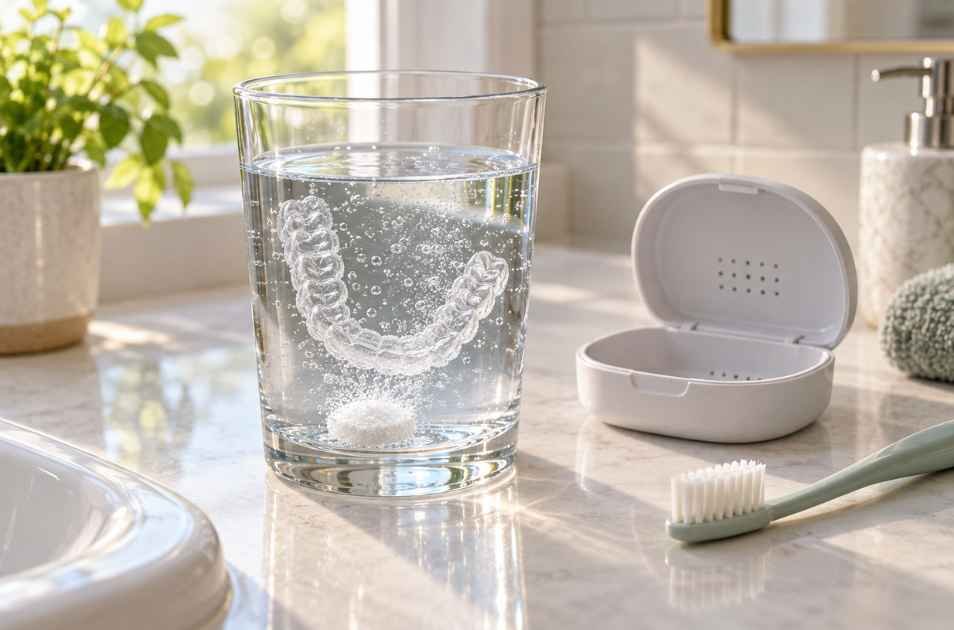
Step 2: Deep clean soak. Drop a retainer-cleaning tablet into a cup of lukewarm water. Submerge the retainer for the recommended time (usually 15–20 minutes). The effervescent action penetrates surface deposits that brushing leaves behind. Rinse and brush gently afterward. A diluted white vinegar soak (equal parts vinegar and lukewarm water, 15–20 minutes) is an alternative if you don’t have tablets on hand.
Step 3: Clean or replace the case. Wash the case with warm water and dish soap, scrubbing the interior and lid. Let it air-dry completely. If the case itself smells even after washing, replace it — cases cost a few dollars and no amount of retainer cleaning helps if the storage environment is contaminated.
Step 4: Air-dry before storing. After cleaning, set the retainer on a clean surface (a paper towel works) and let it dry completely before closing it in the case. This eliminates the moist-case incubation problem.
If steps 1–4 resolve the odour and it stays resolved, the problem was cleaning consistency and/or case hygiene. Maintain the daily routine and weekly deep clean going forward.
Don’t Forget the Case
This deserves its own section because it’s the cause people miss most often. A retainer case that hasn’t been washed accumulates a biofilm of its own — bacteria, dried saliva residue, and moisture trapped in the corners and lid. Every time a freshly cleaned retainer goes into a dirty case, it picks up bacteria from the case surface.
Wash the case at least once a week with warm water and dish soap. Use a brush to reach the corners. Rinse and air-dry completely. Replace the case every 2–3 months, or sooner if it develops discolouration, persistent odour, or any sign of mould.
If the case has ventilation holes, make sure they’re not clogged with residue. If it doesn’t have ventilation holes, either leave the lid slightly cracked while the retainer dries inside, or dry the retainer outside the case and close it only when both are fully dry.
When Odour Won’t Go Away
If you’ve reinstated daily cleaning, done a thorough deep clean, replaced the case, ensured proper drying, and the retainer still smells within hours of cleaning — the problem is likely in the retainer’s surface or material, not in your routine.
Bacteria embedded in surface scratches or micro-damage can’t be reached by external cleaning. An ultrasonic cleaner may help in some cases by reaching crevices that manual methods miss — but if the damage is deep enough, even cavitation won’t dislodge embedded colonies. For more on ultrasonic cleaning capabilities, see: Do Ultrasonic Retainer Cleaners Actually Work?
A retainer with persistent odour despite thorough, consistent cleaning is usually one that’s reached end-of-life. The surface has accumulated enough damage that it can no longer be kept hygienically clean. Contact your orthodontist to discuss replacement. This is a normal lifecycle event, not a failure of cleaning — all retainer materials degrade over time.
One thing to avoid: don’t escalate to aggressive chemicals (bleach, alcohol, undiluted hydrogen peroxide, harsh household cleaners) in an attempt to kill the smell. These can damage the retainer material, leave residual taste, and irritate oral tissue. If gentle methods haven’t worked, the answer is replacement, not stronger chemistry.
Prevention
Clean the retainer daily. Every time you remove it. No exceptions, no skip days. The 60 seconds this takes prevents the biofilm accumulation that causes odour in the first place.
Deep clean weekly. A cleaning tablet soak once a week handles what daily brushing leaves behind. Twice a week if you notice odour developing between deep cleans.
Clean and replace the case regularly. Weekly wash, monthly inspection, replacement every 2–3 months. A clean retainer in a clean case stays clean.
Air-dry before storing. Never seal a damp retainer in a closed case.
Don’t use toothpaste. The abrasive scratching creates the surface damage that makes retainers harder to keep clean and more prone to harbouring odour-causing bacteria.
Stay hydrated. Dry mouth produces less saliva flow, which reduces the natural rinsing action that helps limit bacterial buildup. Staying hydrated during the day — and particularly before bed if you wear a nighttime retainer — supports oral environment conditions that make retainer odour less likely.
For the full cleaning routine, see: How to Clean a Retainer.
Frequently Asked Questions
Is a smelly retainer dangerous?
A smelly retainer is a sign that bacteria have colonised the appliance surface beyond what your current cleaning routine handles. It’s a hygiene concern, not a medical emergency. But wearing a retainer with significant bacterial buildup isn’t ideal for oral health — bacteria against your teeth and gums for hours each night is counterproductive to the orthodontic result the retainer is supposed to maintain. Fix the cleaning routine or replace the retainer.
Can I soak my retainer in mouthwash to remove the smell?
Alcohol-based mouthwash can degrade and discolour some retainer materials over time. It may mask the smell temporarily without addressing the underlying bacterial colonisation. Use a purpose-made retainer-cleaning tablet or diluted white vinegar soak instead — both address bacteria more effectively without material risk.
Does an ultrasonic cleaner help with retainer odour?
It can help by reaching bacteria in crevices and surface textures that brushing and soaking miss. Add a compatible cleaning tablet to the tank water for best results. If odour persists even after ultrasonic cleaning, the retainer surface is likely damaged beyond what any cleaning method can fix. See: Best Ultrasonic Retainer Cleaner.
How often should I replace my retainer case?
Every 2–3 months, or sooner if it develops persistent odour, discolouration, or mould. Cases are inexpensive and replaceable. A dirty case undermines every other cleaning effort you make.
My retainer smells bad on the first day of wearing a new one. Why?
A brand-new retainer may have a faint manufacturing odour from the material or packaging. This usually dissipates after a rinse and a few hours of wear. If the smell is strong, persistent, or chemical in nature, contact your orthodontist — the material may need inspection. A brief soak in lukewarm water with mild dish soap before first wear can help.

Sources & References
American Association of Orthodontists — How to Clean Your Retainer
Biofilm removal performance of commercial orthodontic cleaning tablets on PMMA specimens (2023)
https://pubmed.ncbi.nlm.nih.gov/37266911/
Sambhavaphol P et al. (2026) — Ultrasonic cleaning with chemical agents on thermoplastic retainers
https://pubmed.ncbi.nlm.nih.gov/41313277/
CDC — Cleaning (Disinfection and Sterilization Guidelines)
https://www.cdc.gov/infection-control/hcp/disinfection-sterilization/cleaning.html