Last updated: August 2026 | By: VerdictLab Editorial Team
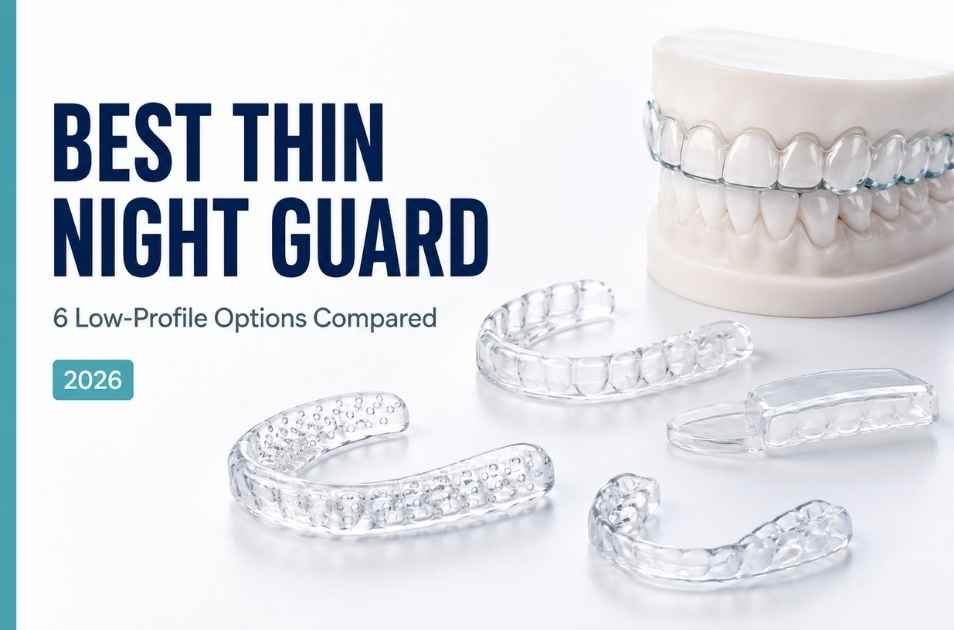
The most useful night guard is one you can actually wear consistently. And for some people, bulk is the thing that gets in the way.
A thick guard can feel intrusive, trigger gagging in sensitive users, take up more room in the mouth, or simply make it harder to relax at bedtime. After a few uncomfortable nights, the guard ends up in a drawer and the teeth are back to grinding without protection.
That’s where thin and low-profile guards make sense. They reduce the amount of material in the mouth, but there is a trade-off: less material may also mean less wear allowance depending on the material, design, and how strongly you grind.
This guide compares six thinner or lower-profile options — custom and OTC — plus choices for people who find standard guards too large and for people who clench during the day.
Quick Picks
- Best 1mm custom night guard: Remi 1mm — custom impression fit, dual-laminate construction
- Best thin OTC: SOVA Aero 1.6mm — perforated design, remoldable up to 20×
- Best thin OTC durability warranty: LunaGuard 1.6mm — remoldable up to 20×, 180-day durability warranty
- Best slim DenTek option: DenTek Ultimate — low-profile bite-pad design, FDA-cleared
- Best for smaller-fit needs: Sleepette — 4-pack with 2 size options
- Best custom option for daytime clenching: enCore Ultra Thin — 1mm custom hard-layer guard suitable for discreet daytime wear
In This Guide
Why a Lower-Profile Guard Can Be Easier to Wear
Thickness isn’t the only thing that determines comfort, but it can make a noticeable difference.
Less bulk. A lower-profile guard simply occupies less space in the mouth. That can matter if you’ve already tried a thicker appliance and found the feeling distracting or difficult to tolerate.
Gag sensitivity. Some people have a strong gag reflex and find appliances that feel bulky or extend too far toward the back of the mouth uncomfortable. A thinner, well-fitted design may be easier to tolerate, although the shape and posterior extension of the guard matter too.
General mouth feel. Thickness affects how much material sits around the teeth and against the tongue and cheeks. For some users, reducing that material makes the appliance feel less intrusive.
Retention still matters. Thin isn’t useful if the appliance feels loose or unstable. A secure fit may matter just as much as the actual millimetre measurement.
None of this means thinner is automatically better. Someone who repeatedly wears through thin guards may benefit from a thicker or more wear-resistant design. The right balance is the lowest-profile guard you can wear comfortably that still holds up adequately for your grinding pattern.
The Thin-Guard Trade-off
Reducing thickness means reducing the amount of material available to wear through. But thickness alone doesn’t predict lifespan.
Material, fit, grinding intensity, where your teeth contact the appliance, and the guard’s construction all affect durability.
A thinner guard made from a wear-resistant thermoplastic may hold up better for one person than a thicker but softer appliance. Another person may destroy both quickly.
So instead of assuming:
- 1mm = short lifespan
- 2mm = long lifespan
- thin = light grinders only
look at your own wear pattern.
If a thin guard fits comfortably and remains intact, there’s no reason to move thicker just for the sake of thickness. If you repeatedly develop deep grooves, holes, distortion, or bite-through, durability becomes a stronger reason to consider another design.
Comfort still matters. A more durable appliance has little practical value if it’s uncomfortable enough that you stop wearing it.
Product Picks
Remi 1mm — Best 1mm Custom Night Guard
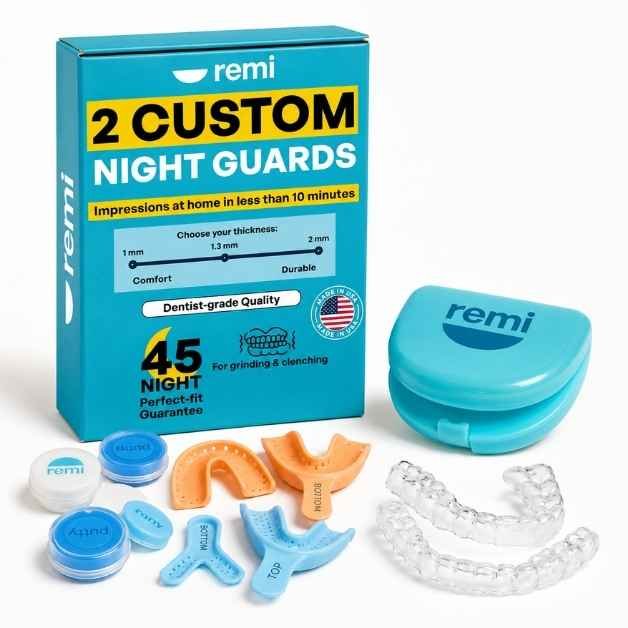
Amazon Price: Check current listing | Thickness: 1mm | Material: Dual-laminate | FDA: Cleared under 510(k) K251778 | Fit: Custom impression
Remi’s 1mm option is the thinnest version in its current custom lineup. The company also offers 1.3mm and 2mm versions, giving you some flexibility if you want a little more material without changing brands or impression systems.
The main advantage here isn’t simply the 1mm number. It’s the combination of a low-profile design with a guard fabricated from your own dental impression.
For someone who has found generic OTC guards bulky or unstable, that individually fabricated fit may be as important as the reduction in thickness.
Remi uses a dual-laminate construction rather than a rigid single-layer design. The company generally positions the thinner versions toward lighter grinding and the 2mm version toward heavier grinding, but your own wear pattern should ultimately determine whether the 1mm remains durable enough for you.
Don’t assume thinner automatically means invisible or impossible to feel. It is still an oral appliance, and comfort varies from person to person.
SOVA Aero (1.6mm) — Best Thin OTC
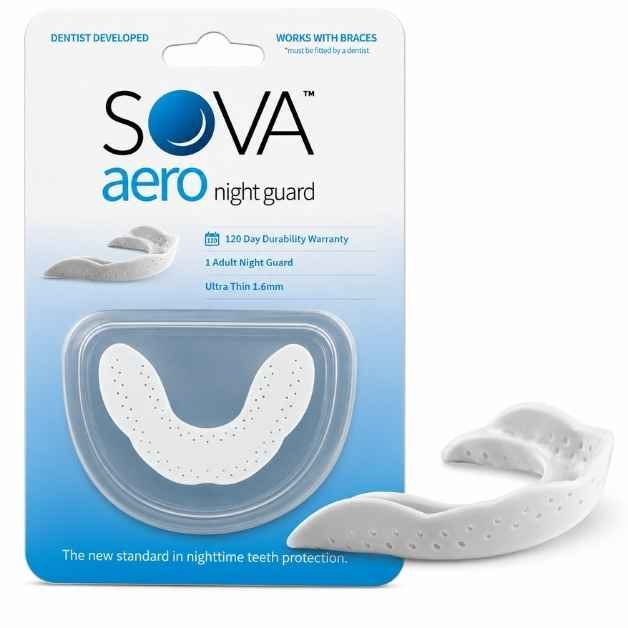
Amazon Price: Check current listing | Thickness: 1.6mm | Remoldable: Up to 20× | Design: Perforated Diffusix | Durability warranty: 120 days
The SOVA Aero is a 1.6mm moldable OTC guard built around SOVA’s perforated Diffusix design. The manufacturer says the perforations allow fluid and airflow through the appliance while helping distribute grinding forces across the material.
The most useful feature for home fitting is remoldability. SOVA says the Aero can be reheated and remolded up to 20 times, which takes much of the pressure out of getting the mold perfect on the first attempt.
That makes the Aero particularly attractive if you want a low-profile OTC guard but have had trouble getting a stable boil-and-bite fit before.
SOVA also backs the Aero with a 120-day durability warranty. That is a more useful durability benchmark than trying to predict exactly how many months it will last in your mouth.
LunaGuard (1.6mm) — Best Thin OTC Durability Warranty
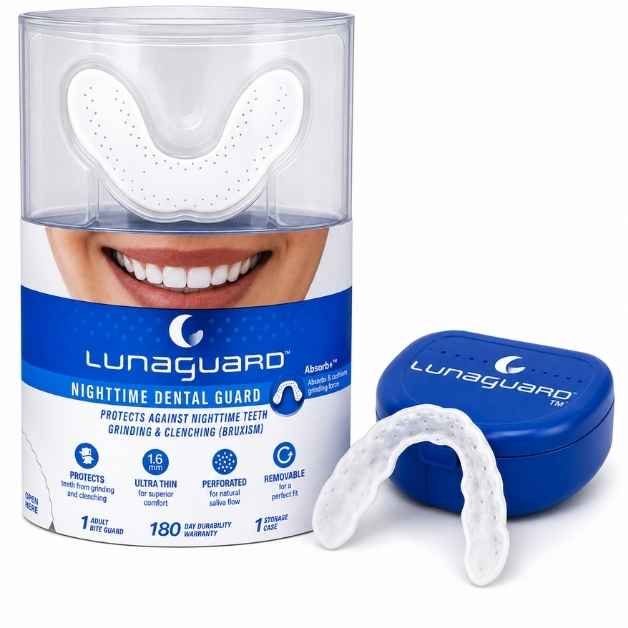
Amazon Price: Check current listing | Thickness: 1.6mm | Remoldable: Up to 20× | Durability warranty: 180 days | Fit: Moldable OTC
LunaGuard is also 1.6mm, so the choice between it and SOVA Aero isn’t simply about which one is thinner.
Its standout feature is the manufacturer’s 180-day durability warranty — longer than SOVA’s current 120-day warranty. LunaGuard can also be reheated and remolded up to 20 times.
That combination makes it particularly relevant for someone who wants a thin moldable guard but is worried about paying for something that wears rapidly.
We wouldn’t claim LunaGuard universally lasts longer than SOVA or another competing guard. A warranty is not the same thing as a controlled head-to-head durability test, and individual wear can vary enormously.
Think of LunaGuard as the thin OTC option with the strongest manufacturer durability warranty in this group.
DenTek Ultimate — Best Slim DenTek Option
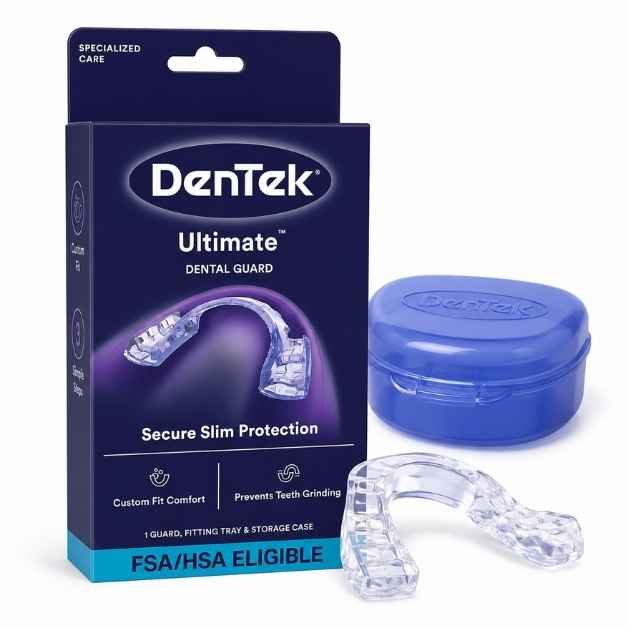
Amazon Price: Check current listing | Design: Ultra-light / slim profile | FDA: Cleared under 510(k) K180933 | Fit: OTC fitting system
DenTek’s Ultimate is aimed directly at the bulkiness problem. Rather than using a traditional full slab of thick moldable material, the design uses cushioned bite pads and a lower-profile connecting structure.
DenTek doesn’t publish an exact thickness comparable with SOVA’s 1.6mm measurement, so it doesn’t make sense to rank the Ultimate by millimetres.
Its appeal is the shape: less material occupying the mouth than a conventional full-coverage boil-and-bite design.
The product has FDA clearance under K180933 and comes from an established OTC dental-guard brand. If you dislike traditional boil-and-bite bulk but don’t necessarily want the SOVA/LunaGuard style, the Ultimate gives you another approach to reducing mouth feel.
Guards for Smaller Mouths
Sleepette Night Guard — Best for Smaller-Fit Needs
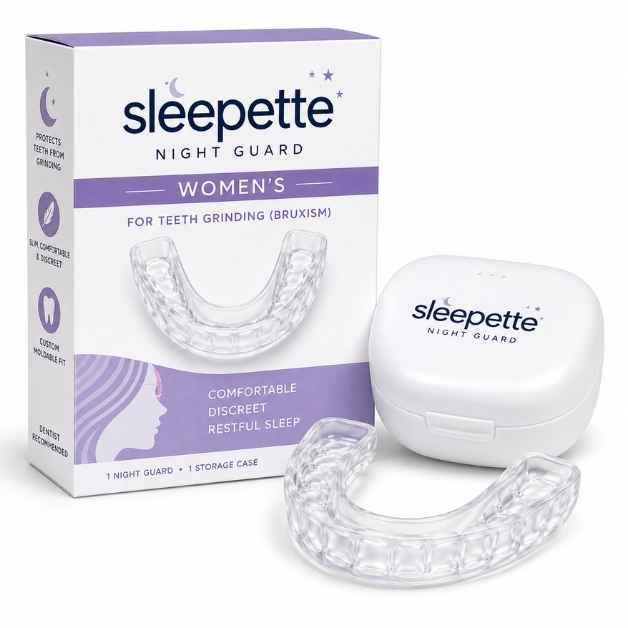
Amazon Price: Check current listing | Count: 4 guards | Sizes: 2 size options | Type: Moldable
Sometimes thickness isn’t actually the problem. The guard is simply too wide or long for your mouth.
Sleepette is marketed toward women and smaller-fit needs, and its 4-pack includes two size options rather than forcing every user into one universal shape.
That’s the reason it belongs in this article. If a standard OTC guard feels too large around the sides or toward the back of the mouth, access to a smaller option may help more than simply choosing a thinner guard.
The gender label isn’t the important part. Mouth and dental-arch size vary between individuals, so anyone who repeatedly finds one-size guards too large may appreciate having more than one size to work with.
Custom guards provide another solution to sizing problems because the appliance is fabricated from an impression of your own teeth rather than from a universal stock size. Both Remi and enCore use custom impression systems.
Daytime Guards for Awake Clenching
Not all bruxism happens during sleep. Awake bruxism involves clenching or repetitive jaw-muscle activity while you’re conscious — often during concentration, stress, work, driving, or other habitual situations.
The management approach is different because you’re awake enough to change the behaviour.
For daytime clenching, awareness is especially important. Reminders to keep the teeth apart, noticing the situations in which you clench, and consciously relaxing the jaw are commonly recommended behavioural strategies.
A guard can still provide a physical barrier in selected situations, but it shouldn’t become a substitute for reducing unnecessary daytime tooth contact.
If you do want an appliance for daytime protection, a low-profile custom design is easier to use discreetly than a bulky nighttime guard.
enCore Ultra Thin — Best Custom Option for Daytime Clenching
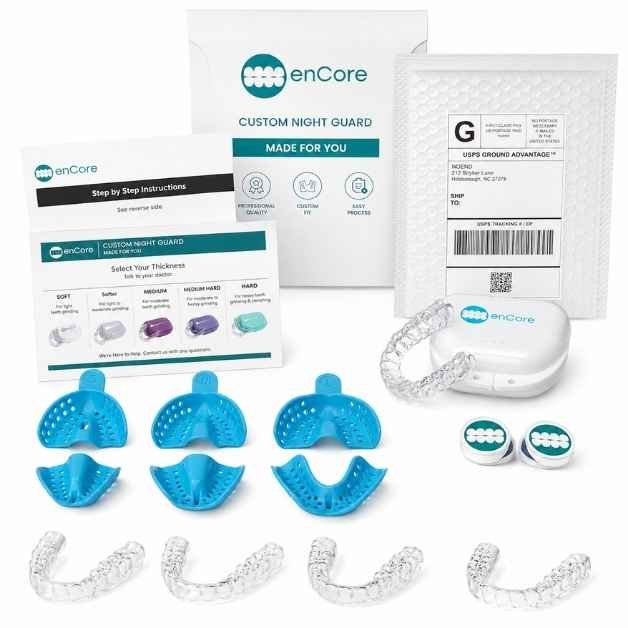
Amazon Price: Check current listing | Thickness: 1mm | Material: Hard-layer material with a thinner profile | Fit: Custom impression | Use: Suitable for discreet daytime wear
enCore’s current low-profile product is the Ultra Thin, not the older “Daytime Hard” name that appears in some older product information.
The Ultra Thin is approximately 1mm thick and uses the same general hard-layer material family as enCore’s rigid guard while being made thinner and somewhat more flexible.
enCore specifically positions it as suitable for discreet daytime wear. That makes it the most relevant option in our Amazon custom lineup for someone who wants a protective appliance during waking hours.
The custom impression fit is particularly useful here because speaking and normal daytime activity make a loose or bulky appliance much harder to tolerate than it might be during sleep.
But the guard is only one part of awake-bruxism management. If you catch yourself clenching throughout the day, work on reducing habitual tooth contact rather than assuming wearing a guard allows the clenching to continue unchanged.
Frequently Asked Questions
Is a thin night guard effective for grinding?
A thin guard can still separate the teeth and protect against direct tooth-to-tooth contact, but effectiveness depends on fit, material, your grinding pattern, and whether the appliance remains intact.
There is no universal thickness that is appropriate for every grinder. If a thin guard repeatedly develops holes, deep grooves, or distortion, that’s a sign to consider a more durable design rather than simply continuing to replace the same type.
Comfort matters too: a guard you can wear consistently may be more useful in practice than a theoretically tougher appliance that you repeatedly remove because it’s uncomfortable.
What’s the thinnest night guard available?
Among the custom Amazon options in this guide, both Remi and enCore currently offer approximately 1mm choices: Remi’s 1mm custom guard and enCore’s Ultra Thin.
Among the OTC products reviewed here, SOVA Aero and LunaGuard are both 1.6mm.
Don’t choose solely from the smallest number. Fit, material, durability, and whether the guard is appropriate for your use matter as well.
How do I stop gagging on my night guard?
If your guard triggers gagging, first make sure you’re fitting and wearing it exactly as the manufacturer instructs.
A lower-profile or smaller-fitting guard may help some people. A custom guard can also be fabricated to your individual arch rather than relying on a universal size.
Do not cut or trim a guard unless the manufacturer specifically says that the model can be modified that way. Changing an appliance on your own can alter its fit.
If gagging persists even with an appropriately fitted low-profile guard, talk to your dentist. They may be able to recommend or adjust an appliance with a shape that is easier for you to tolerate.
Can I wear a thin night guard during the day?
Follow the intended use of the specific product. A thin profile by itself doesn’t automatically make a nighttime guard suitable for daytime wear.
If regular daytime protection is needed, enCore’s Ultra Thin is specifically positioned for discreet daytime use and is custom-made from an impression.
For awake bruxism, though, the bigger opportunity is behavioural: noticing when your teeth are touching and practising keeping them apart when you’re not eating or swallowing.
Which thin guard lasts longest?
There isn’t a reliable head-to-head test showing that one thin guard will last longest for everyone.
Among the OTC options here, LunaGuard has the longer current manufacturer durability warranty at 180 days, while SOVA Aero carries a 120-day durability warranty.
That doesn’t mean every LunaGuard will physically outlast every SOVA. Grinding patterns differ too much for that conclusion.
With custom guards, your own wear history is a better guide than generic lifespan claims. Inspect the appliance regularly and replace or have it assessed if you see significant wear, holes, distortion, or a change in fit.
Sources & References
-
National Institute of Dental and Craniofacial Research — Bruxism
-
enCore — Ultra Thin Custom Guard Specifications
-
Remi — Night Guard Thickness Guidance
-
SOVA — Aero Night Guard Product Information
-
LunaGuard — Product Technology and Durability Information
-
U.S. Food & Drug Administration — DenTek Ultimate Dental Guard, 510(k) K180933
Choosing a Thin Guard
If bulk is the main reason you’ve struggled to wear a night guard, a lower-profile design is worth trying.
Remi 1mm gives you a thin custom option, while SOVA Aero and LunaGuard are both 1.6mm OTC alternatives with remoldable designs. LunaGuard currently carries the longer manufacturer durability warranty, while SOVA uses its distinctive perforated construction.
If the problem is overall sizing rather than thickness, Sleepette gives you two size options instead of a single universal fit.
And if daytime clenching is part of the picture, enCore Ultra Thin is the relevant 1mm custom option for discreet waking use — alongside the more important habit of reducing unnecessary daytime tooth contact.
The durability trade-off can’t be reduced to a simple thickness chart. Watch how your own guard wears. If a thin appliance fits comfortably and remains intact, that’s useful evidence that the design suits you. If you repeatedly wear through it, move toward a more durable option rather than assuming thinness must remain the priority.
For readers who repeatedly destroy guards, see our Best Night Guard for Heavy Grinders. For the full comparison across all types, see: Best Night Guard for Teeth Grinding (2026).