Last updated: August 2026 | By: VerdictLab Editorial Team
TMJ pain and teeth grinding often show up together. The jaw aches when you wake up. The muscles on the side of your face feel tight. Opening wide may produce a click or a catch. And somewhere in the background, you may also be grinding or clenching through the night without knowing it.
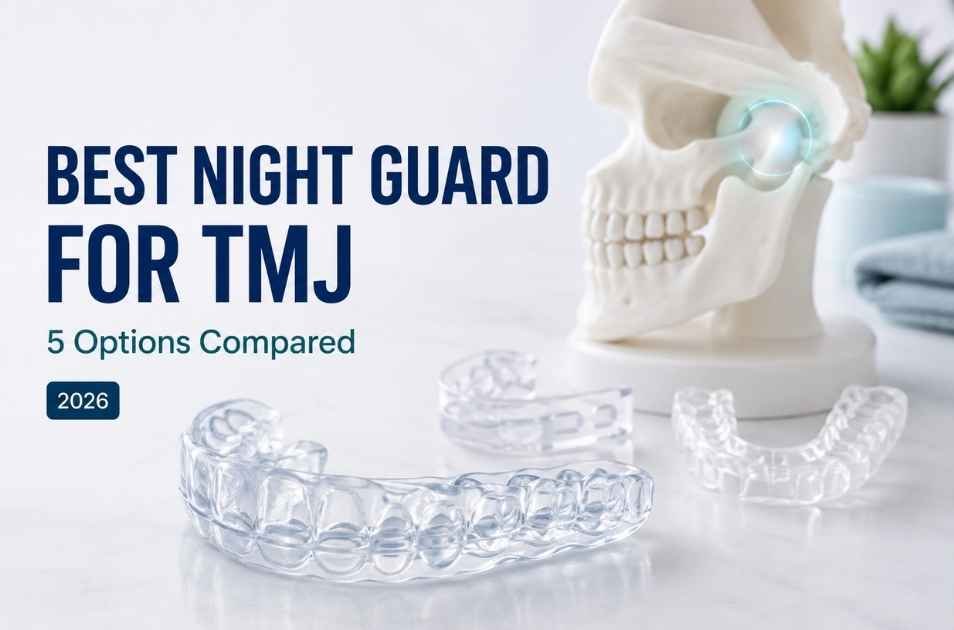
Bruxism and TMD frequently overlap, but the relationship is complicated. Grinding does not automatically mean it caused your TMD, and treating the grinding does not automatically make jaw symptoms disappear.
A night guard can separate the teeth and help protect them from grinding damage. Some people with TMD also experience less jaw-muscle pain or morning soreness while using an appliance, but the research on TMD symptom relief is mixed and depends heavily on the individual, the diagnosis, and the appliance being used.
This guide covers what to look for when jaw symptoms are part of the picture, five guard options worth comparing, and — equally important — when shopping for another guard is the wrong next step.
Quick Picks
- Best hard custom option: enCore Hard — rigid custom construction if a hard guard is appropriate for your situation
- Best two-guard custom option: Remi 2mm — dual-laminate construction with two guards per standard order
- Best remoldable OTC option: LunaGuard — 1.6mm design, remoldable up to 20 times, 180-day durability warranty
- Best thicker OTC option: SOVA Max — 2.4mm, remoldable up to 20 times
- Best two-layer OTC option: The Doctor’s NightGuard — molded two-layer design from an established dental-guard brand
In This Guide
TMJ, TMD, and Bruxism: How They Overlap
Quick terminology: TMJ is the joint itself — the temporomandibular joint, which sits just in front of each ear. TMD (temporomandibular disorder) is the broader term for conditions involving the joint, the chewing muscles, or both. “TMJ” is often used conversationally to mean “TMJ problems,” even though TMD is the more accurate term.
TMD is not one condition. Symptoms can arise primarily from the jaw muscles, from structures inside the joint, or from a combination of factors. Stress, pain sensitivity, injury, parafunctional habits such as clenching, and other biological or behavioural factors can all be part of the picture.
Bruxism and TMD frequently occur together, but association is not the same as causation. Some people grind their teeth and have no TMD symptoms. Others have substantial TMD symptoms without clear evidence of sleep bruxism.
That distinction matters because a guard may be useful for protecting teeth from grinding without necessarily resolving the jaw problem that brought you to this article.
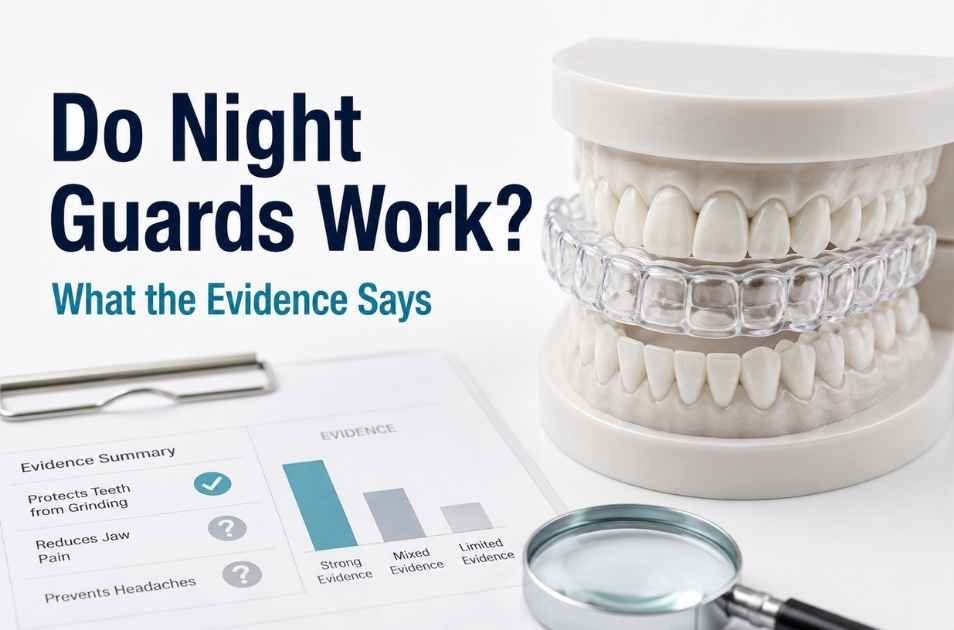
A dentist or orofacial pain specialist can help work out which factors are relevant in your particular case and whether an oral appliance belongs in the treatment plan. For the broader evidence on night guards, see: Do Night Guards Work?
What a Night Guard Can and Can’t Do for TMJ
What it can do:
A night guard creates a physical barrier between the upper and lower teeth. Its clearest role is helping protect enamel, restorations, and the guard itself from direct tooth-to-tooth grinding damage.
Some people with TMD — particularly those whose symptoms involve jaw-muscle soreness alongside clenching or grinding — report less discomfort while using a properly fitted appliance. Clinical studies have also examined splints for TMD, but results are mixed and the certainty of the evidence is limited. There is no guarantee that reducing tooth contact will reduce your jaw pain.
What it can’t do:
A guard doesn’t diagnose or cure TMD. It does not reliably eliminate sleep bruxism, correct every internal joint problem, treat systemic inflammatory disease, or replace professional assessment when symptoms are persistent or progressive.
The safest way to think about a guard is as one possible management tool rather than the treatment for TMJ.
Tooth protection is the most predictable benefit. Symptom relief is possible for some people, but much less predictable.
What to Look for in a Guard When You Have TMD
Fit without persistent pain or bite changes. A guard should seat securely without creating ongoing tooth pain, excessive pressure, or a bite that remains noticeably different after the appliance is removed. If it does, stop using it and have the fit assessed.
A design appropriate for your dental situation. Someone with multiple crowns, bridges, implants, active orthodontic treatment, significant tooth wear, or previous TMJ treatment should be more cautious about choosing an appliance without professional input.
Comfort you can actually tolerate. Thin is not automatically better and thick is not automatically better. Material, retention, tongue space, mouth size, and where the appliance contacts your teeth all affect comfort.
Professional guidance when you’re choosing the appliance specifically for TMD. Hard stabilisation splints are the most frequently studied appliance type in TMD research, but that does not mean every person with TMD should simply buy a hard night guard. Appliance design, occlusion, diagnosis, and follow-up matter.
Don’t choose thickness or rigidity on the assumption that more separation or a harder material automatically means more TMJ pain relief. The evidence isn’t strong enough for that shortcut.
Product Options to Compare
The products below are night guards, not substitutes for a professionally selected TMD splint. If a dentist or orofacial pain specialist has recommended a particular appliance design, follow that recommendation rather than choosing from a ranking.
enCore Custom Night Guard (Hard) — Best Hard Custom Option
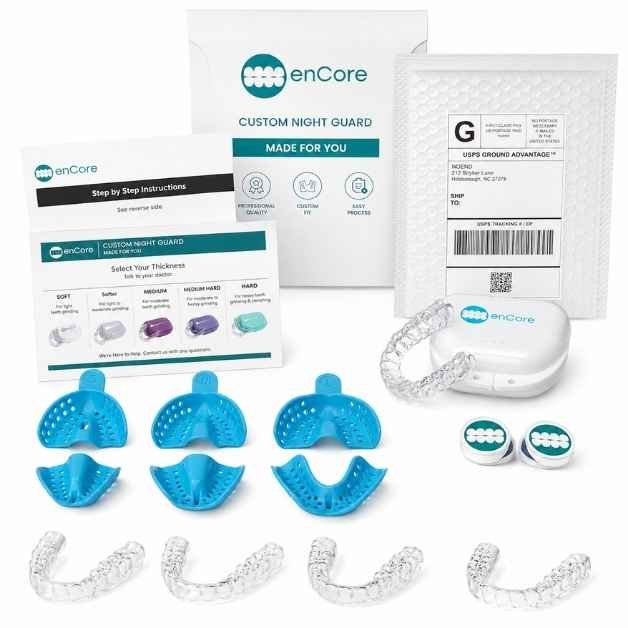
enCore’s Hard Guard is the rigid option in its custom lineup. The company currently offers hard guards in multiple thicknesses, alongside Soft, Hybrid, and Ultra Thin alternatives. The lab states that it has more than 30 years of dental manufacturing experience.
Hard stabilisation appliances are the most frequently studied splint type in clinical TMD research, which makes a rigid custom guard relevant to the conversation. But an online hard night guard is not automatically equivalent to a professionally designed and adjusted TMD stabilisation splint.
If your dentist has specifically recommended a rigid guard and you’re considering an online custom option, enCore is the most relevant product in our Amazon set. If you’re choosing a guard primarily to treat unexplained jaw pain on your own, professional assessment should come first.
Remi Custom Night Guard (2mm) — Best Two-Guard Custom Option
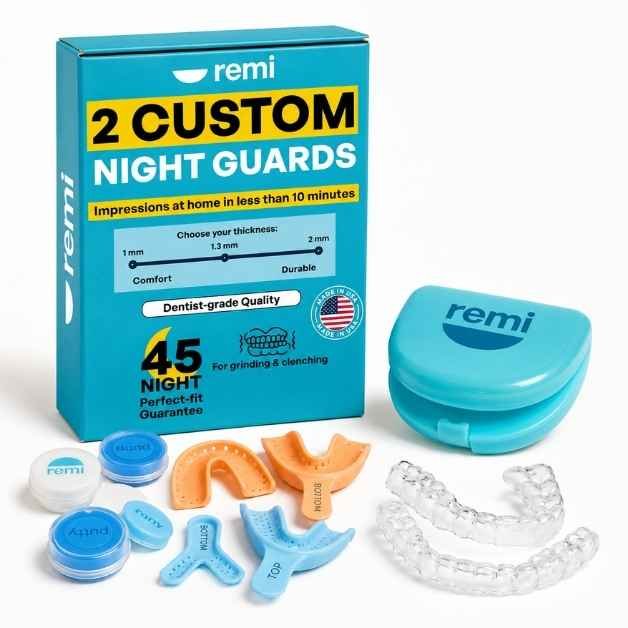
Remi’s 2mm version is the thickest option in its current custom lineup and is positioned by the company for heavier grinding. It uses a dual-laminate construction rather than the rigid single-layer construction of enCore’s Hard Guard.
The practical advantage is the package: Remi’s standard custom order includes two guards. That gives you a spare and lowers the effective cost per guard compared with many single-guard custom orders.
The 2mm thickness should not be interpreted as a specific TMD treatment. More material between the teeth does not automatically mean more symptom relief, and Remi’s dual-laminate construction is not the same thing as a professionally adjusted hard stabilisation splint.
If you’re primarily looking for custom grinding protection and also happen to have TMD symptoms, Remi is worth comparing. If the appliance is being selected specifically to manage TMD, ask your clinician what type of splint or guard they want you to use.
LunaGuard — Best Remoldable OTC Option
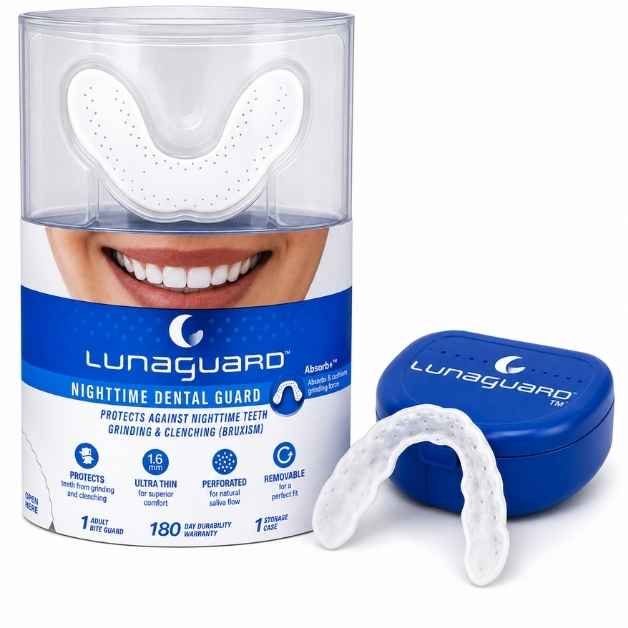
LunaGuard is a 1.6mm moldable OTC guard made from a durable thermoplastic. Its biggest practical advantage is that the manufacturer says it can be reheated and remolded up to 20 times.
That matters when fit is particularly important. Instead of being stuck with a poor first mold, you have multiple chances to improve the seating of the appliance.
LunaGuard also carries a 180-day manufacturer durability warranty and is made in the USA.
We’re including it because of those objective product characteristics — not because we’re claiming LunaGuard treats TMD. If an OTC guard increases your jaw pain, creates pressure on individual teeth, or leaves your bite feeling persistently different, stop using it and seek professional advice.
SOVA Max (2.4mm) — Best Thicker OTC Option
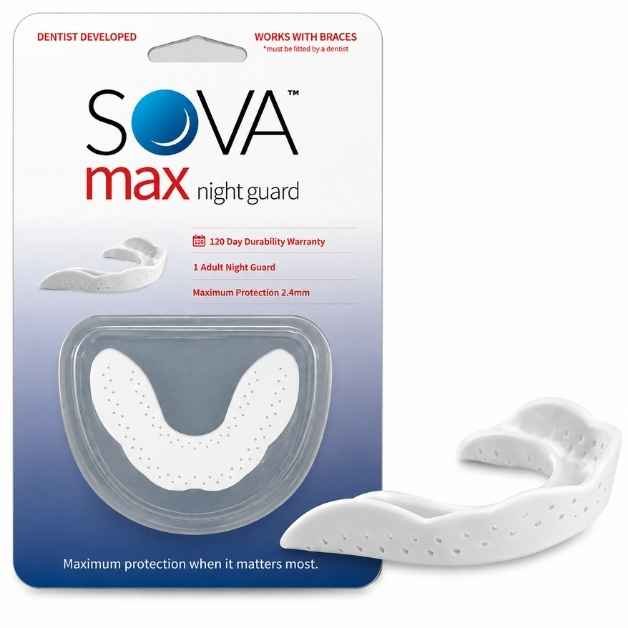
SOVA Max is the thicker version of SOVA’s moldable guard design. At 2.4mm, it provides more material than the 1.6mm SOVA Aero while retaining the brand’s perforated Diffusix construction.
Like the Aero, the Max can be reheated and remolded up to 20 times. That makes it one of the more forgiving OTC choices if your first fitting attempt isn’t right.
The reason to choose the Max over the Aero is simple: you prefer a thicker appliance or wear through thinner guards quickly. The extra thickness should not be interpreted as evidence that it provides greater TMD pain relief or mechanically unloads the TMJ.
Some people will prefer more material; others will find it bulky. Fit and comfort matter more than chasing maximum thickness.
The Doctor’s NightGuard — Best Two-Layer OTC Option
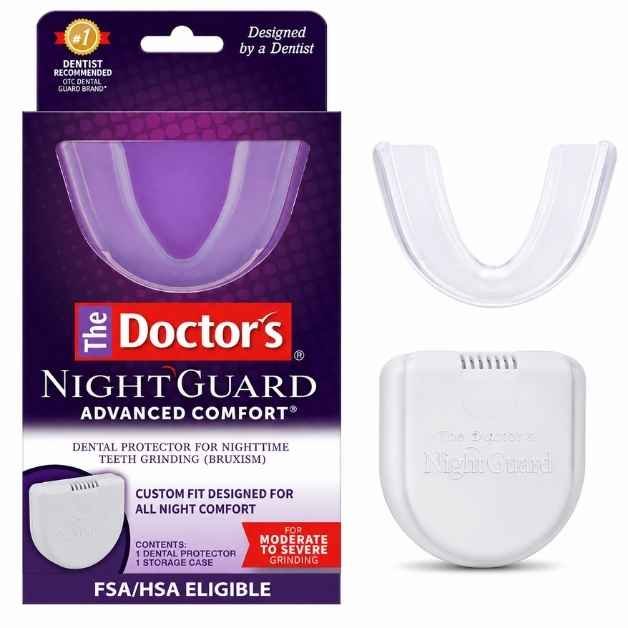
The Doctor’s NightGuard uses a patented two-layer construction that combines a softer cushioning layer with a firmer supporting layer. The product was developed with dental input and has been on the OTC market for years.
The design gives you a different feel from a single-material boil-and-bite guard without moving all the way to an online custom appliance.
That makes it a reasonable lower-commitment option for someone primarily seeking grinding protection who also has mild jaw symptoms — provided the product fits comfortably and doesn’t worsen those symptoms.
Again, this is a night guard rather than a clinically selected TMD splint. If jaw pain is the main reason you’re shopping, a dental evaluation is more valuable than simply buying progressively more expensive guards.
When a Guard Isn’t Enough
A night guard can be useful for tooth protection when grinding and jaw symptoms overlap. But some situations need professional evaluation rather than another product purchase.
Jaw locking. If your jaw gets stuck open or closed or you temporarily cannot move it normally, internal joint problems may be involved. This warrants assessment by a dentist or orofacial pain specialist.
Progressive limitation in opening. If your ability to open your mouth is gradually decreasing, have it professionally evaluated. Your clinician can decide whether examination alone is sufficient or whether imaging or specialist referral is appropriate.
Pain that’s getting worse while using a guard. Don’t assume worsening symptoms are part of an adjustment period. Stop using the appliance and contact your dental professional.
Significant ear pain, facial swelling, fever, or difficulty chewing. Symptoms around the jaw can overlap with dental, ear, salivary-gland, and other conditions. These deserve proper evaluation rather than being automatically labelled “TMJ.”
Previous TMJ surgery or complex treatment history. If you’ve had TMJ surgery or substantial previous treatment, oral-appliance decisions should be made with the clinicians who know your history.
The general rule is simple: persistent, progressive, locking, swelling, or worsening symptoms belong in a clinical conversation. A shopping guide cannot tell you which structure in your jaw is causing the problem.
Frequently Asked Questions
Will a night guard fix my TMJ?
Not reliably. A night guard can separate the teeth and protect them from grinding damage. Some people with TMD also experience improvement in jaw-muscle symptoms while using an oral appliance, but research on pain relief is mixed and the response varies considerably between individuals.
TMD has multiple possible drivers, so an appliance that helps one person may make little difference for another. For the broader evidence, see: Do Night Guards Work?
Should I get a hard or soft guard for TMJ?
Hard stabilisation splints are the most frequently studied appliance type in TMD research. That does not mean a hard guard is automatically right for everyone with TMD.
The evidence for splint therapy remains uncertain overall, and the design used clinically involves more than simply choosing a rigid material. Fit, bite contacts, diagnosis, adjustment, and follow-up can all matter.
If your main reason for buying a guard is TMD pain rather than simple grinding protection, ask your dentist or orofacial pain specialist which type of appliance — if any — they recommend.
Can a night guard make TMJ symptoms worse?
Yes, an appliance that fits poorly or aggravates your jaw can make symptoms worse in some people. Warning signs include new or increasing pain, uncomfortable tooth pressure, difficulty wearing the appliance, or a persistent unwanted change in how your teeth meet.
If that happens, stop using the guard and have it assessed rather than repeatedly trying to adapt to the discomfort.
Upper or lower guard for TMJ?
Many OTC night guards are designed for the upper teeth, so for ordinary grinding protection you should use the product exactly as its instructions specify.
When an appliance is being selected specifically as part of TMD management, upper versus lower placement should be guided by the treating dentist or specialist rather than chosen by trial and error.
How long until a night guard helps TMJ symptoms?
There isn’t a reliable universal timeline. Some people notice changes quickly, some only after longer use, and others find that the appliance protects their teeth without materially changing the jaw symptoms.
More importantly, don’t wait for an arbitrary number of weeks if the guard is making you worse. New pain, worsening symptoms, or a persistent bite change are reasons to stop and contact your dental professional.
If symptoms simply continue despite a comfortable guard, follow up rather than assuming that buying a different night guard will solve the problem.
Should I see a regular dentist or a TMJ specialist?
A general dentist is a reasonable starting point for many people. They can examine the teeth and jaw, look for grinding-related damage, and decide whether the situation can be managed in general practice or whether referral is appropriate.
Persistent or complicated TMD symptoms may warrant referral to an orofacial pain specialist or another clinician with relevant expertise. Jaw locking, progressive limitation, previous TMJ surgery, or symptoms that remain unexplained are particularly good reasons to seek more specialised assessment.

Sources & References
National Institute of Dental and Craniofacial Research — Temporomandibular Disorders (TMD)
National Institute of Dental and Craniofacial Research — Bruxism
Cochrane Review — Occlusal Interventions for Managing Temporomandibular Disorders
LunaGuard — Product Technology and Durability Information
SOVA — Max Night Guard Product Information
Choosing a Guard When You Have TMJ Symptoms
If your dentist or orofacial pain specialist has recommended a specific appliance type, follow that advice. They’ve examined your jaw and teeth and know far more about your particular situation than any product ranking can.
If you’re primarily looking for grinding protection and comparing commercially available options, enCore Hard is the relevant rigid custom choice, while Remi offers a two-guard dual-laminate custom package. Among OTC options, LunaGuard stands out for remoldability and its durability warranty, while SOVA Max gives you a thicker 2.4mm moldable design.
None of those features prove that one product will relieve your TMD symptoms.
The useful dividing line is this: if your main problem is grinding-related tooth protection, comparing guards makes sense. If your main problem is persistent jaw pain, locking, progressive limitation, or worsening symptoms, figuring out what’s causing the problem matters more than finding the highest-ranked guard.
For the full guard comparison, see: Best Night Guard for Teeth Grinding (2026). For the evidence on effectiveness, see: Do Night Guards Work?
Related Guides
- Best Night Guard for Teeth Grinding (2026)
- Do Night Guards Work? What the Evidence Says
- How to Stop Grinding Teeth at Night
- Signs You Need a Night Guard
- Best Custom Night Guard (Online Labs Compared)
- Best OTC Night Guard
- Best Night Guard for Heavy Grinders
- Custom vs OTC Night Guard: Is Custom Worth It?