Last updated: September 2026 | By: VerdictLab Editorial Team
Search this question and you’ll get two confident, contradictory answers. Half the internet says yes — denture tablets clean retainers just fine. The other half says no — denture cleaners are too harsh and will damage your retainer. Both sides state their position as though it’s settled fact.
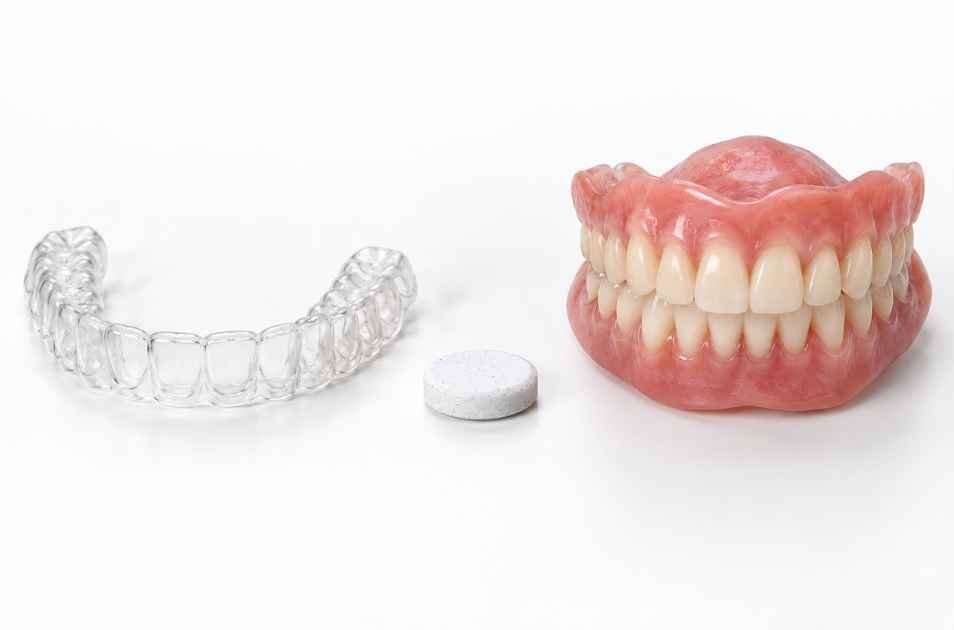
Neither is right as a blanket answer. The real answer is: it depends on the exact product and the exact appliance. “Denture cleaner” is a product category containing many different chemical formulations. “Retainer” covers several different materials with different sensitivities. Whether a specific cleaner is appropriate for a specific retainer depends on what’s in the cleaner and what the retainer is made of — not on the category label on the box.
Here’s how to sort it out.
In This Article
The Short Answer
Sometimes — but only when the exact cleaner explicitly lists your exact appliance type on its label. A denture-cleaning tablet that says “for retainers, clear aligners, and night guards” on the packaging is a different product from one that says “for dentures” only. The label is the evidence. The category name is not.
Why the Advice Is So Contradictory
The confusion exists because people — and many dental blogs — treat “denture cleaner” as though it’s one thing. It isn’t. The category contains dozens of products from multiple manufacturers, each with a different chemical formulation designed for a different set of materials.
Some denture cleaners are formulated exclusively for thick acrylic denture material. Their chemistry may be too aggressive for thin thermoplastic retainers. Others — like certain Efferdent products — have been specifically reformulated and relabelled for a broader range of dental appliances including retainers, clear aligners, and night guards.
Meanwhile, “retainer” also isn’t one thing. A Hawley retainer (acrylic plate with metal wire) responds differently to cleaning chemistry than a clear thermoplastic Essix-type retainer, which responds differently from an Invisalign aligner, which responds differently from a soft night guard. A cleaner that’s perfectly fine for acrylic may not be appropriate for thin thermoplastic — and vice versa.
The bloggers who say “never use denture cleaner on a retainer” are usually thinking about traditional denture-only formulations and clear plastic retainers. The bloggers who say “denture tablets work great” are usually thinking about multi-appliance products like Efferdent’s retainer-specific line. Both are partly right. Neither is giving you the full picture.
The Efferdent Case Study
Efferdent is the clearest example of why product-level specificity matters more than category labels.
Efferdent’s Retainer Clean & Bright is explicitly labelled for retainers, clear aligners, night guards, and sports mouthguards. The manufacturer’s own website and product packaging identify these appliance types by name. This isn’t a blogger’s interpretation or an Amazon reviewer’s guess — it’s the manufacturer’s stated intended use, printed on the box.
Efferdent also makes traditional denture-cleaning products. Those are formulated for dentures. The distinction between Efferdent’s denture-specific products and its appliance-specific products is a formulation decision made by the manufacturer — not something you should override based on a blog post.
If you’re considering an Efferdent product for your retainer, the check is simple: does the specific product you’re holding say “retainers” or “clear aligners” on the label? If yes, the manufacturer says it’s compatible with those appliances. If the label only says “dentures,” it wasn’t designed for your retainer regardless of how similar the tablets might look.
Even with a compatible Efferdent product, follow the specific directions on the packaging — soak time, water temperature, rinsing instructions. And check your appliance manufacturer’s instructions too. If your orthodontist or retainer brand says not to use effervescent tablets at all, that narrower instruction takes priority over the tablet manufacturer’s broader compatibility claim.
Persulfates: What They Are and Why They Matter
Many effervescent dental-appliance cleaners — including Efferdent and Retainer Brite — contain persulfates (typically potassium persulfate or sodium persulfate). Persulfates are oxidising agents that help break down organic material and contribute to the fizzing action of the tablet.
Efferdent’s own labelling discloses that its products contain persulfates and warns that persulfate-containing cleansers may cause allergic reactions in some individuals. Symptoms can include tissue irritation, rash, or in rare cases more significant allergic responses.
If you have a known persulfate allergy or sensitivity, avoid any cleaning tablet containing persulfates — regardless of whether it’s labelled as a denture cleaner, retainer cleaner, or appliance cleaner. Look for a persulfate-free formulation, or use a non-tablet cleaning method (dish soap, diluted vinegar, or an ultrasonic cleaner with water).
If you don’t have a known sensitivity, persulfate-containing tablets used as directed are a standard cleaning option supported by dental professionals and studied in independent research. The 2023 PMMA biofilm study included Retainer Brite (which contains persulfate) and found it removed more biofilm than comparator tablets in that test — though no tablet achieved complete removal of established biofilm.
The persulfate issue is worth knowing about, not worth being alarmed by. Most people use persulfate-containing tablets without any reaction. Those who do react should switch products and mention it to their dentist.
Compatibility by Appliance Type
The practical starting point below is based on manufacturer labels, professional guidance, and available evidence. But the exact cleaner’s label and the exact appliance manufacturer’s care instructions are always the controlling documents.
Clear thermoplastic retainers (Essix-type)
Use only products explicitly labelled for retainers or clear appliances. Products like Efferdent’s Retainer Clean & Bright and Retainer Brite are formulated and labelled for this use. Traditional denture-only formulations may be too aggressive for thin thermoplastic. Follow the recommended soak time — don’t extend it. Use lukewarm water, never hot.
Invisalign and Vivera
Align Technology sells its own cleaning products (Cleaning Crystals, Cleaning Crystals+). These are the only products with direct manufacturer validation for Invisalign materials. Some third-party tablets like Efferdent’s retainer-specific line list “clear aligners” on the label, which provides product-level compatibility evidence. But your orthodontist’s specific instructions for your Invisalign treatment may be narrower — follow those. For full Invisalign care guidance, see: How to Clean Invisalign and Clear Aligners.
Hawley retainers (acrylic + wire)
Hawley retainers are generally more tolerant of effervescent cleaning tablets than thin thermoplastic retainers. The acrylic is thicker and more chemically resistant. Many denture-cleaning products are compatible because denture acrylic and Hawley acrylic are similar materials. But “generally compatible” is not “universally safe” — check the specific product label and your orthodontist’s guidance.
Night guards (hard acrylic, hybrid, soft)
Night guard materials vary more than retainer materials. Hard acrylic guards are similar to Hawley acrylic and generally tolerate appliance-cleaning tablets. Soft EVA and dual-laminate guards are more variable — some manufacturers advise against effervescent tablets. Check your guard manufacturer’s care instructions. Products explicitly labelled for night guards (like Efferdent’s Retainer Clean & Bright) are the safest commercial choice. For the full night guard cleaning guide, see: How to Clean a Night Guard.
Sports mouthguards
Efferdent’s appliance-specific line includes sports mouthguards in its labelled uses. Follow the product directions and your mouthguard manufacturer’s care instructions.
How to Check Before Using
A two-step process that takes less than a minute:
Step 1: Read the cleaner’s label. Does it explicitly list your appliance type — “retainers,” “clear aligners,” “night guards”? If yes, the manufacturer says it’s formulated for that use. If the label says “dentures” only, it wasn’t designed for your appliance.
Step 2: Check your appliance manufacturer’s instructions. Does your orthodontist or retainer/guard manufacturer say anything about tablet cleaning? If they permit it, proceed. If they say to avoid effervescent tablets or specific chemical ingredients, that instruction overrides the tablet manufacturer’s broader compatibility claim. The narrower, appliance-specific instruction wins when the two conflict.
If the two sources agree (cleaner says “for retainers,” orthodontist says “cleaning tablets are fine”), you’re clear. If they conflict (cleaner says “for retainers,” but your orthodontist says “no tablets for this specific retainer”), follow the orthodontist. If you can’t find clear guidance from either source, call your orthodontist’s office. They can confirm compatibility in seconds.
Alternatives to Denture Tablets
If you’ve decided denture-category tablets aren’t appropriate for your specific appliance, or if you have a persulfate sensitivity, several alternatives handle weekly deep cleaning:
Purpose-made retainer cleaning tablets. Products like Retainer Brite are formulated specifically for retainers and dental appliances from the ground up — not reformulated denture products. For the full comparison, see: Best Retainer Cleaning Tablets.
Diluted white vinegar. Equal parts vinegar and lukewarm water, soaked for 15–20 minutes. Dissolves mineral deposits without effervescent chemistry. Rinse thoroughly afterward.
Mild dish soap and a soft brush. The AAO’s baseline recommendation for daily cleaning. Handles biofilm effectively when done consistently. No chemical compatibility concerns.
Ultrasonic cleaner with a compatible cleaning agent. Reaches surfaces manual cleaning misses. Use a cleaning agent in the tank for best results. For the full evidence, see: Do Ultrasonic Retainer Cleaners Actually Work?
For the complete cleaning product comparison, see: Best Retainer Cleaner.
Frequently Asked Questions
Can I use Polident on my retainer?
Check the specific Polident product label. Like Efferdent, Polident makes multiple formulations. Some may list retainers or dental appliances as compatible uses; others may be labelled for dentures only. The product label — not the brand name — is what tells you whether it’s appropriate for your appliance. Also check your retainer manufacturer’s care instructions for any restrictions on effervescent tablet use.
Is Efferdent safe for Invisalign?
Efferdent’s Retainer Clean & Bright lists “clear aligners” on the label, which provides product-level compatibility evidence. However, Align Technology sells its own cleaning products (Cleaning Crystals) specifically validated for Invisalign materials. If your orthodontist has given specific cleaning instructions for your Invisalign treatment, follow those. The safest approach is the manufacturer’s own product; the Efferdent retainer-specific line is a reasonable and more affordable alternative if your orthodontist permits third-party cleaning products.
Will denture tablets damage my retainer?
A tablet explicitly labelled for retainers, used according to its directions with the correct water temperature and soak time, is unlikely to damage a compatible appliance. Damage risk increases when you use a tablet not labelled for your appliance type, soak for much longer than recommended, use hot water, or use the tablet on a material it wasn’t formulated for. The label and instructions exist for a reason.
Are persulfate-free tablets available?
Yes. Some retainer cleaning tablets are marketed as persulfate-free for people with persulfate sensitivity. Check the ingredient list rather than relying on front-of-package marketing — “natural” or “gentle” doesn’t always mean persulfate-free. If you have a confirmed sensitivity, verify the specific ingredient list or ask your pharmacist.
Why does my orthodontist say no tablets, but the tablet says it’s safe for retainers?
Because your orthodontist may be giving instructions specific to your retainer material, your treatment situation, or their clinical experience — and those instructions are narrower than a tablet manufacturer’s general compatibility claim. The tablet manufacturer is saying “our product is formulated for retainers in general.” Your orthodontist is saying “for your specific retainer, in your specific situation, I recommend a different approach.” Follow the narrower instruction. Your orthodontist knows your appliance; the tablet manufacturer doesn’t.
Can I use denture tablets on my night guard?
Products explicitly labelled for night guards — like Efferdent’s Retainer Clean & Bright — are formulated for that use. Night guard materials vary (hard acrylic, soft EVA, dual-laminate), and some manufacturers advise against effervescent tablets for soft guards specifically. Check both the tablet label and your guard manufacturer’s care instructions. For the full night guard cleaning guide, see: How to Clean a Night Guard.

Sources & References
- Efferdent — Retainer Clean & Bright (product label, appliance compatibility, persulfate disclosure)
- Efferdent — Yes, You Can Use Efferdent on Retainers and Other Dental Appliances
- Cleaning performance of commercial orthodontic cleaning tablets regarding biofilm removal on PMMA test specimens (2023)
- American Association of Orthodontists — How to Clean Your Retainer
Related Guides
- How to Clean a Retainer
- Best Retainer Cleaning Tablets
- How to Clean Invisalign and Clear Aligners
- Do Ultrasonic Retainer Cleaners Actually Work?
- Best Retainer Cleaner: Devices, Tablets and Foams
- Ultrasonic Retainer Cleaner vs Cleaning Tablets
- How to Remove White Buildup From a Retainer
- How to Remove Bad Smell From a Retainer
- How to Clean a Night Guard